AI News
Jev 1.14 Sets a One-Week Clock for Its Alias Switch
TypeSafe’s preview model promises multilingual gains, while image inputs, bounding boxes and longer context require explicit opt-ins and remain experimental.
 Angelica Kim7 min
Related reporting, guides, and analysis from Zeniteq.
TypeSafe’s preview model promises multilingual gains, while image inputs, bounding boxes and longer context require explicit opt-ins and remain experimental.
Angelica Kim7 min
Three compact models ship in multiple deployment formats, with optional text correction and speaker tools; FUTO’s app integrations are still upcoming.
 Jim Clyde Monge7 min

JetBrains has released weights for self-hosted repository work, but GGUF packages and vLLM speculative-decoding support remain on the roadmap.
Angelica Kim6 min
The 35B speech model supports plain-language performance direction, but its commercial license, temporary API pricing and invite-only editing deserve a closer look.
 James Rivera7 min

Introductory pricing runs through November 30, while API, Gemini app, Search, and Antigravity access follow different product and subscription rules.
James Rivera7 min
Datalab’s compact OCR release offers structured document output, but its benchmark lead depends on workload, text-layer reuse, and comparison settings.
Angelica Kim7 min
LFM2.5-24B-A2B offers open weights, a 131K context window, and broad local-runtime support, but its speed and benchmark results remain vendor-reported.
Angelica Kim7 min
Developers get API and Muse Code access now, while the Muse rollout remains pending and Meta’s performance and safety claims need independent…
Jim Clyde Monge7 min
Nature Will claims one model can handle unfamiliar instructions and objects, but tuned demonstrations and hardware-dependent benchmarks leave important questions unresolved.
Angelica Kim7 min
SubQ’s decision model promises inexpensive, fast choices over long multimodal inputs, but limited preview capacity and vendor-run benchmarks warrant careful evaluation.
James Rivera7 min
Mistral’s flagship LLM combines million-token context, image understanding, and discounted API access, while its open-weight release remains a separate milestone.
Jim Clyde Monge7 min
The downloadable 1-bit model opens up constrained local-AI experiments, but its smaller weights come with lower benchmark scores and no measured speed…
Angelica Kim7 min
Z.ai’s legal LLM targets agentic workflows, but restricted access and unanswered evaluation questions matter more than treating its benchmark score as autonomous…
Jim Clyde Monge7 min
Microsoft claims faster responses and fewer tokens than its June model, while GitHub lists usage rates developers can evaluate against completed tasks.
James Rivera7 min
The complete speech-to-speech checkpoint runs locally, but LAION’s own evaluation finds gains in predicted quality alongside weaker target-voice similarity.
James Rivera7 min
Cloudflare’s new decision model combines mixed media in one call, while cheaper Clef-flash inference comes with a smaller hosted context window.
James Rivera7 min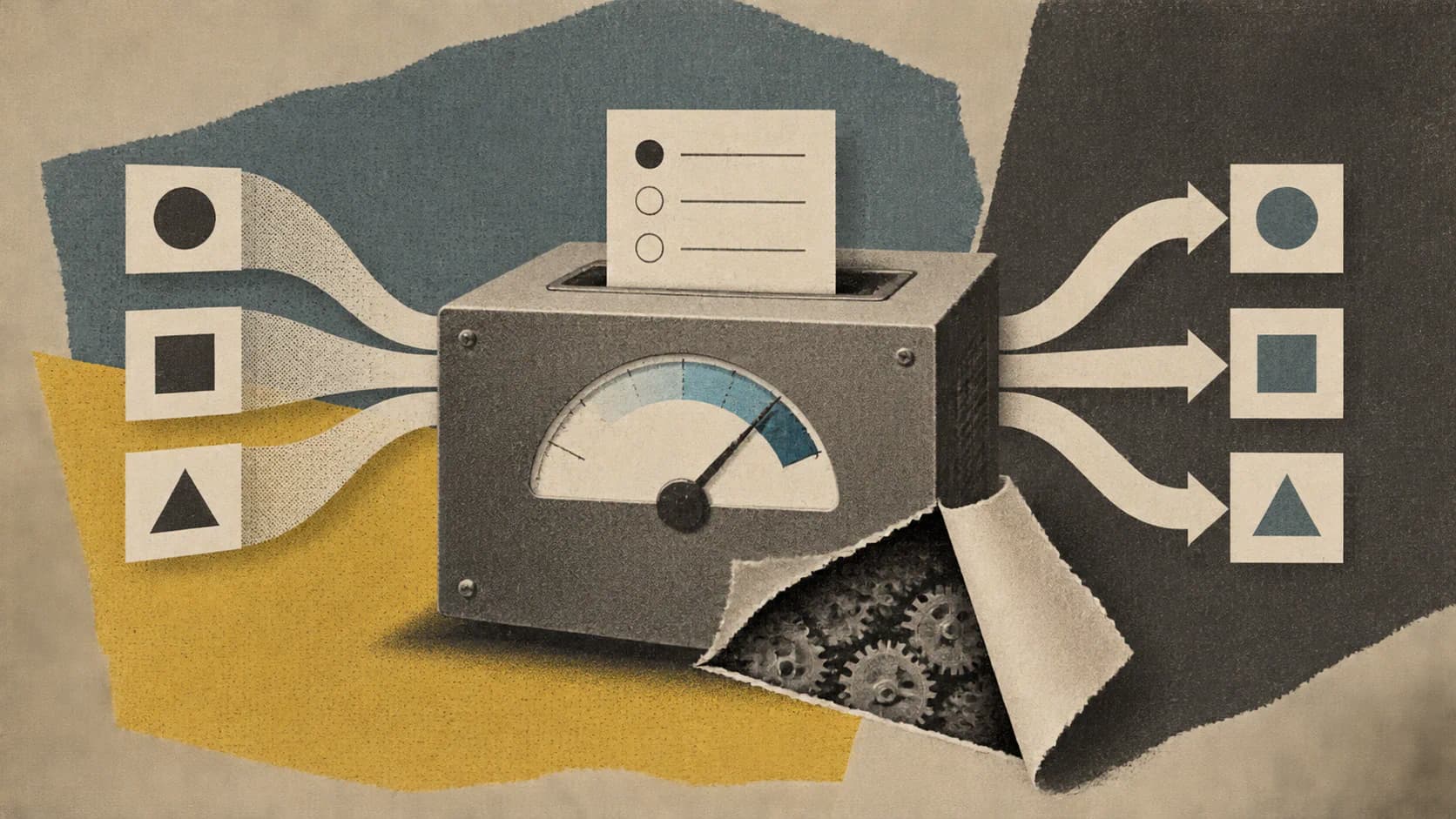
Microsoft’s Qwen-based scoring model offers inexpensive agent control in Foundry, while its headline speed and accuracy results remain vendor-reported.
Angelica Kim7 min
The two API models differ in resolution, reference controls and cost, with Lite’s 1080p output upscaled rather than rendered natively.
Angelica Kim7 min
Illumina released code, weights and billions of variant scores, but its reported gains come with licensing restrictions and a tissue-dependent prediction weakness.
James Rivera7 min
JetBrains’ Apache-2.0 model adds repository-focused reinforcement learning, but its speed and capability comparisons come from the company rather than independent testing.
Jim Clyde Monge7 min
A 3B vision-language model and an experimental 600M sibling target local classification, but published results leave important multimodal performance questions unanswered.
James Rivera7 min
The October 7 rollout brings native charts, forms and calculators to ChatGPT, while Free and Go access follows a day later.
James Rivera7 min