Block has unveiled Dessa, a voice AI model it says was trained from scratch on human conversation, without text or a pretrained language model. According to Block’s announcement, Dessa can listen and speak simultaneously and run locally on a MacBook Pro M4 Max or better.
Dessa lead Ragavan Thurairatnam introduced the model on October 23, 2026. The announcement is a research reveal with selected conversation recordings and an invitation for safety researchers, not a generally available model release.
Three separate claims make Dessa interesting: how it learned, how it handles live conversation, and where it can run. Each requires different evidence. A convincing conversation recording can illustrate timing and expression; verifying the training recipe or reproducing local performance requires additional disclosures and access.
Speech-Only Training Without a Pretrained LLM
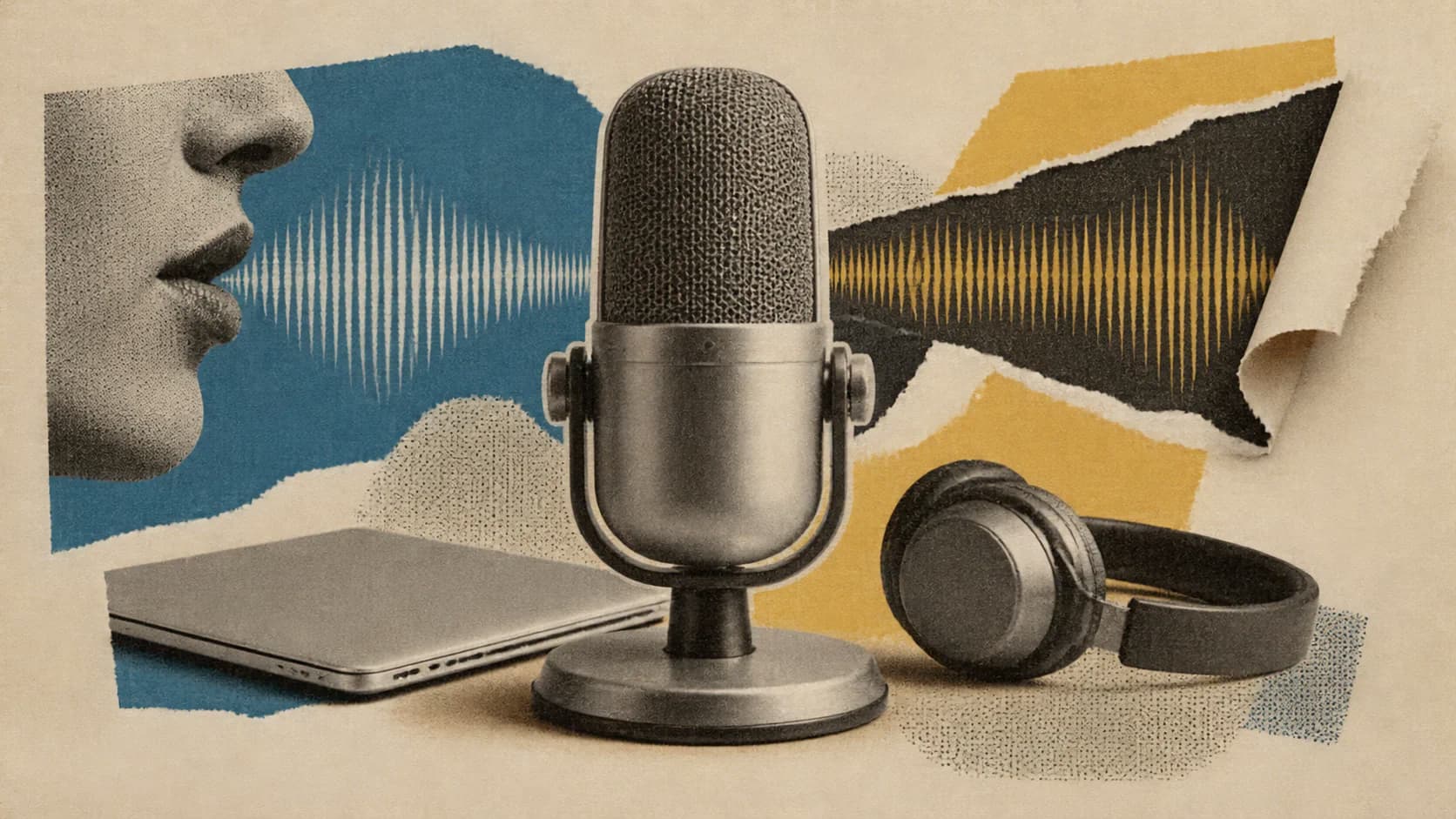
Block describes Dessa’s interface in five words: “Audio in, audio out.” The company says everything the model knows came from human speech, with no text or pretrained models used in training.
That distinguishes the claimed approach from a familiar voice-assistant pipeline: transcribe speech, send the text to an LLM, then synthesize its written response. Dessa is presented as learning conversation directly from sound, including both the content of speech and its delivery.
The distinction matters because words alone leave out information. A pause can signal hesitation. Stress can change the meaning of a sentence. Laughter during someone else’s sentence can be an immediate response, not an event to append after a transcript is complete. A system that retains acoustic information has an opportunity to use those signals.
Block’s announcement describes a training approach, however, without providing a detailed internal architecture. It leaves open how Dessa represents audio internally, how its components are organized, and how training objectives produce its conversational behavior. Speech-only training should not be interpreted as proof that the model uses no intermediate representations.
Block also says Dessa learned language from hundreds of times fewer words than LLMs. That is a vendor comparison without published dataset sizes or a matched evaluation. Spoken conversation and a broad text-training corpus differ in content, repetition and task coverage, so the claim cannot yet support a like-for-like efficiency ranking.
My view is that the training claim is the announcement’s most consequential part. If independently substantiated, it would offer useful evidence about what AI models can learn from conversation alone. The expressive recordings are interesting, but they cannot verify what went into training.
Full Duplex Makes Timing Part of the Conversation
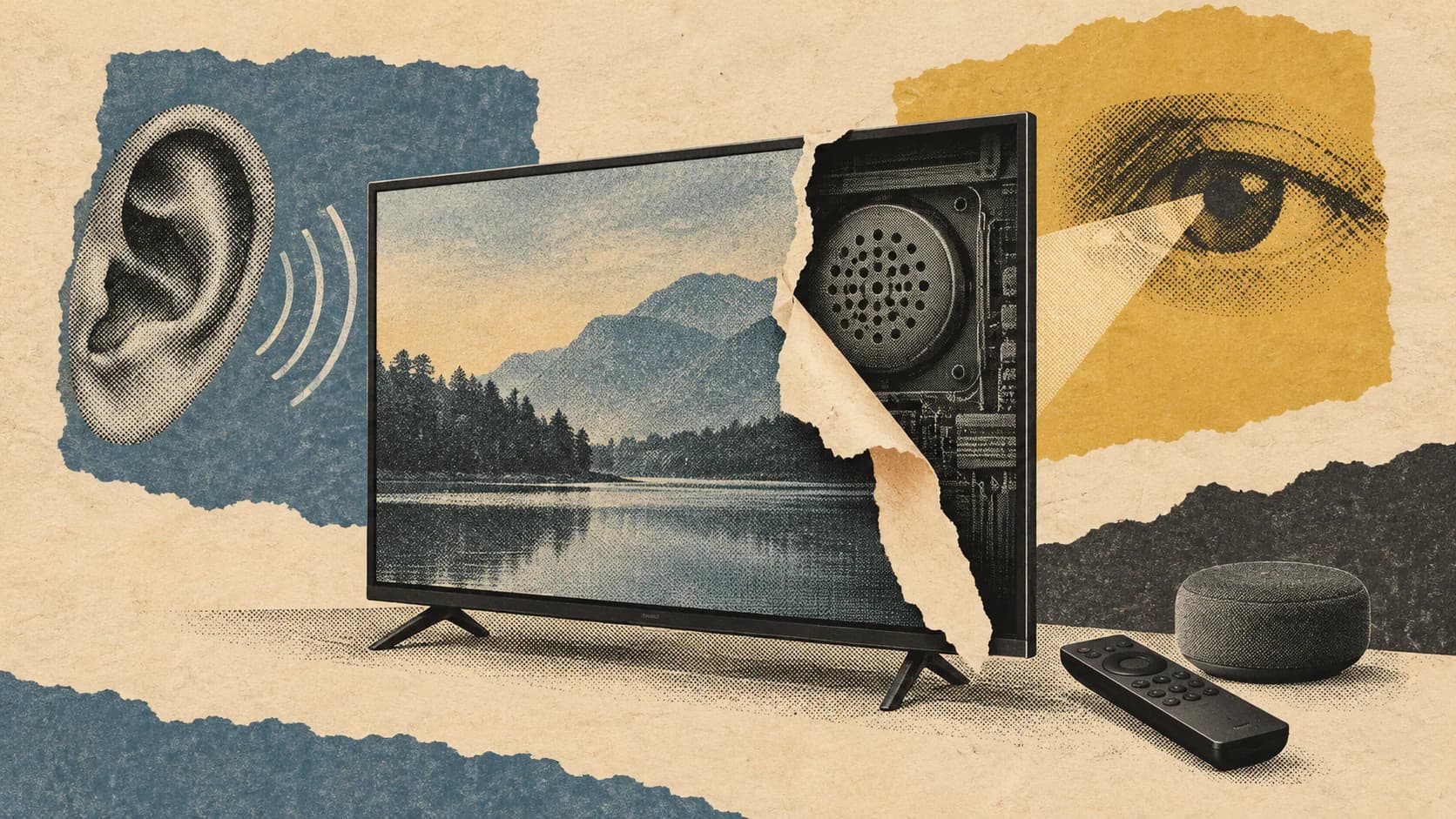
Full duplex means Dessa can listen and speak at the same time, according to Block. A turn-based assistant typically waits for a person to finish before responding. A full-duplex system can continue receiving speech during its own output.
That opens up several conversational behaviors:
- Backchanneling: Brief acknowledgments that show the system is following along.
- Overlapping responses: Reacting before the other speaker has finished.
- Interruption handling: Detecting speech while talking and deciding whether to stop, continue or respond.
Block describes recordings in which Dessa laughs mid-sentence, completes a person’s thought and gets louder when asked. The company attributes these behaviors to learning from conversation.

These are useful distinctions because conversation quality depends on timing as well as wording. An acknowledgment delivered a second too late can feel disconnected; an interruption at the wrong moment can prevent someone from finishing an important request.
Block also claims inference runs faster than real time. That concerns processing speed relative to the duration of audio. It is not an end-to-end response-latency measurement. Buffering, audio capture, decisions about when to speak and output playback can all affect the delay a person experiences.
I’d want measured interruption and response timing before judging how natural Dessa feels across ordinary conversations. Fluent delivery is one component; consistently yielding the floor is another.
Local Inference and Training Use Different Hardware
Block names two very different hardware targets: a MacBook Pro M4 Max or better for inference, and one NVIDIA GB200 NVL72 system for training.
| Stage | What Block says | What remains unspecified |
|---|---|---|
| Local inference | Runs on a MacBook Pro M4 Max or better | Memory configuration, numerical precision, software setup and measured performance |
| Processing speed | Inference runs faster than real time | End-to-end latency and test conditions |
| Training | Used one NVIDIA GB200 NVL72 system | Training duration, utilization and total compute or cost |
The official page supplies those hardware claims but no reproducible deployment recipe. It also omits the parameter count and downloadable weights.
A MacBook Pro M4 Max is a high-end consumer machine. Naming that chip family is useful, but buyers still need to know the required memory configuration and whether performance changes under sustained use. Block’s wording gives prospective researchers a hardware target, not enough information to select a configuration confidently.
The training claim needs similar care. One GB200 NVL72 system is a system count, not a claim that training used a single GPU. Without runtime and workload details, that count cannot establish total compute consumption, energy use or training cost.
Local execution could be valuable for privacy-sensitive applications because audio processing could remain on the device. That benefit depends on the surrounding application: where recordings are stored, what telemetry leaves the machine and whether other services are involved. Local model inference alone is insufficient to establish those privacy properties.
For developers, the practical implication is straightforward: Dessa has a stated local hardware target, but no public installation path yet. There is no supported setup procedure to reproduce from this announcement.
The Recordings Show Expression, Not Reliability
Block’s launch page contains several selected conversations. One involves a person struggling to remember a movie title; another presents an anniversary surprise with an emotionally delivered response. Other examples emphasize varied intonation, speed and life-advice dialogue.
The company says the recordings are live interactions, that nobody steers Dessa, and that subtitles were added afterward. Those descriptions are Block’s account of how the demonstrations were produced.
Frequently Asked Questions
3 questions
1Is Dessa Available to Download?
Block has not published downloadable weights or general public access. It offers a waitlist and a separate early-access invitation for selected AI safety researchers.