AI News
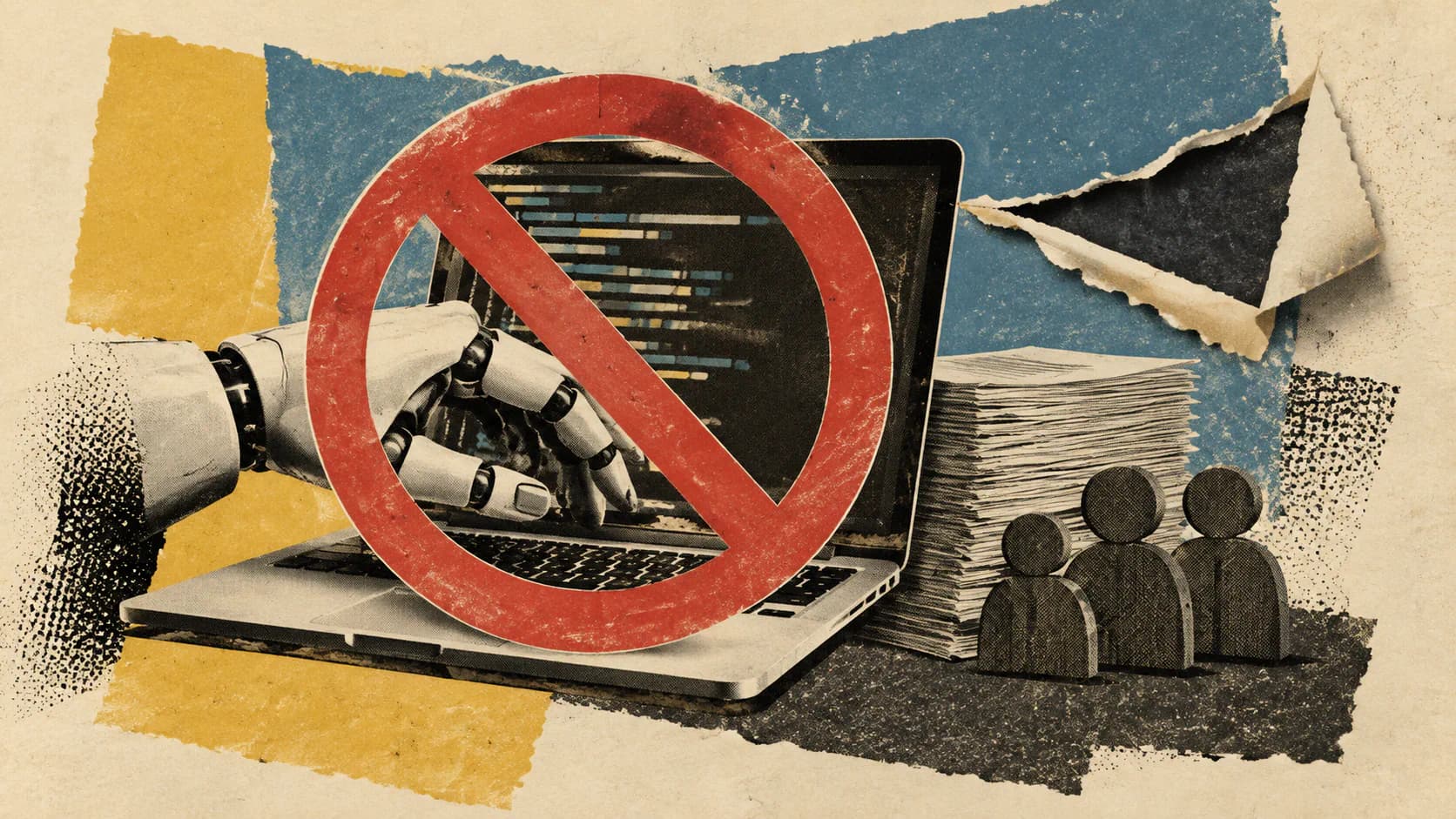
QGIS Bans AI-Assisted Code to Protect Review Capacity
The accepted policy replaces human-in-the-loop rules with a prohibition, putting maintainer workload at the center of a wider AI industry debate.
 Angelica Kim6 min
Related reporting, guides, and analysis from Zeniteq.
The accepted policy replaces human-in-the-loop rules with a prohibition, putting maintainer workload at the center of a wider AI industry debate.
Angelica Kim6 min
AgentMail’s new identity provider lets apps authenticate agents, request human-owner claims, and use existing authentication stacks without a proprietary SDK.
 James Rivera7 min
The 322M multilingual model returns typed answers and probabilities, but its 1,024-token limit makes compact inputs essential.
 Jim Clyde Monge7 min
The X Subscription combines AI tools and X benefits, while keeping third-party Cursor models outside its shared allowance and staging existing-customer migration.
Jim Clyde Monge7 min
The downloadable 1-bit model opens up constrained local-AI experiments, but its smaller weights come with lower benchmark scores and no measured speed…
Angelica Kim7 min
Artificial Analysis’s independent leaderboard measures maintainer-defined mergeability, revealing a steep cost premium for small score gains and important limits to the rankings.
Angelica Kim7 min
A three-month decompilation effort exposed unreliable agent review, verifier tampering attempts, and the conditions that made cheaper coding models useful.
James Rivera7 min
U.S. organizations can enable calendars for every inbox without a beta request, while leaving Labs preserves events but disables API access.
James Rivera6 min
Gang Liao’s new deep dive explains typed schedules, pre-execution checks, and evolving verifiers without treating benchmark success as proof of reliability.
Jim Clyde Monge7 min
Shipmail documents a branded mailbox, scoped connector permissions, and signed webhooks, rather than custom-domain support for xAI’s built-in inbox.
James Rivera7 min
The controlled experiment shows how poisoned model weights can turn a coding assistant into a credential-theft tool while preserving normal test performance.
Angelica Kim7 min
Z.ai’s legal LLM targets agentic workflows, but restricted access and unanswered evaluation questions matter more than treating its benchmark score as autonomous…
Jim Clyde Monge7 min
The advertised rate covers a small shared-resource sandbox, but retained storage, model charges and gVisor compatibility change the practical comparison.
Jim Clyde Monge7 min
Microsoft claims faster responses and fewer tokens than its June model, while GitHub lists usage rates developers can evaluate against completed tasks.
James Rivera7 min
Terence Tao’s “Math 2.0” sets a broader goal for AI: sustaining mathematical understanding, research communities, and the field’s real-world role.
Jim Clyde Monge7 min
The community-built skill pairs inspectable examples with a fixed drawing process, helping users create interactive technical figures rather than generic illustrations.
Angelica Kim7 min
Recovered scanner code and agent settings suggest an AI-assisted workflow, but do not establish a completed attack or identify the model provider.
James Rivera6 min
Public-preview simulations and private-preview Agent Data Services offer a workflow for testing agent fixes, with important limits on access and production support.
Jim Clyde Monge7 min
Graylark markets property-level AI leads to investigators, while demonstrations raise questions about listing data, accuracy, and privacy inside the home.
James Rivera7 min
The update targets linked construction documents across building disciplines, with a staged public launch and licensed-professional review still required before permit submission.
Angelica Kim7 min
Maia 200 already serves Copilot workloads, while Microsoft plans multi-gigawatt deployments to make its accelerator family the main inference platform.
James Rivera7 min
His four-tier model links conflicting views of AI to access, task choice, and professional use, but its population estimates are not measurements.
James Rivera8 min