A photograph of a washer and dryer posted on X led Raven to a candidate rental in Charlotte, North Carolina, in a demonstration examined by 404 Media. Reporter Joseph Cox found that the result repeated the title of an Airbnb listing whose photographs showed the same property.
According to 404 Media’s October 12, 2026 report, Raven can use visual clues inside a room to return a likely property, apparently drawing on material available through rental and real-estate listings. That is a more specific surveillance capability than estimating which city a photograph depicts.
Graylark, Raven’s developer, describes its outputs as ranked investigative leads requiring human review, not confirmed locations. The demonstrations do not establish how reliably the system works across unfamiliar homes, poor-quality photographs, or properties outside its coverage.
The privacy concern is concrete: a room photographed for a property listing can become a reference against which police compare an entirely different image, even when that image contains no location metadata.
What the Interior-Photo Demonstrations Show
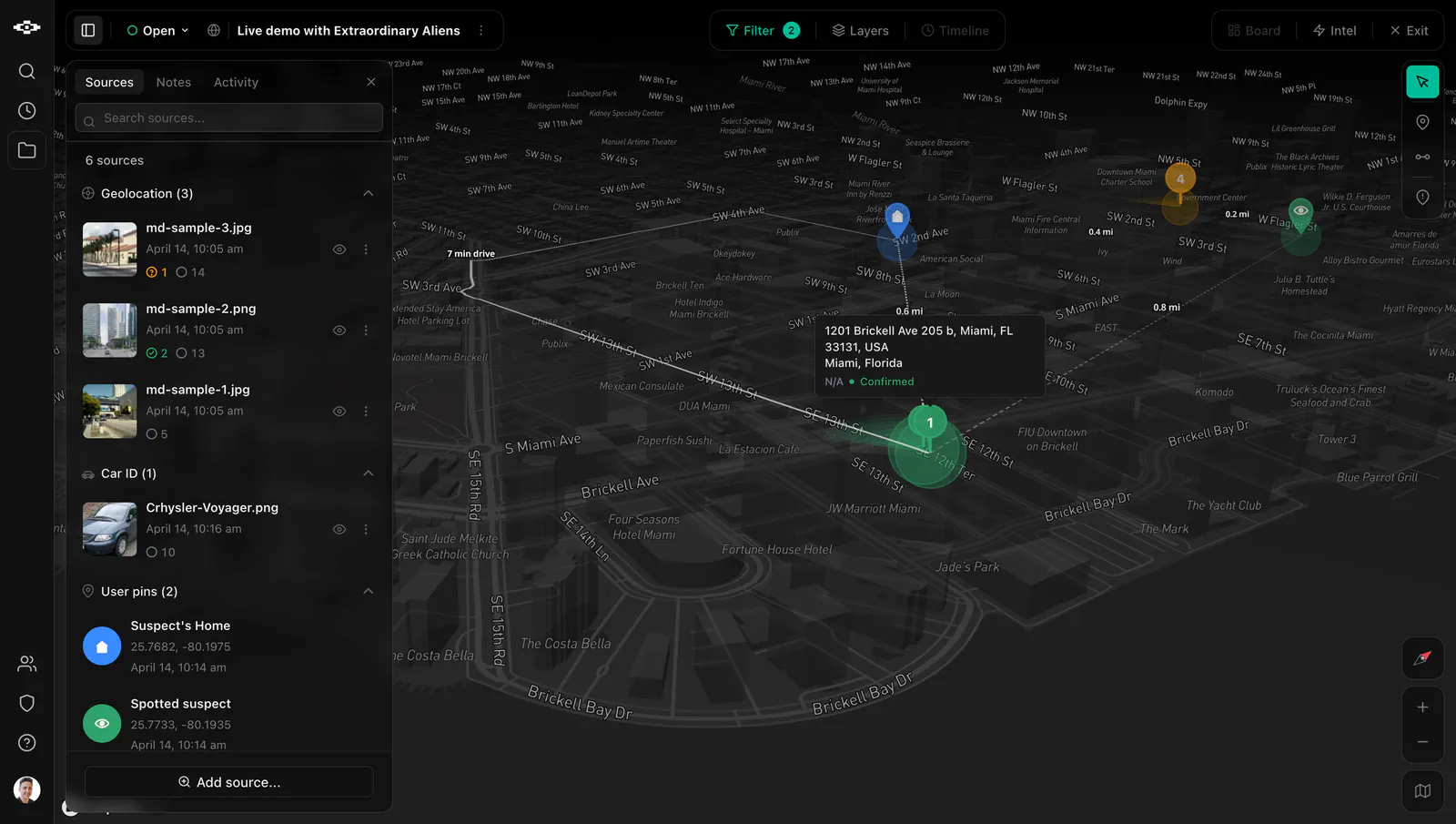
The Charlotte demonstration followed a guided workflow. A user uploaded the washer-and-dryer photograph, selected a property-geolocation option, and chose a region to search. The interface then displayed candidate results near Charlotte, with the matching Airbnb listing at the top, according to 404 Media.
A bathroom photograph taken from social media produced a result in Montecito, California, in another demonstration. Cox traced the returned property name to a Vrbo listing. A separate demonstration connected an interior photograph to a San Francisco address and displayed reference photographs that 404 Media found were identical to images on Zillow.
These observations support the report’s conclusion that listing material is involved in the demonstrated workflow. How Graylark acquires that material remains unclear, including whether it uses a live lookup or a previously assembled dataset and what licensing arrangements might exist.
As 404 Media describes it, Raven appears to go beyond a conventional reverse-image search. Instead of simply locating an identical photograph elsewhere online, it appears to identify characteristics of a room and find other photographs of the same property, potentially taken from different angles or at different times. A social-media photograph that has never appeared in a listing could reveal enough of a room to connect it to the property’s marketing photographs.
These are selected promotional demonstrations, however, not a controlled evaluation. The report explicitly notes that their speed and success may not represent Raven’s performance more generally. They document a capability worth examining without providing an accuracy rate.
Graylark Distinguishes Property Searches From Rental Matching
Graylark’s Raven capabilities page separates two relevant functions, with different coverage claims and maturity labels.
Find Property, labeled beta, matches an interior or exterior photograph to candidate addresses in a supported city. Short-Term Rental ID, labeled experimental, matches an interior photograph or video frame against what Graylark describes as millions of short-term rental listings worldwide.
These vendor descriptions are not independently verified measures of coverage. “Worldwide” does not demonstrate that every rental is searchable, while “supported city” explicitly limits the property-search function.
The workflow also complicates any suggestion that one photograph automatically yields an address anywhere on Earth. The Charlotte demonstration included a region-selection step. Other promotional material examined by 404 Media described city-specific property AI, and the publication previously obtained emails showing that the Miami-Dade Sheriff’s Office had access to a model specifically trained for its county.
Graylark says GeoSpy became Raven in April 2026 as the platform expanded beyond regional image geolocation. Its official transition page emphasizes ranked candidates for human review rather than a single verdict.
Estimating a region from visual patterns and matching a room to a particular property are different tasks. Property matching depends on distinguishing one location from plausible alternatives, and its usefulness will depend on the reference material and search coverage available.
Listing Photos Can Become a Location Reference
Rental and real-estate photographs show prospective guests or buyers what a property looks like. The Raven demonstrations suggest that those same images can also help identify where an unrelated photograph was taken.
Familiar privacy precautions have limits here. Removing GPS or other EXIF metadata prevents a file from directly disclosing embedded coordinates. It does not remove the visual details that a property-matching system may compare with reference imagery.
Airbnb told 404 Media that it excludes location metadata from listing photographs, allows hosts to display an approximate location, and shares a home’s address with a guest only after a reservation is confirmed. Those measures address direct disclosure through the platform. Visual matching creates a separate route to a location lead.
The exposure can extend beyond the person who published the listing. A guest, tenant, visitor, or other occupant may post an interior photograph without knowing that the room has already been documented extensively online. The connection is between the room and its reference photographs, not necessarily between the poster and a property account.
The underlying data practices remain unresolved. According to 404 Media’s reporting, Airbnb said it has no relationship with Graylark, prohibits scraping, uses technical safeguards intended to limit automated collection, and is reviewing the case. Zillow said scraping violates its terms of use and that it pursues legal avenues when necessary. Vrbo did not respond to multiple requests for comment.
These are the platforms’ stated positions. They do not prove which collection method Graylark used or resolve whether any particular acquisition of data violated an agreement.
For the AI industry, the consequential issue is the reuse of ordinary-looking visual material: photographs published to market a room can become part of a system for locating people or investigating activity associated with that room.
Police Access Makes Accuracy More Consequential
404 Media reports that both the Los Angeles Police Department and the Miami-Dade Sheriff’s Office previously purchased access to Raven, formerly GeoSpy. Law-enforcement use is therefore more than a hypothetical application.
Graylark’s Raven product page says the platform is available to verified agencies and investigative teams. It presents a workflow in which investigators review geographic candidates against reference imagery and incorporate reviewed leads into a case.