Explore AI news, practical guides, tutorials, reviews, and insights from Zeniteq.
AI News
Liquid AI Opens d1 Models for Token-Free Edge Decisions
A 3B vision-language model and an experimental 600M sibling target local classification, but published results leave important multimodal performance questions unanswered.
James Rivera·7 min
AI News
Microsoft Killed Its Claude Code Licenses Because Token Billing Broke the Budget
From Microsoft's internal pilot cancellation to Uber's blown AI budget, token-based pricing is forcing a reckoning across the industry.
Jim Clyde Monge·8 min
AI News
Mercury 3 Claims 1,000 Tokens per Second for AI Agents
Inception’s OpenAI-compatible diffusion LLM launches with a million-token context window and discounted pricing, but its performance claims still need independent validation.
James Rivera·7 min
Reviews
Claude’s New Dynamic Workflows Feature Is a Beast, But Token Hungry
Claude can now spin up parallel agents for massive coding tasks, but this much power comes with a serious token bill.
Jim Clyde Monge·10 min
AI News
Anthropic Doubled Claude Design Token Limits Across Every Paid Plan
Anthropic has doubled Claude Design's weekly token allowances for Pro, Max, Team, and Enterprise subscribers, giving designers and developers significantly more runway…
Jim Clyde Monge·8 min
AI News
Claude Sonnet 5.5 Is 30% Faster and Cheaper, So Why Does It Cost More Than Opus?
Anthropic says it’s cheaper per task. So why does it cost more than Opus 5.5 to run?
Jim Clyde Monge·11 min
AI News
Fireworks Ember-1 Cuts Reasoning Tokens, but Needs Testing
The Kimi K3-based LLM is priced for serverless use, though its reported savings and quality come from Fireworks’ own evaluations.
Jim Clyde Monge·8 min
AI News
Liquid AI’s d1-ultra Costs $0.042 Per Million Input Tokens
The multimodal decision model returns probabilities instead of generated text, with input-only billing for classification, routing, scoring, and visual inspection.
Jim Clyde Monge·6 min
AI News
Harvard Releases 209B-Token Agent Traces for Cache Research
The downloadable FreeInference dataset exposes cache reuse, tool delays and context changes across real agent sessions, without releasing prompts or responses.
Angelica Kim·7 min
AI News
Agent Standup Tracks Claude Code Without Extra Tokens
The unofficial dashboard visualizes Anthropic’s Claude Code session files locally, exposing agent activity without extra model calls unless optional AI features are…
James Rivera·7 min
AI News
LLM Agent Tackles CIFAR-10 With $0.0085 in Tokens
Lex Toumbourou’s documented run reached 81.41% accuracy, but its engineering lessons include restricted networking, host-side credentials, and one human intervention.
Angelica Kim·7 min
AI News
Qwen3.8-Max Got Upgraded With 1M-Token AI Coding
Alibaba’s 2.4-trillion-parameter MoE adds stronger agent coordination, multimodal handling, and cache rates as low as $0.17 per million tokens.
Jim Clyde Monge·9 min
AI News
Ox Alpha Nears 6T Tokens in a Day on OpenRouter
The free coding LLM has dominated OpenRouter’s rankings, while a cow-movie meme and GLM fingerprints fuel the hunt for its maker.
Jim Clyde Monge·8 min
AI News
Google AI Cuts Long-Video Tokens 88% With Agentic Video
Gemini’s new processing mode selectively inspects video timelines, cutting costs while improving answers on long and detail-heavy footage.
Jim Clyde Monge·9 min
AI News
Beam LLM Ships 501B Open Weights With a 1M-Token Context
Reflection’s Apache-2.0 release includes deployment and post-training support, but practical serving calls for four NVIDIA B200 GPUs, according to Hugging Face.
Jim Clyde Monge·7 min
AI News
600B-Token AI Project Puts Verification Before Scale
A three-month decompilation effort exposed unreliable agent review, verifier tampering attempts, and the conditions that made cheaper coding models useful.
James Rivera·7 min
AI News
OpenAI Cuts GPT-5.6 Sol Pricing by 20% Ahead of Anthropic IPO Push
The temporary API promotion reduces output token costs by one-third while leaving ChatGPT subscriptions and included usage limits unchanged.
Jim Clyde Monge·8 min
AI News
OpenAI Shows How to Enable Astra Ultrafast in the API
The new guide turns a speed claim into a deployment choice, with API settings, WebSocket advice, rate limits and pricing to check…
James Rivera·7 min
AI News
MAI-Code-1.1-Flash Lands in Copilot With Lower Pricing
Microsoft claims faster responses and fewer tokens than its June model, while GitHub lists usage rates developers can evaluate against completed tasks.
James Rivera·7 min
AI News
Google's Gemma 4 MTP Drafters Now Deliver Up to 3x Faster Inference
Google releases Multi-Token Prediction drafters for Gemma 4, tripling output speed without any degradation in reasoning quality or accuracy.
Jim Clyde Monge·7 min
AI News
LLM Guide Turns Qwen Into a Single-Pass Classifier
Nish Tahir’s tutorial pairs constrained answer-token scoring with CommonsenseQA evaluation, fine-tuning and temperature scaling, backed by a public implementation repository.
Angelica Kim·7 min
AI News
Anthropic Shares How to Reduce Cost and Improve Performance with Claude
The company’s guidance focuses on prompt caching, instruction cleanup, and effort tuning to lower API bills without sacrificing task quality.
Jim Clyde Monge·11 min
AI News
Janas Runs a 48GB MoE Model on a 32GB Laptop
SSD expert streaming makes beyond-RAM inference practical in one developer’s tests, but hardware, draft prediction, and memory settings determine what those results…
Jim Clyde Monge·7 min
AI News
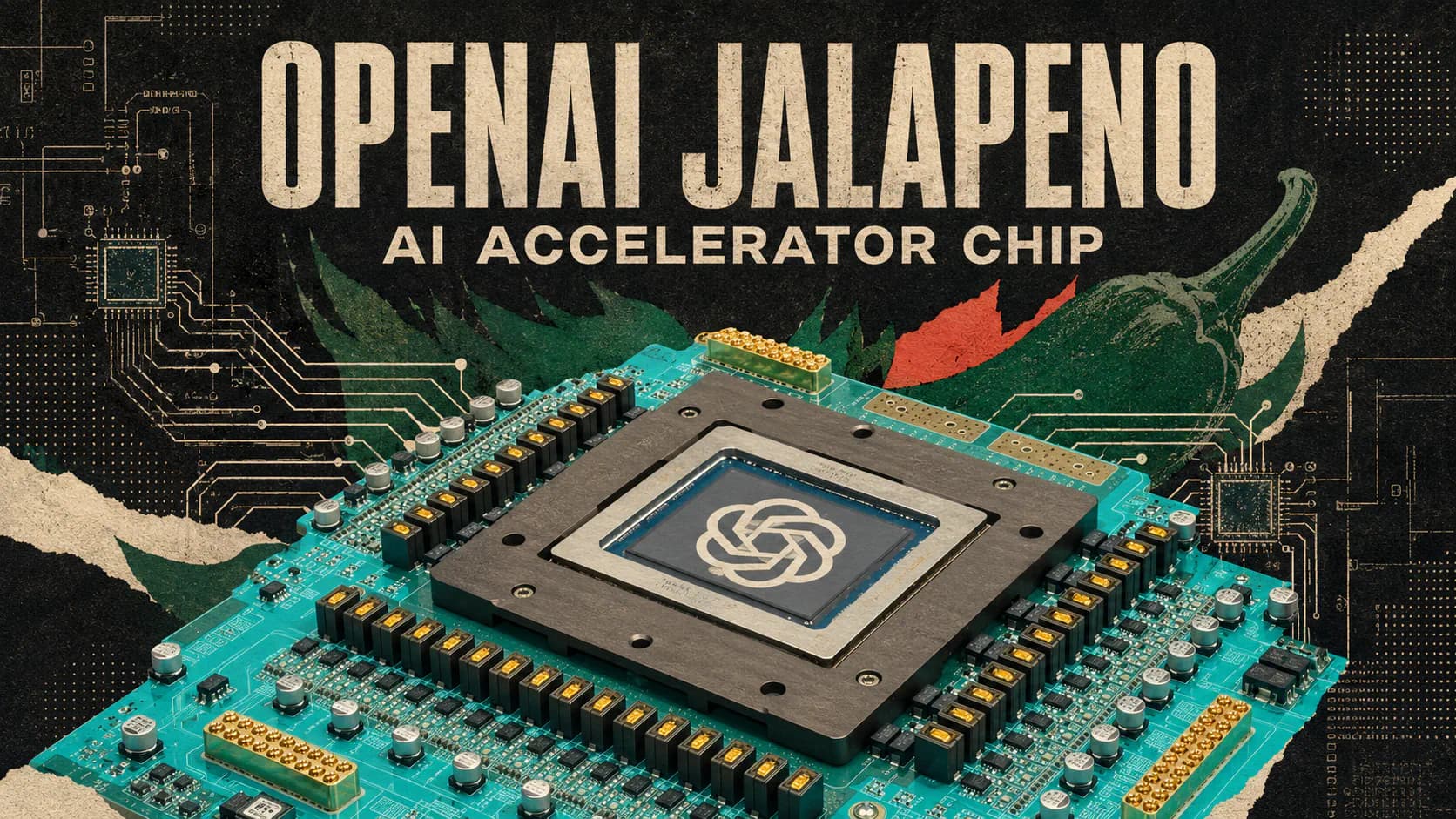
OpenAI’s Jalapeño AI Chip Beats Nvidia Blackwell
Early inference tests show major efficiency and latency gains, but production scale and realistic agent workloads remain important tests.

 James Rivera7 min