Liquid AI’s d1-ultra evaluates text, images, or both and returns probabilities over defined outcomes without generating output tokens. Its launch price is $0.042 per million input tokens, with images charged at the same token rate as text.
Developers can access it directly through Liquid’s API for bounded decisions: which department should receive a support ticket, whether a photograph shows damage, or how urgently an incident needs attention.
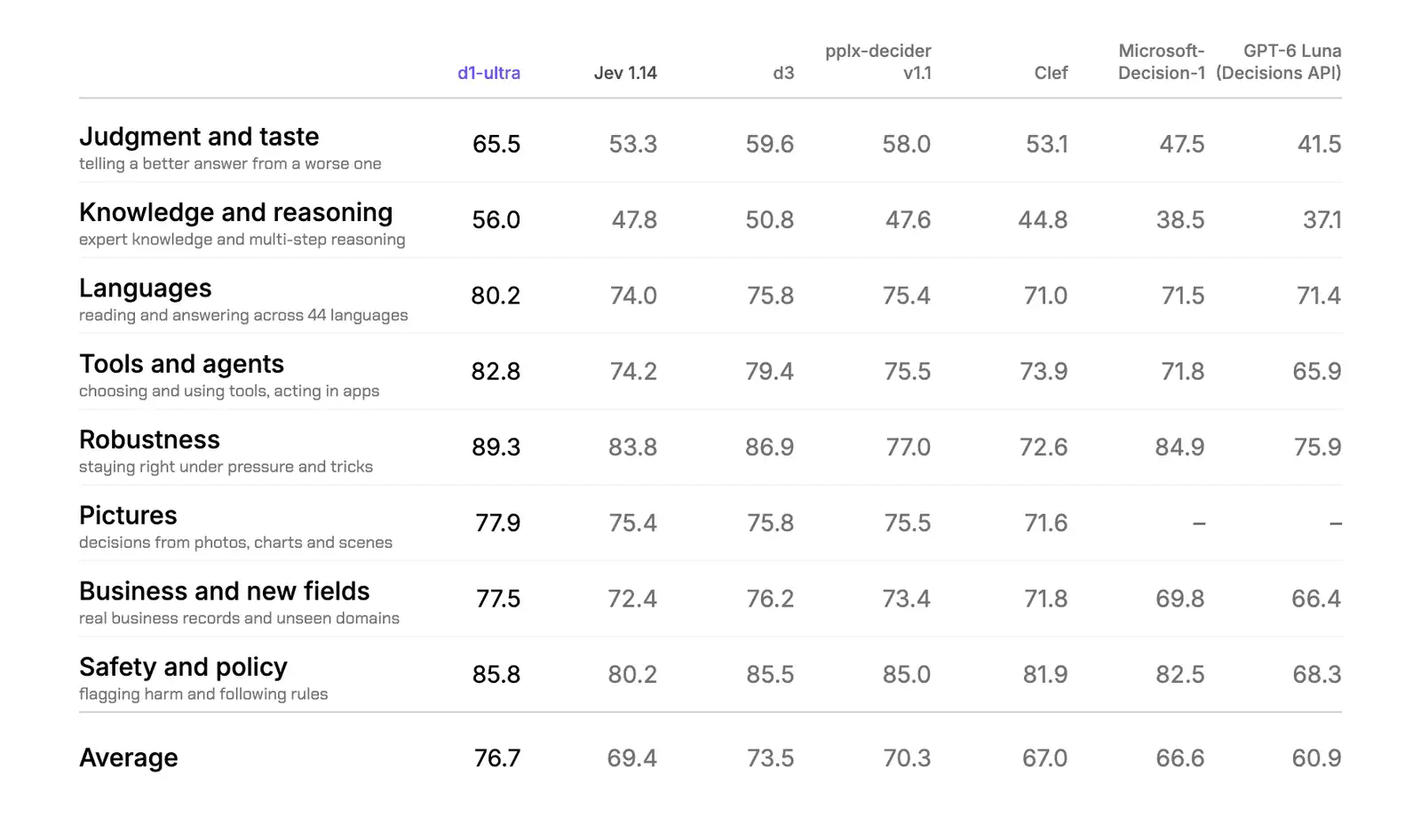
The output contract distinguishes it from a generative LLM. Developers define possible outcomes and receive probabilities their software can act on, without asking the model to write a label or explain a judgment. Liquid also claims improved accuracy and calibration, although its benchmark superiority claims remain vendor-reported and are not independently established by the supplied evidence.
A Decision Model Answers Within Defined Boundaries
According to Liquid’s decision-model documentation, these models evaluate a situation and return structured probabilities in a single forward pass. They do not generate an answer token by token.
d1-ultra supports three question types:
- Noul: A yes/no question that returns a probability between zero and one.
- Choice: A selection among named categories, with a probability distribution across the options.
- Score: A position on an ordered scale, using a defined scoring rubric.
For ticket routing, a Choice question could distinguish billing, technical support, and account access. The same ticket could be assessed for sensitive personal information with a Noul question and rated for urgency with a Score question.
Multimodal input extends that pattern to decisions involving pictures. Liquid’s announcement gives examples including identifying a circuit-board defect against a specification and checking a damage claim against a customer’s photograph. These proposed applications do not establish that the model meets a particular factory’s inspection standard or an insurer’s claims requirements.
A generative LLM remains the appropriate tool for an explanation, summary, conversation, or piece of code. d1-ultra is intended for answers within a defined set of outcomes. It could help decide where a customer message goes without also being responsible for composing the reply.