AI News

Google’s Universal Gemini Agent Can Use Anthropic Claude
One persistent agent spans business apps, code, and automation, while Google separates model choice from the agent and puts industry specializations in…
 James Rivera7 min
Related reporting, guides, and analysis from Zeniteq.
One persistent agent spans business apps, code, and automation, while Google separates model choice from the agent and puts industry specializations in…
James Rivera7 min
The experimental Mac app combines audio capture, AI-expanded notes and local document search, with Google promising fully on-device processing.
 Angelica Kim6 min
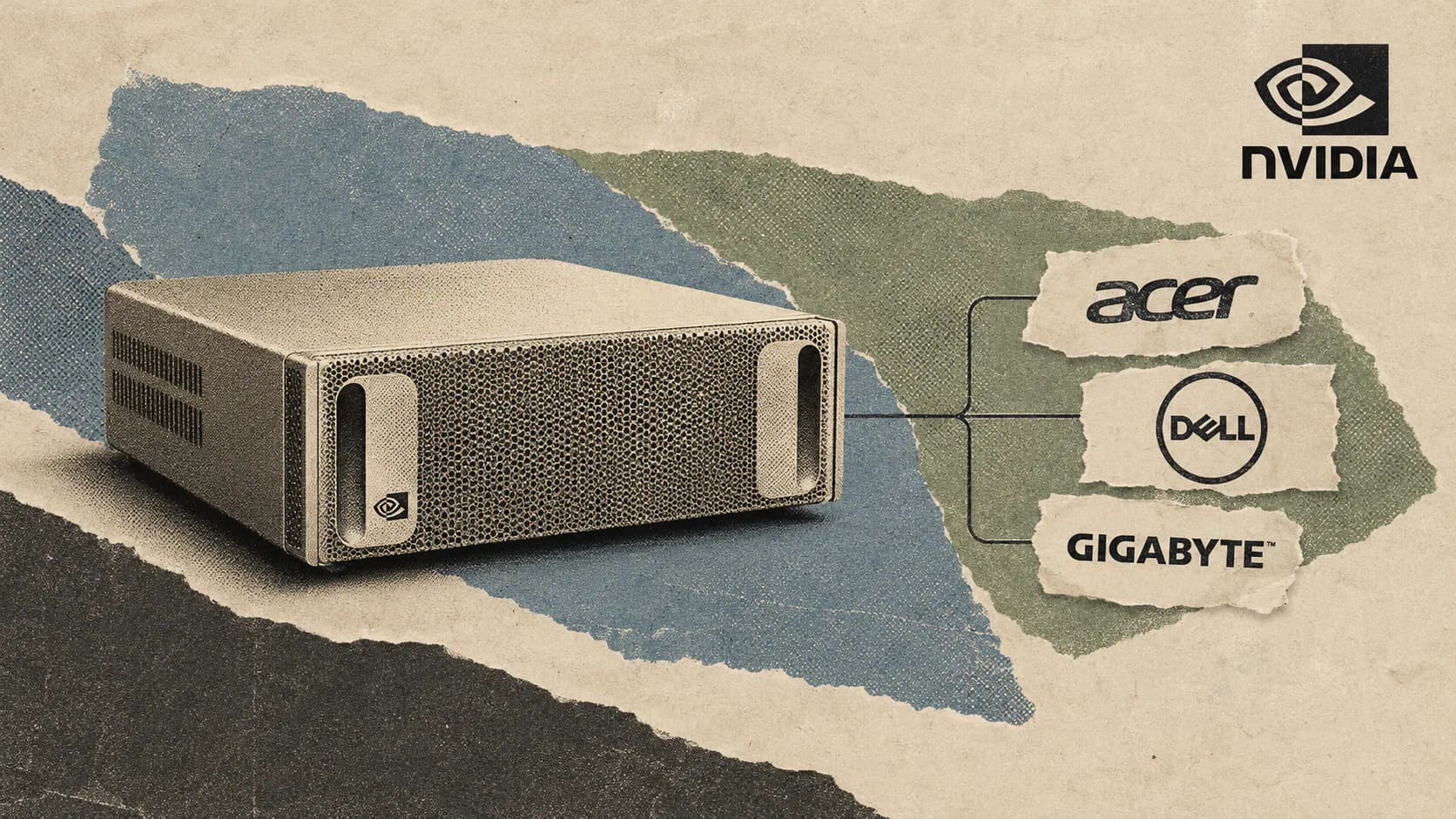
The smaller-memory configuration retains NVIDIA’s AI software stack and supports two-node clustering, with partner systems scheduled for October 23.
 Jim Clyde Monge7 min

The English-language website checks images, video and audio for supported watermarks, but an unmarked file is not proof of authenticity.
Angelica Kim7 min
The experimental builder combines prompt-based creation with browser sharing, while weekly usage limits and a future Unity integration define its early boundaries.
Angelica Kim8 min
Apps and Managed Runtime enter public preview, while Foundry IQ and the Review panel offer generally available grounding and readiness checks.
Jim Clyde Monge7 min
A dedicated tablet app expands access to the personal agent, while its connector list now includes accounting, marketing, and collaboration tools.
Angelica Kim5 min
The October system card reports stronger jailbreak resistance alongside teen-safety setbacks, additional content filters, and High cyber and biological capability ratings below…
Jim Clyde Monge8 min
Microsoft's experimental update lets Windows developers run GGUF models locally while keeping ONNX workflows and reusing familiar OpenAI client code.
Jim Clyde Monge7 min
The SDK supports Windows, macOS and Linux, but Windows session isolation ships ahead of Entra attribution and enterprise management integrations.
Jim Clyde Monge7 min
The $5,999 Dev Box offers a desktop alternative, but local-model capacity and forthcoming Windows agent controls need separate scrutiny.
Jim Clyde Monge7 min
A new signposting detector and red-team agent target disguised links to child-abuse material, but Meta has not published system-level results.
Jim Clyde Monge7 min
The U.S.-only, 18+ experiment offers tiered creation access through Google AI subscriptions, while its promised Unity Spark integration remains unshipped.
James Rivera7 min
The collection includes computer-checkable proof artifacts, but uneven verification and a private model leave mathematicians with substantial work before accepting its claims.
Angelica Kim7 min
Campaign commands remain in testing, while draft-based workflows preserve approval gates and two separate advertising features move to general availability.
Jim Clyde Monge7 min
ChatGPT and Codex will follow through a phased EU rollout, while restricted detector access limits how developers can use watermarking as evidence.
Angelica Kim6 min
Permission-aware connections are available now, while deeper Jira agent assignment, progress tracking, and orchestration remain future integration plans.
Jim Clyde Monge7 min
The new Get the Guide flow translates hair and nail inspiration into salon terminology, time estimates, price ranges, and maintenance details.
Jim Clyde Monge5 min
The textGrain rollout covers eligible output across EU plans, while API developers worldwide get an opt-in control and important warnings about detection.
Jim Clyde Monge7 min
The assistant combines a visible browser, approval checkpoints, and ad-free access, but connecting personal accounts raises questions its launch materials cannot settle.
Angelica Kim7 min
A limited U.S. trial will bring labeled ads to image generation, while expanded measurement partnerships give advertisers more ways to assess results.
Jim Clyde Monge7 min
Claude’s observed audio-training control is off by default and separate from chat permissions, but retention rules and rollout details remain unclear.
Jim Clyde Monge7 min