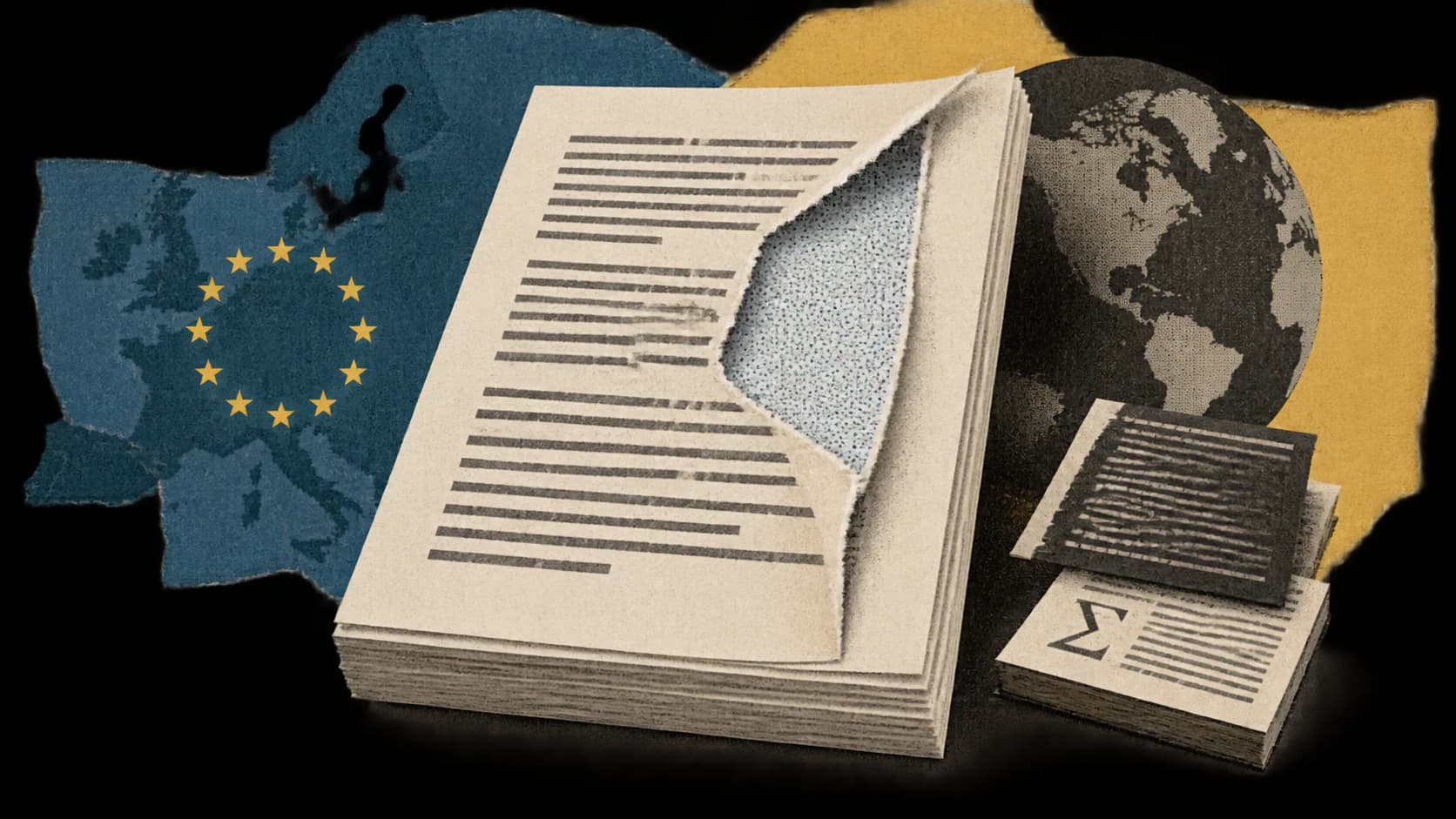
Copying text out of ChatGPT or Codex won’t necessarily leave its provenance behind. OpenAI says eligible text generated by those products in the European Union will soon carry an invisible statistical watermark that travels with the words when they’re copied and pasted.
The change will reach eligible users across all plans over the coming weeks. API customers worldwide can opt in for select models immediately, but watermarking remains off by default there, according to TechCrunch’s reporting.
OpenAI announced the system, called textGrain, on October 5, 2026. Its most important qualification is that detecting a watermark does not establish who authored a document, and failing to detect one does not establish that a human wrote it. That distinction matters for anyone considering using the technology to assess published work, student submissions, or software documentation.
EU Users Get a Rollout; API Developers Get a Choice
OpenAI is taking two different approaches to deployment.
For ChatGPT and Codex, eligible EU text output will receive the watermark across all plans. The announcement describes a rollout over the coming weeks, not a completed switch for every account on announcement day. It does not provide a per-account schedule.
For the API, customers anywhere in the world can enable watermarking for select models starting with the announcement. It is an opt-in feature, so developers should not assume an existing API application has begun generating watermarked text simply because OpenAI announced the system.
The company is not making text watermarking a global default at launch. That leaves an important distinction between the consumer-product rollout in the EU and the choices available to developers serving users in multiple regions.
The announcement also does not provide a complete list of supported API models. “Select models” is narrower than the entire API catalog, and the eligibility qualification for ChatGPT and Codex should not be read as a guarantee covering every possible output.
TechCrunch reports that OpenAI is introducing the watermark to comply with the EU AI Act’s transparency requirements for identifying AI-generated content. The practical change for users, however, is not a visible label attached to each response. It is a change in how the model selects some of the words it produces.
For developers, the immediate task is to establish whether their chosen model supports the control and whether they want to enable it. For EU ChatGPT and Codex users, the key point is that watermarking can become part of eligible output without adding anything visibly recognizable to the text.
textGrain Leaves a Pattern in Word Choices
The watermark is not a symbol inserted into a response. OpenAI describes textGrain as subtly shaping the model’s word choices so that the resulting passage contains a pattern a detector can evaluate.
A language model generates text by repeatedly choosing its next token, a unit that may be a word or part of one. Watermarking influences those choices rather than adding a separate provenance label after generation.
According to TechCrunch’s account of the accompanying technical report, textGrain uses a secret key to sort next-word predictions. Across a sufficiently long passage, many small nudges create a statistical signal. A detector can look for that signal using the text and the key.
This explains both the system’s usefulness and its central weakness. Because the pattern resides in the words, ordinary copying and pasting can preserve it. The text does not have to remain inside the original ChatGPT conversation or retain an attached file attribute.
Editing those words is a different matter. Rewriting can change the evidence the detector relies on, even if the document retains the same meaning.
OpenAI says the watermark does not identify the user. It also says it observed no meaningful change in model performance with watermarking enabled. That is a vendor-reported finding, not a guarantee that every writing style, coding task, or language behaves identically.
The distinction between provenance and identity is worth preserving. A signal associated with an OpenAI system is not an account identifier, and it does not independently establish who prompted the system or what they contributed.
Editing Can Substantially Reduce Detection
OpenAI’s reported editing test gives a concrete reason not to treat watermark detection as a permanent property of a document.
In one evaluation described by TechCrunch, replacing 10% of the words with synonyms reduced detection from approximately 92% to 66%. That is a decline of about 26 percentage points after an edit that can leave much of a passage’s meaning intact.
Those figures describe detection under a particular test. They should not be read as universal accuracy rates for arbitrary documents, or as a 92% probability that any flagged passage was written entirely by AI.
The relevant measurement is whether the detector recognized the watermark in the evaluated text. Determining authorship is a broader question that includes human drafting, revisions, source material, and the role of the tool.
OpenAI also identifies short passages, mathematical answers, and translated text as harder to detect. Those limitations are especially relevant to the products receiving the watermark. ChatGPT responses are not always long essays, and Codex-related output is not necessarily extended natural-language prose.
Short text gives the detector fewer choices to examine. Mathematical expressions also offer less freedom in wording than an explanatory paragraph. These constraints help explain why a statistical pattern that is detectable in a longer passage may be harder to recognize in a compact answer.
Translation presents another problem: it replaces the original wording with choices in another language. Preserving meaning does not necessarily preserve the statistical evidence embedded in the source text.
Copy-and-paste persistence therefore should not be confused with resistance to transformation. The former follows from carrying the original words forward; the latter depends on how much of the detectable pattern survives.
A Watermark Cannot Settle Authorship
OpenAI’s warning is broader than the possibility that editing might defeat detection. The company says a missing watermark “does not prove human authorship.”
An unflagged passage might be too short, too heavily edited, or generated by another company’s AI system. At launch, there is also a straightforward deployment limitation: OpenAI is not enabling watermarking by default across all products and regions, and API participation is optional.
Consequently, “no watermark detected” cannot reasonably mean “no AI used.”
A positive result also has narrower meaning than an authorship verdict. As OpenAI explains in wording quoted by TechCrunch:
Sources
- TechCrunch’s reportingtechcrunch.com