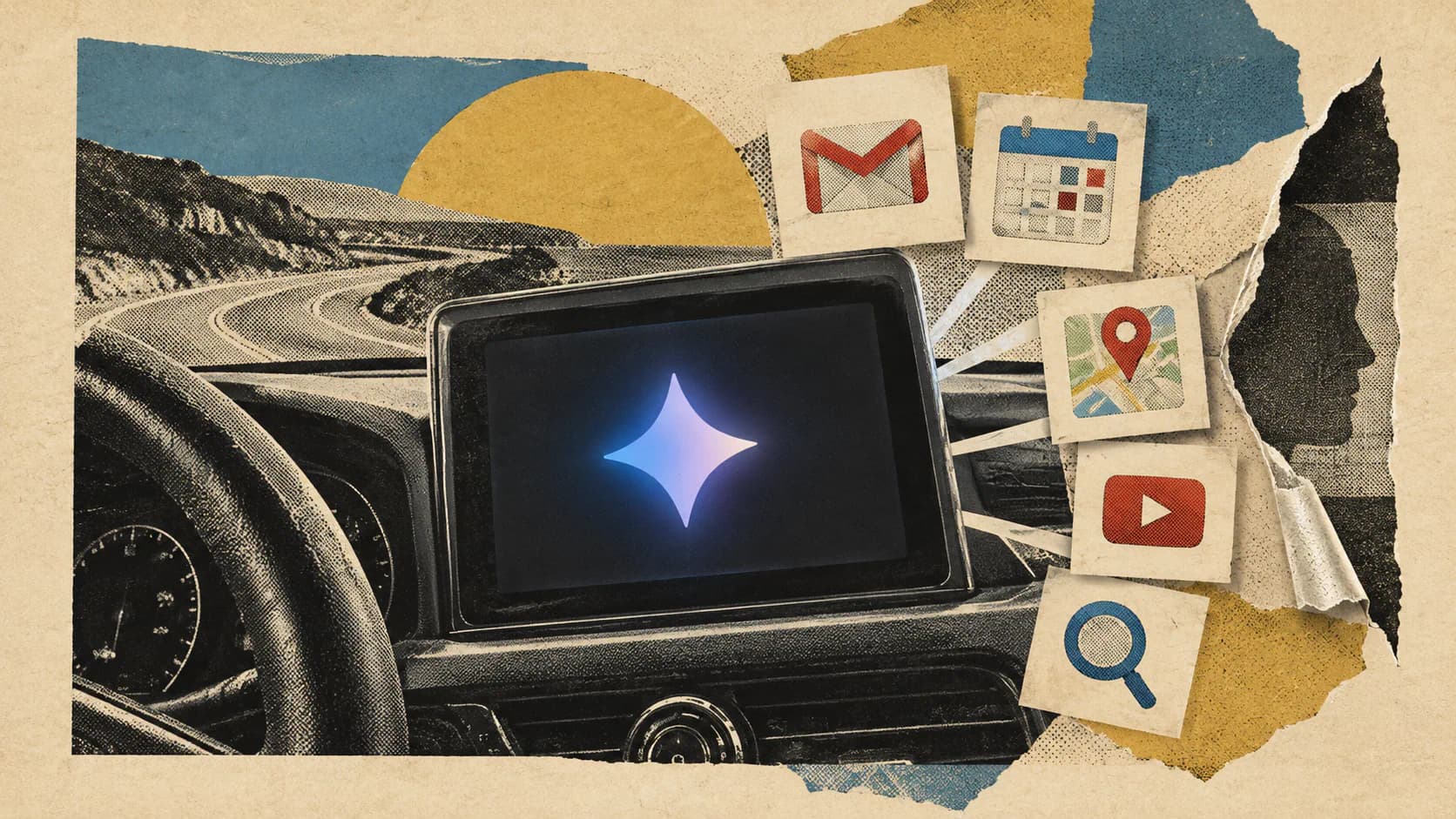
Google began rolling out Personal Intelligence with Gemini to Android Auto on October 20, 2026, letting its in-car assistant draw on connected Google services for more personalized answers. Cars with Google built-in will get the feature in the coming months, according to Google’s announcement.
The feature is opt-in, but that choice may already have happened on your phone. Google says an existing Personal Intelligence setting in Gemini carries into the car. That makes reviewing your current app connections important before a driving conversation starts drawing on emails, appointments, photos or past searches.
Two distinctions matter here: Gemini’s global availability in cars does not mean Personal Intelligence is available everywhere, and opting into connected-app access is a separate question from whether you want personal information spoken in a shared cabin.
Android Auto Gets Personal Intelligence First
Google’s announcement covers two vehicle platforms with different rollout schedules. Android Auto runs through a user’s phone and projects functions such as navigation, messaging and media onto the vehicle’s infotainment display. Google built-in integrates Google software and services directly into the vehicle, as TechCrunch explains in its launch coverage.
| Platform | How it works | Personal Intelligence timing |
|---|---|---|
| Android Auto | Phone-based experience projected to the car’s display | Rollout began October 20, 2026 |
| Cars with Google built-in | Google software and services integrated into the vehicle | Coming in the following months, with no firm date announced |
Google says Gemini itself is already available globally on both platforms. Personal Intelligence is the additional layer that uses information connected to your account. A car having Gemini therefore does not, by itself, confirm that personalized answers are available.
The announcement’s eligibility footnote also narrows the launch. Personal Intelligence is rolling out to eligible personal Google accounts belonging to people aged 18 or older. Workspace business, enterprise and education accounts are excluded, along with users in the European Economic Area, Switzerland, the United Kingdom and Nigeria. These conditions appear in Google’s original post.
There is a potentially confusing naming detail: Google lists Workspace services, including Gmail and Calendar, among the information sources. That does not make managed work or school accounts eligible. The services it can connect and the account types allowed into the rollout are separate issues.
I’d check those restrictions before troubleshooting a missing setting. Rollout commencement also leaves room for eligible users to receive access at different times; it is not a promise that every supported account gained the feature on announcement day.
Existing Gemini Permissions Travel Into the Car
Google describes Personal Intelligence as optional: apps are not connected until the user enables it, and the feature can be switched off in Gemini settings. TechCrunch reports that users can select which apps they want to connect.
The most consequential setup detail is Google’s statement:
“If you've already enabled it in the Gemini app, it comes with you into the car.”
That means drivers should not assume the car will be a separate starting point for deciding whether to use personalization. Google documents the carryover of the existing setting, though it does not provide a complete walkthrough of any dashboard prompts.
The practical controls described in the announcement are:
- Choose whether to enable Personal Intelligence. Connected-app personalization requires opting in.
- Select app connections. You can choose which services contribute information.
- Review preferences in Gemini settings. Google identifies those settings as the place to manage the feature.
- Turn personalization off without losing ordinary car functions. Navigation, music, calls and general questions remain available.
That last point makes the choice less costly. You can keep using the assistant and familiar driving functions without giving it connected-app context for tailored answers.
My view is that carrying settings between devices is convenient, but a car changes the audience. A permission choice made for a phone can become relevant when a partner, colleague or passenger is within earshot. Reviewing existing permissions is therefore more useful than waiting for a new consent decision to appear on the dashboard.
Connected Apps Supply Context for More Complex Requests
Personal Intelligence connects information from Gmail, Google Calendar, Google Photos, Google Maps, YouTube and Search, according to Google’s announcement. TechCrunch specifically describes Google Search history among the sources used for personalization.
Google describes two core capabilities: retrieving a particular detail and reasoning across multiple sources. In a car, that could reduce the number of separate requests needed to locate information and act on it.
Its published examples illustrate several different uses:
- Flight details and current status. A driver could request a flight gate and ask whether the flight is on time in one exchange. Google says this avoids separately finding a confirmation email and searching for delays.
- Directions to an appointment. The assistant could use appointment context to find a destination without requiring the driver to remember its street address.
- A place captured in a photo. Google describes finding a car wash from a photo taken the previous week and navigating there.
- Personalized stops along a route. A restaurant request could incorporate preferences, such as vegetarian dining, instead of requiring the driver to repeat them.
These are Google’s proposed uses. They explain the intended behavior, but they are not independent demonstrations of how reliably the assistant identifies the right email, photo, appointment or destination.
The flight example also shows why cross-service access matters. One part of the answer concerns the traveler’s own booking; another concerns changing external information. A personalized response can combine both into a single exchange, saving the driver from supplying the missing context.
The tradeoff is that a fluent answer can hide an important selection step: which booking or appointment did Gemini use? For consequential details, such as a destination or departure time, I’d treat confirmation of the underlying event as more important than the convenience of receiving everything in one response.
Personal Answers Raise Shared-Cabin Privacy Questions
App access controls determine which services Gemini can consult. They do not, on their own, determine who might hear the resulting answer.
An appointment request could produce information about a medical visit. A travel question could reveal an itinerary. Those are practical implications of Google’s examples, not reports of observed disclosures. The issue is that information suitable for a private phone interaction may have a different audience when delivered through a vehicle’s speakers.
Frequently Asked Questions
3 questions
1Is Personal Intelligence available in every Gemini-equipped car?
No. The Android Auto rollout began October 20, 2026. Google built-in support is planned for the coming months, and account, age and regional restrictions apply.