
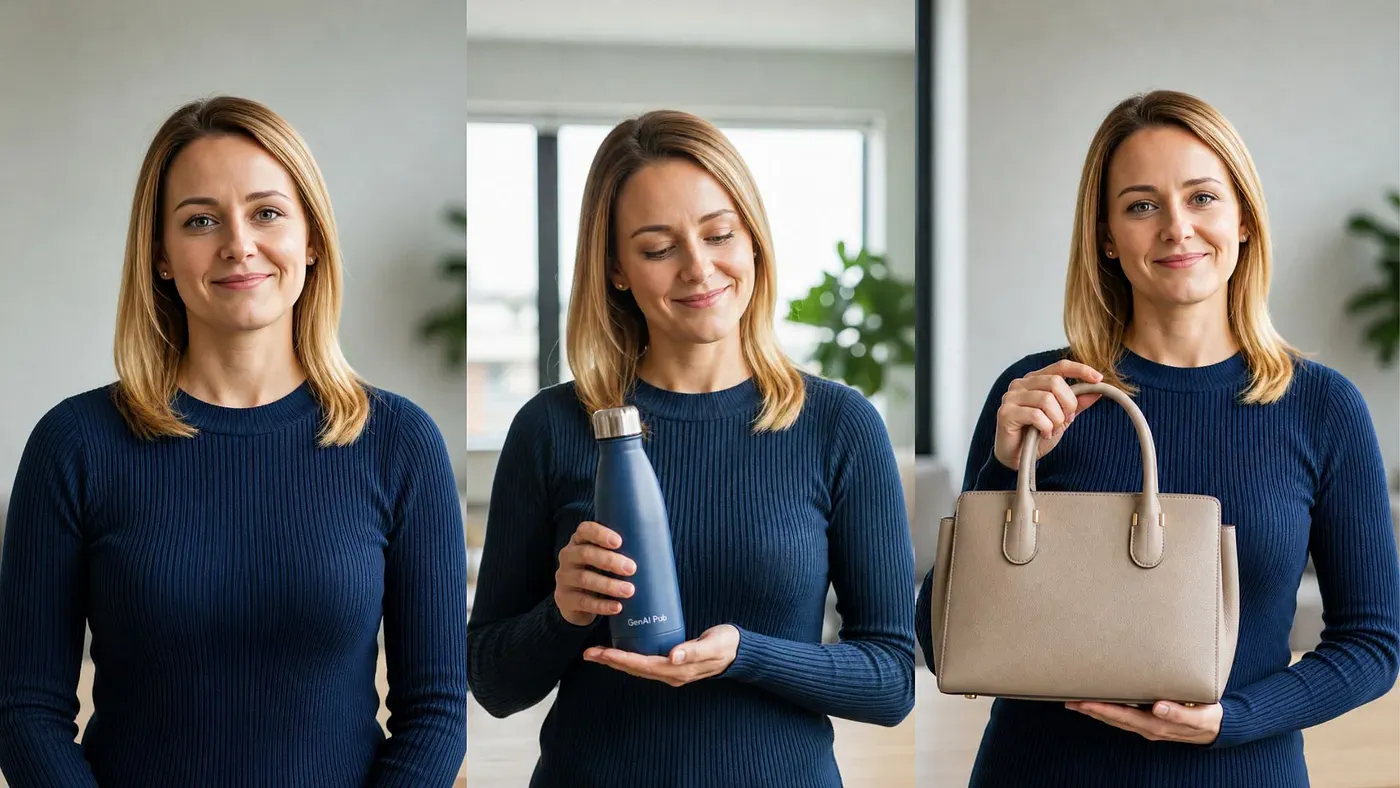
According to McKinsey’s latest State of AI report, 88% of organizations now use AI in at least one business function. Marketing and sales are also among the areas where companies are actively applying generative AI.
You can see it everywhere now. Open social media or browse ecommerce platforms, and many campaign ads, product demos, and UGC-style videos are either AI-generated or AI-assisted.
You cannot really blame marketers or business owners. AI is faster, cheaper, and gives them more room to test ideas without booking a full shoot or hiring a full production team.
The bigger question now is how businesses can actually use these AI video tools in a practical way.
In this guide, I’ll show you an easy way to transform your images into talking AI avatars. I’ll also share a platform you can use and a few ways to create avatar videos for product demos, UGC content, ecommerce, and more.
Where to create an AI avatar?
There are currently hundreds of platforms that offer the ability to create custom avatars with AI. They all differ in terms of features and capabilities, but one that I personally recommend is AI Studios.
AI Studios is an AI video creation platform from DeepBrain AI that lets you create avatar videos without needing a camera crew, actor, or full editing setup. You can choose from more than 2,000 ready-made AI avatars, or create your own custom avatar by uploading a short video recording.
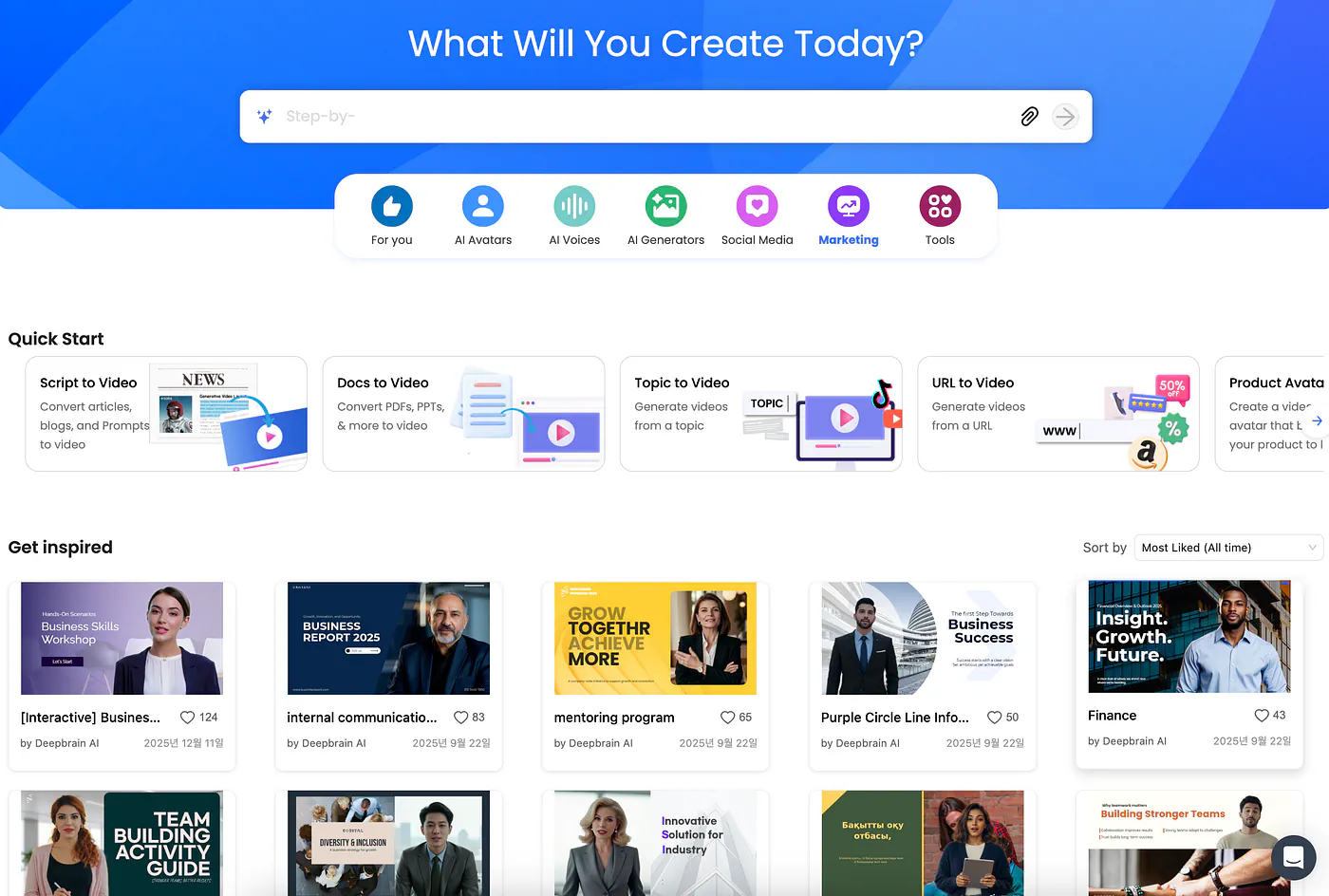
AI Studios video generation dashboard. Image by Jim Clyde Monge
It also supports AI voices, voice cloning, translation, dubbing, and avatar videos in over 150 languages, which makes it useful if you want to create content for different markets without recording the same video again and again.
In the next sections of the article, I will show you various ways you can take advantage of these AI avatars in improving your business workflows through automation.
I will also share the prompts I used so you can replicate them if you want to. Let’s get started.
Create a custom avatar
One of the most interesting features in AI Studios is the ability to create a custom avatar. You basically just need an image or a video of a character, then feed it into the system. The end result is a customizable AI avatar that you can use to create explainer videos, product demos, UGC videos, and other types of business content.
The possibilities are really wide with this tool. You can create a digital presenter for your brand, build a reusable spokesperson for product videos, or even turn a simple portrait into a talking avatar for social media content. Let me show you how it works.
First, head over to the AI Studios dashboard and click on the Photo Avatar link. This will take you to the avatar creation page, where you can upload the image you want to use as the base for your avatar.
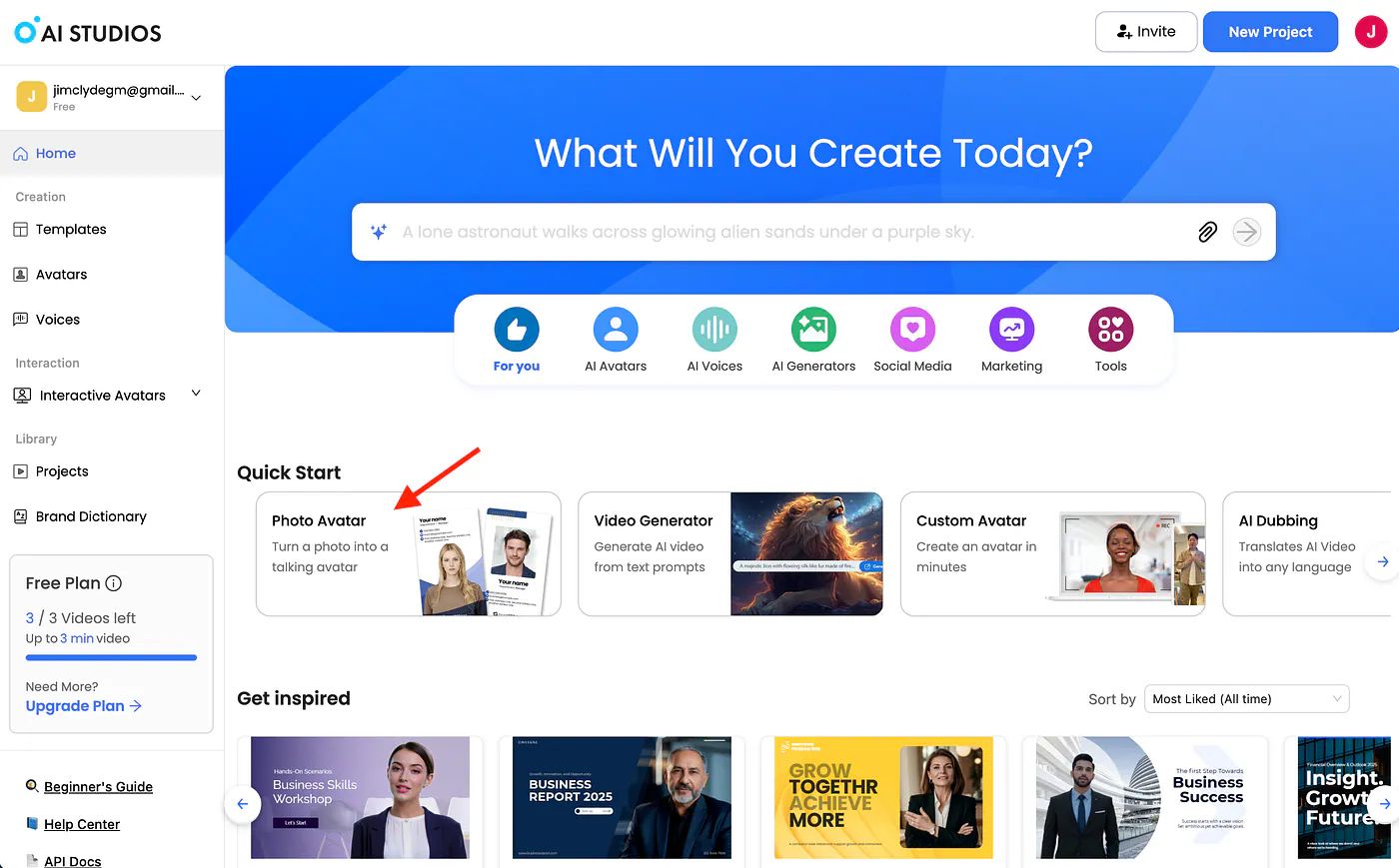
AI Studios Photo Avatar tool. Image by Jim Clyde Monge
As an example, let’s use the portrait below as the input image. Upload it, then click the Generate button. Keep in mind that AI Studios has security layers that block attempts to upload images of celebrities or known personalities.
This is a good thing because avatar tools can easily be abused if there are no safety checks in place.
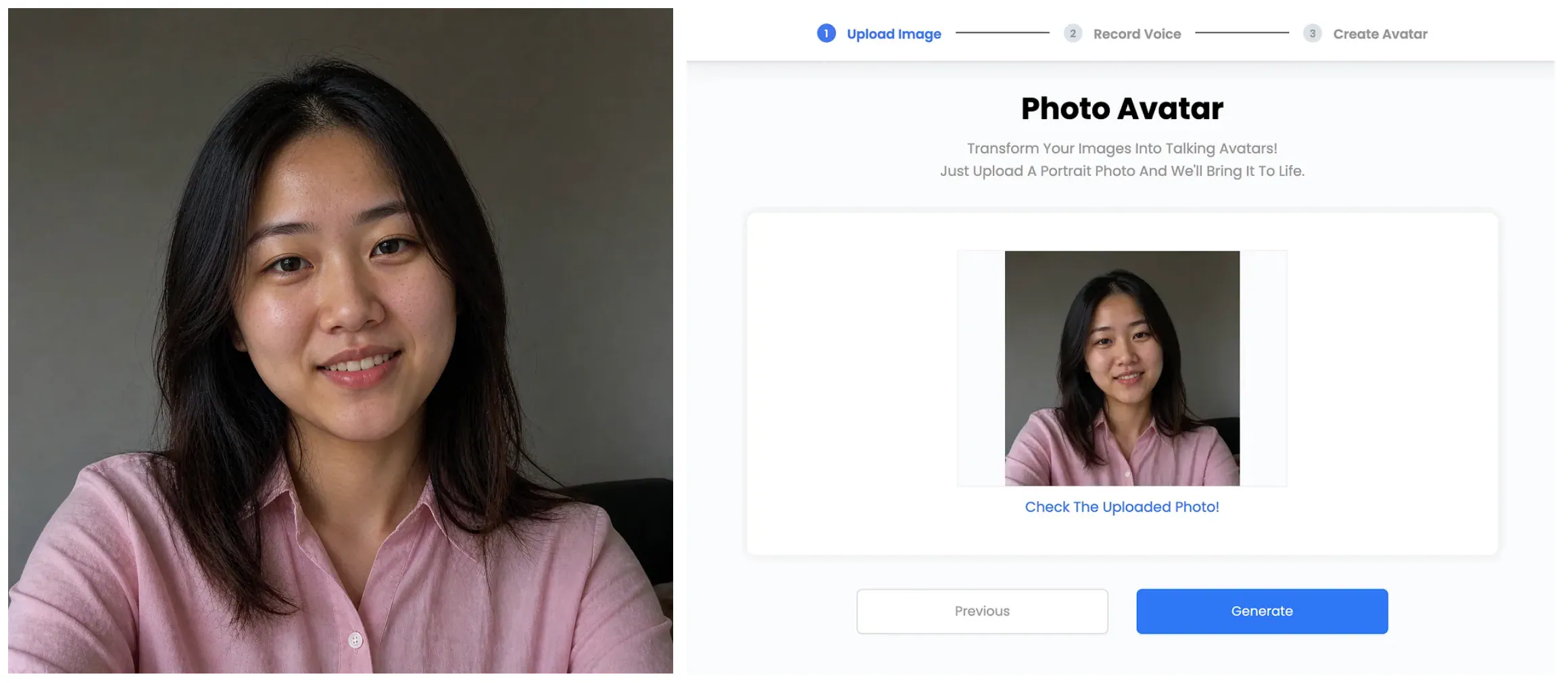
AI Studios Photo Avatar tool example. Image by Jim Clyde Monge
Follow the rest of the instructions to create the custom avatar. You basically need to choose the target aspect ratio and select a custom voice for the avatar. There is also an option to either use your own voice recording or choose from a set of pre-made voices.
If you do not want to go through the hoops and loops of building a custom avatar from scratch, you can simply choose from the template list. AI Studios has over 2,000 AI avatars to choose from.
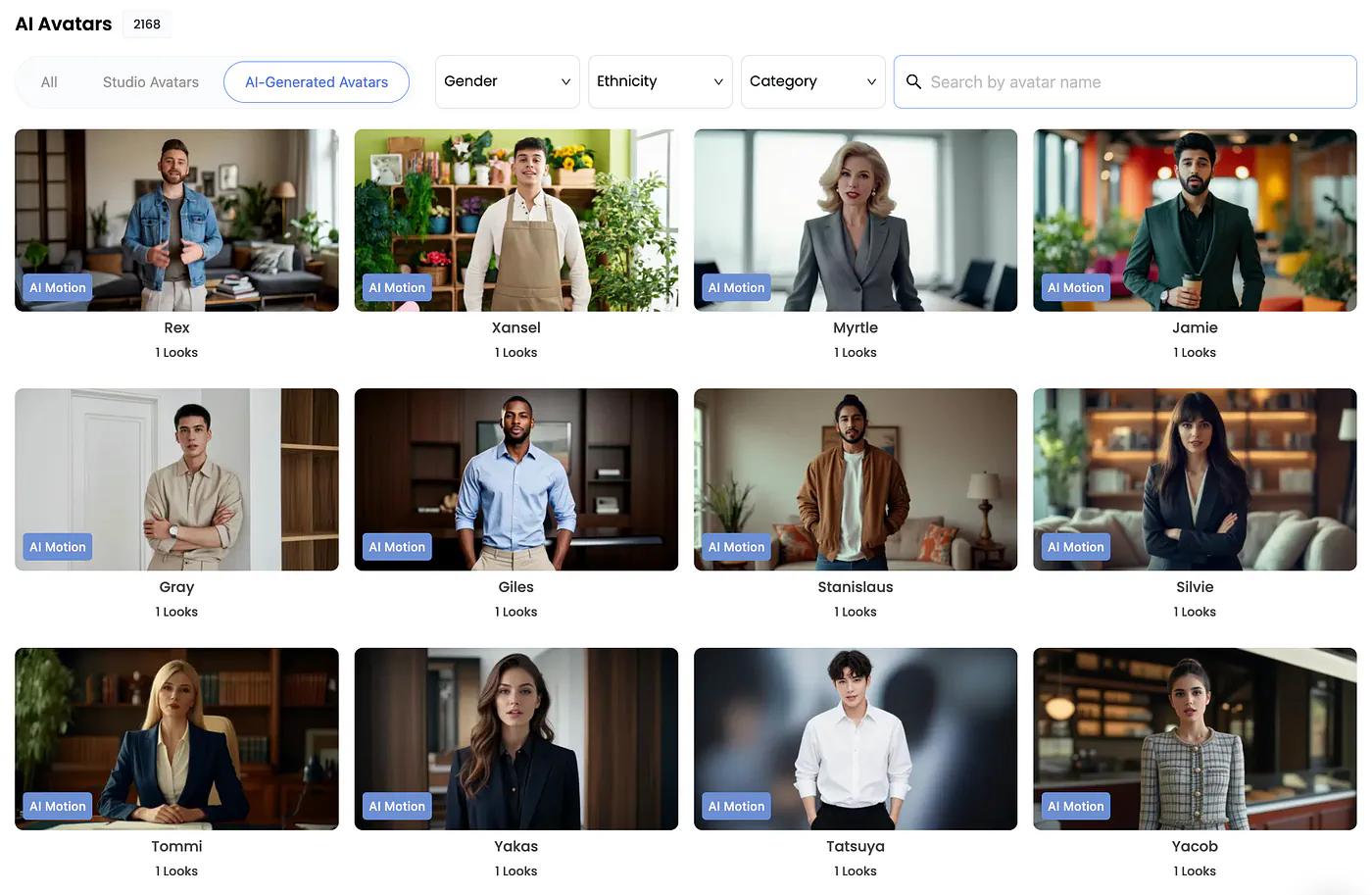
AI Studios model templates. Image by Jim Clyde Monge
This is by far the largest set of avatar templates I have seen in the market. What makes it even more interesting is that they used real people with different genders, ages, ethnicities, and careers, so you get a wide variety of options depending on the kind of video you want to create.
Once the custom avatar is successfully created, you will be taken to the video editor dashboard. From here, you can now make the avatar talk by simply adding a script.
For our first video, let’s make her talk with a basic self-introduction. I’m going to name her Ava, and here’s the script for the self-intro:
Script: Hi, I’m Ava.
I help brands create simple, clear, and engaging content that feels real. I’m passionate about storytelling, creative ideas, and making every message easy to understand.
I’m excited to connect, learn, and work with people who care about good communication.
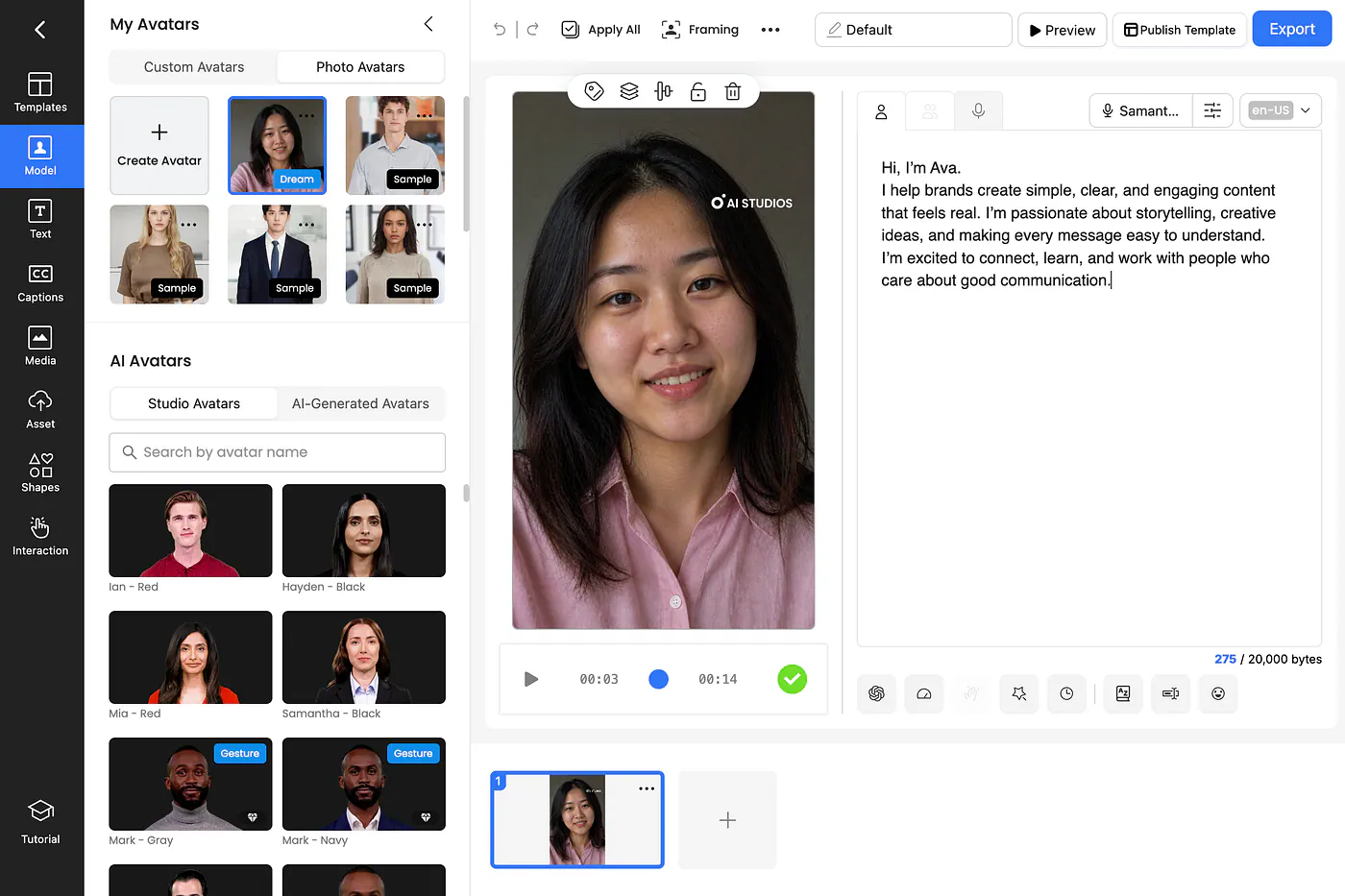
AI Studios talking video example. Image by Jim Clyde Monge
Click the Preview button to check how the audio sounds. You can still tweak it before exporting the final video. This is what the final video looks like:
AI Studios talking video example. Image by Jim Clyde Monge
The audio sounds realistic, and it matches the avatar’s look really well. The only part that still feels a bit off is the lip syncing. It does not perfectly match the words being spoken, so you can still notice that the mouth movement is slightly behind or not fully aligned in some parts.
That said, this is also an area AI Studios is continuously improving. Avatar video generation is still moving fast, and lip sync quality is one of those details that usually gets better with model updates, rendering improvements, and more refined voice-to-mouth alignment.
Let’s do another example.
Creating a UGC video for products
In this example, I will show you how you can create product campaigns or UGC-style videos with nothing but a single photo of the product you want to promote.
Suppose I want to create a user-generated content style video of a girl using the water bottle and telling the world why it is such a cool product. Open the Product Avatar tool, select an avatar from the template section, then upload the product image.
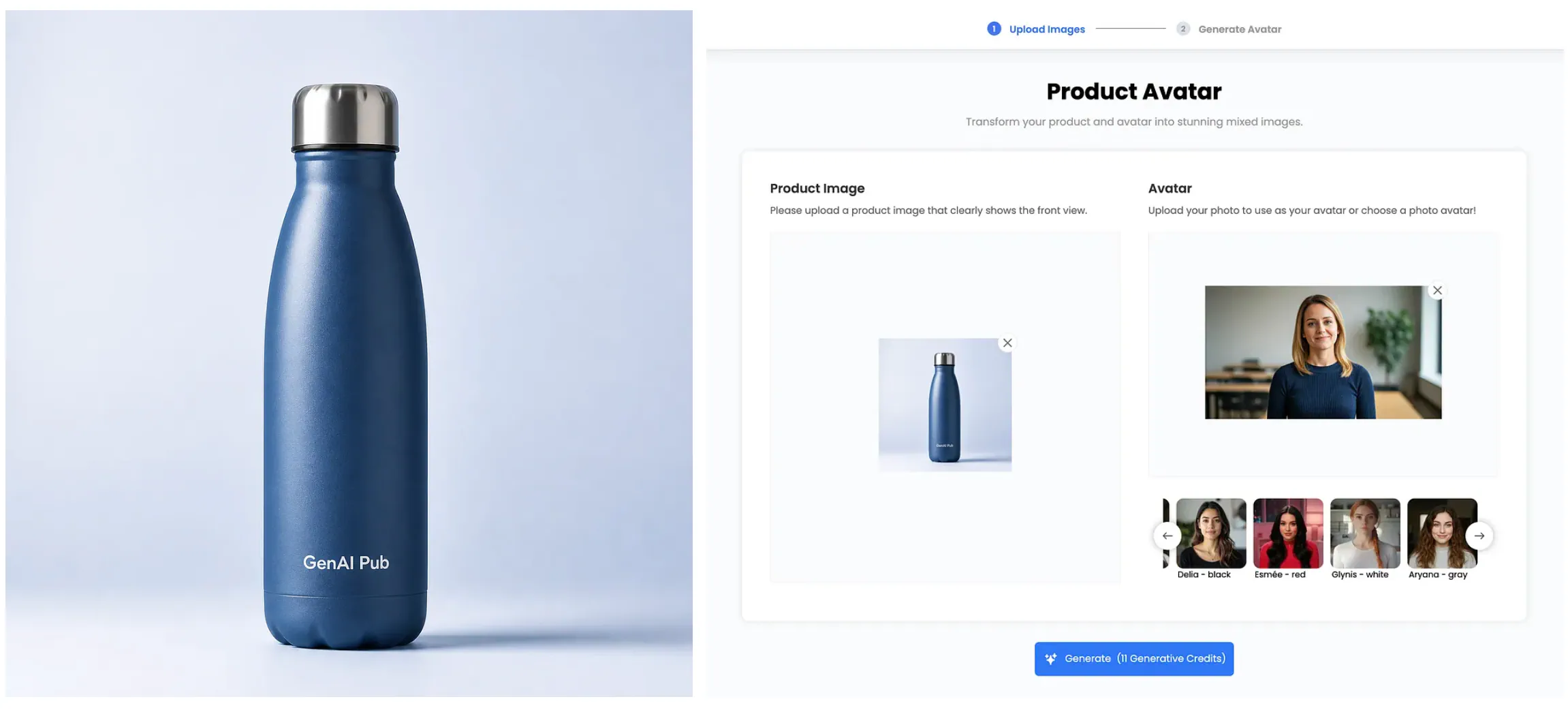
AI Studios UGC video generation example. Image by Jim Clyde Monge
When you click the Generate button, the AI agent automatically merges both the model and the product into one image. This is the part that makes the workflow interesting because you are not just creating a talking head video anymore. You are combining a product, a presenter, and a campaign idea into one simple workflow.
On the next screen, write the script that the model will say in the final video.
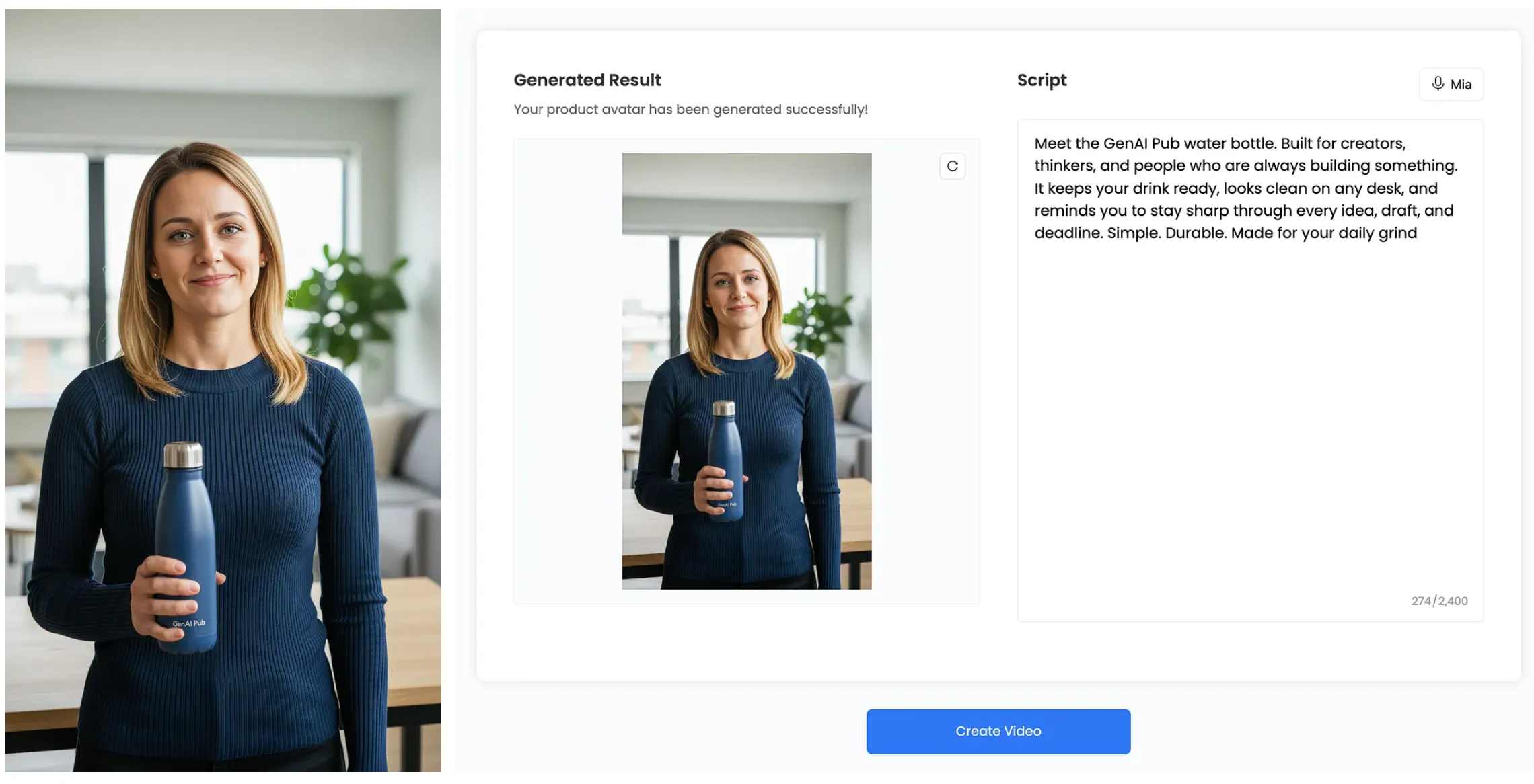
AI Studios UGC video generation example. Image by Jim Clyde Monge
Here’s the sample script:
Script: Meet the GenAI Pub water bottle. Built for creators, thinkers, and people who are always building something. It keeps your drink ready, looks clean on any desk, and reminds you to stay sharp through every idea, draft, and deadline. Simple. Durable. Made for your daily grind
Click the Create Video button and wait for the final video to render. Here’s the output:
AI Studios UGC video generation example. Image by Jim Clyde Monge
This output is a great example of how fast product marketing is changing. In less than 5 minutes, anyone can take a simple product image from their smartphone and turn it into a clean campaign video that looks ready for social media, ecommerce pages, ads, and product launch posts.
What makes this even more interesting is the time and cost difference. A video like this would usually take days or even weeks if you did it with a real human influencer. You would need to plan the shoot, prepare the product, book talent, record multiple takes, handle edits, and go through revisions.
With AI, that whole process becomes much faster. It will not replace every kind of production, but for quick product tests, social media campaigns, and ecommerce promos, this kind of output gives small brands and creators a practical way to move faster without spending too much upfront.
Final Thoughts
In this guide, you just learned how you can take a simple product image, turn it into a talking AI avatar, and use it for demos, UGC-style videos, ecommerce clips, ads, and social posts.
And this is just one use case. You can also use AI video generators for product launches, onboarding videos, quick explainers, ad variations, and even fake UGC-style content for testing different angles before spending more money on a real shoot.
Thanks to platforms like AI Studios, this is now much easier and cheaper to do. You do not need a studio, a camera crew, or a human presenter for every single video idea.
Thanks for reading. If you know other ways marketers and business owners can use AI video generators, let me know in the comments.
Sources
- McKinsey’s latest State of AI reportmckinsey.com
- AI Studiosapp.aistudios.com
- Jim Clyde Mongemedium.com
- https://vimeo.com/1189237559?fl=pl&fe=vlvimeo.com
- https://vimeo.com/1189247512?fl=pl&fe=vlvimeo.com


