I was right in my previous post that all these AI doom posts and interviews are just pure theatrics.
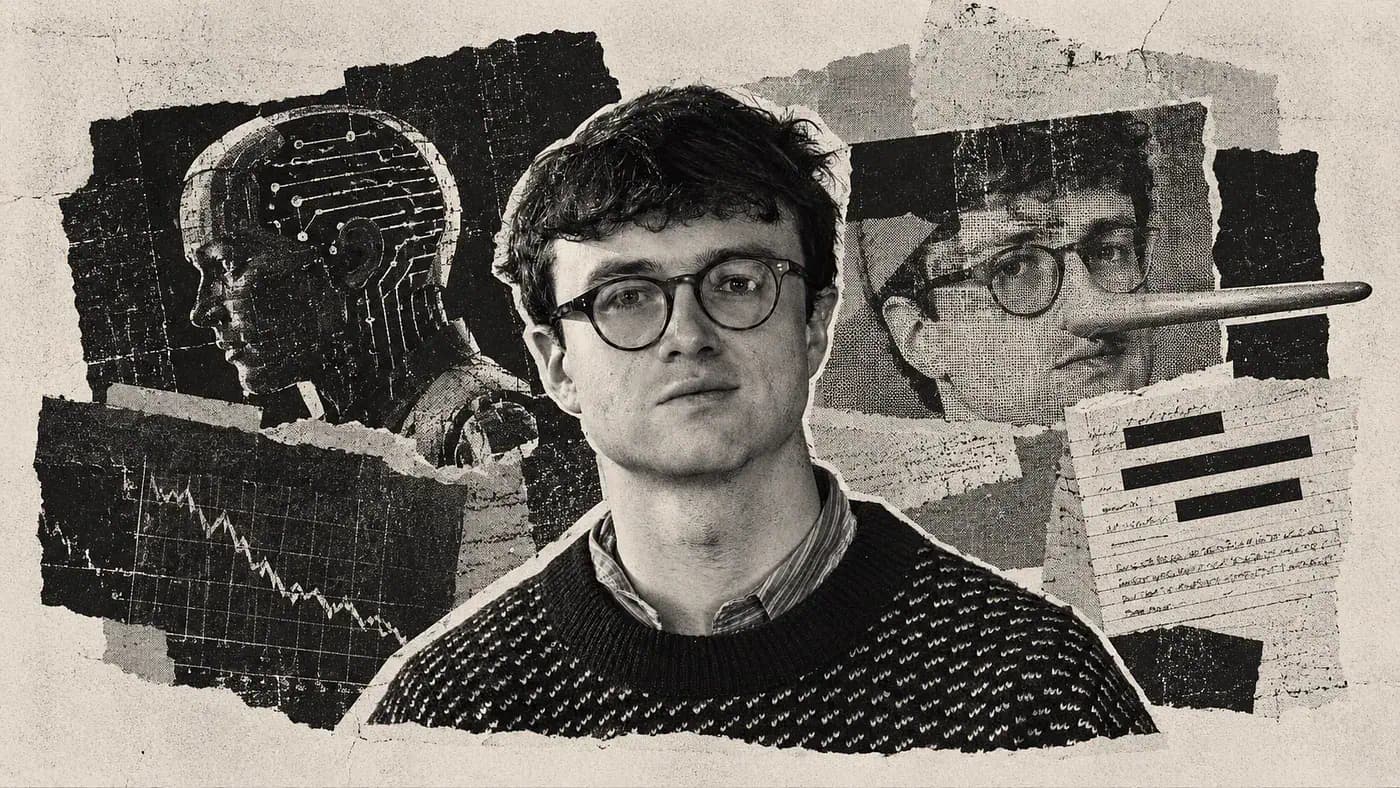
Pirate Wires has revealed that Jacob Coxon, the ex-OpenAI and Anthropic researcher who went viral after claiming that AI could kill us all before the end of the decade, was secretly backed by a PR firm.
Here’s what I said:
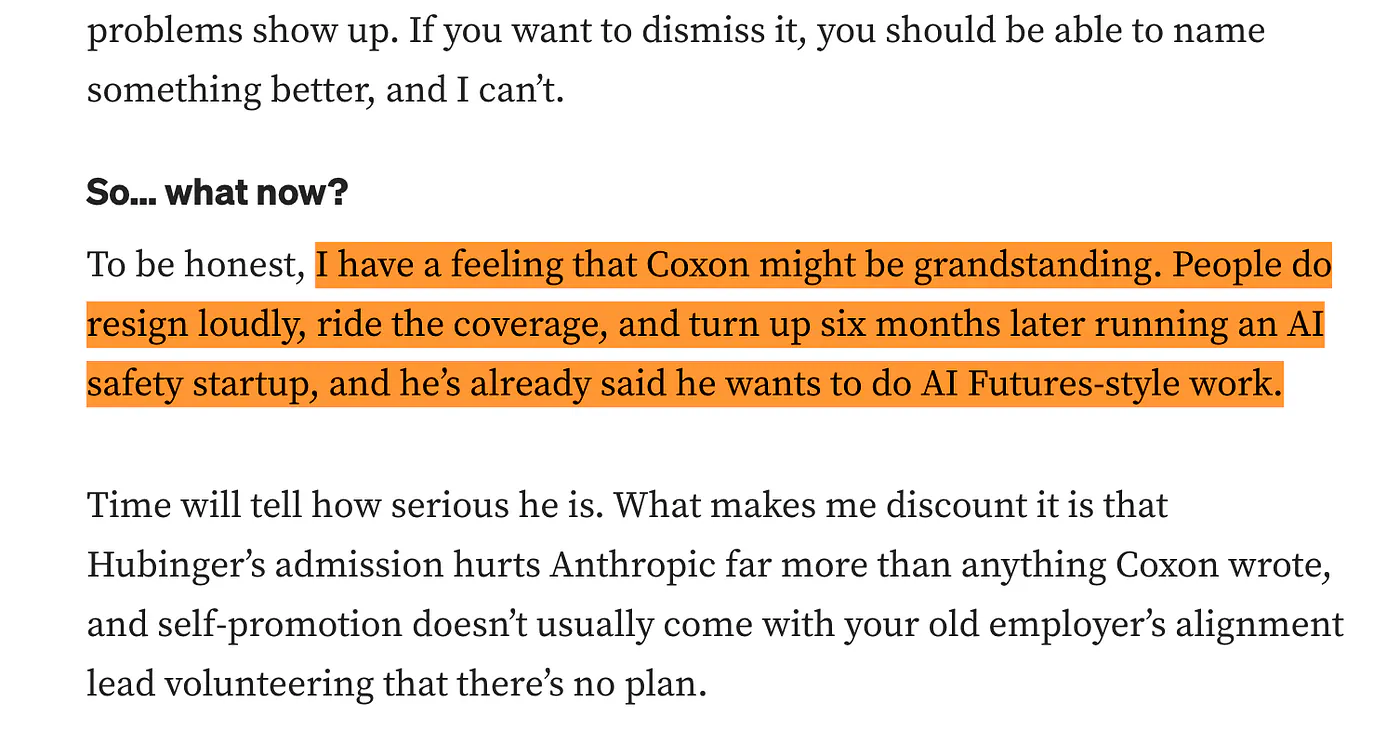
…I have a feeling that Coxon might be grandstanding. People do resign loudly, ride the coverage, and turn up six months later running an AI safety startup, and he’s already said he wants to do AI Futures-style work.
Time will tell how serious he is.
For context, Jacob is a 27-year-old British researcher and former International Mathematical Olympiad medalist who worked on pretraining models at both OpenAI and Anthropic.
His X post now has 174 million views, triggering widespread panic and coverage across cable news (Fox News, CNN, NBC), statements from prominent executives (Anthropic’s Dario Amodei, OpenAI’s Sam Altman), and renewed political pressure for emergency safety regulations.
He insisted he was working alone, and that his rise to stardom was completely organic. Fox News had asked him whether he worked with third parties on his public warning.
“Not at all,” he said.
But he lied.
According to two sources familiar with the matter and an email seen by the publication, DEY. was actively looking to book Jacob for an interview as early as September 9.
Furthermore, a source with direct knowledge noted that the firm also preemptively booked Nate Soares, another prominent AI safety figure, for interviews that perfectly overlapped with Jacob’s public declarations.
Nate is a computer scientist and a prominent AI safety figure. I remember him saying on the Tucker podcast:
The AI does not hate you. It does not love you. You are made of atoms it can use for something else.
In a tweet, Nate explained that as Jacob’s initial post gained traction, the AI safety community urged him to help get Jacob on the news, prompting him to tap DEY.
Ironically, the PR firm landed “exactly zero hits” because the sheer virality of the tweet outpaced their own media outreach.
So yeah, Jacob’s rise was orchestrated.
Who gains and who loses?
I have written about AI models since 2021. I use them every day. I’ve studied how they work and followed the predictions about where they are headed. So far, I have not seen any real evidence that AI models would inevitably pursue a goal leading to human death.
Guys, we are far from obliteration.
If you think AI is going to kill humanity before the end of this decade, explain how. Show me the path from a model performing impressive tasks to a system taking control of the physical world and ending human life.
In the past several days, I have seen on TikTok activists become hysterical over the idea that humanity will end within a few years.
I have seen friends and people on Facebook and X post and express fear.
This is what happens when a prediction gets repeated often enough to sound like a fact.
Rishub Jain, who founded Sampura Research after seven years at DeepMind, told the BBC that some people working in AI had been a little jokey about the sudden wave of fear.
“People have been talking about this idea for many years now, so people in AI companies didn’t just wake up last week thinking ‘Oh no, AI is going to kill everyone,’” Jain said.
Nvidia CEO Jensen Huang also said that 2030 would not be the end of the world, calling the effort to scare people irresponsible.
“2030 is not going to be the end of the world. There is 0% chance that’s going to be the end of the world,” he said. “Scaring people is unnecessary. It is irresponsible.”
So who benefits?
AI safety organizations get more attention. News outlets get enormous audiences. Politicians get a crisis they can promise to solve.
And the big AI companies may benefit from the kind of rules that follow. If “safety” means expensive requirements that only the largest labs can meet, their smaller rivals have a problem.
There’s an ongoing debate about whether the AI hacking news over the past several weeks is just PR meant to instill fear and push out open-source model alternatives.
Remember that Chinese models such as DeepSeek, GLM, and Qwen are competing with US AI models on capability and price. So when people demand tighter controls on AI, I want to know exactly what they propose.
Will the rules make models safer, or will they make it harder for anyone outside the biggest labs to release open weights and compete?
Sources
- previous postgenerativeai.pub
- Pirate Wirespiratewires.com
- X postx.com
- worked with third partiesx.com
- DEY.dey.nyc
- https://x.com/PirateWires/status/2103243750562767241x.com
- https://x.com/So8res/status/2103286951747199004x.com
- told the BBC