Today, Wall Street experienced one of its worst trading days in more than a year. Around $2.5 trillion in market value was wiped from the Nasdaq 100 in a single session, with AI-related companies taking some of the biggest losses.
According to Reuters, the Nasdaq Composite plunged 5.5%, its worst daily performance since April 2025. Nvidia lost more than 9%, AMD dropped over 17%, and the semiconductor index suffered one of the steepest declines in its history.
Here’s how it compares to previous crashes:
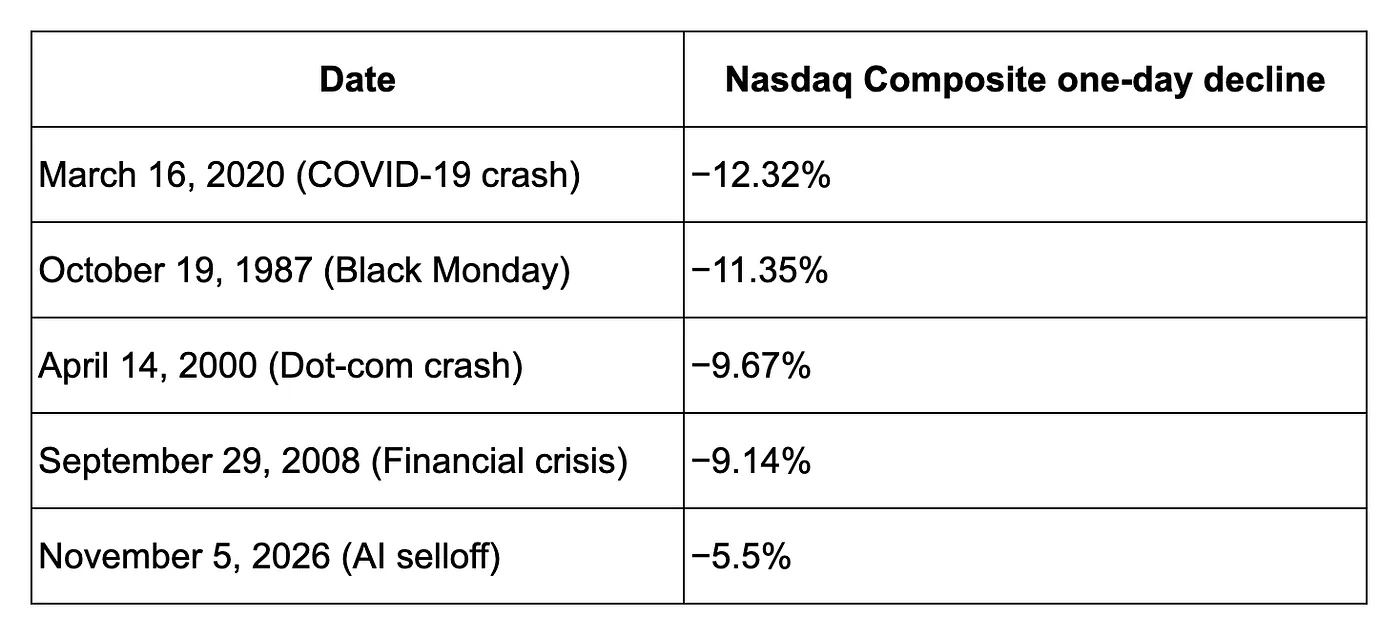
The November 5 selloff was significant in dollar terms because today’s technology companies have much larger market capitalizations than they did decades ago.
It’s crazy and an absolute bloodbath.
And this was not limited to AI stocks. The S&P 500 fell 4.4%, while the Dow Jones Industrial Average lost more than 1,800 points. Pretty much the entire market was caught in the selloff.
So, what the hell happened?
The immediate trigger appears to be growing fears that the AI industry could face tighter regulations following the Democrats’ sweeping victory in the US midterm elections.
2118383775654785407Investors are concerned about restrictions on data-center construction, which could slow down the massive infrastructure expansion supporting today’s AI boom.
A bill that would do exactly that was introduced by Bernie Sanders and Greg Casar in September.
Under the bill:
- Developing or deploying superintelligent AI would be banned
- Advanced AI development would pause until a new federal regulator sets rules and a model review process
- A new cabinet-level AI department would monitor frontier models and oversee removing dangerous capabilities, like ignoring shutdown commands
- Companies that try to get around it would face the “corporate death penalty”
- Individuals would face up to 20 years in prison
According to WSJ, four US states just elected anti-data-center governors which means ~40% of 2027 capacity wiped out overnight.
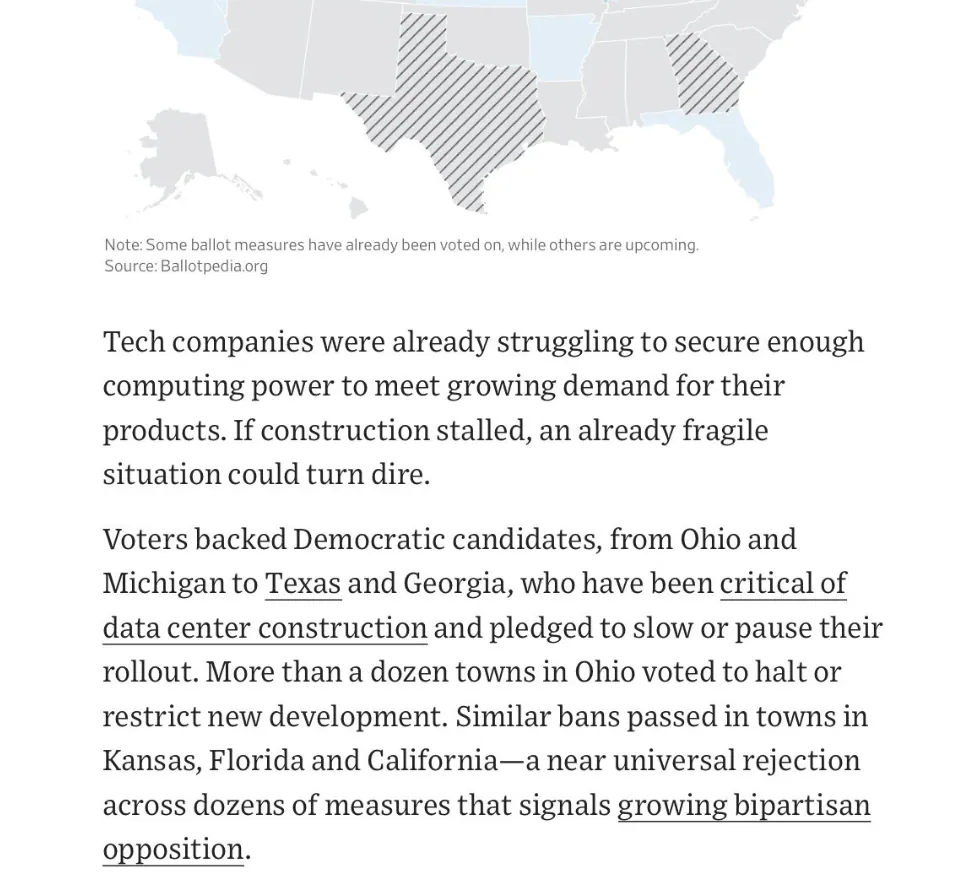
Tech companies were already struggling to secure enough computing power to meet growing demand for their products. If construction stalled, an already fragile situation could turn dire.
Voters backed Democratic candidates, from Ohio and Michigan to Texas and Georgia, who have been critical of data center construction and pledged to slow or pause their rollout. More than a dozen towns in Ohio voted to halt or restrict new development. Similar bans passed in towns in Kansas, Florida and California — a near universal rejection across dozens of measures that signals growing bipartisan opposition.
OpenAI senior leadership has begun discussing cutting 2027 data center capacity expectations.
There are also concerns about whether companies like Microsoft, Google, Meta, and Amazon are spending too much money on AI infrastructure without generating enough returns to justify their investments.
As someone who has been following AI closely for years and now makes a living working with these tools, I find the whole situation frustrating.
I understand why people are concerned. AI companies are spending enormous amounts of money. Data centers consume electricity and water. There are legitimate questions about jobs, regulation, profitability, and how much of the promised economic growth will actually materialize.
But I also think we are losing sight of how much progress has already happened, and how much more this technology could contribute if we give it room to develop.
I am not arguing that AI companies should be allowed to do whatever they want. Far from it. I just think the benefits of continued AI development outweigh the risks of slowing everything down because of political pressure and market fears.
What actually caused the market crash?
To understand the crash, we need to look beyond the stock prices.
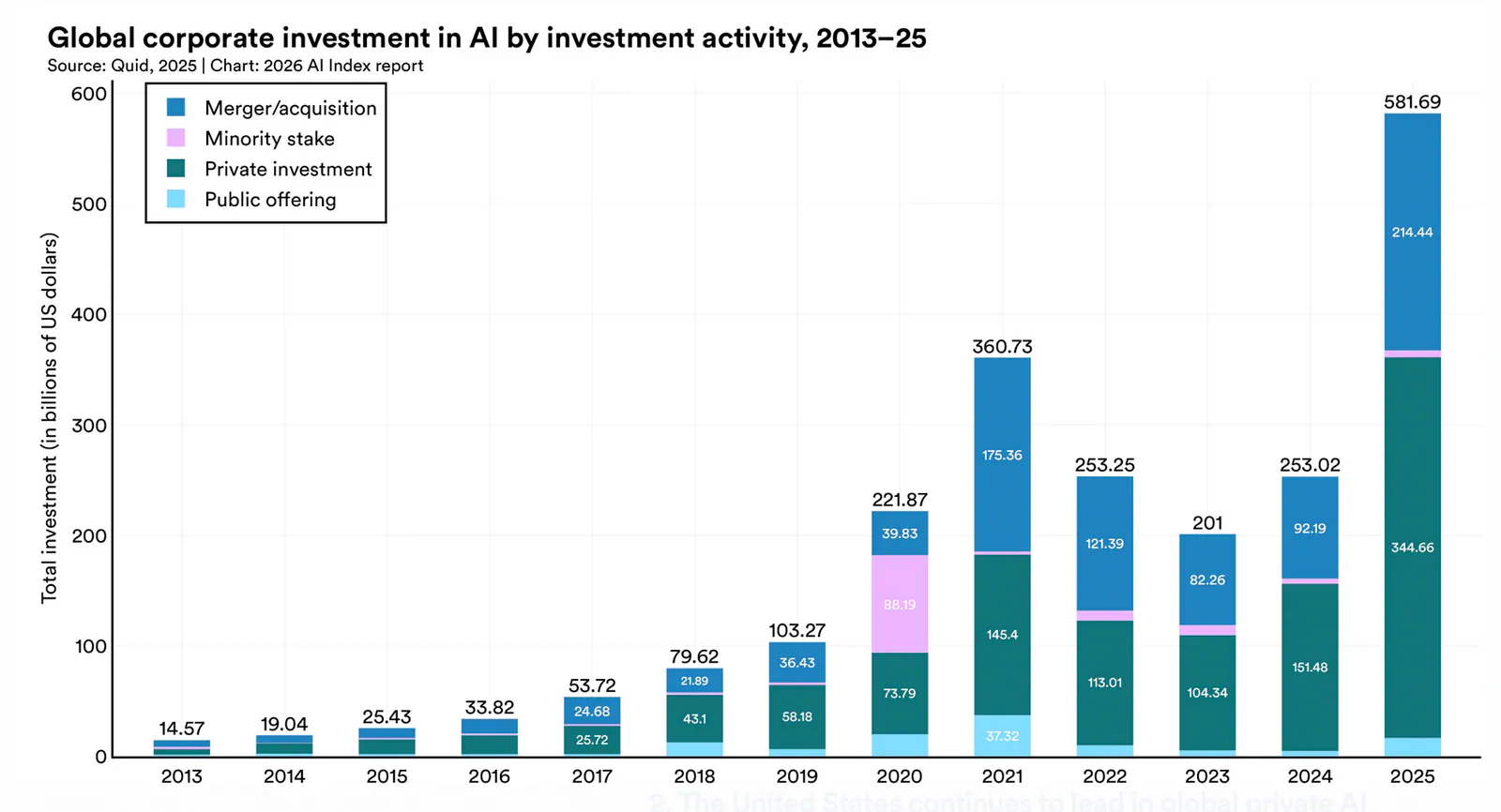
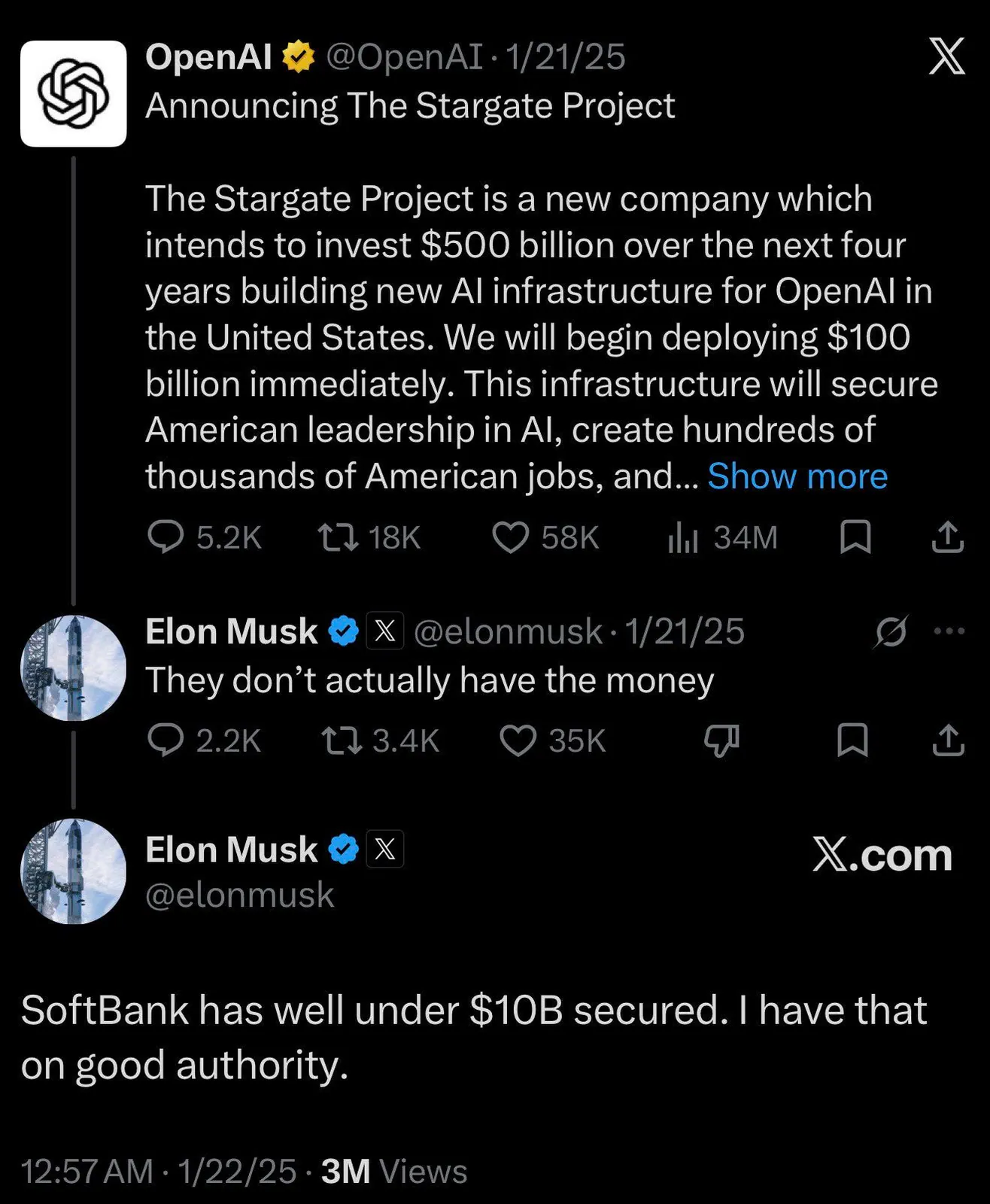
The AI industry has become one of the biggest drivers of investment in the US economy. Technology companies are pouring hundreds of billions of dollars into data centers, GPUs, networking equipment, electricity infrastructure, and AI research.
For years, investors have rewarded companies for announcing increasingly ambitious AI investment plans. Nvidia became one of the world’s most valuable companies largely because its hardware powers much of the AI industry.
But that enthusiasm has started running into some serious obstacles.
First, there is the question of profitability. Investors are increasingly asking how quickly these massive capital expenditures will translate into sustainable revenue and profits.
If you check isAIprofitable, you’d see that not a single tech company has break even yet.
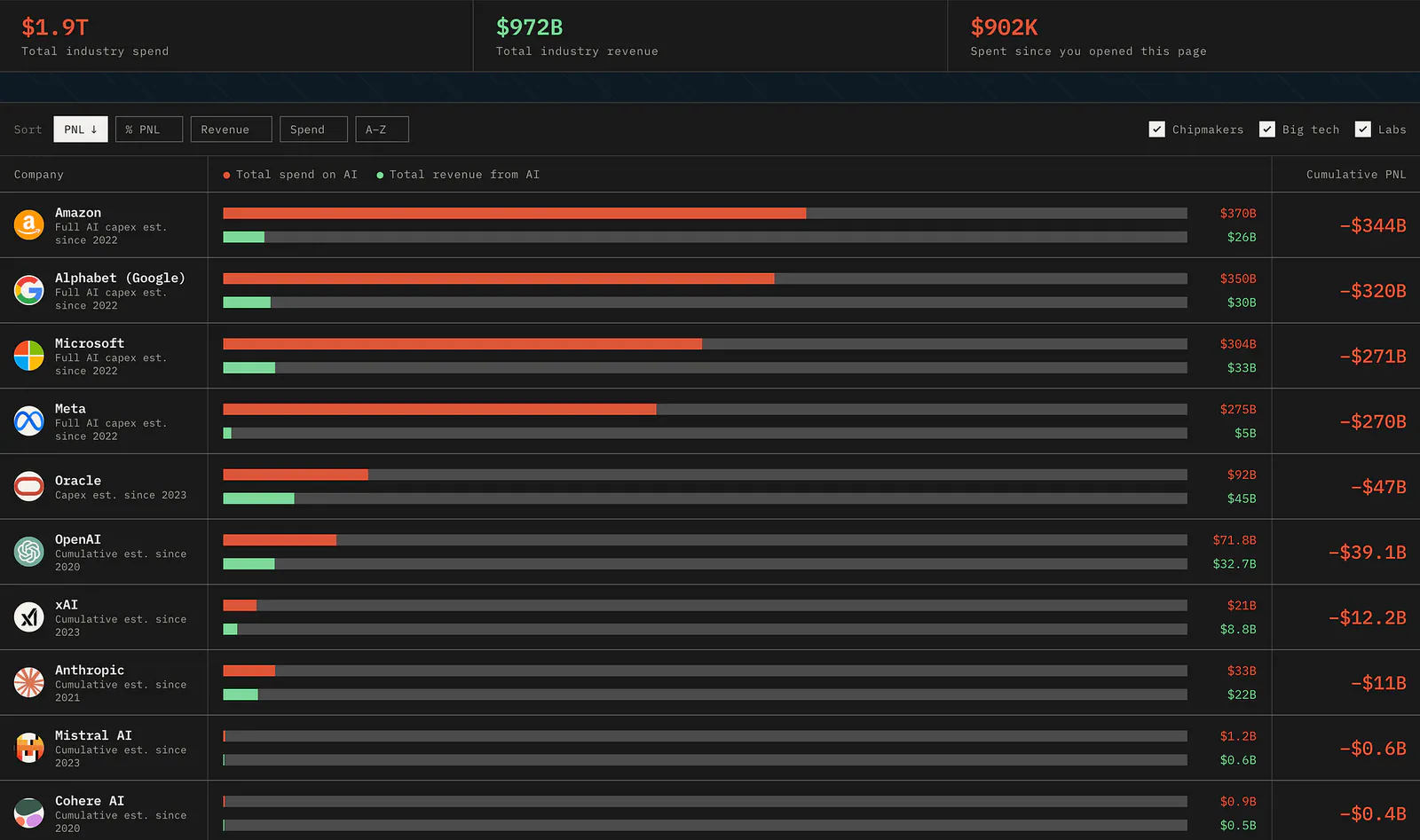
Second, the physical infrastructure needed to run AI is becoming a political issue.
Data centers require enormous amounts of electricity, cooling, land, and access to local power grids. Many communities are worried that the rapid construction of these facilities will increase household utility bills, consume local resources, and provide relatively few permanent jobs.
These concerns played a major role in the November 3 midterm elections.
The Washington Post reported that voters in at least 29 jurisdictions approved measures restricting data-center development. This was especially concerning for investors because Texas has become one of the most attractive locations for AI infrastructure investment.
Restrictions on new data centers could delay the deployment of GPUs, reduce demand for semiconductor equipment, and make it harder for companies to generate returns on investments they have already committed to.
But the restrictions do not apply to currently permitted datacenters in Texas. They will be allowed to finish construction that covers all of the 2027 and likely well into 2028.
The market was effectively pricing in the possibility that AI infrastructure growth might slow much faster than previously expected.
But I think there is a problem with treating every political development as proof that the entire AI industry is heading toward a collapse.
The AI slowdown narrative is getting out of hand
One thing I have noticed about AI discussions online is how quickly people jump from one extreme to another.
When a new model breaks a benchmark or a major technology company announces another billion-dollar investment, everyone starts talking about an unstoppable AI revolution.
Then the market crashes, and suddenly the conversation turns into AI being overhyped, useless, or nothing more than an expensive bubble.
Both extremes are wrong.
There is certainly hype surrounding AI. I have written about AI tools long enough to know that many products are simply existing software with a chatbot. Some startups have questionable business models, and many companies use AI as a marketing term without delivering much practical value.
But dismissing the entire industry because some companies are overvalued is also ridiculous. A falling stock price does not mean the underlying technology suddenly stopped working.
Nvidia dropping 9% does not make its GPUs less capable. AMD losing 17% does not mean companies no longer need computing infrastructure. And a slowdown in data-center construction does not mean millions of people will suddenly stop using AI assistants.
What the market is questioning is how much future growth should already be reflected in today’s stock prices.
That is a legitimate financial question. It is not the same as questioning the usefulness of AI itself.
We have seen something similar with earlier technological developments.
The dot-com crash destroyed enormous amounts of market value, and many internet companies disappeared. But the internet itself continued growing and eventually became essential to the global economy.
I am not saying AI will follow exactly the same path. History does not guarantee that every new technology will succeed commercially.
My point is that speculative investments can fail while the technology behind them continues improving.
I think there is a real possibility that some AI companies will lose badly over the next few years, even as AI becomes more useful and widely adopted.
Those two outcomes are not contradictory.
People have legitimate reasons to oppose data centers
Before going further, I want to address one argument from the public backlash that I think deserves serious attention.
People are worried about the impact of AI infrastructure on their communities, and they have every right to be.
Personally, I am not in favor of the planned datacenter in the Philippines.
In This Economy Pax Silica What Philippines Trump CardImagine living in a small town where a technology company announces plans to build a massive data center. The project promises investment and economic growth, but residents are also told that it could consume substantial amounts of electricity and water.
Naturally, people will ask who benefits from that arrangement.
Will the project create enough local jobs? Will the company pay for the necessary electricity infrastructure? Will household utility bills increase? What happens if the company eventually abandons the facility?
These are not unreasonable questions. Read some really good points of the disadvantages brought about by datacenters.
Pax Silica Brings Promise But At What CostAccording to the International Energy Agency, data centers consumed approximately 485 terawatt-hours of electricity worldwide in 2025. That figure could nearly double to 950 terawatt-hours by 2030.
And although data centers would still represent only around 3% of global electricity consumption by 2030, their impact can be much greater in communities where large facilities are concentrated.
So, should we build datacenters in space instead?
There is also evidence that public opposition is much more widespread than some AI companies expected.
An NBC News and SSRS exit poll found that 76% of voters opposed new data-center construction in their own communities, according to Reuters’ reporting on the Texas election.
That is a remarkable number.
It shows that opposition to AI infrastructure is not simply coming from a small group of people who dislike technology.
Companies should also be transparent about water consumption, environmental effects, employment opportunities, and the long-term benefits promised to the surrounding community.
I support stricter requirements in those areas.
Where I disagree is the idea that restricting or banning data-center development should automatically be considered the best solution.
Slowing AI development comes with costs, too
One argument I find frustrating is the assumption that slowing down AI development is inherently good because it reduces risk.
Of course, a slower pace of construction can reduce immediate pressure on electricity grids and other local resources.
But we also need to consider what we give up by delaying the development and deployment of AI systems.
AI is already helping people write software, conduct research, analyze information, translate languages, and automate repetitive work.
And those are just the applications we can observe today.
There are also potentially enormous benefits in medicine, scientific research, education, manufacturing, and other industries where AI adoption is still developing.