5 New AI Image Models to Know in November 2026
What changed in GPT Image 2.6, MAI-Image-2.7, Nano Banana 2.1, Grok Imagine Image 2.0, and Seedream 5.0 Pro
Five AI labs released or updated image models between July and early November 2026, and only one of them, OpenAI's GPT Image 2.6, actually arrived in November.
The other four are still the current versions you'll be choosing between this month: Microsoft's MAI-Image-2.7 Preview, Google's Nano Banana 2.1, xAI's Grok Imagine Image 2.0, and ByteDance's Seedream 5.0 Pro.
Each section gives the real release date, so you can see how fresh each model is.
This guide is for designers, marketers, and developers who need to pick an image model for real work. It sticks to what changed in each release: new features, where you can use the model, what it costs through the official API, and what the vendor admits it still gets wrong.
If you're sorting through the new AI image models 2026 has produced so far, treat leaderboard positions as a rough signal. The Arena text-to-image leaderboard was updated on November 6, and some of the newest entries there are still marked preliminary.
The list runs from newest to oldest release. Position says nothing about quality, and the right pick depends on whether you need editing, text-heavy layouts, low per-image cost, or an API you can ship against today.
GPT Image 2.6
GPT Image 2.6 is OpenAI's newest image model, released on November 4, 2026, according to ExplainX's launch coverage, which cites The Verge. In the API it comes as two models, gpt-image-2.6-flare and gpt-image-2.6-sunburst.
OpenAI's image prompting guide describes Flare as the smaller model for workflows where speed matters most, and Sunburst as the base model for work that needs more detail or precise edits. Both handle generation, editing, and transparent backgrounds.
Most of what's new is about control. OpenAI's image generation guide lists complexity control, markup-guided edits, SVG output, and animated GIFs of two to 16 frames for both models. There are catches.
GIF output doesn't support streaming or partial images, the edit endpoint can't return SVG, and OpenAI warns that higher complexity can add latency and introduce unwanted changes. Blockchain.news reports OpenAI's claim of a 50% speed improvement over the previous version.
On rankings, the two big boards don't agree. Artificial Analysis's text-to-image arena puts GPT Image 2.6 Sunburst (max) first with an Elo of 1259 and Flare (max) second at 1228. The Arena text-to-image leaderboard, updated November 6, still had the older GPT-Image-2.5 Sunburst on top, with 2.6 Sunburst (Medium) second at a preliminary 1409.
OpenAI's pricing page charges the same for both variants: $8 per million image input tokens and $30 per million image output tokens. There's no flat per-image price, so run your typical sizes through the calculator in the guide before you budget. Artificial Analysis lists both at $210.72 per 1,000 images at max settings.
Developers should also check endpoint support: the Flare model page and the Sunburst model page list only the image generations and edits endpoints, and neither model is in the Batch pricing tier.
MAI-Image-2.7 Preview
Microsoft AI released MAI-Image-2.7 in preview on October 27, 2026, and it starts with editing only. Microsoft says text-to-image generation is "coming soon" but gives no date.
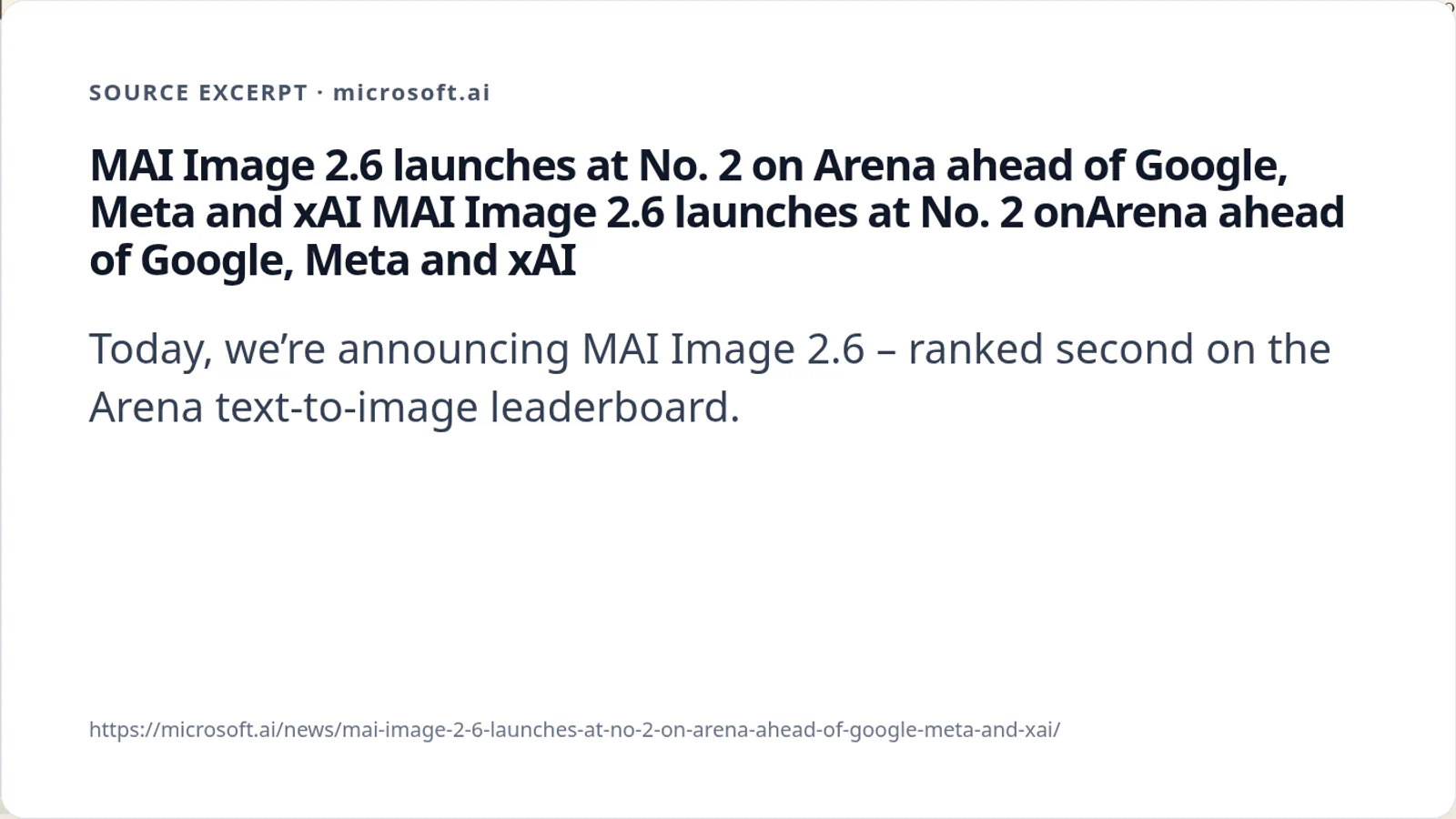
Supported edits include restyling or relighting a whole scene, changing text and symbols, enhancement and restoration, and reasoning-based edits. Microsoft also says it improves on MAI-Image-2.6 across all 10 use cases and all seven editing actions it measures.
The rankings have shifted since launch. Microsoft's announcement claims No. 2 on Artificial Analysis's image editing leaderboard and No. 3 on Arena Edit. On the Arena image edit leaderboard updated November 6, MAI-Image-2.7-Preview sits fourth with a score of 1467, behind three OpenAI models.
WinBuzzer reported a 1193 Elo on Artificial Analysis's editing benchmark, within the confidence interval of GPT Image 2.5 Sunburst at 1199, so neither model has a clear lead there.
You can try it today on Arena, Artificial Analysis, and MAI Playground. There's no API and no published price yet, and WinBuzzer notes that developer access hasn't been announced. If you need a Microsoft model to build on now, MAI-Image-2.6 and MAI-Image-2.6 Flash are generally available in Microsoft Foundry, according to Microsoft AI.
Microsoft introduced 2.6 in September as a Foundry public preview. That makes 2.7 Preview most useful for teams already on Microsoft's platform who want to judge its editing quality now and plan a switch once the API ships.
Nano Banana 2.1
Google released Nano Banana 2.1 on October 6, 2026, according to its model card. It updates Nano Banana 2 (Gemini 3.1 Flash Image), and Google positions it as the more efficient counterpart to Gemini 3 Pro Image. The Gemini image page highlights better visual design, mask-based editing, and subject consistency.
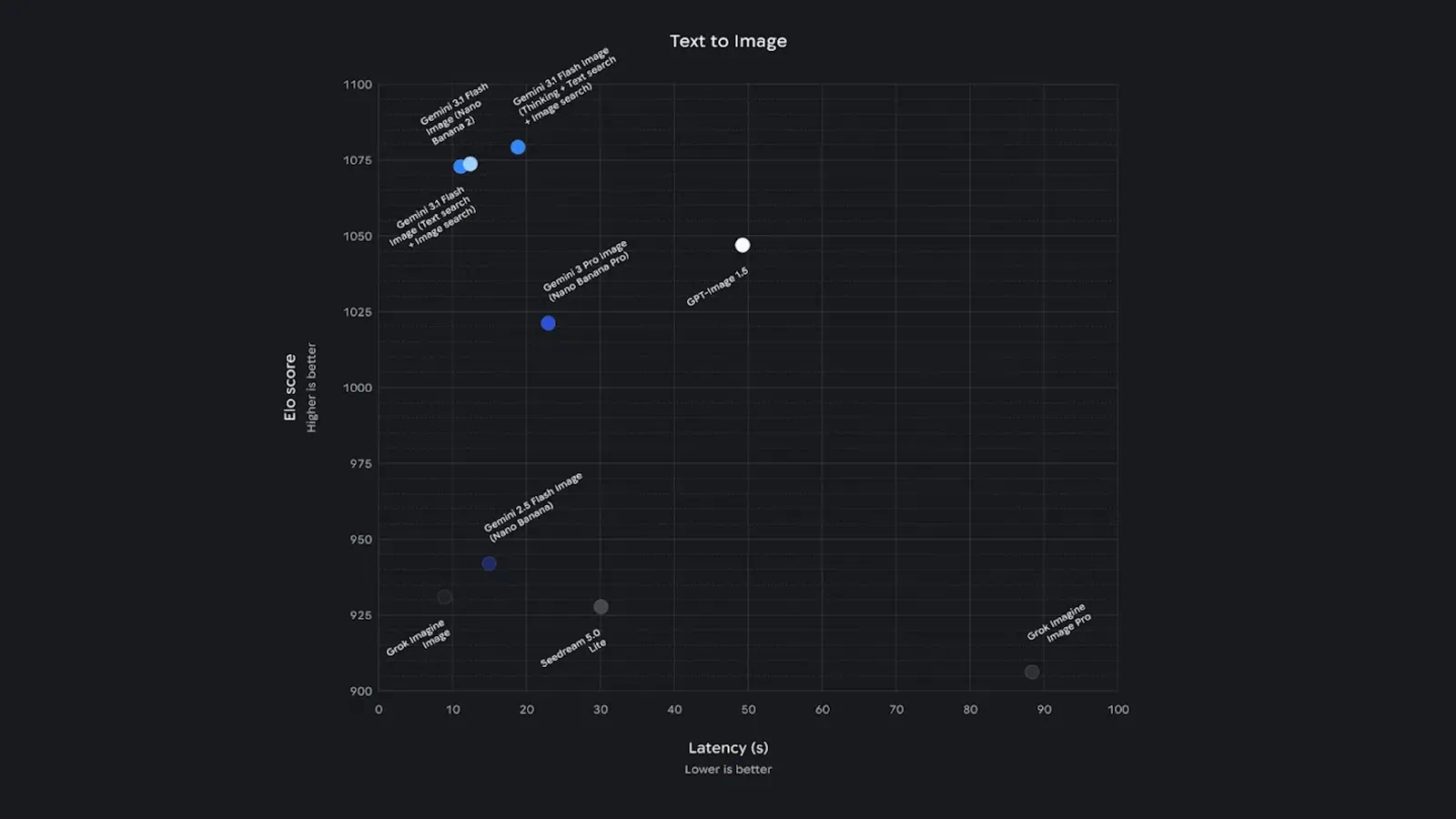
The API model page lists improved realism at 1K, 2K, and 4K output, better text rendering and infographic layout, and a fix for tiling artifacts on very wide ratios such as 8:1 at 2K and 4K. It accepts up to 14 reference images and keeps up to four characters and 10 objects consistent.
For campaign sets or storyboards where the same product or character has to look right across many images, that's the most relevant change. On Google's own infographic factuality test, the model card reports 0.521 against 0.179 for Gemini 3.1 Flash Image.
The price dropped by about half. Google's pricing page lists $0.0336 per 1K image, $0.0504 at 2K, and $0.113 at 4K, compared with $0.067 per 1K image for Nano Banana 2. Batch requests cost half the standard rate.
The model card lists availability in the Gemini app, Google AI Studio, the Gemini API, AI Mode in Search, Google Ads, Flow, and Stitch, so it's the easiest of the five to reach without writing code.
Google is upfront about the gaps. The model card says it's still limited in world knowledge, 3D reasoning, and factuality, and that character consistency isn't always perfect. Every output carries a SynthID watermark, according to the image generation docs.
If you're still calling Nano Banana 2, the changelog marks it deprecated with no shutdown date announced yet, so plan a migration rather than waiting for a deadline.
Grok Imagine Image 2.0
xAI released Imagine Image 2.0 on August 7, 2026, as the new Quality Mode on grok.com/imagine and in the Grok iOS and Android apps, with API access under the ID grok-imagine-image-2.0. It's the second-oldest model on this list, but it's still xAI's current image model: the xAI models page lists nothing newer for images.
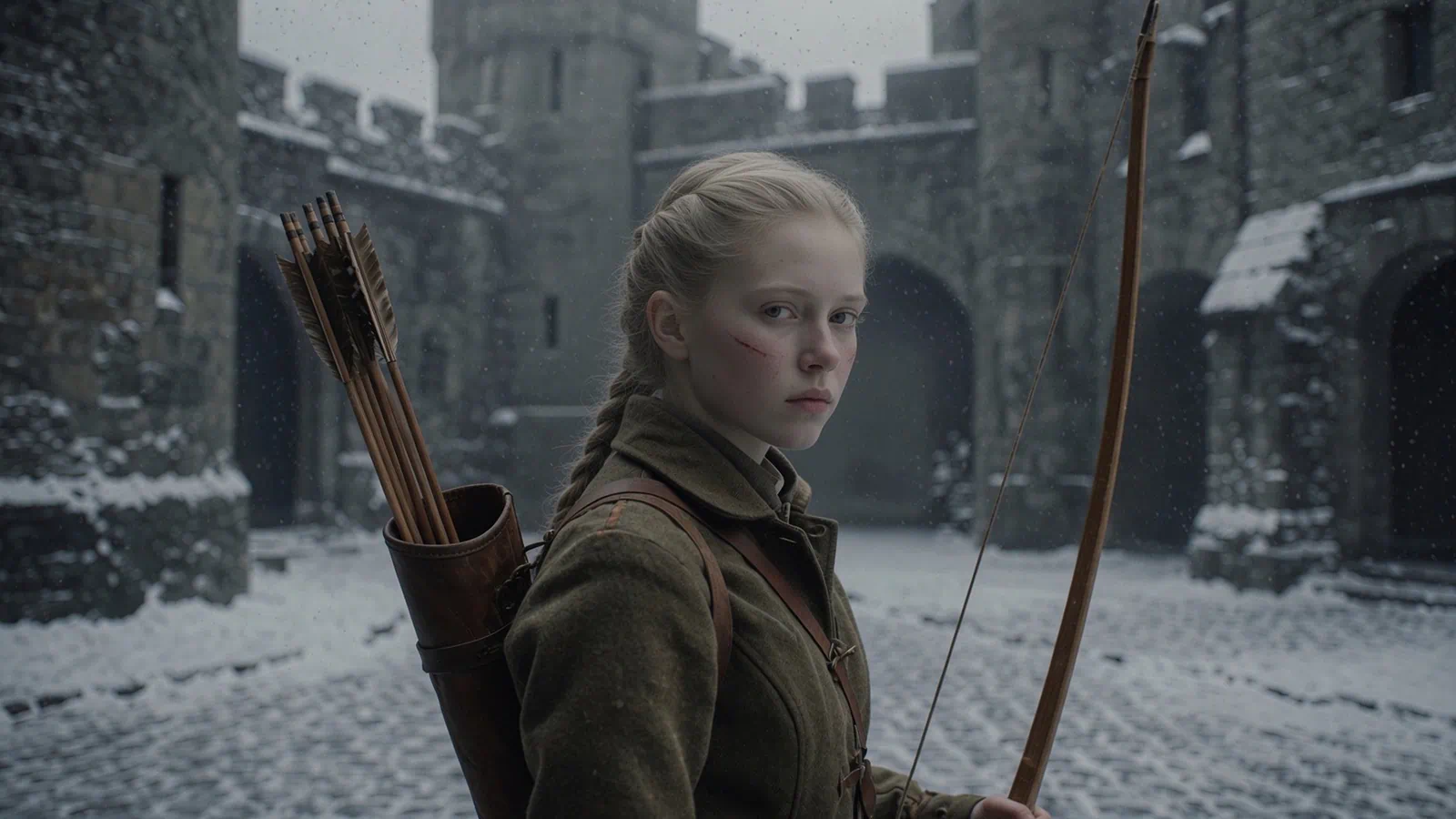
xAI built this release around iterative editing. The announcement says the model follows instructions closely, keeps small text sharp, plans typography and layout, and preserves what you put in across generations and edits.
Frequently Asked Questions
3 questions
1Which of these image models launched in November 2026?
GPT Image 2.6 is the only one. It came out on November 4, 2026, according to ExplainX's coverage. The others launched between July and late October and are still the current versions from their labs.