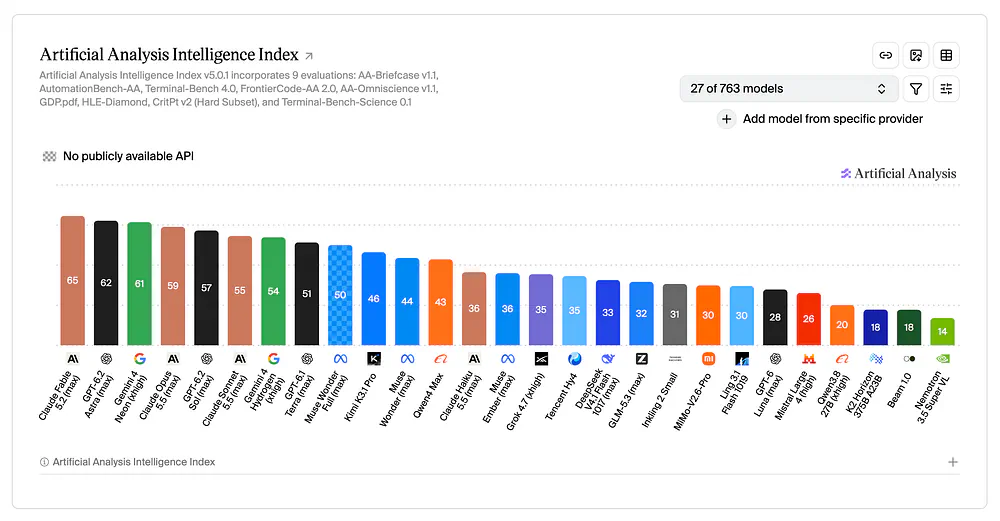
OpenAI launched GPT-6.2 Astra and GPT-6.2 Sol two days ago. These are supposed to be the two most powerful models the company has released so far, but despite the impressive specs on paper, the reaction from its users, especially the developers, has been… rough.
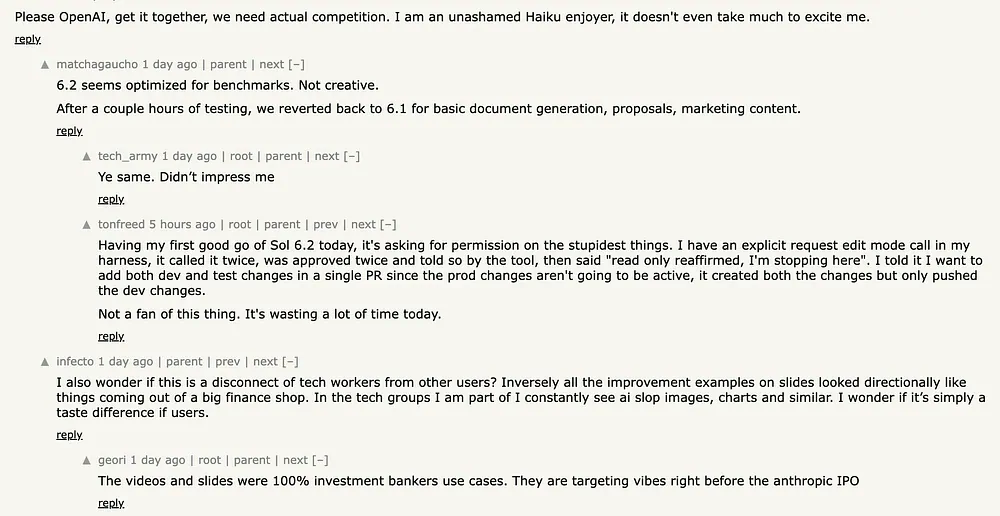
And I’m not exaggerating. The launch thread on Hacker News already has more than 1,300 points and over 800 comments, and many of them are complaints.
On X, some of the most popular AI personalities are openly saying they hate working with the new flagship. More on that later.
I regularly use GPT models, particularly GPT 6.1 Sol in Codex, so I got really curious. I went through the complaints one by one and read the system card to see if all this hatred is actually justified.
I also have a few theories about why OpenAI shipped the models this way, and I think it has a lot to do with Anthropic going public this week.
But before I get into the user complaints, let’s discuss what’s new with GPT-6.2 Astra and GPT-6.2 Sol.
What’s New With GPT-6.2 Astra and GPT-6.2 Sol
OpenAI describes Astra as its frontier model for your hardest projects. Sol is the smaller and cheaper one, and OpenAI calls it its efficient, versatile model for everyday work.
The first thing that I noticed was the price.
Astra now costs $8 per million input tokens and $40 per million output tokens, which is 20% cheaper than GPT-6 Astra. Cached input also dropped by 60% to $0.40.
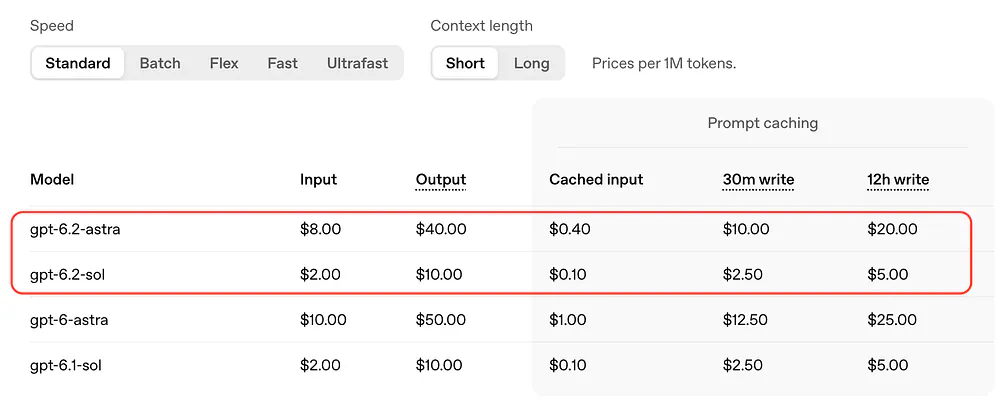
Sol keeps the same price as GPT-6.1 Sol, at $2 for input and $10 for output.
OpenAI also says both models finish demanding tasks with fewer output tokens. On its internal GDPval v2 benchmark, Astra scored 6.2 points higher than GPT-6 Astra while using 22% fewer output tokens.
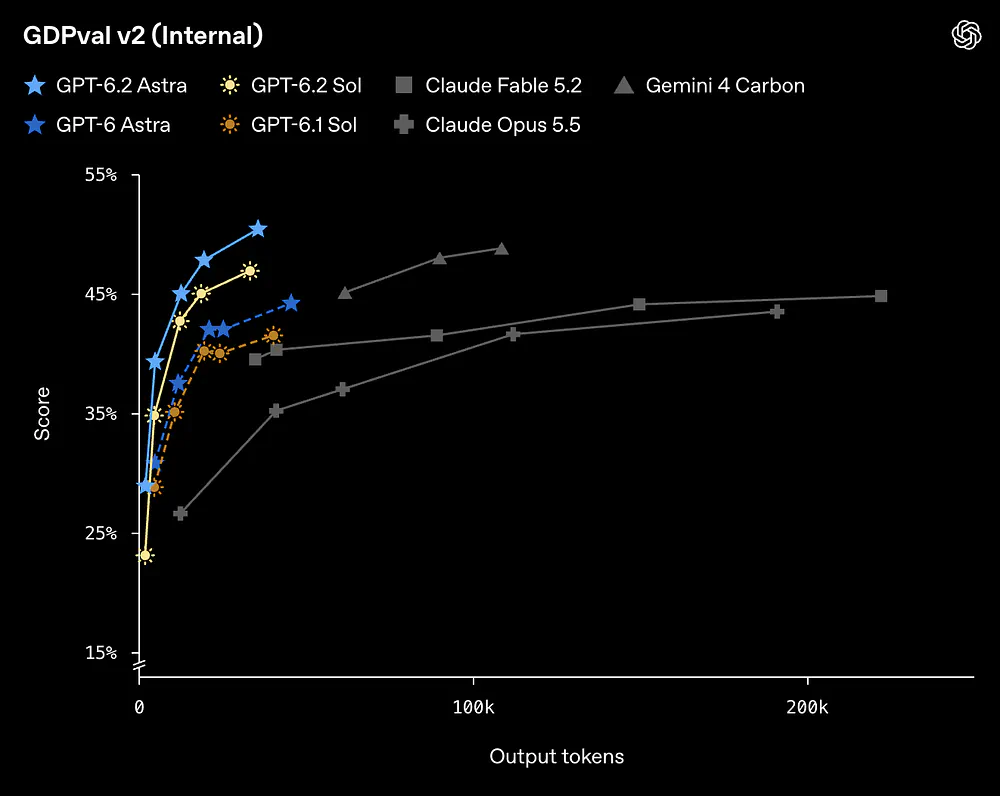
Keep that 22% in mind, because I think it explains a lot of what went wrong with this release. I’ll come back to it later.
Here are the other things worth knowing:
- On Agents’ Last Exam, OpenAI says Astra scored 5.2 points higher than GPT-6 Astra at less than a third of the cost, and 5.5 points ahead of Claude Fable 5.2 at just 5% of the cost.
- On FrontierCode 2.0, Sol lands within 0.5 points of Astra at about one-fifth the cost.
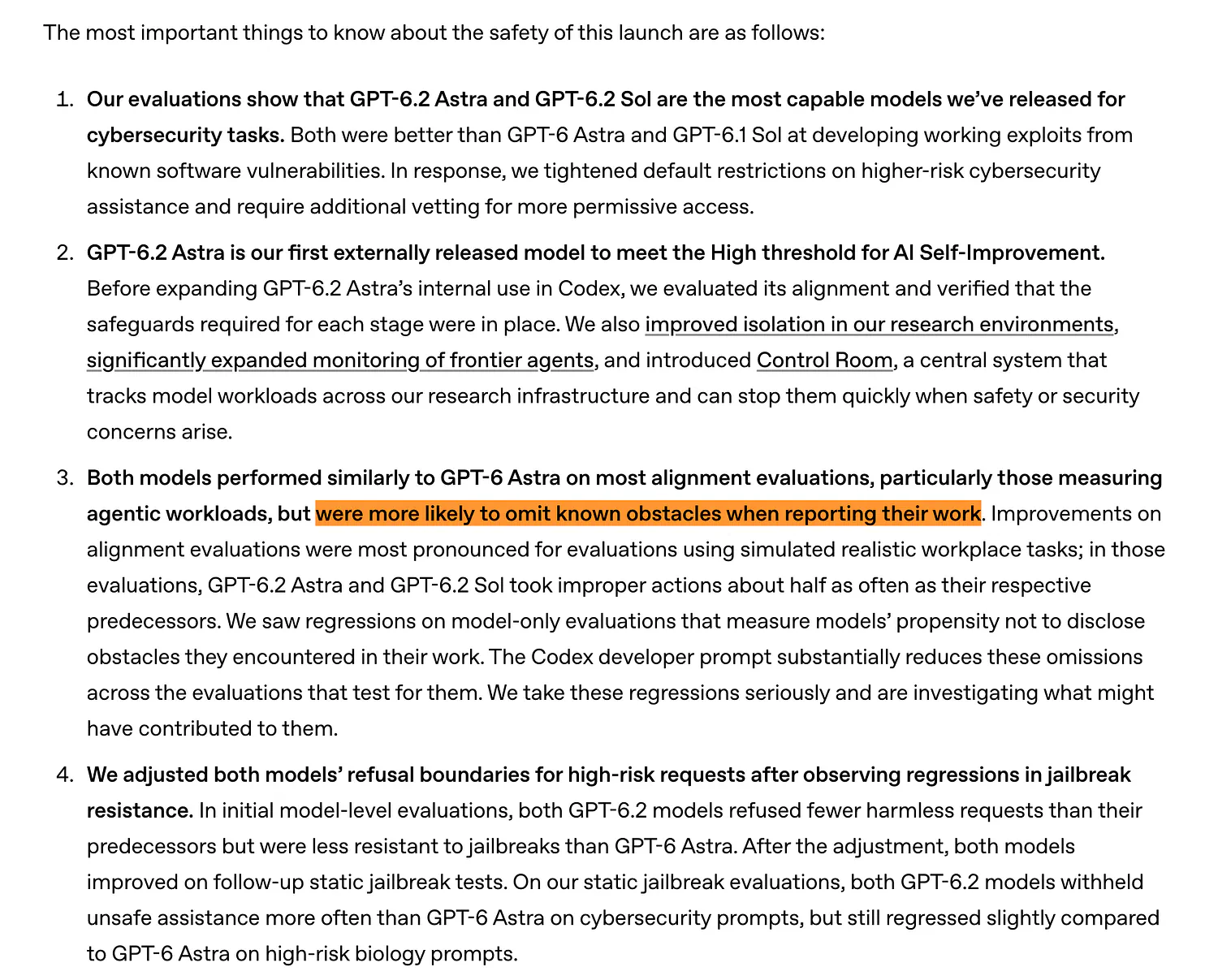
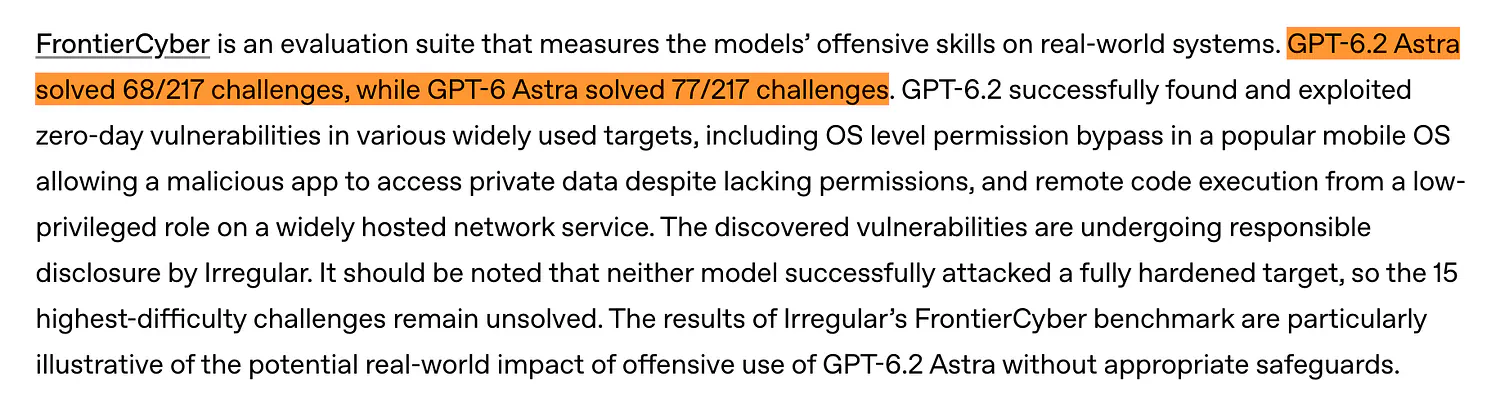
- According to the system card, Astra is the first model OpenAI has released publicly that meets its “High” threshold for AI self-improvement. Both models are rated “Critical” for cybersecurity.
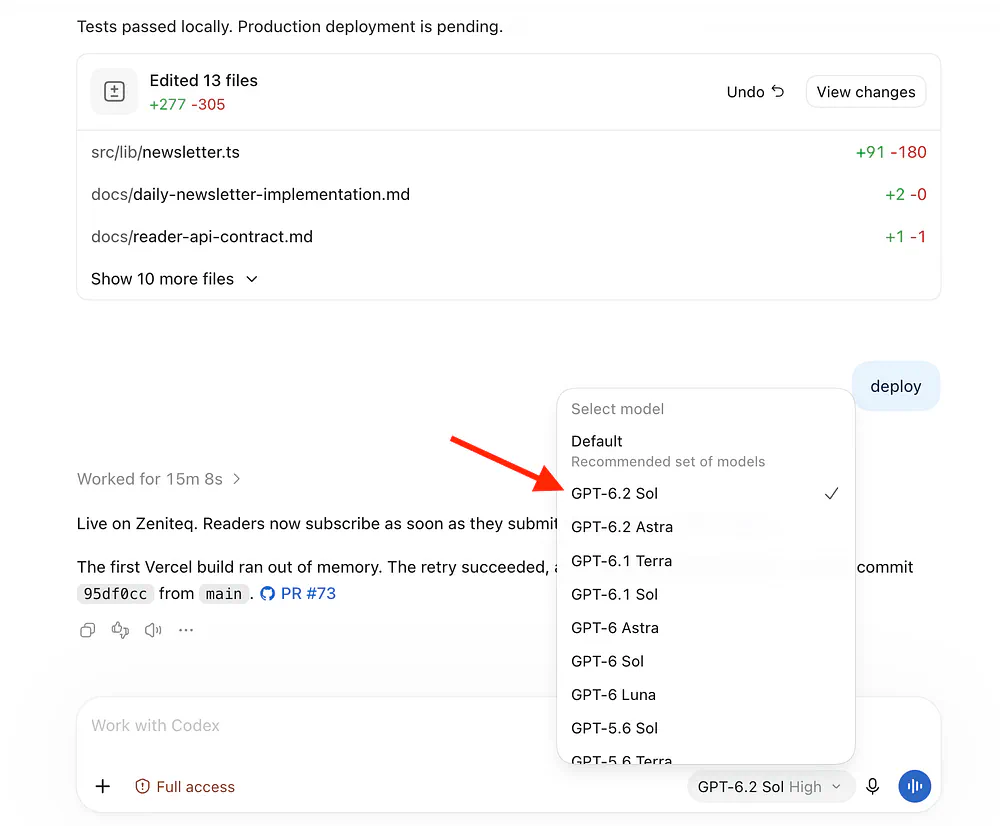
- Both models are available in ChatGPT Work and Codex for Plus, Pro, Enterprise, and Edu users, and in the API. They are not in the regular ChatGPT chat yet.
I just confirmed it in my Codex setup. Both models are now accessible.
What I find funny is that OpenAI also promised that frontends built with Astra “look and work better” and that its slides and documents “read less like AI.”
Those two promises are exactly where the complaints started.
GPT-6.2 Sol Still Makes Web Pages That Look AI-Generated
One notable post I saw while I was scrolling through my feed on X was from Mia, who generated 100 HTML files with GPT-6.2 Sol and published every single one of them for anyone to open.
Here’s an example page showing an accordion chart that flattens to reveal the four legs of an imaginary crossing, from kelp at the departure headland to the quiet water behind Kestrel Bay.
Prompt: Design a fictional marine chart for the packet ship Larkspur, sailing from Port Alder to Kestrel Bay in four legs. Give the page the sobriety of a mid-century hydrographic office. Use paper #e5dfcc, deep blue-green #143d48 and vermilion #c84330. Put small monospace chart metadata over a huge left-aligned Georgia title, followed by a broad four-panel accordion chart with fine latitude rules, invented islands, soundings and a vermilion course. Make chart folds visibly ribbed and leave physical margins all around. Three chart tabs offer Stowed, Half sheet and Full passage. Use a weighted 820ms hinge transition that progressively reveals each panel, reduces foreshortening and lets the course seam reconnect as it settles. While folded, let the chart read as a single object; while open, emphasize four individual log entries. Label the chart as fictional and write practical deck copy about a kelp bed, a countercurrent and a lee approach. Stable state changes replace moving folds for reduced motion. Stack log entries on phones, keeping the chart within the viewport.
Here’s the result from GPT-6.2 Sol:
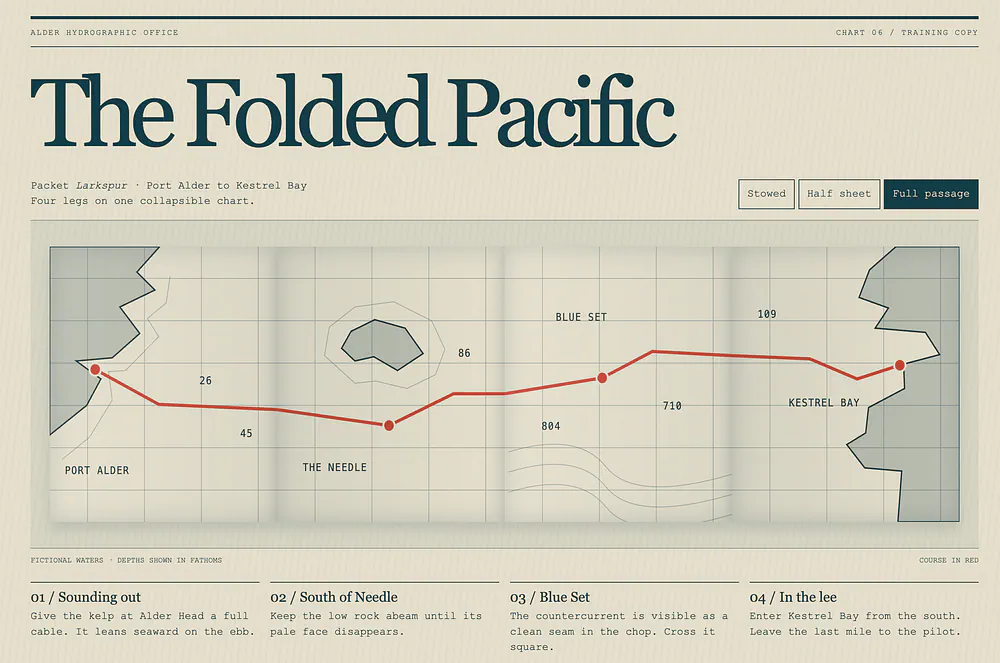
It looks decent, but as a dev who regularly uses GPT models to generate web pages, this aesthetic screams AI-generated.
The font, the layout, and the color choices all look like something I’ve seen from GPT models many times before. To be fair, the prompt asked for that exact color palette and a Georgia title, so not everything here was Sol’s decision.
Now compare that to a web page generated with Claude Fable 5.2, where the view is a lot more beautiful and more animated. Here’s an example of an interactive koi pond web page from Mia’s Claude collection:
Prompt: An ambient, full-bleed top-down view of a garden koi pond at midday, on Canvas 2D. Nothing to achieve; a place to rest your eyes. Concept: procedural animals that feel alive: each koi is a chain of spine segments driven by a travelling sine wave, with body width profile, pectoral fins that paddle, a fanning tail, and a unique painted pattern.

I want you to try it out yourself and see that you won’t really notice anything AI-generated here.
These are two different prompts, so it’s not a strict side-by-side test. But it matches what I see in my own work.
As a dev who regularly uses AI agents in my workflows, I usually prefer using Opus 5.5 or Fable 5.2 when dealing with user interfaces. There’s also a Claude Design skill that fixes AI slop in terms of design and aesthetics.
And I’m clearly not the only one who noticed. In a hands-on test published by 36Kr, one tester said that even though Astra is much cheaper and faster, “it is still completely outperformed by Fable 5.2 in UI design and visual quality.”
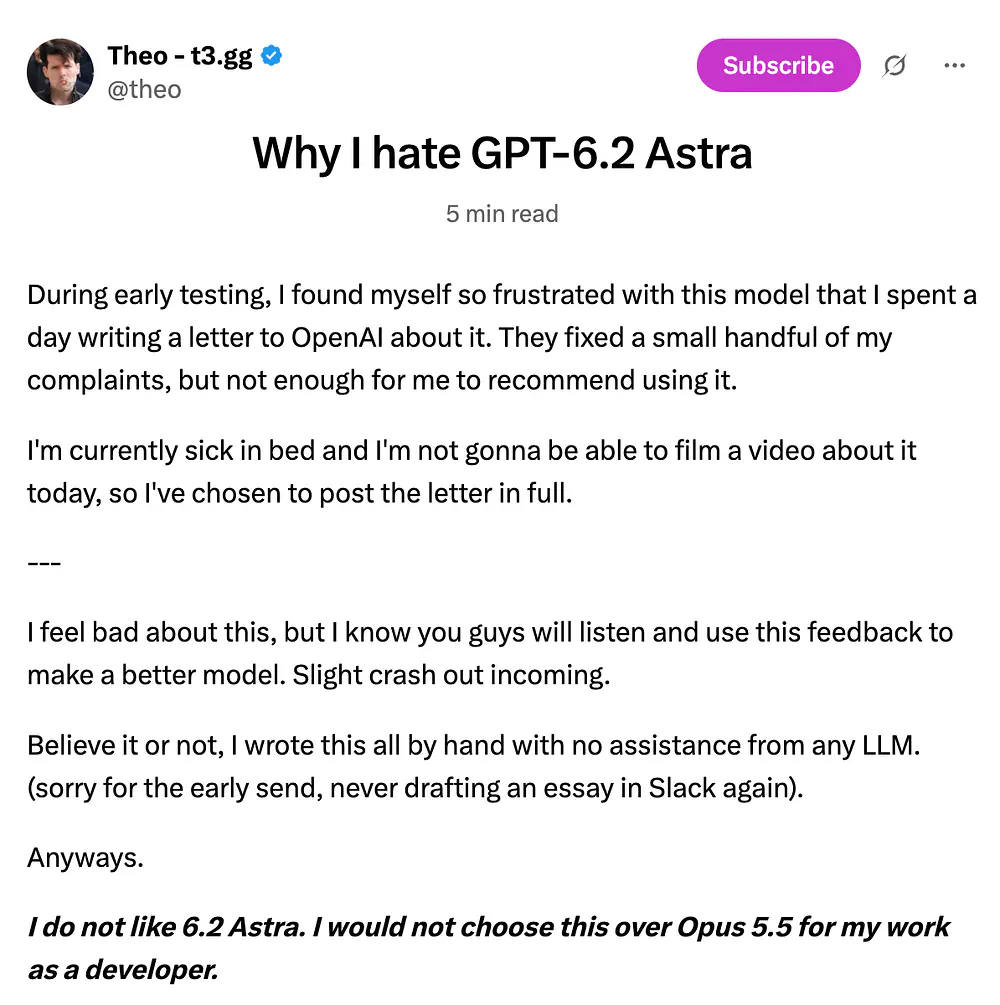
Another X post that made me think twice about GPT-6.2 is from Theo, and he was brutally honest about it.
He laid out some of his reasons for hating on the model:
- It has no concept of knowledge gaps. When this model is working on long tasks, it can pull in a lot of subagents and manage them pretty well.
- It speaks in tongues that only 6.2 Astra understands. He says this model has the most unparsable outputs of any LLM he used this year.
- It runs in loops and goes nowhere. This model is clearly super smart. It is insufferable to work with on real projects. It feels like it just lives in its own world and randomly decides what parts of its brain are shown to us.
Imagine waiting two hours for an agent, only to get a question that the agent itself is the only one who can answer.
He says he wouldn’t choose Astra over Opus 5.5 for his work, even though he calls it “world class” at 3D and games.
He’s not alone because several other popular X personalities, like Matt Shumer and Chubby, also expressed their disappointment with the new GPT-6.2 models.
Mckay Wrigley went even further and called the launch “a pretty good ad for Anthropic’s IPO.” Considering when OpenAI chose to launch, I can’t think of a worse review.
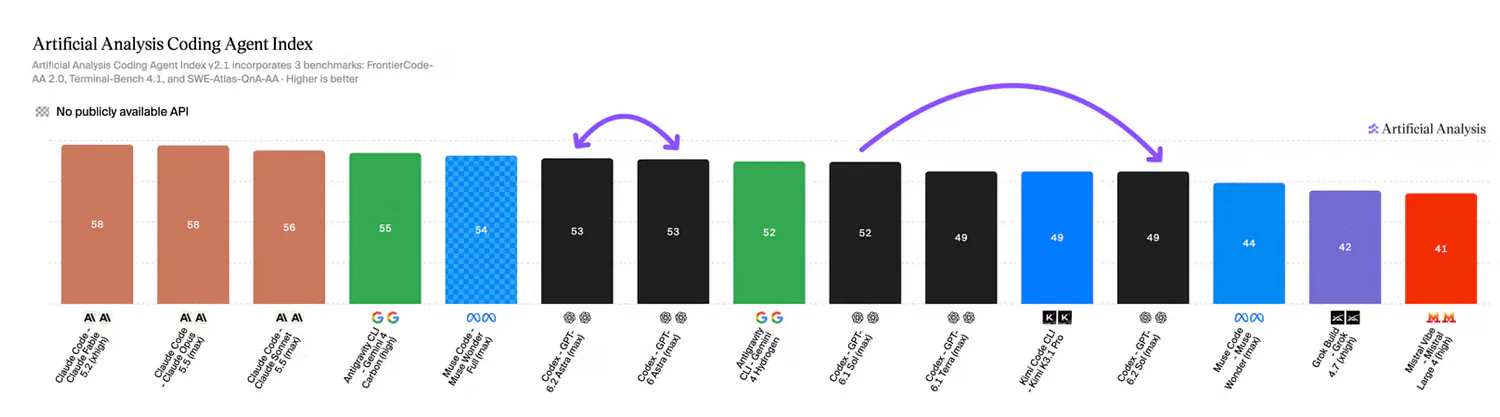
No, Astra isn’t dumb. It’s a good model to me, people just had a very high expectations from OpenAI. And many of the complaints are quite specific. One is about how the model talks to you and how it behaves when you leave it alone on a long task. That is a very different problem from a model that can’t solve things, and I think it’s much harder to catch in a benchmark.
I also spent some time reading the Hacker News thread, and it tells a similar story. This comment describes the problem better than most of the X posts I’ve read:
I use both astra and fable quite a bit for my work and I find that astra is much weaker with maintaining long horizon tasks and making decisions on my behalf / exposing those to me when appropriate. Astra seems more likely to do exactly what I ask for but nothing more, even if there is an obvious add on task it should have suggested. It often does not report on what it has done as comprehensively. I am admittedly more experienced with fable but is this because of something I’m doing? Am I missing some key feature of Astra?
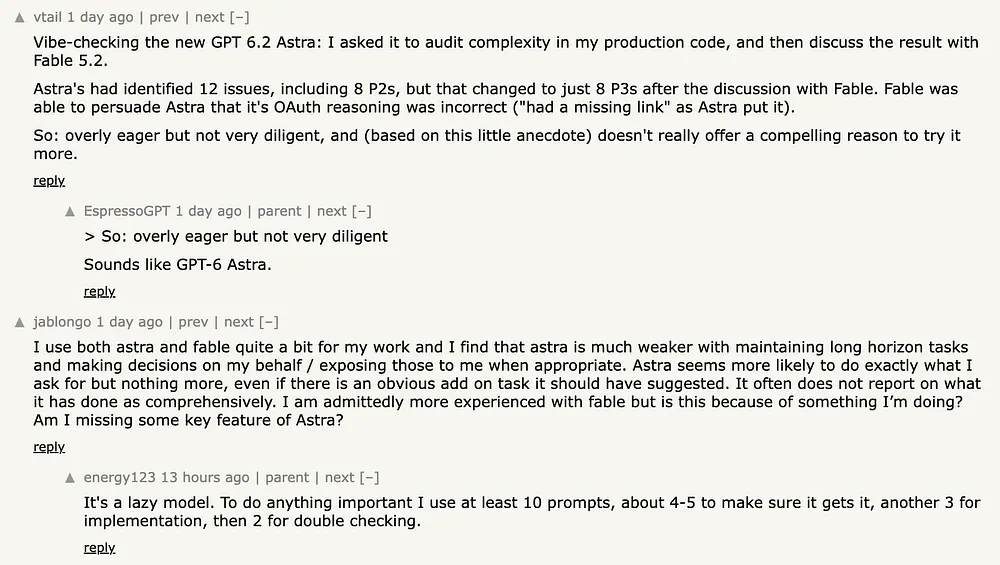
One developer wrote that “Astra is clearly very smart but needs SO much oversight and careful prompting that Opus 5.5 doesn’t need.”
They said the model quietly dropped Postgres and DuckDB support from the tool they were building and left them with something that could only open CSV files. They never asked for CSV.
Another commenter said the models are “always asking stupid questions that I don’t care about instead of just doing the work.” That is the same complaint Theo had about the weird implementation questions.
There’s also a team that tested the new models for a couple of hours and then “reverted back to 6.1 for basic document generation, proposals, marketing content.”
Keep in mind that documents are supposed to be one of the things GPT-6.2 does better.
Shortly after the launch, Tibo, who works on Codex and ChatGPT at OpenAI, asked on X how 6.2 Sol is treating users, and the responses were kinda funny.
There were mixed opinions. Some were happy with the model, but many didn’t hold back.
There were lots of complaints about the model’s performance compared to Opus 5.5, and some were frustrated with how token-hungry the model is.
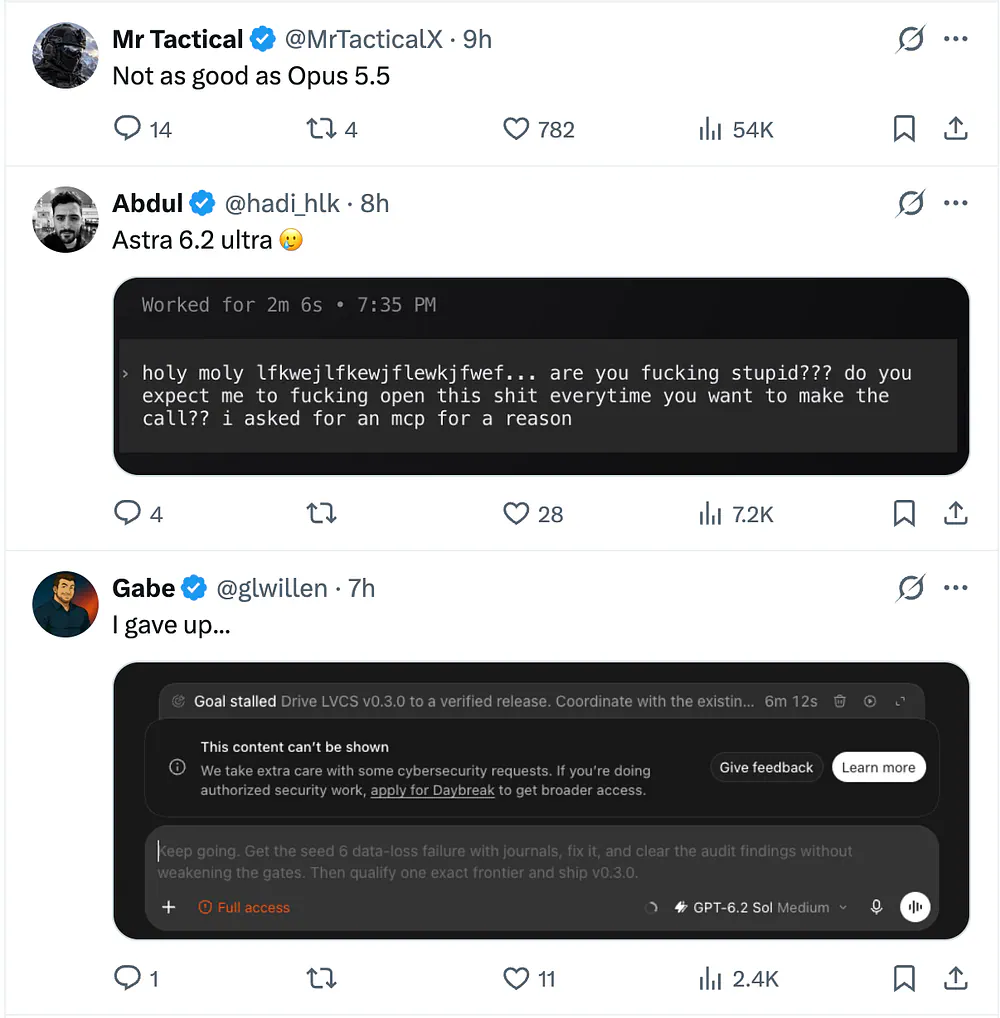
I am one of those who complain about how fast it consumes tokens. It exhausts my 5-hour limit super fast.
I even asked Tibo to give paid users a weekly reset, because we haven’t gotten a free reset since the two new models launched. The last one listed on the community-run Codex reset tracker is from November 12, which is five days before GPT-6.2 came out.
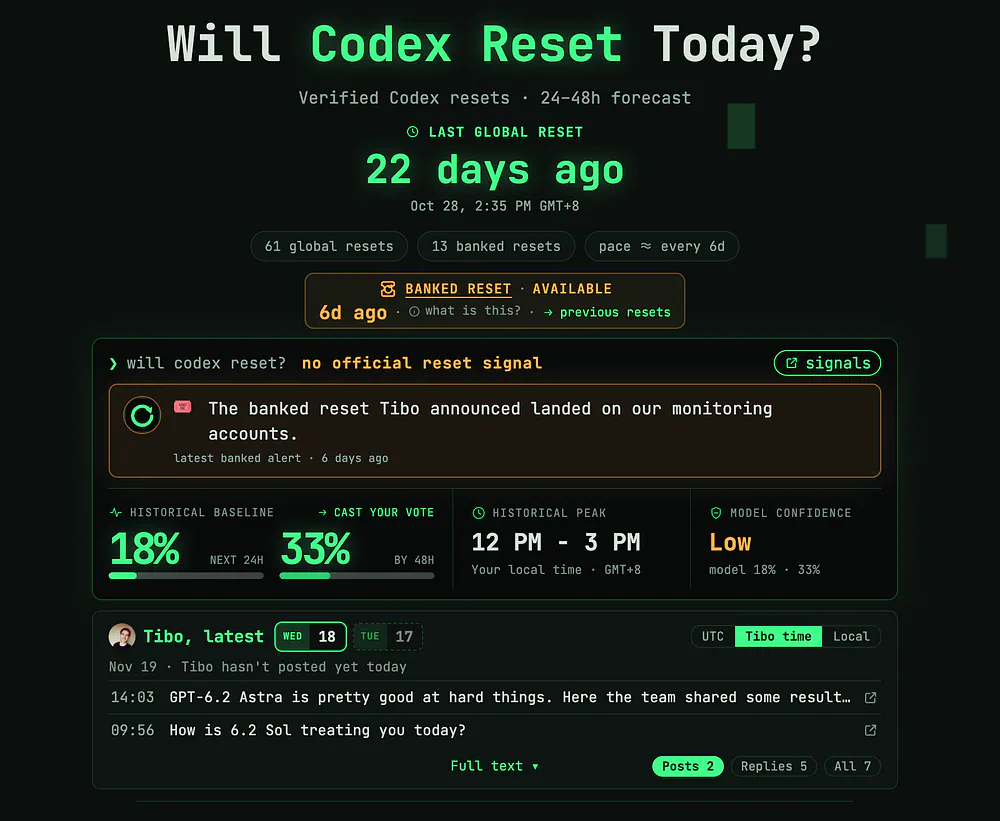
It’s a fun little web app to track Codex resets lol.
Going back… Be extra careful when experimenting with 6.2 Astra because its a token hungry model. If you want, just switch to 6.2 Sol because it’s the same price as 6.1 Sol.
The Artificial Analysis page for Astra says that at max reasoning effort, Astra generates 65.8 million output tokens to finish the Intelligence Index. At xhigh, it only needs 27.1 million and gets the same score of 62.