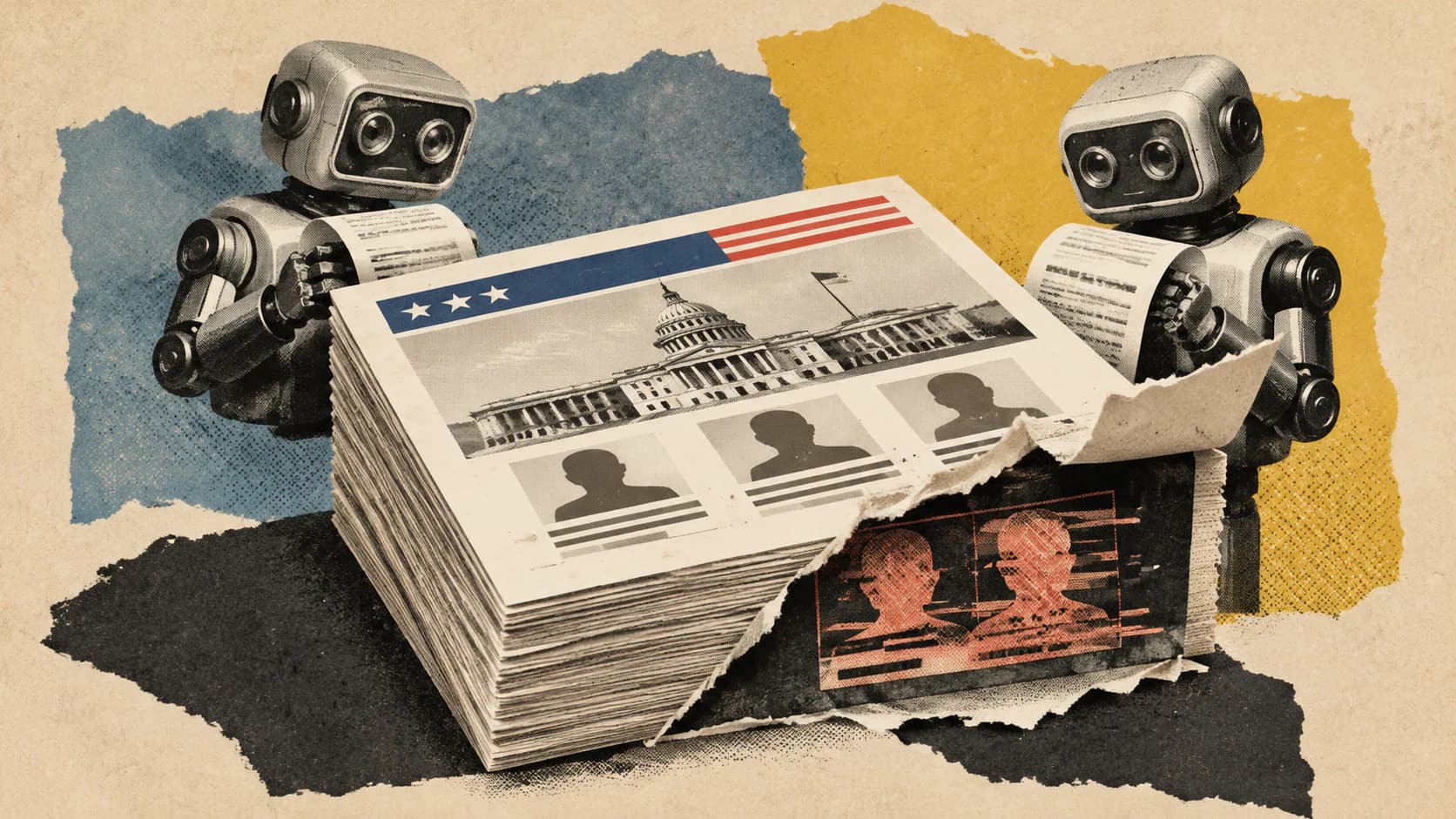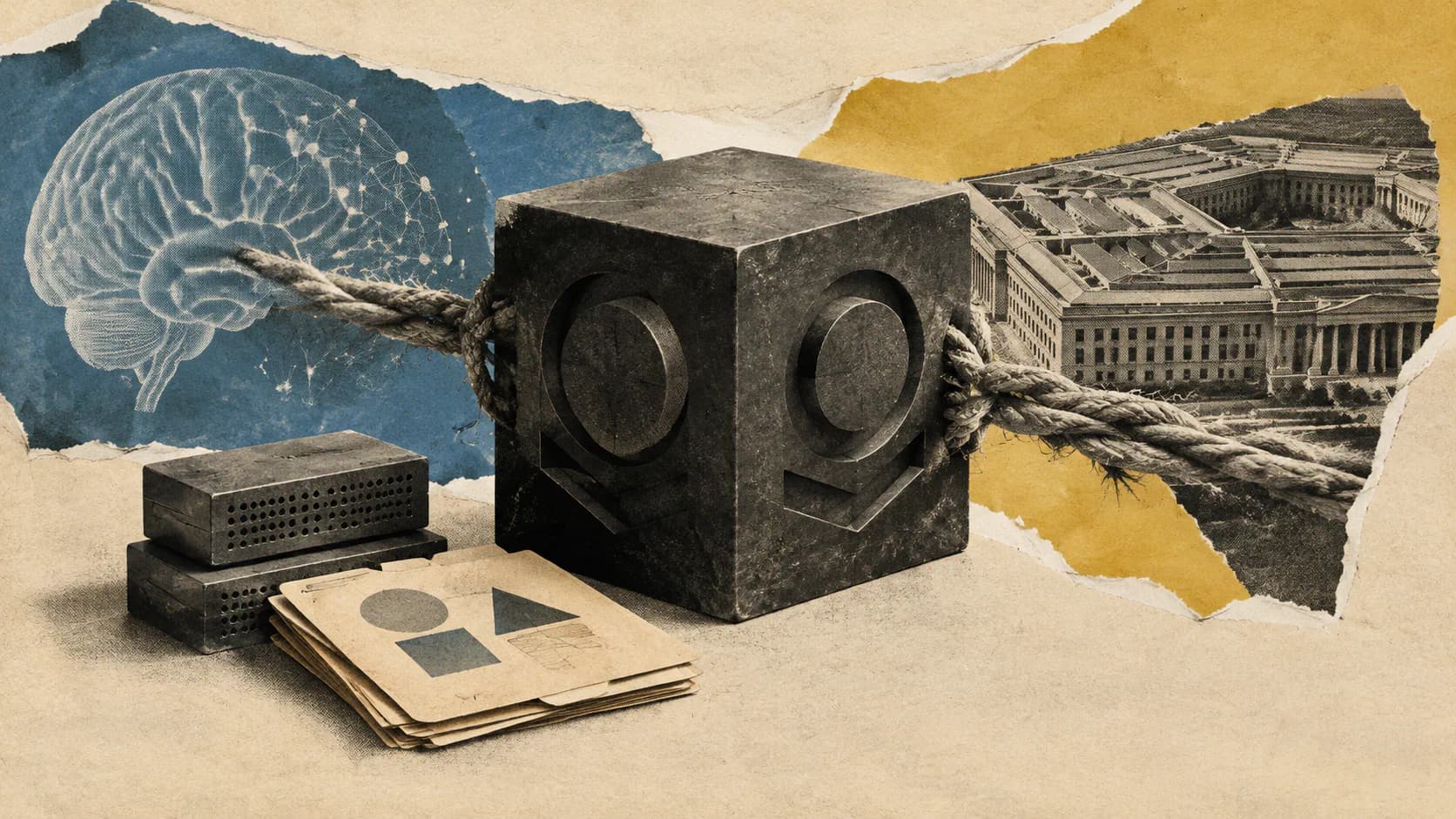
Palantir chief technology officer Shyam Sankar says the company was caught between Anthropic and the US Department of War during their dispute, but he has no regrets about the relationship. Palantir continues to work with Anthropic and another frontier AI lab, he told Ben Thompson in a Stratechery interview published on October 29, 2026. The date appears in the available mirror of the interview’s introduction.
Asked whether he regretted Palantir’s involvement, Sankar gave a direct answer, according to The Next Web’s report on the interview:
“Yes, we were stuck in the middle. I don’t regret it. We still work with Anthropic, we work with both frontier labs.”
His account connects the dispute to a practical engineering priority: Palantir has put substantial work into letting customers switch AI models safely. He also challenged a common corporate justification for AI spending, saying almost all the customers he had seen focus mainly on cutting staff and costs failed to achieve even that objective.
The useful distinction is between maintaining a supplier relationship and maintaining the ability to operate without that supplier. Sankar describes Palantir pursuing both. That makes his comments relevant to buyers deciding how much of their operations to tie to one model provider.
How Palantir Ended Up Between Anthropic and the Pentagon
Thompson framed the question around Anthropic’s work for the US national security system running through Palantir. That placed Palantir in the deployment chain when Anthropic and the government clashed, according to TNW’s account.
Sankar said many of the parties probably handled the dispute poorly. He nevertheless defended the relationship and said it was continuing. The quoted passage refers to two frontier labs without naming the second one, so it should not be read as an announcement of a specific additional partnership.
TNW also reported that Sankar had told CBS earlier in October that the Pentagon had already replaced Anthropic’s AI. That remains an attributed statement from Sankar, relayed through TNW; the opened material does not provide the underlying deployment details.
The available evidence therefore supports a narrower account than a full reconstruction of the clash. It captures Sankar’s explanation of Palantir’s position, not an independently verified account of each party’s decisions. The accessible Stratechery mirror contains the interview’s introduction and opening portion, while TNW supplies the relevant later remarks.
For customers, the important operational point is that a disagreement between a model developer and a government customer can affect a company integrating the two. A deployment partner may have to preserve working relationships while preparing for a change in the technology underneath its product.
Why Model Portability Matters Here
Sankar said Palantir had invested heavily in allowing customers to swap one model for another safely following the dispute, TNW reported. That is the clearest practical consequence disclosed in his account.
Model portability means keeping an application usable when its underlying AI model changes. The commercial appeal is straightforward: a customer gains another option if a provider becomes unavailable, unsuitable or unacceptable for a particular deployment.
Switching access and preserving behavior are separate tasks. A system might be able to send a request to a different model without proving that the replacement will perform the same job to the required standard.
Consider a hypothetical workflow in which a model reads a document, extracts information and recommends an action. Changing models raises several distinct questions:
- Input handling: Can the replacement process the documents and context the workflow needs?
- Output compatibility: Will it return information in the structure the surrounding software expects?
- Task quality: Does it handle difficult cases and incomplete information acceptably?
- Operational controls: Do permissions, approval steps and records remain effective?
- Deployment constraints: Is the replacement available under the customer’s required access and data-handling conditions?
These are evaluation questions, not documented descriptions of Palantir’s implementation. The reporting provides no architecture, migration benchmark or acceptance-test results for its switching capability.
I’d put particular weight on task quality. A successful connection to a replacement model is easy to describe; evidence that a critical workflow remains reliable is much more useful to a buyer. The value of portability depends on how much validation and rework a switch still requires.
Portability Can Shift Dependence to the Integration Layer
Palantir’s response also has a commercial implication. If customers can change models while keeping their application workflows in place, the integration platform becomes the stable part of the arrangement.
That can benefit customers. They may retain more flexibility over which model supplies the intelligence without rebuilding the entire application around every supplier change. It can also strengthen the platform vendor’s position, because more of the durable operational work remains attached to that platform.
This is an analysis of the business logic behind Sankar’s comments, not evidence of a measured increase in Palantir’s customer retention or revenue. The two effects can coexist: less dependence on a model provider and greater dependence on the software coordinating the models.
A useful procurement review would separate the claims this way:
| Issue | What Sankar’s account supports | What a buyer should verify |
|---|---|---|
| Supplier relationships | Palantir continues working with Anthropic and another frontier lab | Which alternatives are actually available for the intended deployment |
| Model switching | Palantir has invested in safe substitution | What must change, be retested or receive approval during a switch |
| Operational continuity | Portability is a stated priority after the dispute | Which workflows can continue, and what interruption or rework to expect |
| Customer independence | Model choice is part of Palantir’s pitch | Which application components remain tied to the platform |
InfoSec Chronicle’s November 1 follow-up approached the story as a vendor-risk issue. It recommended auditing AI integrations, reviewing contractual provisions for supplier substitution and developing migration contingency plans. Those are the publication’s recommendations, not additional commitments from Palantir.
The practical question is how much of a fallback plan exists before a dispute starts. Having another supplier on a list is useful. Knowing which workloads can move, who authorizes the move and what evidence is needed to approve it is substantially more useful.
Sankar’s Warning About AI-Driven Layoffs
Sankar’s comments on customer outcomes were equally pointed. According to TNW, almost all the customers he had seen use AI primarily to reduce staff and costs failed to reach even that goal. He contrasted them with successful customers seeking to win their markets.
This is a vendor executive’s observation about customers he has encountered. The report provides no sample size, evaluation period, definition of success or independently measured comparison. It cannot supply a general failure rate for AI cost-cutting projects.
Even with that limitation, the distinction raises a useful management issue: a staffing target can be a poor substitute for a clearly defined operational goal.
Frequently Asked Questions
3 questions
1Does Palantir Still Work With Anthropic?
Yes. Sankar told Stratechery that Palantir continues to work with Anthropic and another frontier lab, despite being caught between Anthropic and the Pentagon during their dispute.