
The Federal Communications Commission conditionally authorized SpaceX on November 25, 2026, to deploy and operate up to one million Starmind satellites for an orbital data-center network. The decision gives the company a regulatory path toward putting AI computing infrastructure in space, with a deployment schedule extending into 2040.
The important word is conditionally. As TechCrunch reports, SpaceX still faces technical, financial and regulatory hurdles, including unresolved plans for disposing of some satellites. The authorization also permits limited backup radio communications, while the proposed network would primarily use optical links.
One million is the authorized ceiling. It is neither a near-term launch forecast nor a measure of computing capacity. Understanding the decision means separating permission to operate, permission to use particular radio frequencies, and the engineering needed to build a working orbital computer network.
What the FCC Authorized for SpaceX Starmind
SpaceX’s Starmind authorization covers a constellation of up to one million orbital compute satellites, with optical communications as the primary means of connecting them.
According to Spaceflight Now’s account of the FCC order, SpaceX proposes orbital shells spanning 50 kilometers each, at altitudes ranging from 500 to 1,002 kilometers. The satellites would communicate over optical links, including connections to SpaceX’s Starlink network.
The radio permission is narrower than a general authorization to carry computing traffic over those frequencies:
| Authorized radio function | Frequency band | Direction | Operating condition |
|---|---|---|---|
| Backup telemetry, tracking and command | 18.8–19.3 GHz | Space to Earth | When optical links fail |
| Backup telemetry, tracking and command | 28.6–29.1 GHz | Earth to space | When optical links fail |
These are Ka-band frequencies. Telemetry, tracking and command, commonly shortened to TT&C, let an operator monitor spacecraft, determine their positions and send instructions.
That distinction matters. The authorized radio links provide a fallback for spacecraft control if optical communications fail; they are not described as a replacement bulk-data network for AI workloads. The FCC concluded that restricting radio use to this contingency sufficiently addressed interference concerns raised by other parties, Spaceflight Now reports.
The practical consequence is a separation between keeping a satellite controllable and keeping its computing service available. A backup command channel can help an operator manage a spacecraft without supplying the bandwidth required to keep a distributed computing cluster working normally.
SpaceX Starmind Deployment Deadlines Extend to 2040
SpaceX’s Starmind authorization provides seven years to place the first operational satellite in orbit and fourteen years to deploy the full constellation.
The published reporting gives the following schedule:
| Milestone | Reported deadline | Reporting source |
|---|---|---|
| First operational satellite | November 25, 2033 | Spaceflight Now; TechCrunch also reports a seven-year deadline |
| 100,000 operational satellites | November 2035 | Ars Technica |
| 50% of the constellation | November 25, 2038 | Spaceflight Now |
| Full constellation | November 25, 2040 | Spaceflight Now; TechCrunch also reports a fourteen-year deadline |
Spaceflight Now supplies the exact first-satellite, halfway and completion dates. Ars Technica separately reports the 100,000-satellite threshold. Those accounts describe different intermediate milestones; the available excerpts do not reproduce the full schedule, so they cannot independently resolve how every threshold fits together.
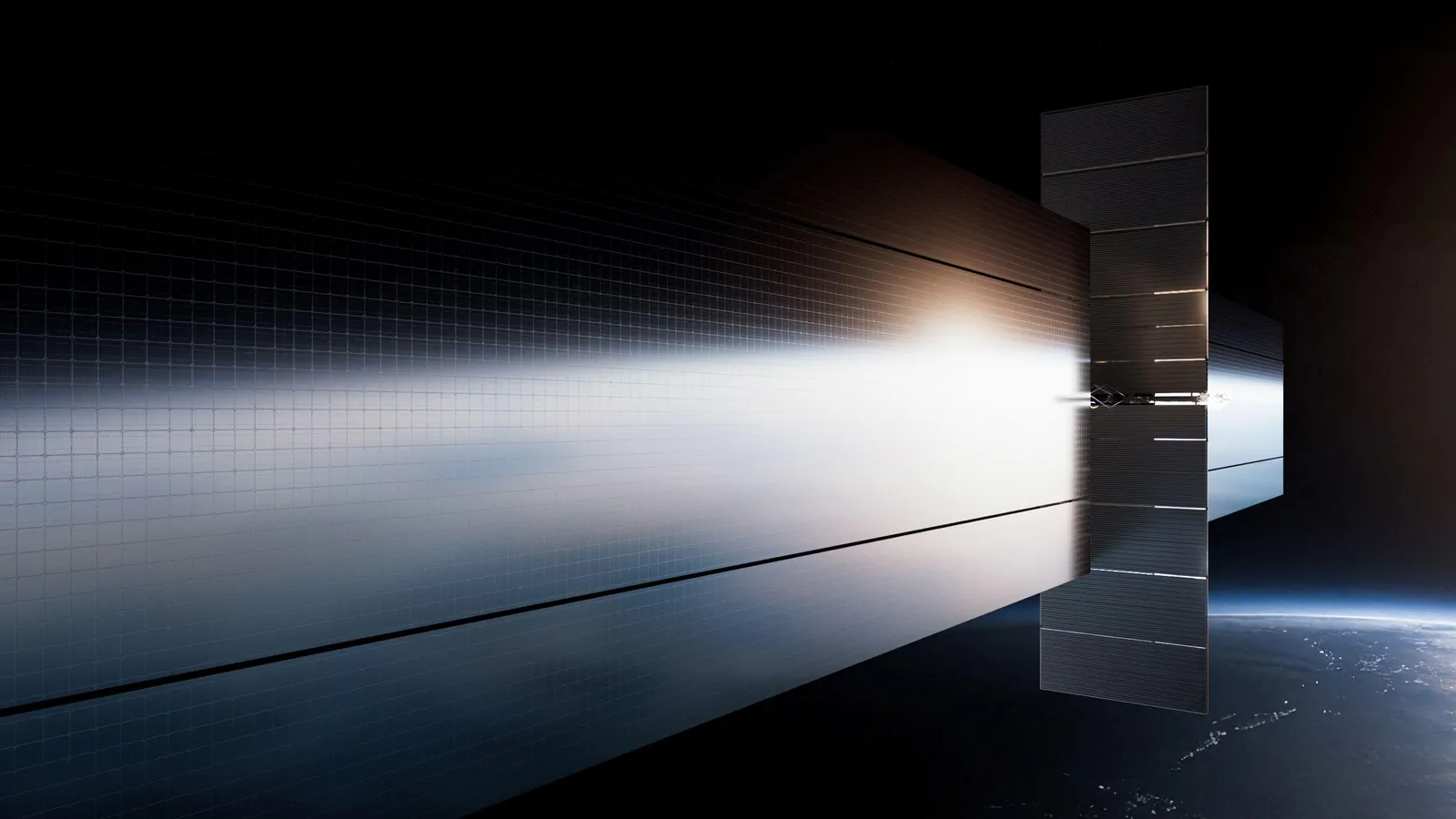
SpaceX’s ambitions run ahead of those regulatory deadlines. Spaceflight Now reports that Elon Musk told a Baron Capital event he anticipated the first launches in the third quarter of 2027, followed by a manufacturing ramp in 2028 and 2029. That is a company forecast, separate from the FCC’s requirements.
The long deployment window gives SpaceX time to develop hardware, test operations and build manufacturing capacity. It also makes the headline number easy to misread: an authorization extending fourteen years into the future says little about how much useful compute will be available in the next few years.
Starmind’s Satellite Disposal Plan Remains Unresolved
SpaceX’s Starmind approval leaves a consequential restriction on satellites intended for disposal somewhere other than Earth’s atmosphere.
SpaceX sought flexibility for satellites operating above 600 kilometers to retire into other Earth orbits or heliocentric orbits, meaning orbits around the Sun. The FCC did not grant that waiver because the company had supplied insufficient information for the agency to determine compliance, according to Ars Technica’s reporting on the disposal decision.
The distinction is between operating altitude and end-of-life arrangements. The unresolved issue is not a blanket prohibition on every Starmind satellite above 600 kilometers. Ars reports that SpaceX must obtain the waiver before deploying satellites that are not intended for atmospheric reentry.
TechCrunch explains that the existing FCC rule requires satellites ending their missions below 2,000 kilometers to reenter Earth’s atmosphere within five years. SpaceX’s proposed alternatives would depart from that disposal approach.
That leaves an engineering dependency inside the regulatory approval. A satellite designed to reenter the atmosphere needs an end-of-life plan consistent with that destination. A design relying on transfer to another Earth orbit or an orbit around the Sun needs the relevant regulatory permission.
Spaceflight Now also reports that SpaceX plans to test satellites at lower altitudes before raising them, and that their propulsion systems would support orbit changes, station-keeping, disposal transit and collision-avoidance maneuvers. Those are elements of SpaceX’s proposed mitigation strategy, not operating results from a deployed Starmind constellation.
Astronomy and Environmental Objections Were Not Settled
SpaceX’s Starmind authorization proceeded despite objections involving orbital congestion, debris, radio interference, astronomy and environmental effects.
Amazon, Viasat and the American Astronomical Society were among the objectors identified by TechCrunch. Their concerns covered distinct issues:
- Radio interference: Whether Starmind’s transmissions could affect other spectrum users.
- Orbital safety: How a constellation of this size would affect congestion, collision risks and debris.
- Astronomy: How additional spacecraft could affect optical and infrared observations.
- Environmental effects: Potential consequences of launches and satellite reentries.
The FCC rejected petitions to deny the application. Its reasoning varied by issue, which is important when interpreting the outcome.
For radio interference, the agency pointed to the restricted backup-only use of Ka-band frequencies. On astronomy, Spaceflight Now reports that the FCC considered SpaceX’s application and supplemental material sufficient, while also treating non-spectrum impacts as outside the scope of the radiofrequency operations under review.
The American Astronomical Society remained opposed. Its statement, reproduced by Spaceflight Now, raised concerns about the future of astronomical research and the absence of formal coordination requirements in the license.
Environmental review followed a similarly narrow path. Ars Technica reports that the FCC declined a comprehensive environmental assessment, citing an October policy determination that space-based activities generally fall outside its National Environmental Policy Act obligations. The agency also regarded launch-emissions concerns as outside its purview and said the record did not substantiate certain concerns about reentry pollution.
The analytical distinction is straightforward: rejecting an objection because it falls outside an agency’s review does not answer the underlying scientific question. The authorization resolves the FCC application under the agency’s stated approach; it leaves broader disagreement over the constellation’s effects.
Starmind’s Compute Architecture Still Faces Economic Tests
SpaceX’s proposed Starmind architecture uses clusters of satellites to assemble computing capacity, according to company descriptions reported by Spaceflight Now.
Michael Nicholls, SpaceX’s senior vice president of Starlink and AI, described the following approximate design:
| Design element | SpaceX’s reported description |
|---|---|
| Individual satellite | Roughly a 250-kilowatt node, comparable to a rack of compute |
| Cluster size | Around 10 satellites |
| Connections within a cluster | Around 10 terabits per second |
| Wider connectivity | Links into the broader constellation and Starlink |
These are company design descriptions, not independently measured performance. Nicholls compared an individual satellite’s computing scale to Nvidia’s NVL72 rack system.
That architecture also explains why “one million data centers” is a misleading shorthand. SpaceX describes individual spacecraft as roughly rack-scale nodes, with groups working together to run AI models efficiently. Satellite count alone cannot reveal the network’s useful AI capacity.
A simple calculation illustrates the distinction. Ten nodes at the stated 250-kilowatt scale would total roughly 2.5 megawatts per cluster. That is an arithmetic implication of SpaceX’s description, not a measured cluster rating or an estimate of delivered AI performance.
Useful performance would also depend on how effectively the links connect those nodes, how reliably the hardware operates and which workloads the system can support. A published bandwidth figure does not, by itself, answer those questions.
TechCrunch identifies manufacturing cost, launch cost, processor cooling and financing orbit-bound chips as unresolved obstacles. Cooling is especially consequential because processors must continuously shed heat. Any successful design has to make the thermal hardware fit the spacecraft’s mass, power and operating requirements.
The economics are equally demanding. Hardware, launches and network operations must collectively produce computing services customers will pay for. Zeniteq’s prior coverage of SpaceX’s $40 billion Nvidia Vera Rubin lease commitment provides related context on the scale of its AI infrastructure ambitions, but this authorization supplies no demonstrated Starmind cost per unit of useful compute.
What Starmind Means for AI Infrastructure Competition
SpaceX’s Starmind authorization gives the company regulatory room to pursue an unusual form of AI infrastructure, without proving that orbital computing can compete economically with terrestrial facilities.
The strongest competitive implication is the opportunity to develop compute hardware, optical networking and satellite operations as one system. If SpaceX can make those pieces work together at an attractive cost, the result could become a new infrastructure option for the AI industry.
Other companies are pursuing orbital computing concepts too, including the project covered in Zeniteq’s reporting on Cowboy Space’s Big Iron AI data-center rocket. Authorization is one competitive step; service capability and economics will determine its commercial value.
The next meaningful evidence will be operational: functioning spacecraft, reliable clustered computing, workable cooling and disposal arrangements, and credible costs. Until those emerge, the FCC decision is best understood as permission to pursue a very large system over many years.
Frequently Asked Questions
3 questions
1What did the FCC approve for SpaceX Starmind?
The FCC conditionally approved SpaceX’s deployment and operation of up to one million Starmind orbital compute satellites. The network would primarily use optical communications, with specified Ka-band frequencies available for backup telemetry, tracking and command when optical links fail. The decision leaves additional regulatory and technical issues unresolved.
2When could Starmind satellites launch?
Elon Musk projected initial launches in the third quarter of 2027, according to Spaceflight Now. The regulatory deadline is later: the first operational satellite is due by November 25, 2033, with full deployment due by November 25, 2040. Musk’s projection is a company target, not evidence of launch readiness.
3What remains unresolved after the approval?
SpaceX still needs permission for proposed disposal methods that would send certain retired satellites into other Earth orbits or orbits around the Sun. Manufacturing costs, launch economics, cooling and chip financing also remain challenges. Astronomy and environmental objections persist despite the FCC’s decision to grant conditional authorization.


