The speed of AI releases is nuts. Remember how quickly the OpenClaw hype turned into posts calling it dead? Jev is already getting similar treatment. Barely two weeks after its release, there’s a competitor beating it on several benchmarks.
Yes, Cloudflare released Clef a few days ago. It supports images, gives developers roughly twice the room for input state, and comes with downloadable weights. There’s also a smaller version called Clef Flash, which posted much lower latency than Jev in Cloudflare’s tests.
Cloudflare even made it compatible with Jev’s API format. So, I suppose if you’ve already built something around Jev, trying Clef doesn’t mean starting over.
But note that Jev is still cheaper. Quite a bit less, actually.
What is Jev?
Jev is a decision model from TypeSafe AI, founded by ex-OpenAI researcher Diogo Almeida.
You send it a state and typed questions. It returns choices, scores, or yes/no probabilities that your code can use directly. The questions run in parallel against the same state.
Jev’s API exposes three primitives: Choice, Score, and Noul.
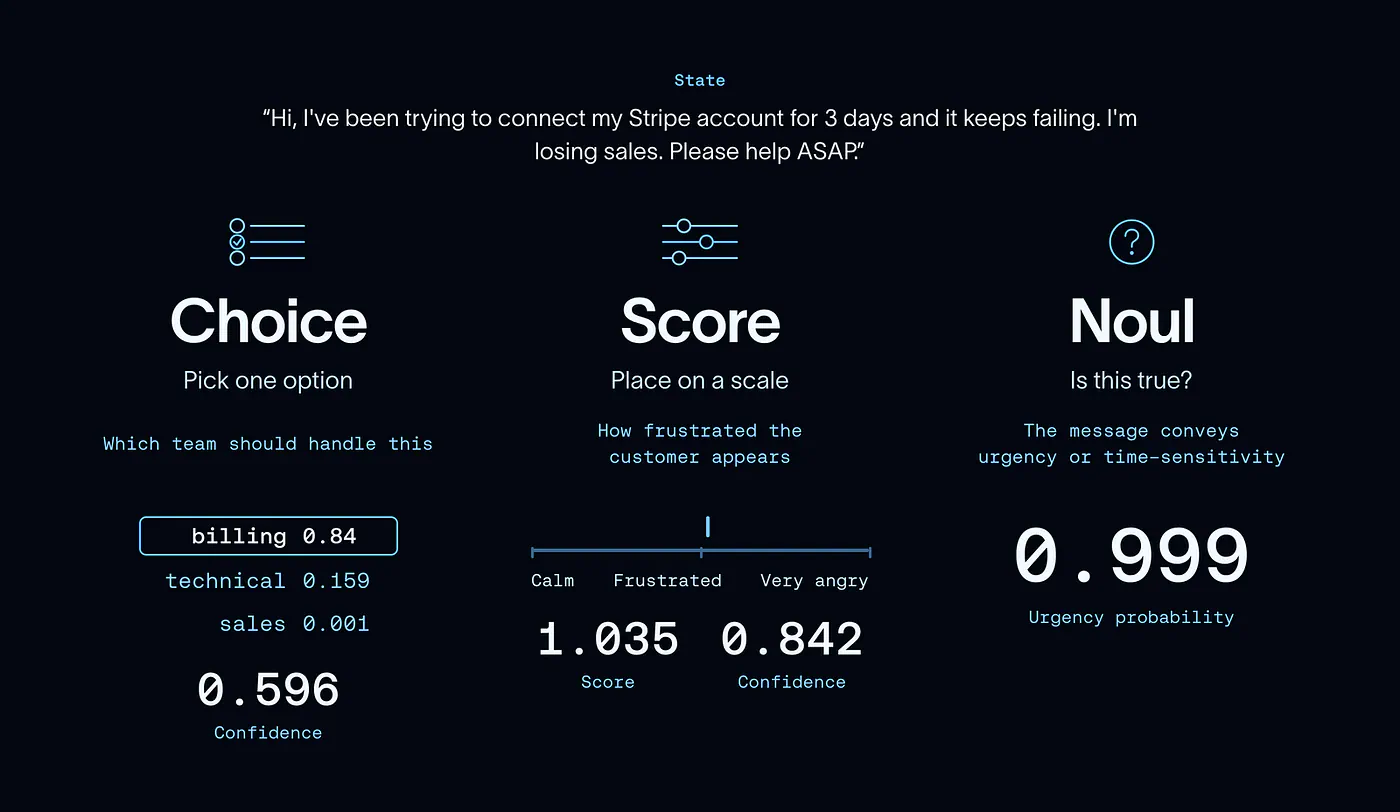
Jev API’s three primitives: Choice, Score, and Noul
In TypeSafe’s benchmarks, the error rate for Jev is literally 0% and the speedups ranging from 19.3x to 193.6x over frontier models.
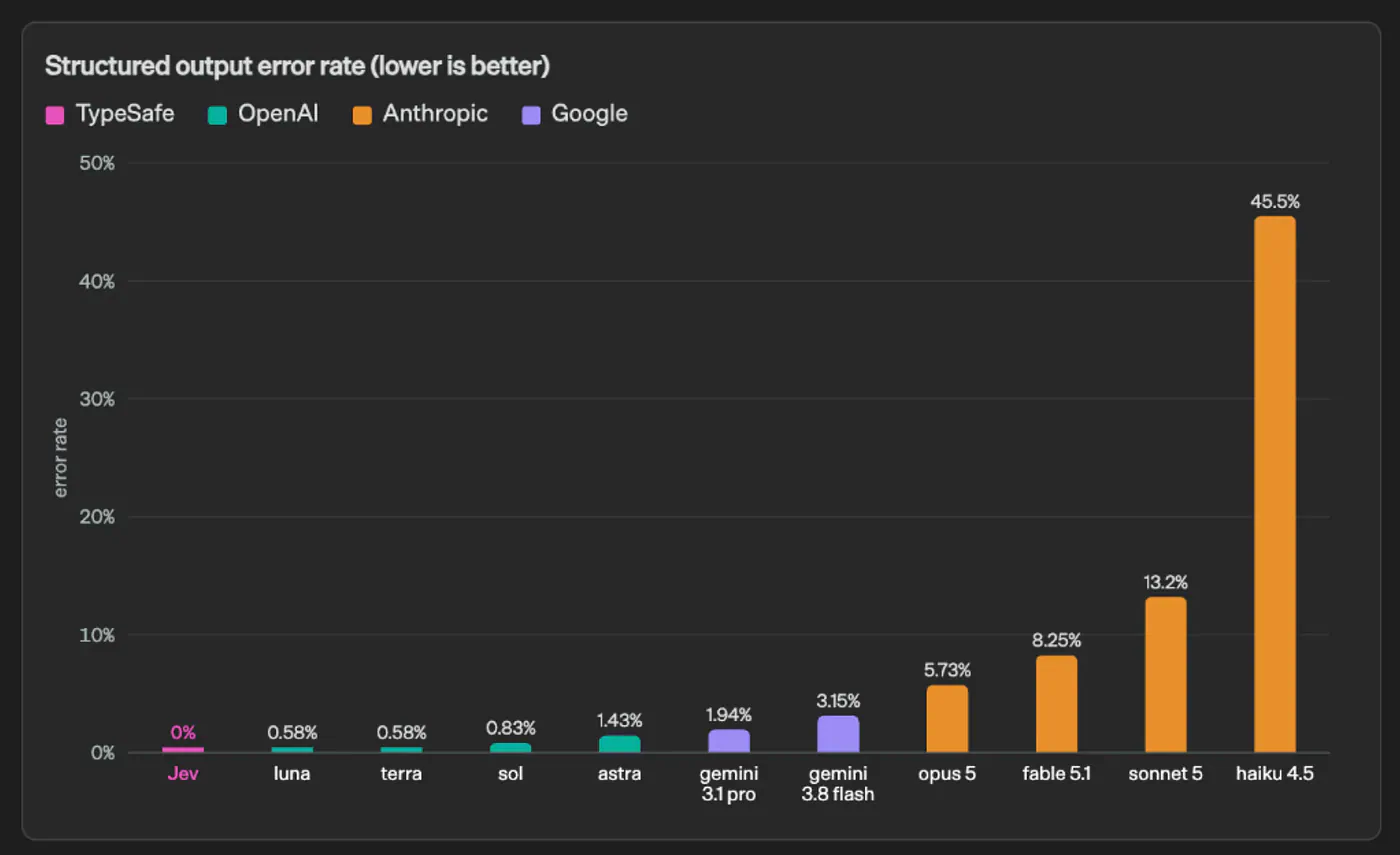
TypeSafe’s benchmarks
Jev costs $0.042 per million input tokens. It’s text-only, with a 32K limit for the state plus the longest question.
Check out my full coverage of Jev in the article below:
New Jev Model Is Insane 200x Faster 400x Cheaper Than Frontier ModelsWhat is Clef?
Clef is Cloudflare’s version of a decision model, available through Workers AI or as downloadable weights.
There are two versions:
- Clef which is 27B params
- Clef-flash which is 9B params
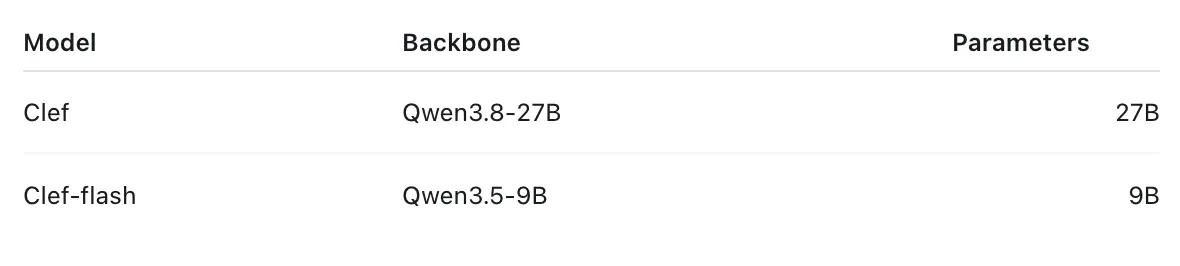
Both releases use Apache 2.0. You can inspect the implementation and run them yourself. Clef and Clef-flash are on Hugging Face.
Cloudflare kept the base weights frozen and trained low-rank adapters alongside a specialized schema head. During inference, the backbone processes the input, then the head scores the allowed answers jointly. The decision step skips autoregressive text generation.
That’s a pretty sensible use of an existing Qwen model. Cloudflare could train for these decisions without starting from scratch.
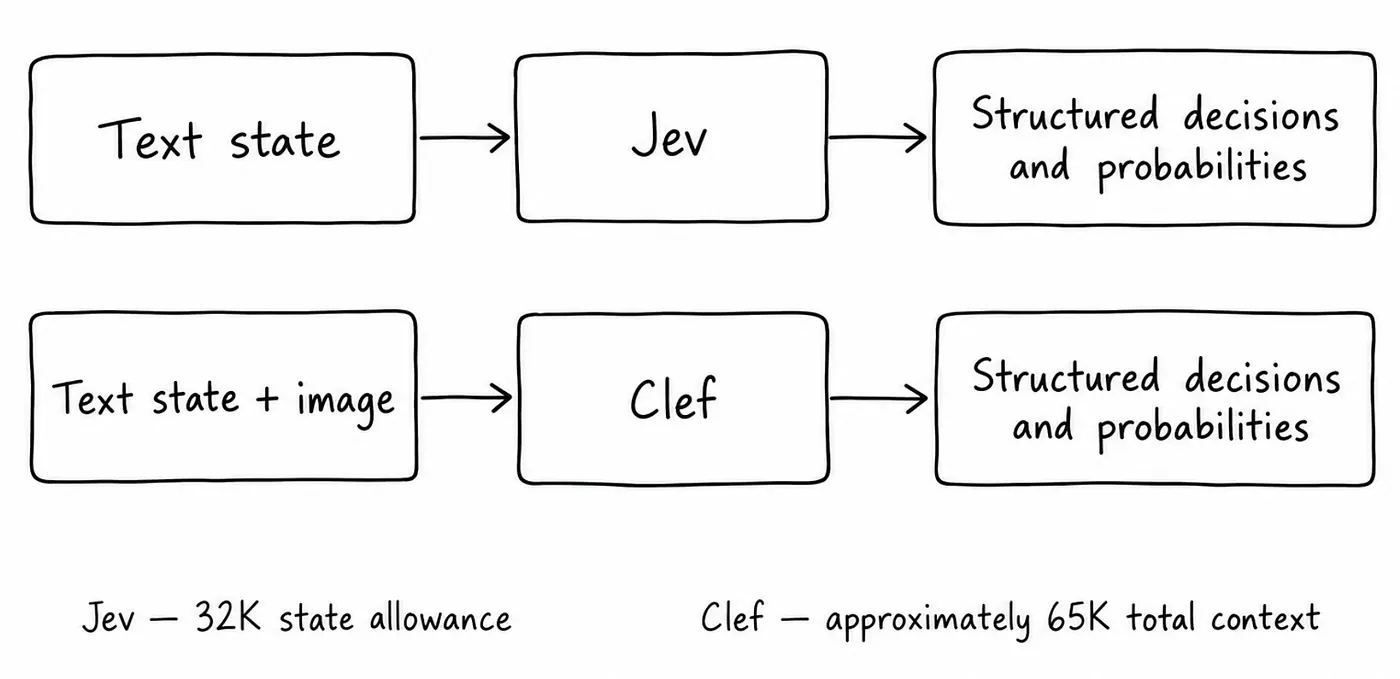
Clef also handles visual input. Jev currently accepts text, so you need another step to turn a screenshot or scanned document into something it can evaluate.
With Clef, you can include the image in the decision request. That’s useful for document checks and visual classification, especially if converting everything into text would lose information.
The hosted context window is 65,536 tokens. Jev has a 64K budget for the whole request, but the state plus its longest question is limited to 32K. So the advertised “2x context” advantage applies to how much shared input you can fit, with that detail attached.
In terms of demo projects, it’s weird that I don’t see that much posts on X and Reddit people building projects with Clef. Here’s one from Luis Catacora:
Clef vs Jev
Clef beats Jev on eight of the ten benchmarks in Cloudflare’s selected launch comparison.
Here are a few results:
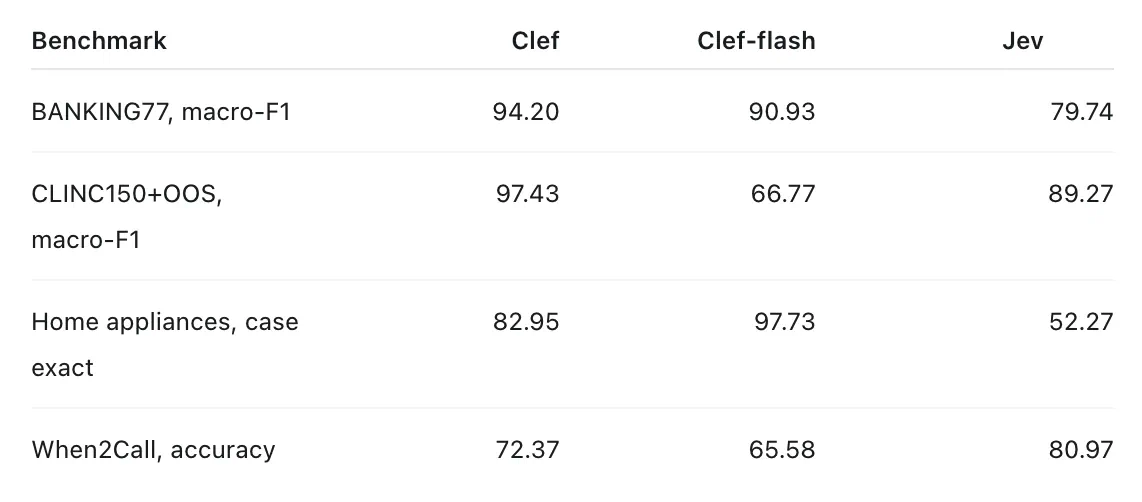
Clef vs Clef-flash vs Jev
The home-appliance result is crazy. Flash scores 97.73 against Jev’s 52.27. That’s close to twice the score.
Then you get to CLINC150, where Flash drops to 66.77 and the larger Clef reaches 97.43. I’d be annoyed if I switched to Flash for its speed and discovered that difference in my own intent-routing workload.
So yes, Clef beats Jev on several tasks. But there are some jobs where Jev performs better.
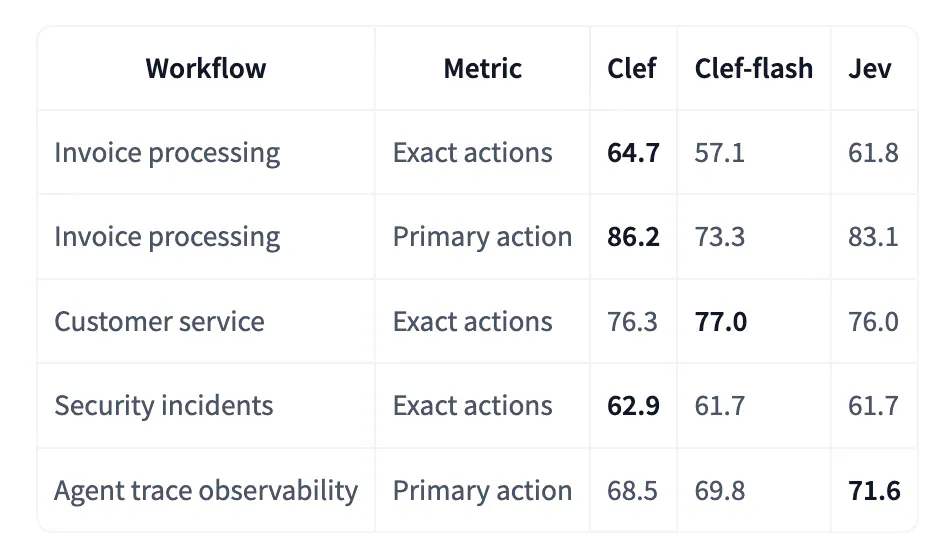
Cloudflare also tested TypeSafe’s four business workflows. Clef leads on three, though customer service is almost tied at 76.3 versus Jev’s 76.0. Jev leads on agent trace observability.
In some independent benchmarks like the one shared by John Ennis on X, Jev won the consumer text analysis benchmark.
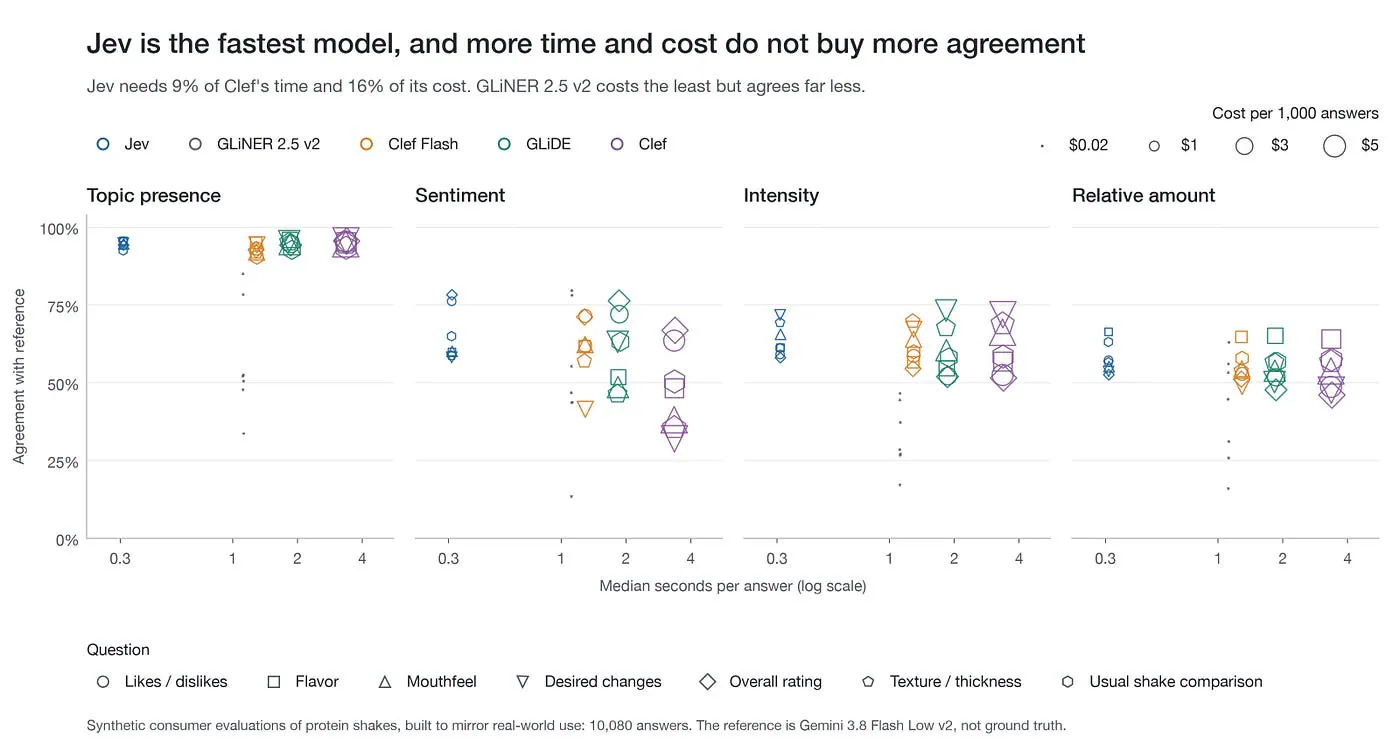
John Ennis’ consumer text analysis benchmark for Jev
John did a large scale comparison of Jev against Clef, GLiDE, and GLiNER models by FastinoAI using synthetic open ended text responses.
Now, in terms of latency, the results are more dramatic.
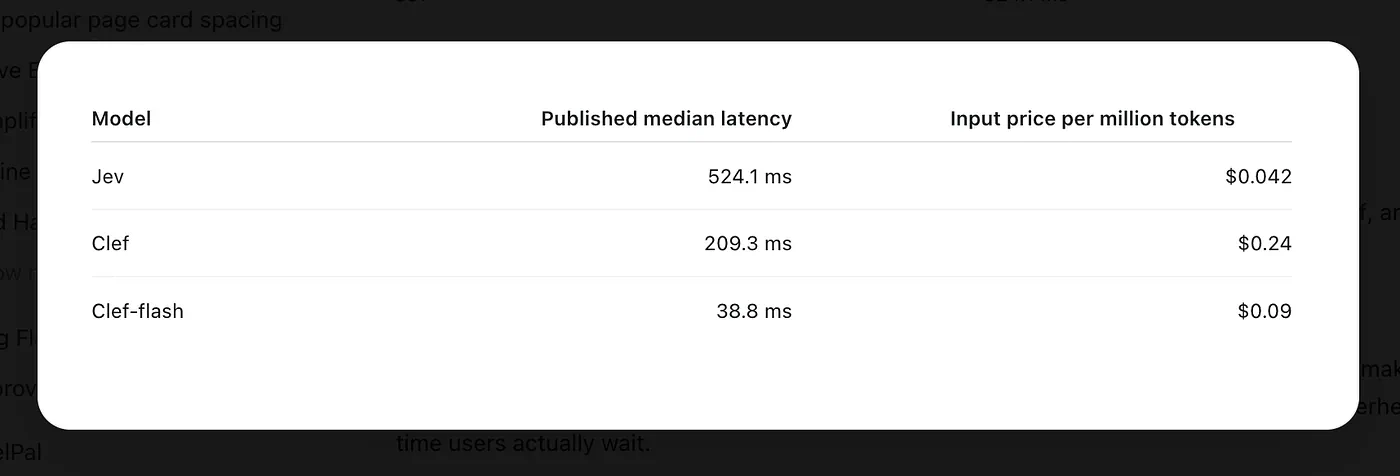
Clef is designed to be fast so decisions come back in milliseconds. Across Cloudflare’s 43 benchmark runs, they achieved speeds where Clef is 2.5x faster than Jev at the median, and Clef-flash 13x faster.
Median latency:
- Clef: 209.3 ms
- Clef-flash: 38.8 ms
- Jev: 524.1 ms
I want to try Flash for decisions inside an interactive request. That latency is low enough to make repeated checks much easier to justify. I’d still measure the API route my app uses, since network overhead affects the time users actually wait.
Jev wins the pricing comparison. Clef costs about 5.7 times as much per input token, while Flash costs about 2.1 times as much.
Sources
- Cloudflare released Clefblog.cloudflare.com
- https://x.com/Cloudflare/status/2105747536510099540x.com
- Jev’s APIdocs.typesafe.ai
- Jev costs $0.042 per million input tokensdocs.typesafe.ai
- https://generativeai.pub/new-jev-model-is-insane-200x-faster-400x-cheaper-than-frontier-models-4c595a3abe55generativeai.pub
- Clefhuggingface.co
- Clef-flashhuggingface.co
- context window