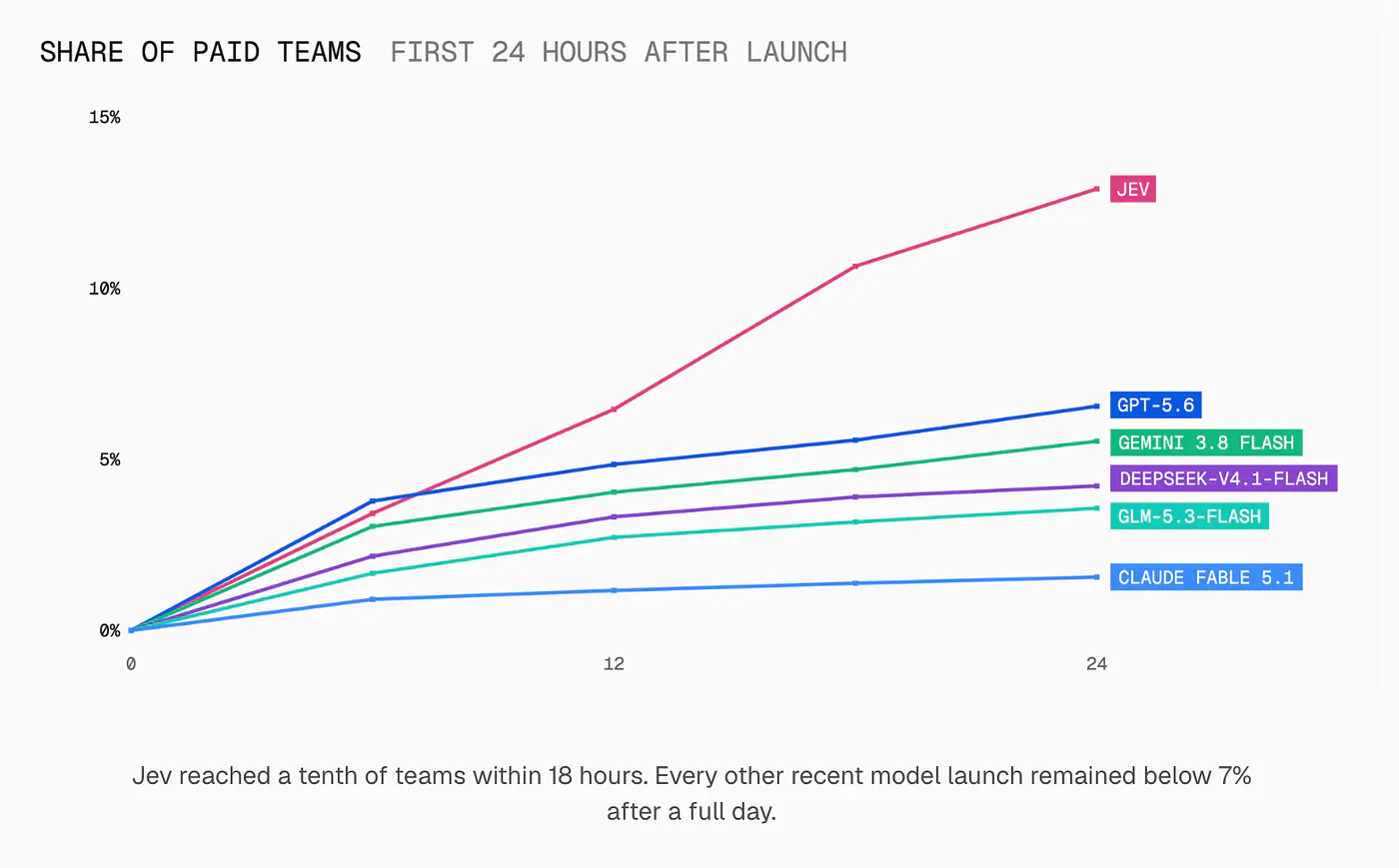
Jev broke the internet when it launched two weeks ago. I wrote an article about it, and it quickly became one of my highest-earning articles. Clearly, people were curious about this new AI model.
That got me thinking: why not write a follow-up?
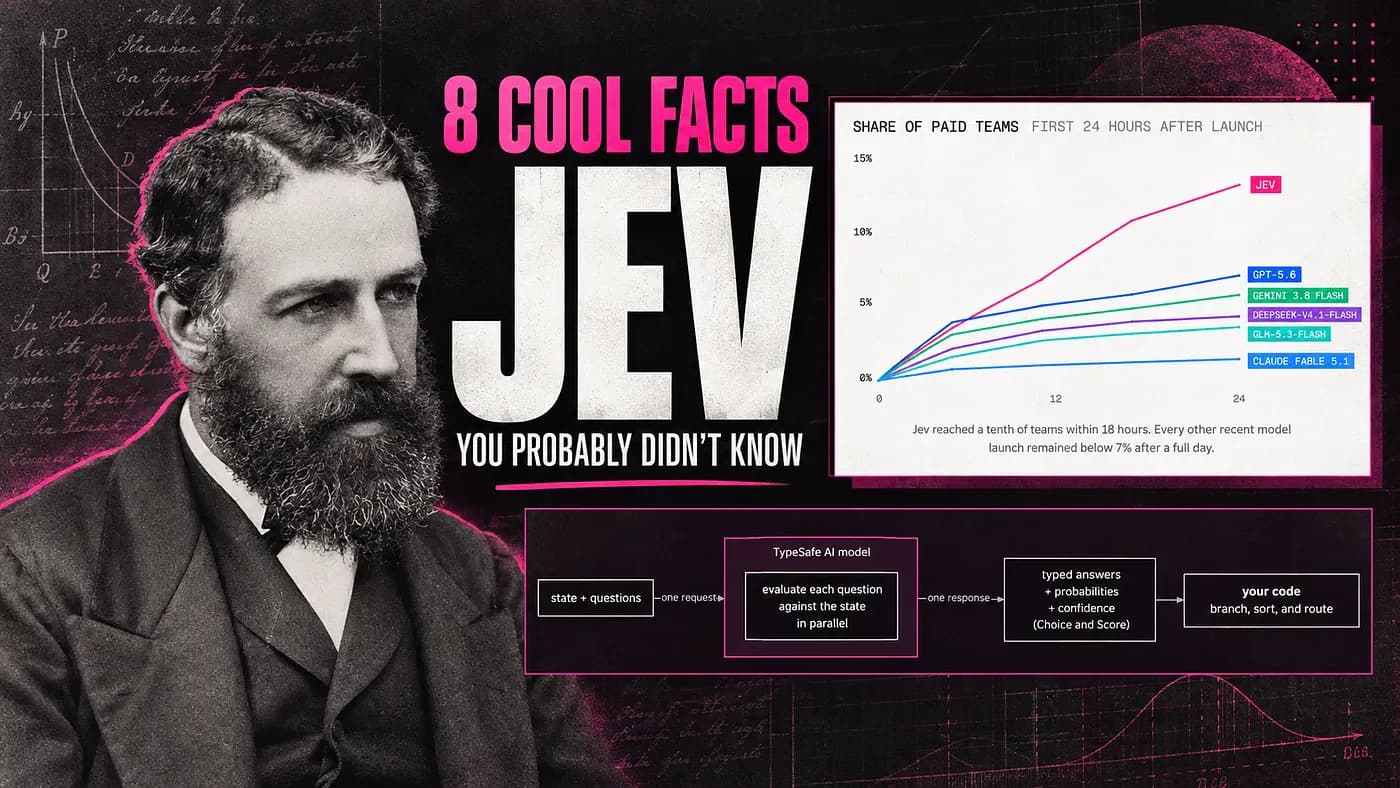
This time, I wanted to share eight cool facts about Jev that you might’ve missed.
Let’s get started.
1. Jev doesn’t write text
Jev is nothing like your typical AI chatbot, such as ChatGPT.
It doesn’t write text. It makes decisions.
It won’t write an email or give you a long answer. You give it a question and a list of possible answers, and it picks one.
It takes program state plus typed questions and returns only a choice, a score, or a yes/no probability. The schema is fixed before the call, so it cannot invent a fifth option when you offered four.

Jev is the first System One model
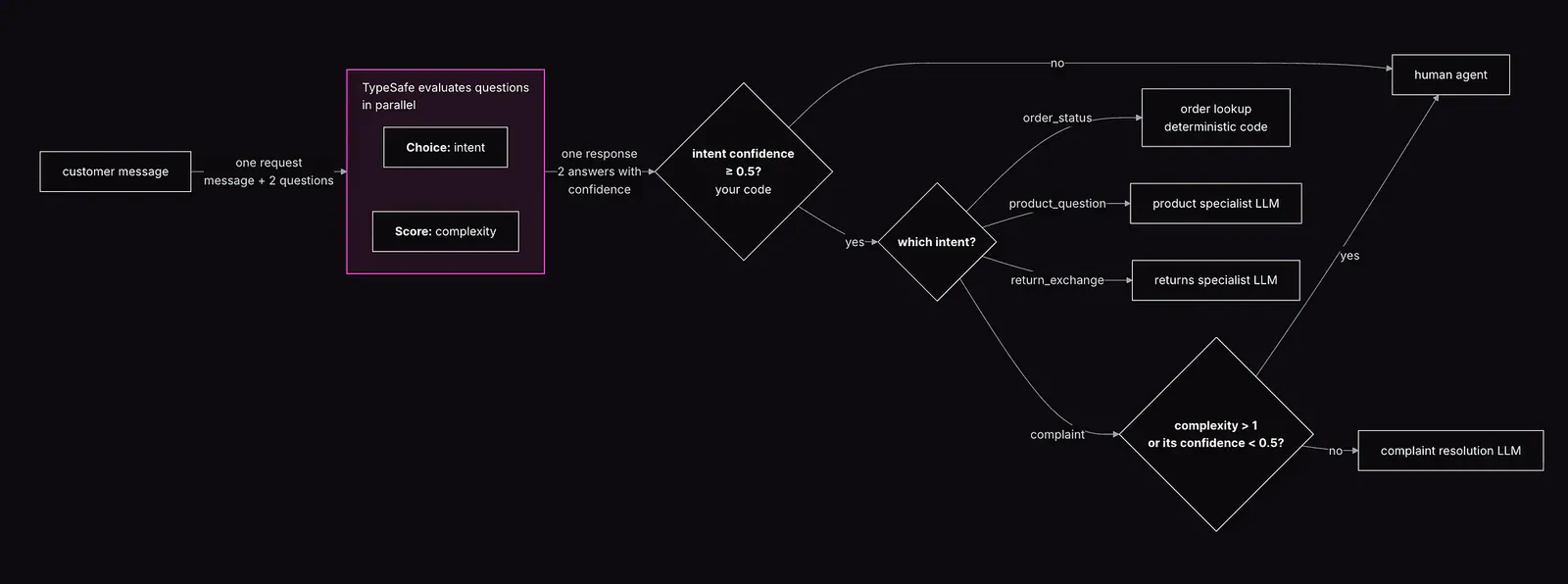
For example, give it a customer’s message and ask: “Does this person need a refund, a replacement, or technical support?” Jev picks an answer, and your app sends the message to the right department.
The word “refund” might appear in its response, but that’s a label you supplied. Jev didn’t write an original reply.
2. Jev is not a new idea
If you think Jev is a groundbreaking new AI model, well, not exactly.
AI models that classify information and return probabilities existed before Jev. One developer published a related project more than a year before its launch.
In March 2025, Nandakishor M released SalesRLAgent, a reinforcement-learning system for predicting whether a sales conversation would lead to a purchase. It updated conversion probabilities as the conversation progressed.
After Jev launched, he posted his earlier work on Reddit and it blew up.
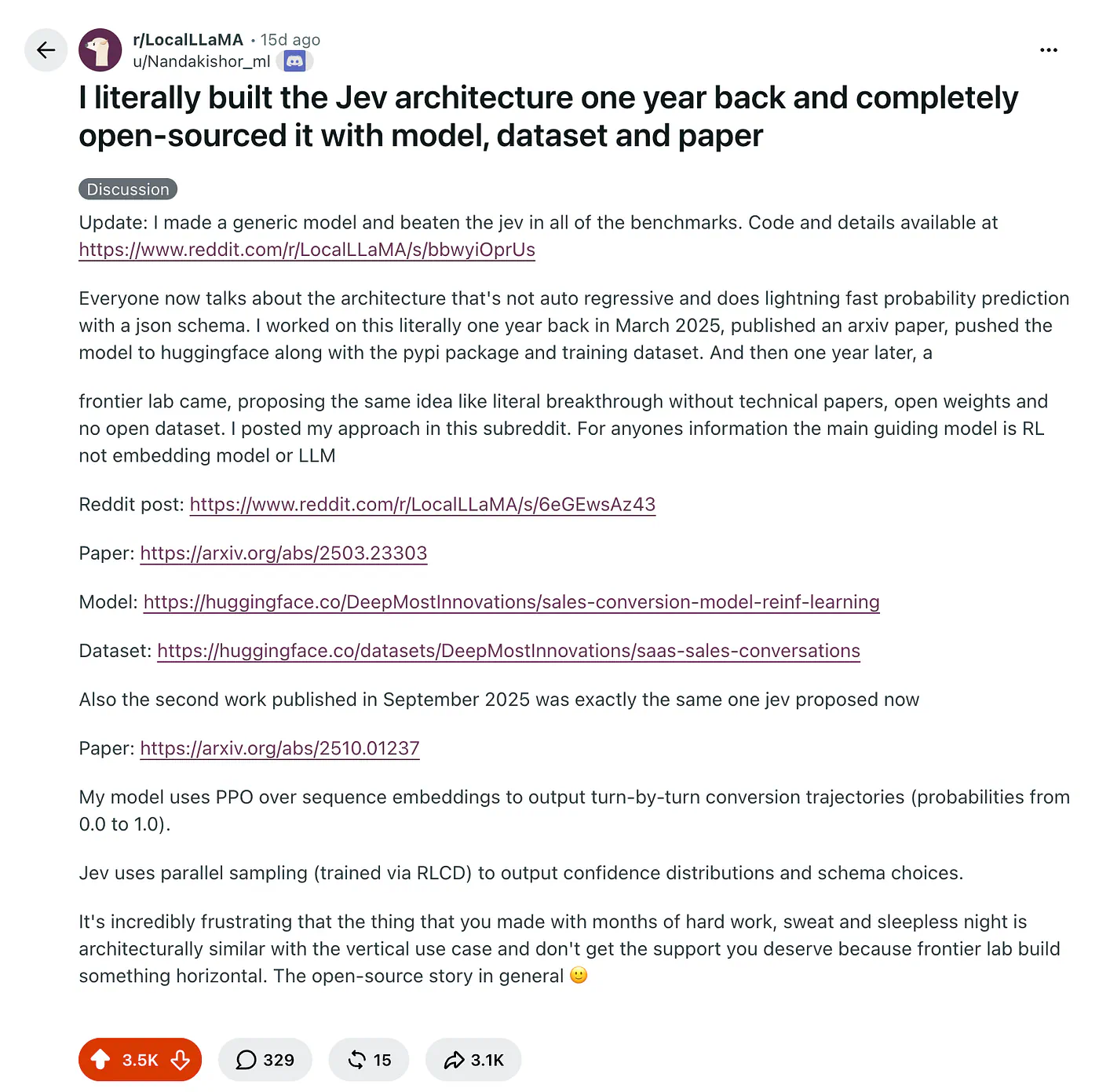
Nandakishor M’s Reddit post about Jev
Nandakishor said his first reaction to Jev was excitement. Then frustration came after.
I trained it overnight while travelling back from Trivandrum and published it the next morning. That was 12 to 15 hours of work, sitting on top of years of research.
3. Jev is named after an economist
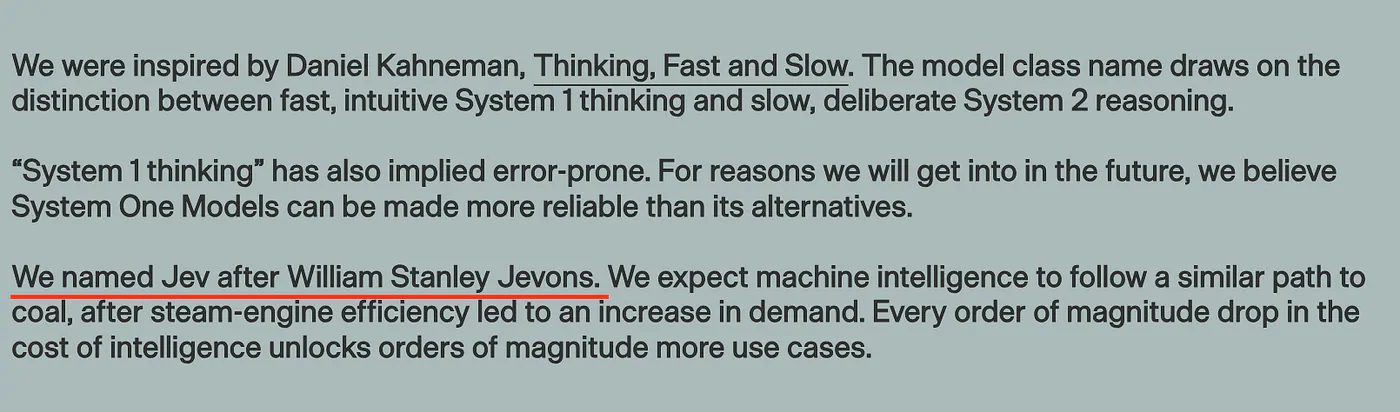
Jev gets its name from William Stanley Jevons, a nineteenth-century economist associated with Jevons paradox.

William Stanley Jevons
The idea is that making a resource more efficient to use can increase total demand for it. As it becomes cheaper to use, people find more things to do with it.
TypeSafe expects the cost of AI to have a similar effect. Cheaper model calls could encourage people to add AI to more parts of their software.
A business might start by checking whether a support ticket is urgent. If each check costs very little, it could also evaluate the proposed reply and decide whether the case needs a person.
Each additional check creates more demand. Jev’s name reflects the company’s bet that falling prices will lead to much more AI use.
4. Its yes-or-no answers aren’t just “yes” or “no”
Jev has a question type called Noul that returns the probability of “yes,” expressed as a number between zero and one.
Ask whether a message sounds urgent, and it could return 0.9, meaning a 90% probability of yes. An answer near 0.5 shows much more uncertainty.
For example, if you ask Jev whether a customer’s message called for a human agent. These are recorded answers:
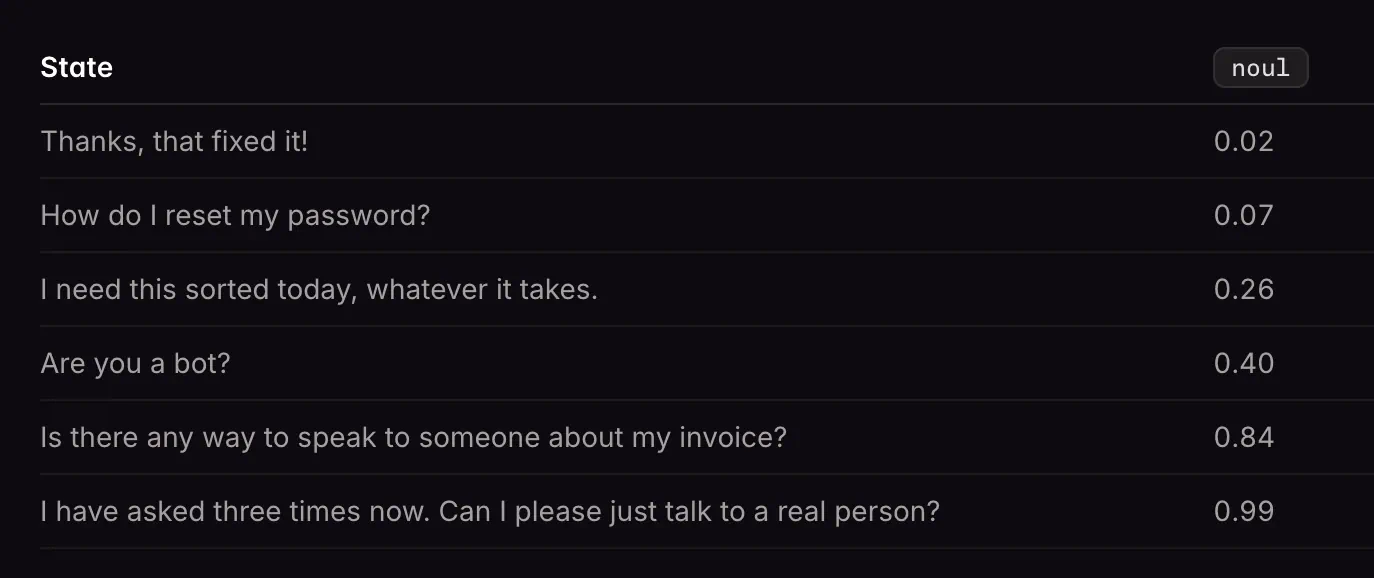
“I need this sorted today” sounds urgent, but the customer hasn’t asked for a person. Jev gives it 0.26. “Are you a bot?” hints that they might want a human, so it returns a less certain 0.40.
Your app decides what to do with that number.
For a support inbox, you could automatically flag messages above a chosen threshold. Uncertain cases could stay in the regular queue or go to a person for review.
You’d probably use stricter rules before approving a payment than before flagging an email. The probability lets you build those different rules into the app.
Jev still won’t explain its reasoning. You get an estimate, and you need to test how well that estimate holds up on the messages you actually receive.
5. Jev costs almost nothing
TypeSafe lists Jev at $0.042 per million input tokens, with free output tokens. That’s 4.2 cents for a million tokens.
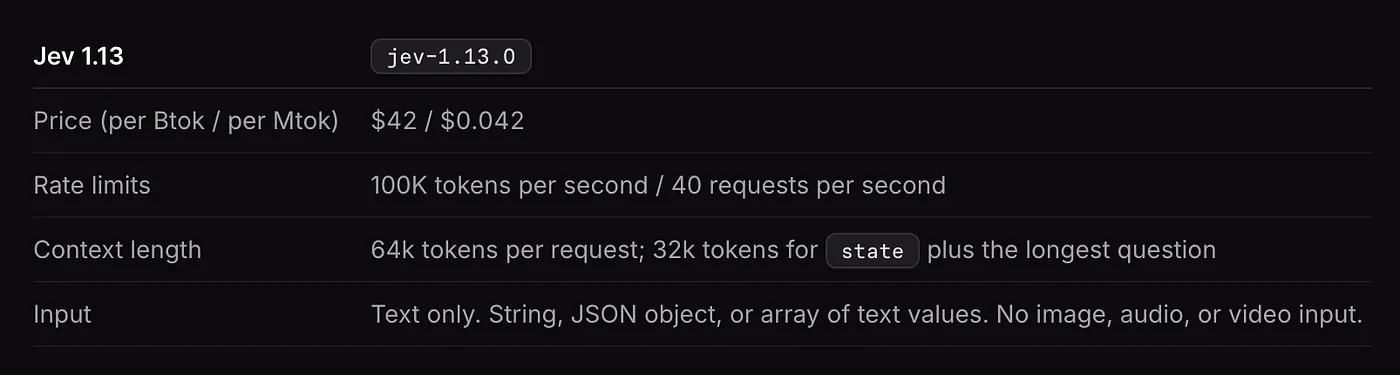
At that rate, a request using 1,000 input tokens costs $0.000042. A dollar covers roughly 24,000 requests of that size.
Longer inputs cost more, so sending an entire document is a different calculation from checking a short message. Your hosting and other services also add to the bill.
But the model price makes frequent checks easier to afford. You can experiment with evaluating every incoming request without each test costing several cents.
What’s even cooler is that platforms like Vercel offered free Jev access through AI Gateway until September 25, 2026.
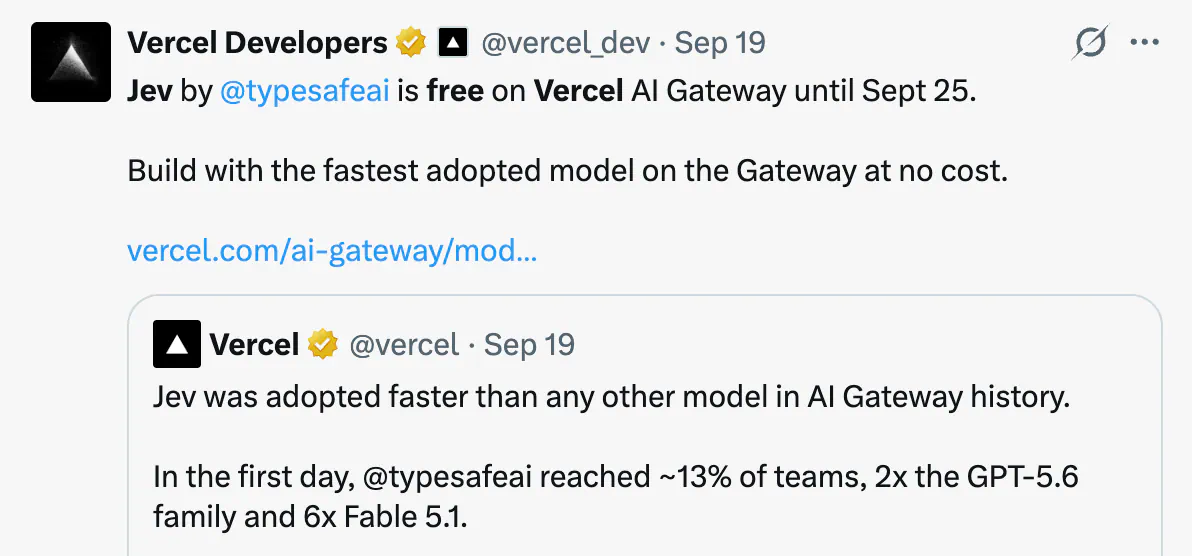
Yes, I know it’s already ended, but you see how cheap Jev is that AI providers are offering them for free.
6. Jev’s founder is an ex-OpenAI researcher
Diogo Almeida, TypeSafe’s co-founder and CEO, worked at OpenAI and co-authored the 2022 InstructGPT paper.
That research used human feedback to help language models follow instructions. People wrote examples and ranked responses, teaching the models which answers people preferred.
TypeSafe spent two years in stealth before launching Jev on September 15, 2026. On the same day, DCVC announced a $40 million seed round. What an incredible amount of patience he has in the fast paced world of AI.
His OpenAI background connects Jev to the research behind instruction-following chat models, even though Jev itself doesn’t chat.
Sources
- wrote an article about itgenerativeai.pub
- SalesRLAgentarxiv.org
- posted his earlier work on Redditreddit.com
- said his first reactionx.com
- William Stanley Jevonsbritannica.com
- similar effecttypesafe.ai
- $0.042 per million input tokensdocs.typesafe.ai