
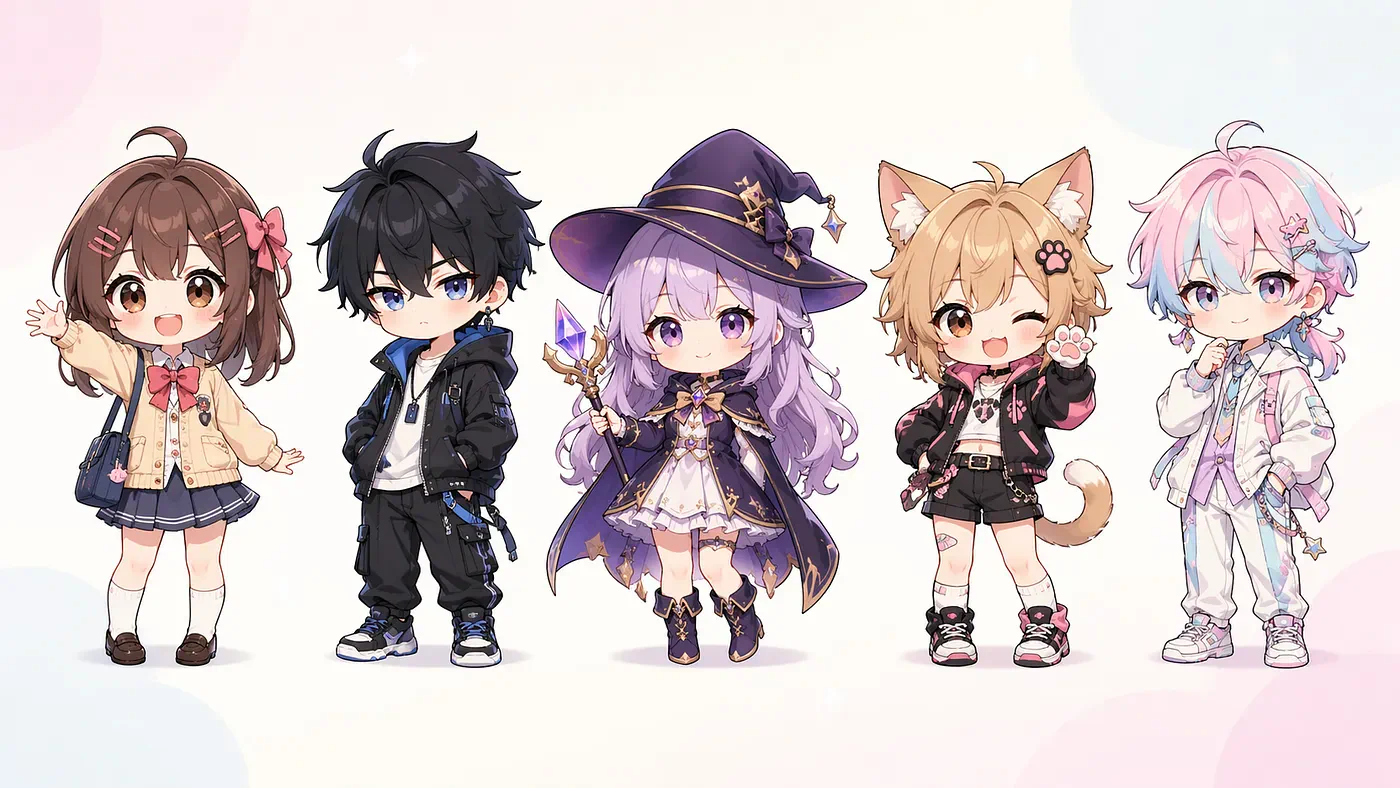
Today my six-year-old niece asked me to draw a chibi version of herself on my iPad. I told her we could just use AI to make one. Easy peasy… but it wasn’t actually.
Deciding which tool to actually use turned out to be trickier than I expected. There are a lot of AI image generators out there now, and not all of them handle chibi the same way. Some are general-purpose models that happen to do anime styles. Others are fine-tuned specifically for anime and chibi work. The output you get from each one is pretty different.
Chibi also looks deceptively simple until you try to generate it. The proportions are extreme, expressions are exaggerated, and the linework has to stay clean even when the character is only a few hundred pixels tall. Get any of that wrong and the result looks like a regular anime character with a shrunken body.
So I did some research and found 5 tools that some of my Otaku readers might find helpful.
Before getting into the details, here is the short version:
- PixAI is an anime-first platform with thousands of community models, many of them tuned specifically for chibi.
- ChatGPT uses GPT Image 1.5 for native image generation and handles chibi through natural conversation.
- Nano Banana Pro is Google’s flagship image model built on Gemini 3 Pro, strong at reasoning and character consistency.
- Flux 2 Pro is Black Forest Labs’ production-grade model with strong prompt adherence and multi-reference support.
- Midjourney v7 is the Discord and web-based model known for stylized, painterly output.
Now let’s go through each one.
1. PixAI
PixAI is a text-to-image platform focused almost entirely on anime and anime-adjacent styles. It runs on fine-tuned Stable Diffusion checkpoints, many uploaded by the community, and it supports LoRAs, ControlNet, img2img, and character templates.
A lot of the models are trained specifically on chibi data, which is why it lands at the top of this list.
Press enter or click to view image in full size
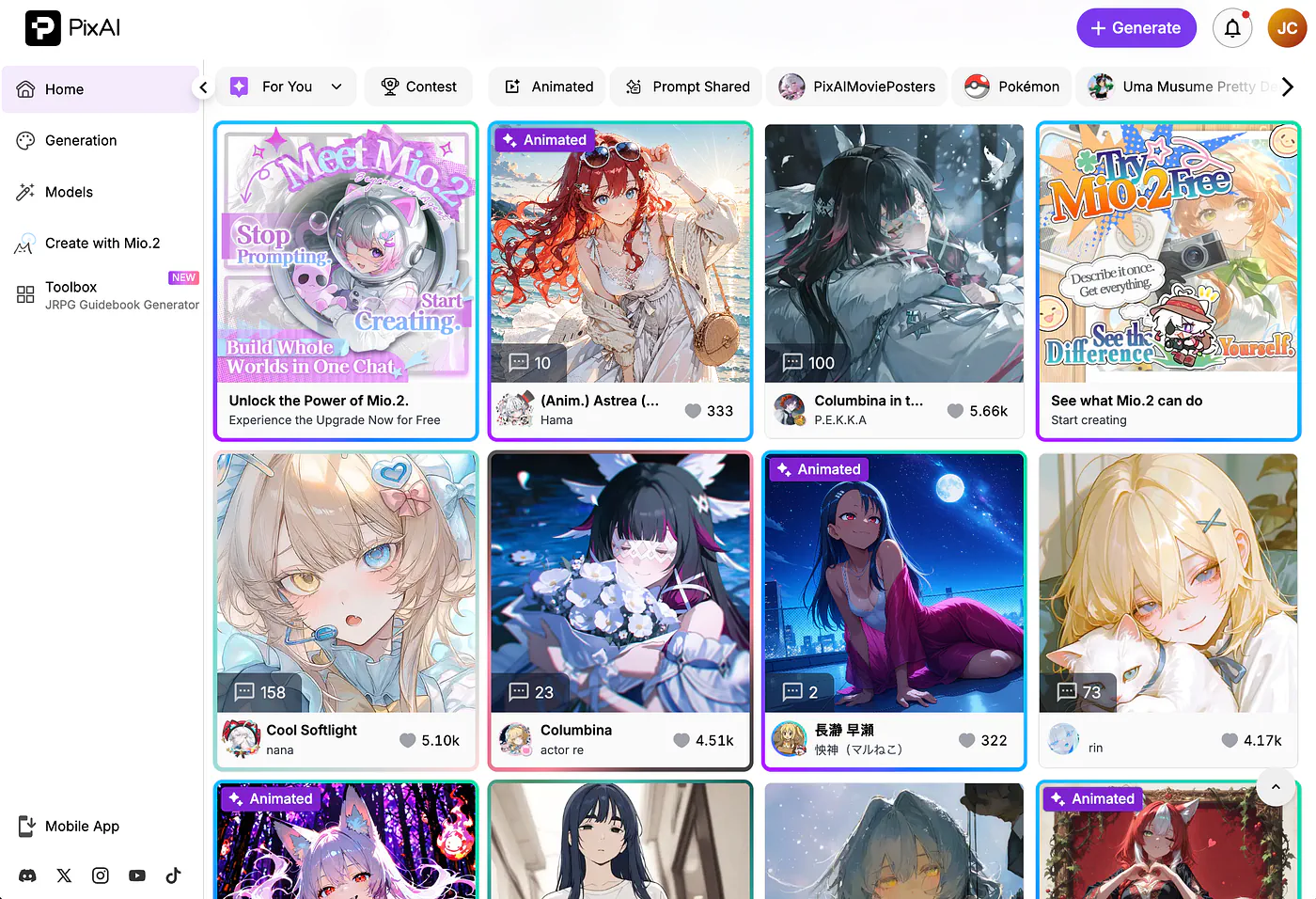
PixAI dashboard. Image by Jim Clyde Monge
You can access PixAI at pixai.art. There’s a free tier with daily credits that reset every 24 hours, and paid plans start at $9.99/month for Starter, $29.99 for Plus, and $49.99 for Premium.
Here’s a sample prompt:
Prompt: chibi character, girl, short pink hair, green eyes, oversized head, tiny body, holding a sword, flat colors, thick line art, white background, full body
Press enter or click to view image in full size
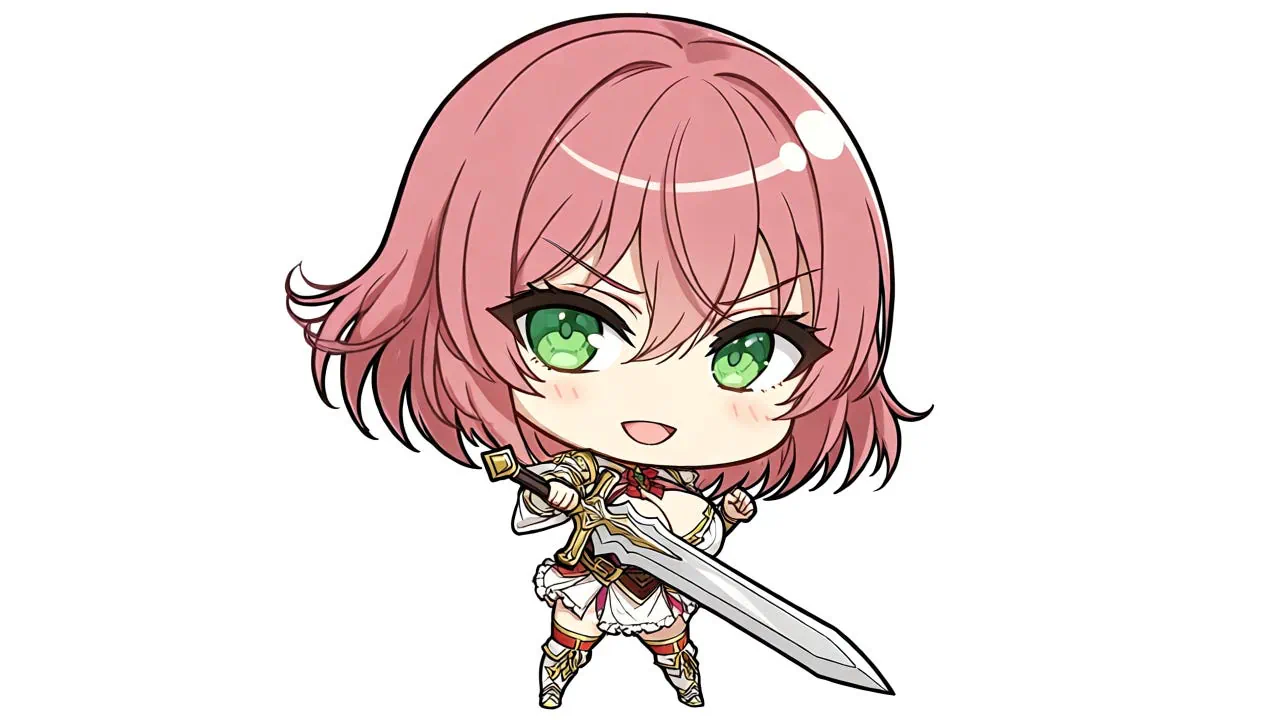
PixAI sample chibi image. Image by Jim Clyde Monge
The result is pretty much what you’d expect from a chibi-trained model.
Clean linework, oversized head, body proportions that actually look like chibi and not just a miniaturized anime character. Colors come out flat and saturated, which is the right look for stickers or merch.
What I like most is being able to switch between chibi-focused checkpoints and get completely different aesthetics without rewriting the prompt. Some models lean toward cute plushie vibes. Others are closer to traditional manga chibi.
What I like about PixAI is how much control you have over the output images and how ample the number of available models are. Take a look at the image generator dashboard below. On the left side you can see that there are options for the model, style, LoRAs, resolution, aspect ratio, etc.
Press enter or click to view image in full size
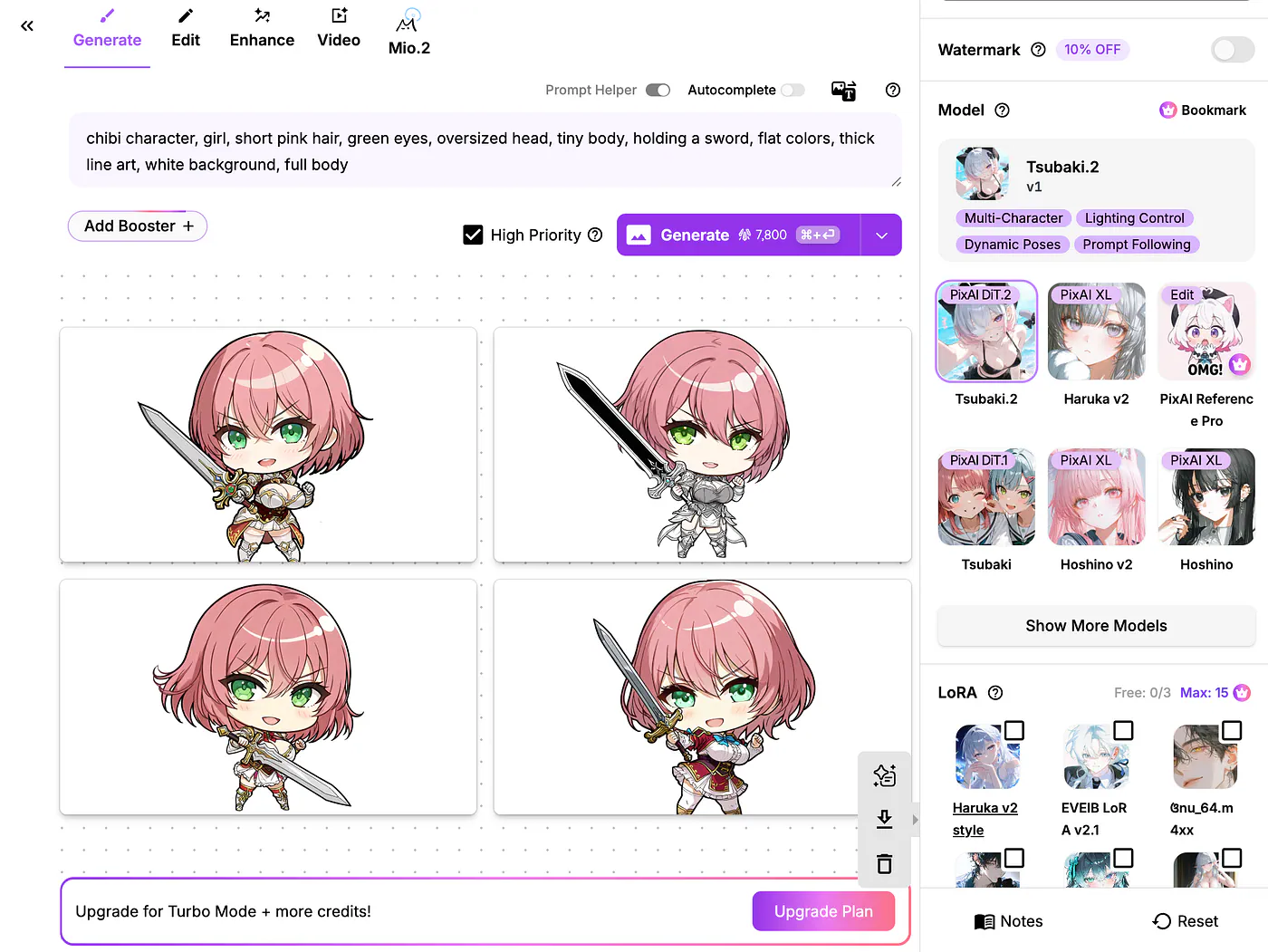
PixAI image generation dashboard. Image by Jim Clyde Monge
You can also control the number of output images. Once the results are generated, you can make further edits like make enhancements or turn them into videos!
Pros:
- PixAI is purpose-built for anime and chibi styles.
- The library of community models and LoRAs is massive
- You get ControlNet plus img2img support when you want to feed in a pose reference.
Cons:
- Quality varies between community checkpoints, so you’ll waste a few generations figuring out which ones actually deliver.
- Queue times on the free tier get long during peak hours too.
2. ChatGPT
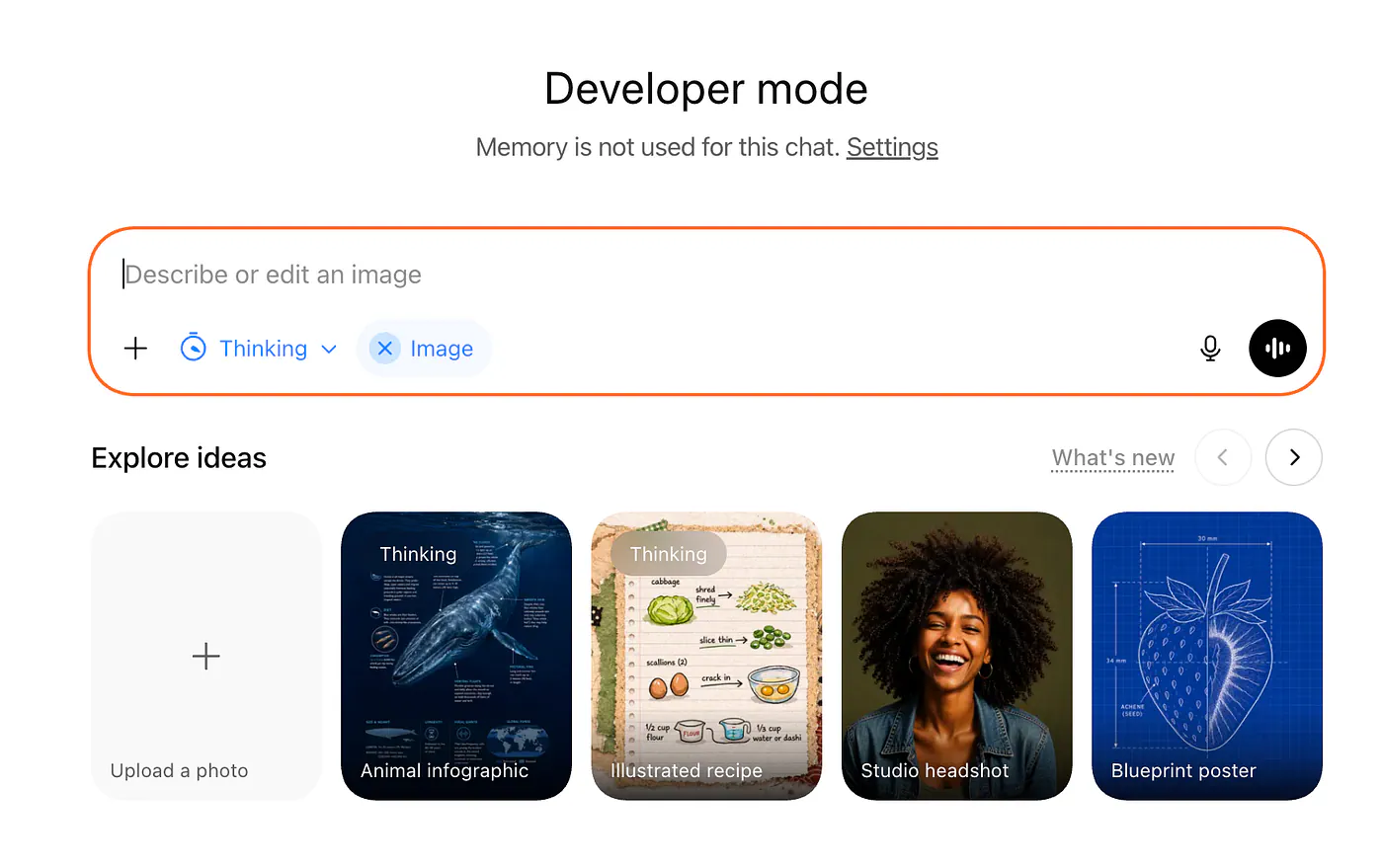
ChatGPT’s image generation is powered by GPT Image 1.5. Well, if you are a paid subscriber, you now have access to the recently released ChatGPT Image 2.0. This brand new model features a near-perfect text rendering and next level hyperrealism capabilities.
Press enter or click to view image in full size
ChatGPT image generation dashboard. Image by Jim Clyde Monge
It’s a multimodal model, so the conversation and the image live in the same context. You can describe a character, ask for a chibi version, then iterate with follow-ups like “make the hair silver” or “add a tiny dragon on the shoulder.”
It’s available at chatgpt.com on Free, Plus, Pro, and Team tiers. Plus at $20/month is the most common entry point, and it includes image generation alongside everything else.
Let’s do an example:
Prompt: Generate a chibi style anime character. She has short pink hair, green eyes, is holding a small sword, and stands on a white background. Flat colors, thick lines, oversized head, tiny body.
Press enter or click to view image in full size
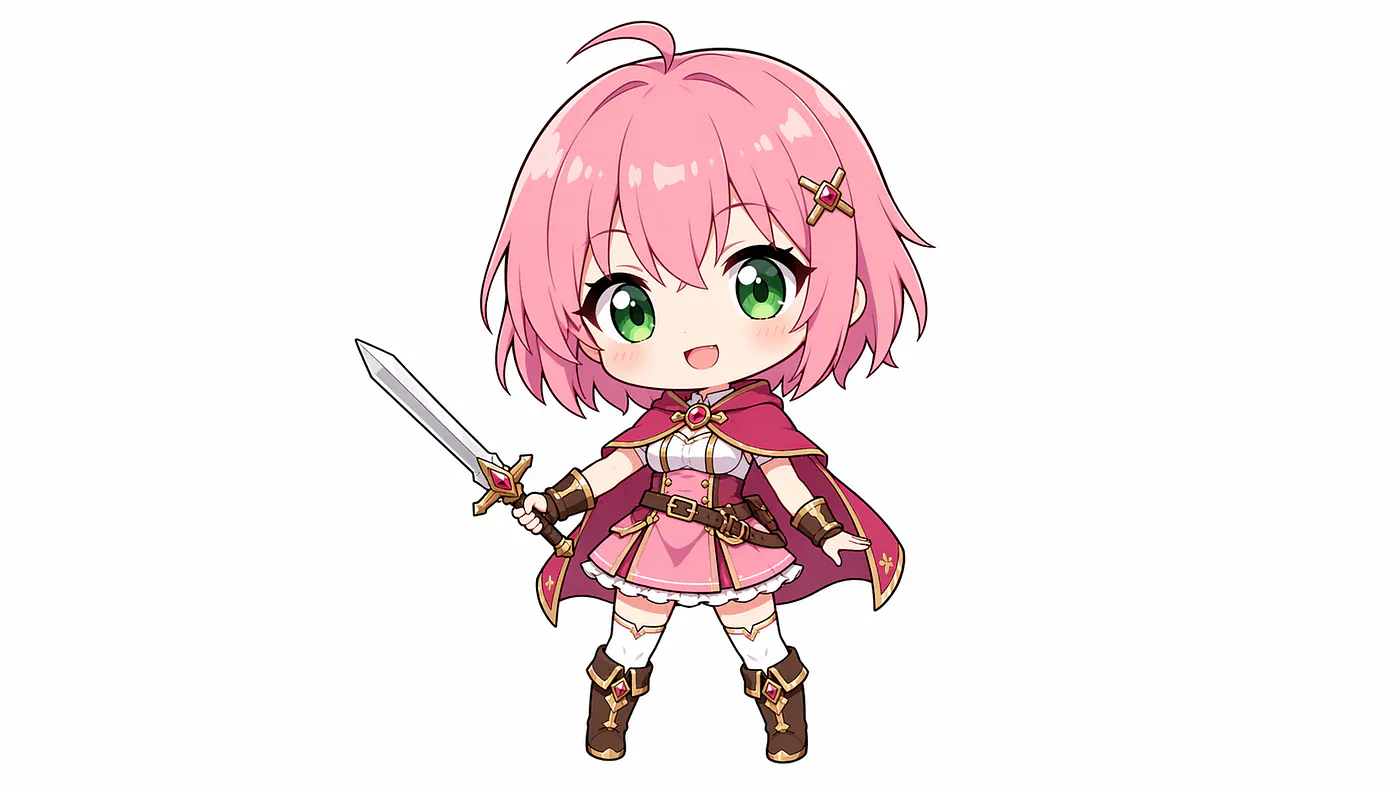
Chibi image generated with ChatGPT image 2. Image by Jim Clyde Monge
It looks good but I was expecting a character with larger head.
Sometimes it nails the proportions. Other times the head is only slightly larger than it should be, and the body still has realistic-ish anime proportions. Face is usually good, lineart is clean, but I end up going back and forth a few times to push it into proper chibi territory.
The real advantage here is the conversational loop. I can ask for ten variations, reference something from earlier in the chat, or paste a photo and ask for a chibi version of it. That feels natural in a way standalone image tools don’t.
Here’s how it works in the image generator dashboard. In the ChatGPT chat prompt, toggle the “Create an image” button and describe the image you want to create.
Press enter or click to view image in full size
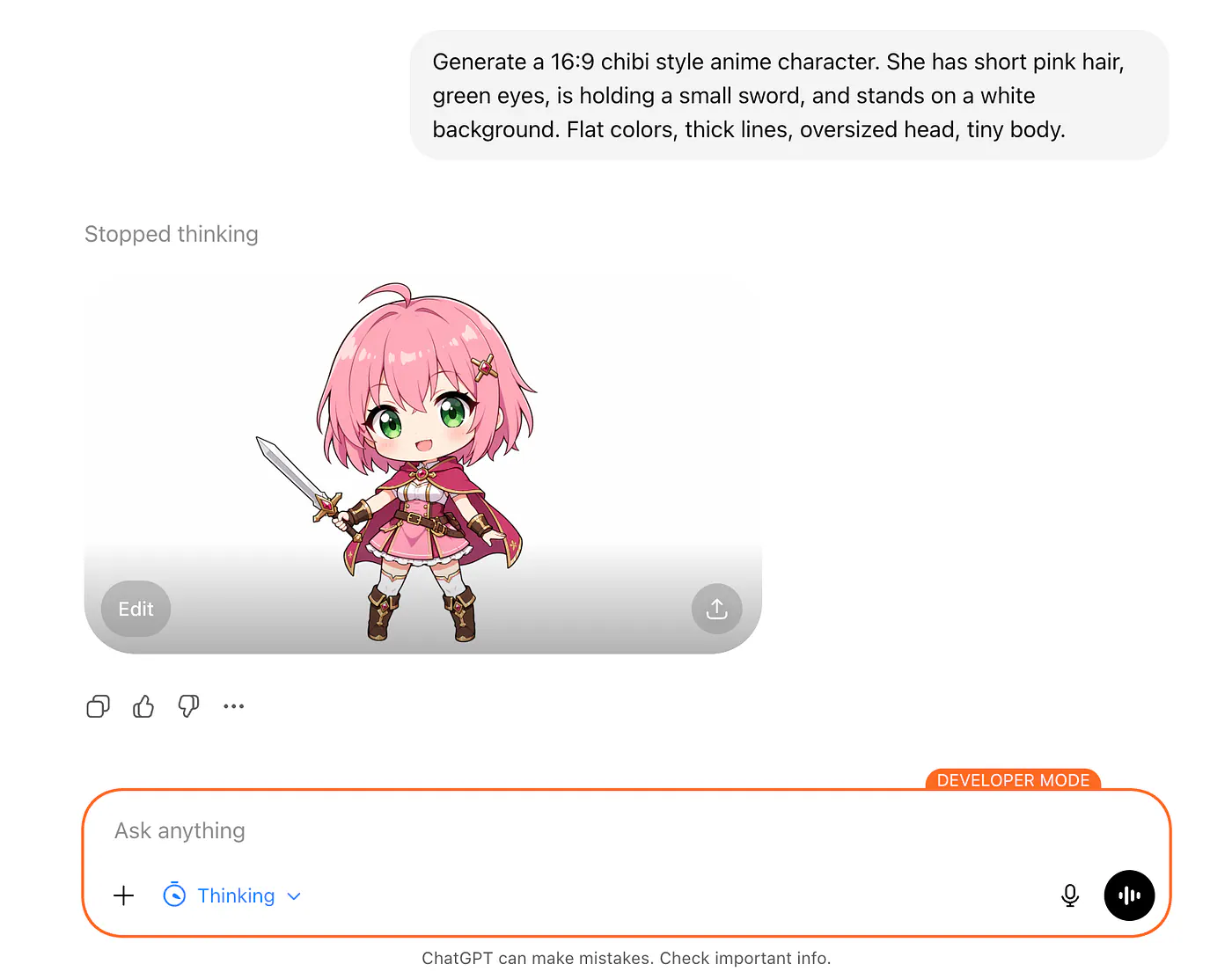
Chibi image generated with ChatGPT image 2. Image by Jim Clyde Monge
Once done, click on the output image and choose download to upscale the image and download it to your local disk.
Pros:
- Conversational iteration feels fast and intuitive
- Strong text rendering inside images
- Easy to combine with other ChatGPT features
Cons:
- Not chibi-native, so it defaults to standard anime proportions unless pushed
- Content filters are stricter than most tools on this list
- Output has a clean commercial look that’s hard to shake
3. Nano Banana Pro
Nano Banana Pro is Google’s current flagship image model, built on Gemini 3 Pro. Released in late November 2025, it’s the upgrade to the original Nano Banana (which ran on Gemini 2.5 Flash Image).
It does up to 4K output, handles up to 8 reference images, keeps character consistency across 5 subjects, and has strong text rendering inside images.
You can access it through the Gemini app by selecting “Create images” with the Thinking model, or through Google AI Studio and Vertex AI. Adobe Firefly and Photoshop also integrate it as a partner model.
Check out the example below:
Prompt: A chibi anime character with short pink hair and green eyes, holding a small sword. Big head, tiny body, flat colors, clean line art, white background, sticker style.
Press enter or click to view image in full size
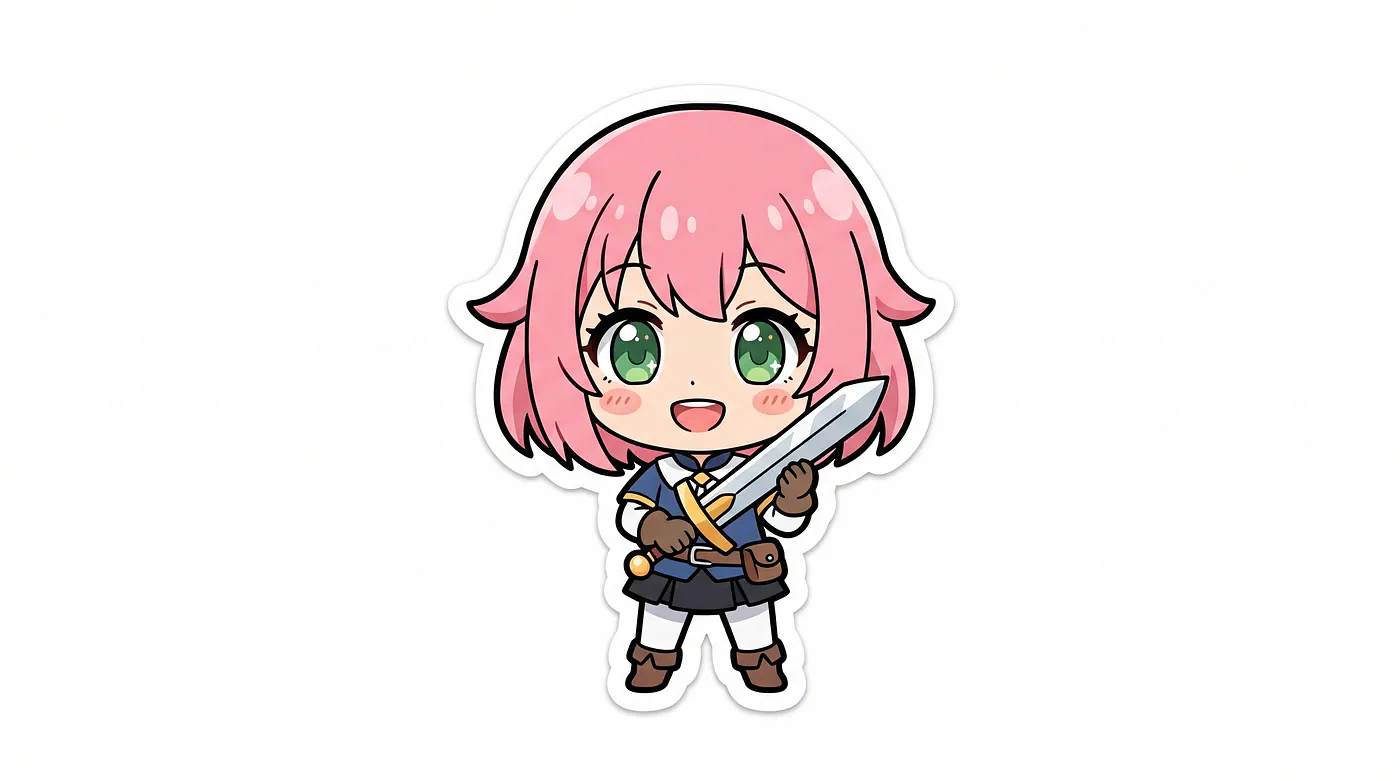
Chibi image generated with Nano Banana 2. Image by Jim Clyde Monge
Nano Banana Pro does chibi surprisingly well for a general-purpose model.
The proportions come out closer to real chibi than ChatGPT’s default, and the linework is sharper. What stands out more is the character consistency. Generate one chibi character, then ask for five different poses of the same character, and the model holds the identity well across the set. Useful for sticker packs or small game asset kits.
To create one with the Gemini app, make sure you have the “Create image” toggled to let the AI know you are trying to create an image. Then describe the output in the prompt box before you hit the enter key.
Press enter or click to view image in full size
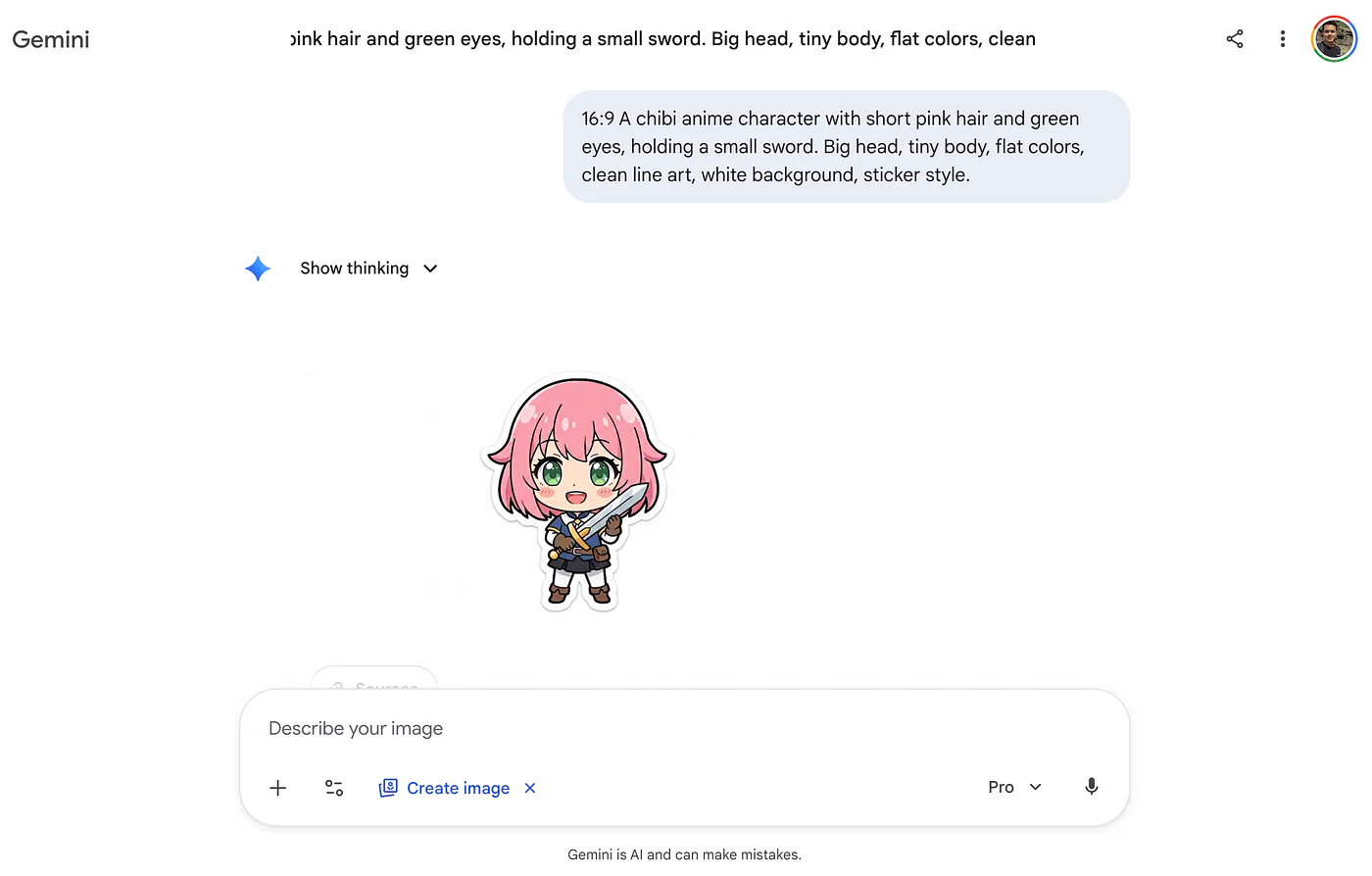
Chibi image generated with Nano Banana 2. Image by Jim Clyde Monge
The downside is that, Gemini is a general purpose chat app. There are no image controls like in PixAI so you have to describe what you want to the AI. There are also no styling or custom LoRAs available so the default aesthetic leans toward digital illustration rather than pure anime. Output sometimes looks more like a Pixar-chibi hybrid than a traditional Japanese chibi.
Pros:
- Excellent character consistency across multiple generations
- High resolution up to 4K
- Strong text rendering if you need text inside the image
Cons:
- Default style isn’t true anime chibi
- Free tier is limited
- Requires switching to Thinking mode inside Gemini
4. Flux 2 Pro
Flux 2 Pro is Black Forest Labs’ production-grade image model, released on November 25, 2025. It’s part of the Flux 2 family, which also includes Flex, Max, Klein, and the open-weight Dev variant. Flux 2 Pro uses a latent flow matching architecture combined with a Mistral-3 vision-language model, and it supports up to 10 reference images, 4MP output, and 32K prompt tokens.
It’s available through the BFL API and third-party providers like fal.ai and Together AI. Pricing runs at $0.03 per megapixel of output. No subscription, pay per image.
Let’s try this prompt as an example:
Prompt: chibi anime character, short pink hair, green eyes, oversized head, tiny body, holding a sword, flat colors, thick black outlines, white background, sticker art style, full body
Press enter or click to view image in full size
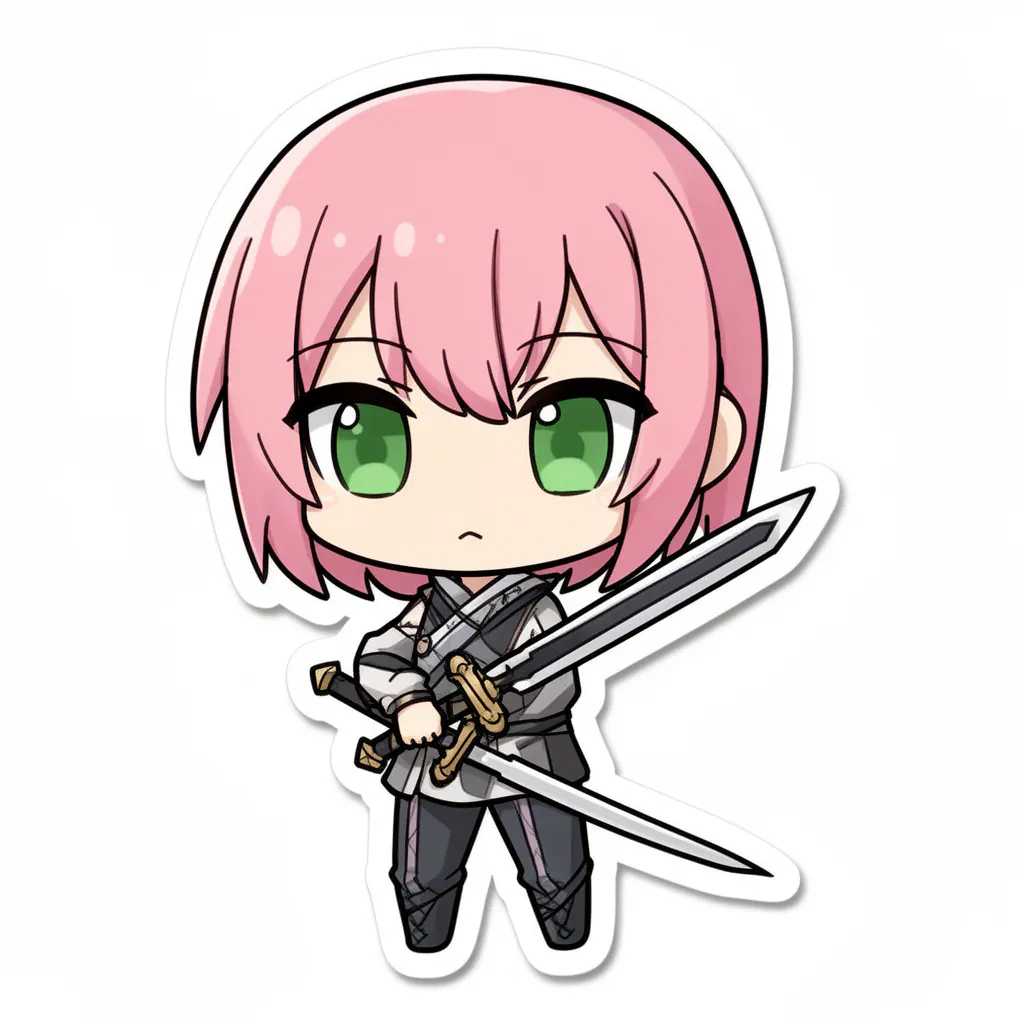
Chibi image generated with Flux 2 Pro. Image by Jim Clyde Monge
The output from Flux 2 Pro is sharp and detail-rich. Textures on the hair strands, small highlights in the eyes, crisp line art. Where it falls short is the “chibi-ness” of the proportions. Flux 2 tends to produce semi-realistic images by default, so pushing it into exaggerated cartoon proportions takes deliberate prompting.
When it does click, though, the results are some of the cleanest on this list. The lineart feels intentional, like something a skilled illustrator would actually draw.
If you want to generate an image with Flux 2 Pro yourself, go to Flux Labs AI and open the image generator tool. Set the model to Flux 2 and describe the chibi style image in the prompt section.
Press enter or click to view image in full size
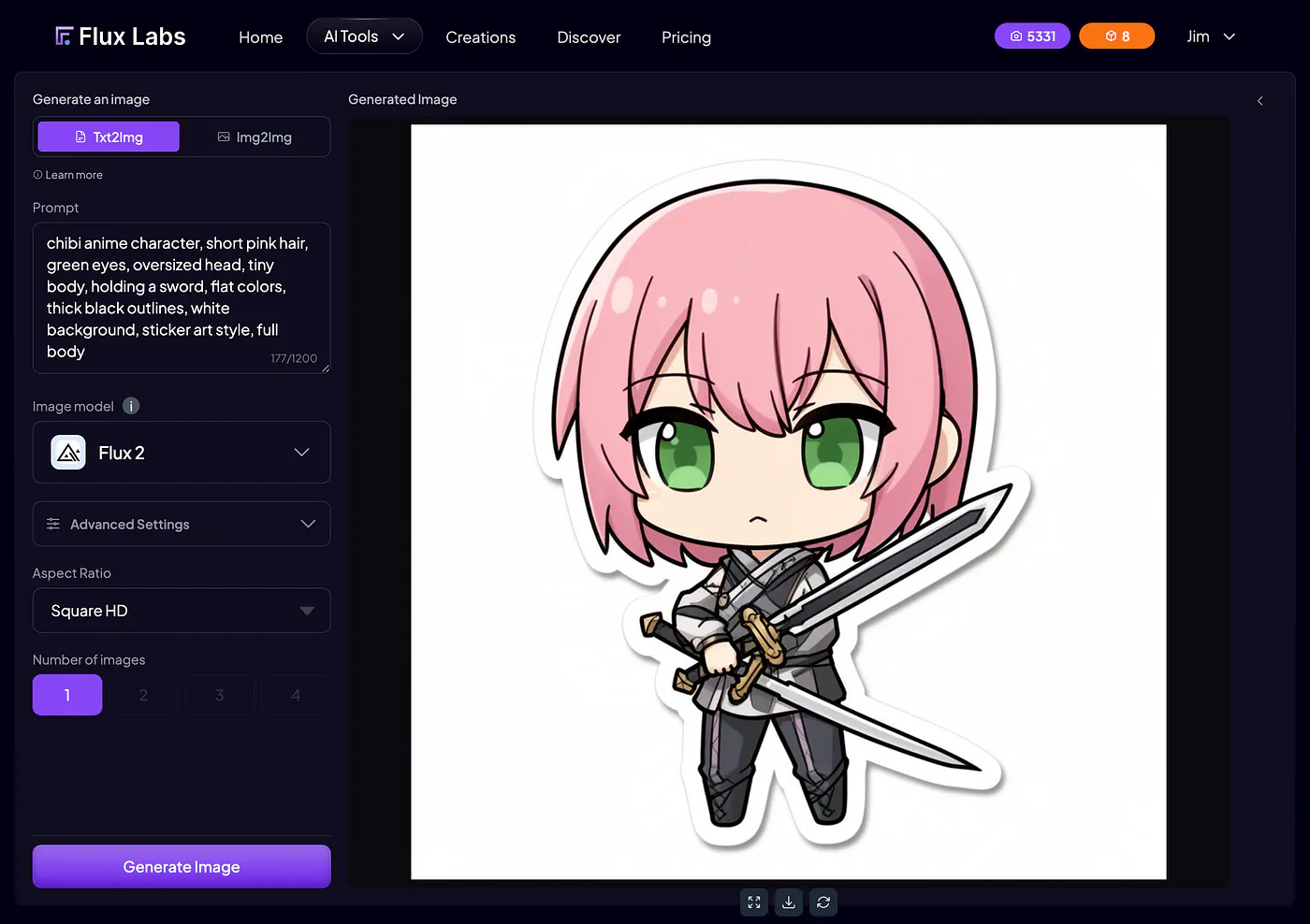
Flux Labs AI image geneartor dashboard. Image by Jim Clyde Monge
You can adjust settings like the aspect ratio, inference steps, output format, and the number of images.
Pros:
- Extremely high detail and clean linework
- Strong prompt adherence
- Open-weight variants (Flux 2 Dev) available for self-hosting
Cons:
- Not anime-native, defaults toward realism
- Requires more prompt engineering to nail chibi proportions
- Pricing adds up on high-resolution runs
5. Midjourney v7
Midjourney v7 launched in April 2025, and the team describes it as a full architectural rebuild rather than an incremental update. It has improved anatomical accuracy (a reported 40% reduction in hand and face errors), better prompt understanding, and personalization features that tune outputs to your aesthetic over time.
You can access it at midjourney.com or through Discord. Plans start at $10/month for Basic, $30 for Standard, $60 for Pro, and $120 for Mega. No free tier.
Here’s an example:
Prompt: chibi anime character, short pink hair, green eyes, oversized head, tiny body, holding a small sword, flat colors, thick line art, white background, sticker style — ar 1:1 — v 7
Press enter or click to view image in full size
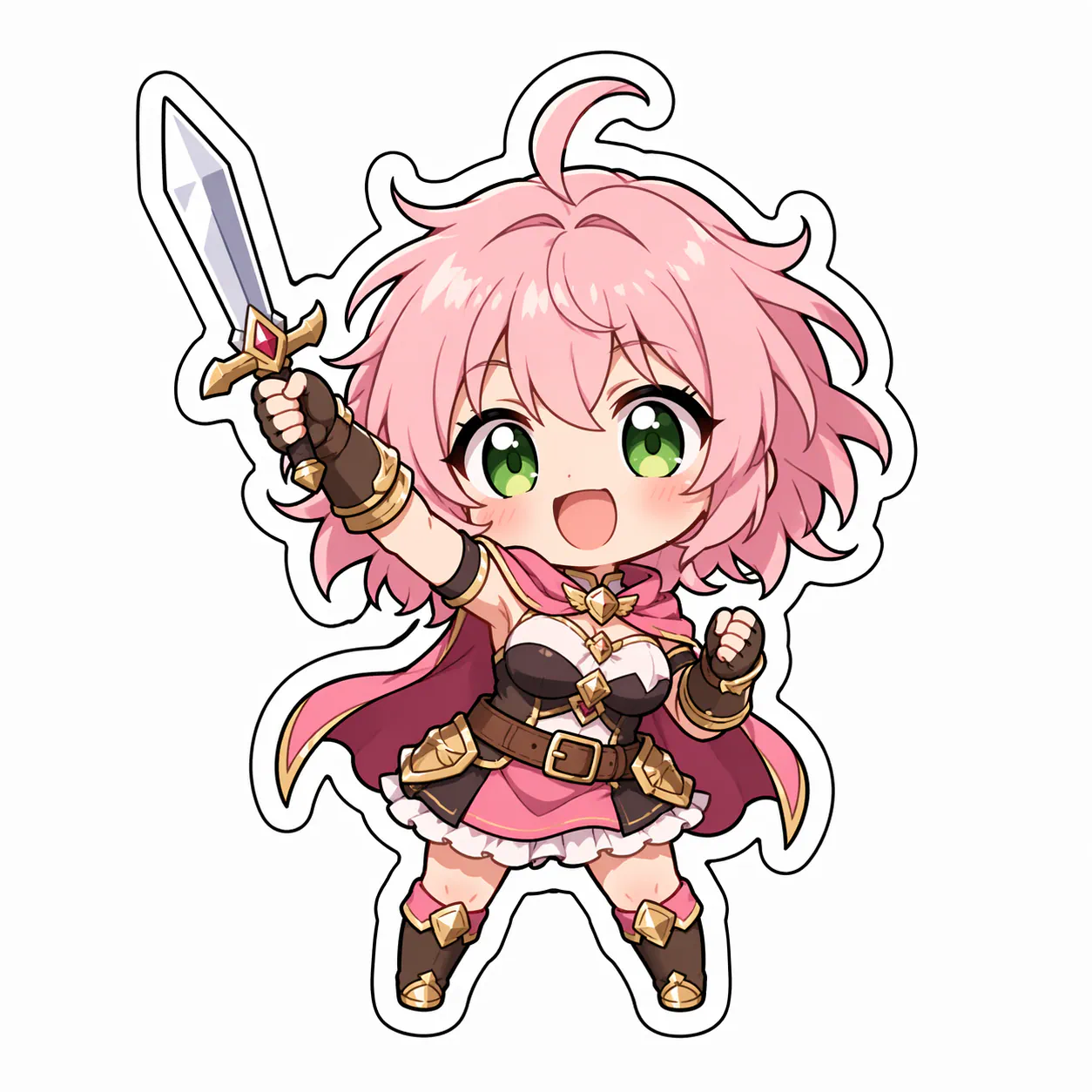
Chibi image generated with Midjourney v7. Image by Jim Clyde Monge
Midjourney’s chibi output has a painterly quality none of the other tools here produce. Richer colors, more layered shading, an editorial feel to the final image. Sometimes that’s what you want. Other times it feels too fancy for something that’s supposed to look like a cartoon sticker.
For chibi specifically, Midjourney works best when you lean into its strengths rather than fight them. If I want flat-color chibi, I’ll use PixAI. If I want a chibi character that looks like it belongs on an illustrated book cover, Midjourney v7 is the move.
Pros:
- Distinctive artistic quality with strong aesthetic defaults
- Excellent for stylized, illustration-heavy chibi
- Good community and prompt-sharing culture
Cons:
- No free tier
- Less flexible for flat, sticker-style chibi
- Prompting feels less precise than with Flux or Nano Banana Pro
Final Thoughts
All five tools can produce chibi characters, but the path to a good result is different for each.
PixAI gives you anime-native models out of the box. ChatGPT wraps image generation in a conversation. Nano Banana Pro is great for consistency across a set. Flux 2 Pro delivers the cleanest linework when you dial in the prompt. Midjourney v7 is just… the most colorful of it all.
If I had to pick one, I’d go with PixAI. It’s the only tool on this list built specifically for anime, and chibi is a direct descendant of the anime tradition. The community models trained on actual chibi data produce results that feel like chibi, not like a general model doing its best impression of it. For sticker packs, profile pictures, and anything that needs the authentic big-head, tiny-body look, it’s the most reliable option I’ve used.
That said, none of these tools are perfect, and the right pick depends on what you’re making. If you’ve been using something I didn’t cover here and you think it deserves a spot on this list, let me know in the comments!
Sources
- PixAIpixai.art
- ChatGPTchatgpt.com
- Nano Banana Prodeepmind.google
- Flux 2 Probfl.ai
- Midjourney v7midjourney.com
- Jim Clyde Mongemedium.com
- pixai.artpixai.art
- ChatGPTchat.openai.com
- chatgpt.comchatgpt.com


