OpenAI CEO Sam Altman says society should accept some AI-enabled harms rather than eliminate them through restrictions that sharply limit people’s access to the technology.
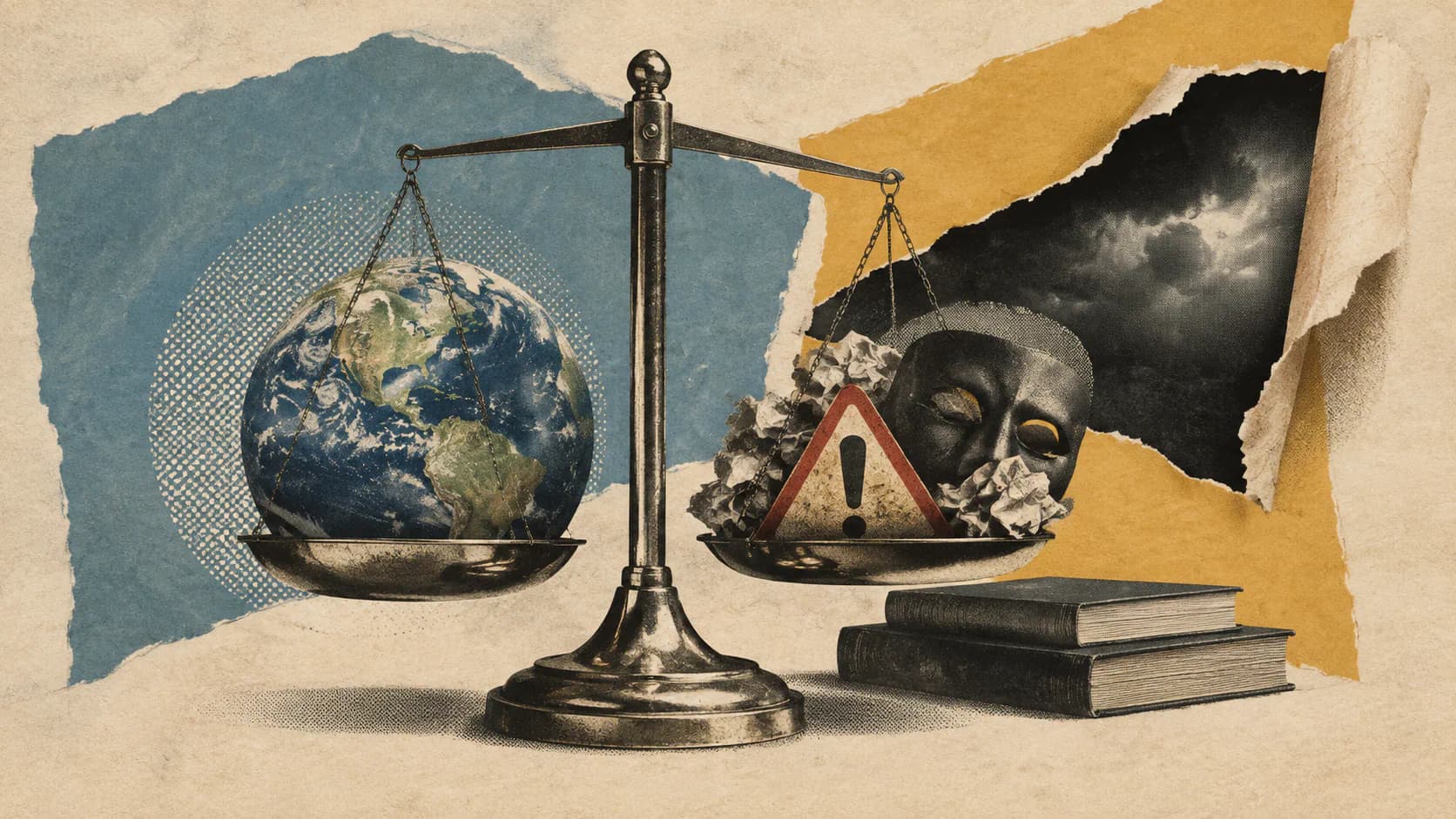
“We believe that the world should accept some bad things happening for the benefits of this technology and people having the agency,” Altman told Politico’s Decoded podcast, according to The Next Web’s account of the interview.
The remarks, reported by The Verge on October 5, 2026, identify hacks, scams and misuse as harms Altman would not try to eliminate by tightly restricting access to advanced AI. He described that calculation as an important difference between OpenAI and Anthropic.
But Altman drew a separate boundary around serious loss of human control over AI, which he said the world should not accept. His argument therefore rests on distinguishing harmful uses of a broadly available technology from systems that humans can no longer reliably control. The consequential question is how OpenAI would translate that distinction into enforceable limits.
Altman Treats Broad Access as a Safety Consideration
Altman’s position goes beyond predicting that AI will sometimes cause harm. He argues that preserving access and individual agency can justify accepting harmful outcomes.
According to The Verge’s reporting, he expects people to do “orders of magnitude” more good than bad with AI. That is his forecast about the technology’s benefits, not a demonstrated benefit-to-harm calculation. The reported remarks do not provide a quantified estimate or explain how different kinds of harm should be weighed against beneficial uses.
His concern is that attempts to prevent every bad outcome could create another danger: concentrating control over AI.
“If we do too much to restrict this technology in the name of safety, and we end up with a small number of companies or people, or perhaps one country, that have too much power over this, that also is a way that this can go horribly wrong,” he said in The Verge’s interview coverage.
That makes access part of Altman’s safety argument. On his account, the risks of misuse must be considered alongside the risks of giving a small group exclusive control over powerful systems.
It also explains why describing his position as simply opposing regulation would be inaccurate. Altman said stronger rules were still needed and characterized OpenAI as “pragmatic centrists,” positioned between Anthropic’s more cautious approach and those favoring little or no regulation.
The distinction is about the extent and purpose of restrictions. Altman is rejecting a safety regime that would sacrifice broad access to guarantee that nothing harmful happens. He is not, in these remarks, saying that scams should be lawful or that AI companies should abandon safeguards.
Still, “some bad things” leaves considerable room for interpretation. An acknowledgment that no technology is risk-free is different from deciding which preventable harms a company should be allowed to impose on others.
Anthropic’s Response Narrows the Claimed Divide
Altman described substantial policy distance between OpenAI and Anthropic. He also criticized the idea that AI could be so dangerous that a single laboratory should possess it and distribute its benefits to everyone else.
That hypothetical is important to his argument, but it should not be treated as a verified description of Anthropic’s proposed policy.
An Anthropic spokesperson told Politico that the company’s proposed rules applied only to frontier models, according to The Next Web’s reporting. Frontier models are the most advanced AI systems, rather than the entire range of software and services described as AI.
The response limits what readers should infer from the disagreement. Restrictions on the most capable systems are not necessarily restrictions on all public access to AI. Nor does supporting such rules, by itself, establish that Anthropic wants one company to control the technology.
The Next Web also disclosed that it had not seen the full interview. Its account supports the reported exchange, but does not establish the complete scope of either company’s policy proposals.
The clearest supported contrast is therefore narrower than an unrestricted-versus-closed contest. Altman is defending a lighter-touch stance that places considerable weight on access and agency. Anthropic responded by emphasizing that its proposed restrictions target advanced systems.
Those positions can produce meaningful disagreement without making every safety measure incompatible with public access. For example, a requirement aimed at evaluating a frontier model’s dangerous capabilities would raise a different access question from a rule determining who may use a deployed product. That distinction matters when assessing Altman’s warning about concentrated power.
His remarks state the principle behind OpenAI’s position unusually bluntly. They do not, on their own, settle whether a particular Anthropic proposal would create the concentration he fears.
Serious Loss of Control Is Outside the Trade-Off
Altman’s willingness to accept misuse did not extend to every category of AI risk.
The Next Web reported that he said the world should not accept the worst risks, including a serious loss of control over AI. The Verge likewise reported his call for caution around that possibility: “let’s be a little thoughtful about lurching into this future.”
This qualification changes the meaning of the headline claim. Altman is not presenting all AI harms as acceptable costs of progress. He is placing some harmful outcomes within a benefits-and-access calculation while treating serious loss of control as a boundary.
The distinction is easier to understand when the source of a harmful action is clear. A person deliberately using AI to run a scam is misuse. A system taking dangerous actions that its operator cannot reliably prevent or stop raises a different control question.
In practice, the outcome alone may not reveal which problem occurred. A hack, for instance, describes an action or result; it does not establish whether a person directed it, whether the system exceeded its instructions, or whether safeguards failed. Understanding the cause would be essential to applying Altman’s distinction.
This is where his two positions need to meet. If serious loss of control is unacceptable, developers need a way to recognize evidence of it before the consequences become catastrophic. Calling an incident a hack or another bad outcome cannot substitute for investigating whether humans retained effective control.
That is an analytical requirement of the boundary Altman drew, not a claim that every instance of harmful AI behavior demonstrates catastrophic risk.
The Missing Piece Is a Threshold for Acceptable Harm
Altman’s reported remarks do not specify how much harm would be acceptable, who would assess it, or what would trigger tighter restrictions.
Sources
- The Next Web’s accountthenextweb.com
- The Verge on October 5, 2026theverge.com