
Yann LeCun accused Anthropic CEO Dario Amodei of “hyping the dangers so that open models would be made illegal and he would stay in control” in a November 22, 2026 post on X. The Turing Award winner and former Meta chief AI scientist also alleged that Amodei left OpenAI because he would not have control. The post, reproduced in a Hacker News discussion, supplied no evidence for either motive claim.
The allegation circulated widely enough to become a major technology discussion. The retrieved Hacker News page showed 1,545 points and 857 comments, while India Today separately covered LeCun’s remarks.
Anthropic’s published position draws a different distinction. In a July 27, 2026 statement, Amodei explicitly rejected a blanket ban on open-weight models and supported mandatory safety testing for sufficiently capable models, whether open or closed. That document establishes Anthropic’s stated policy, not Amodei’s private intentions. The central issue is the gap between LeCun’s allegation about intent and the restrictions Anthropic has publicly endorsed.
What LeCun Alleged About Amodei
Yann LeCun’s November 22 allegation was that Amodei’s warnings about AI danger serve a campaign to restrict open models and preserve control over the technology. LeCun traced that supposed strategy back to the period of OpenAI’s GPT-2 and described it as “medieval obscurantism.”
LeCun also made a separate claim about Amodei’s departure from OpenAI: that he left because he would not have the control he wanted. Neither assertion was accompanied by supporting documents or other evidence in the reproduced post.
India Today’s November 23 report said LeCun was replying to a post citing Amodei’s congressional remarks about open-weight AI creating an “extremely dangerous situation.” That establishes the reported context of the exchange; it does not independently verify the full testimony or LeCun’s interpretation of it.
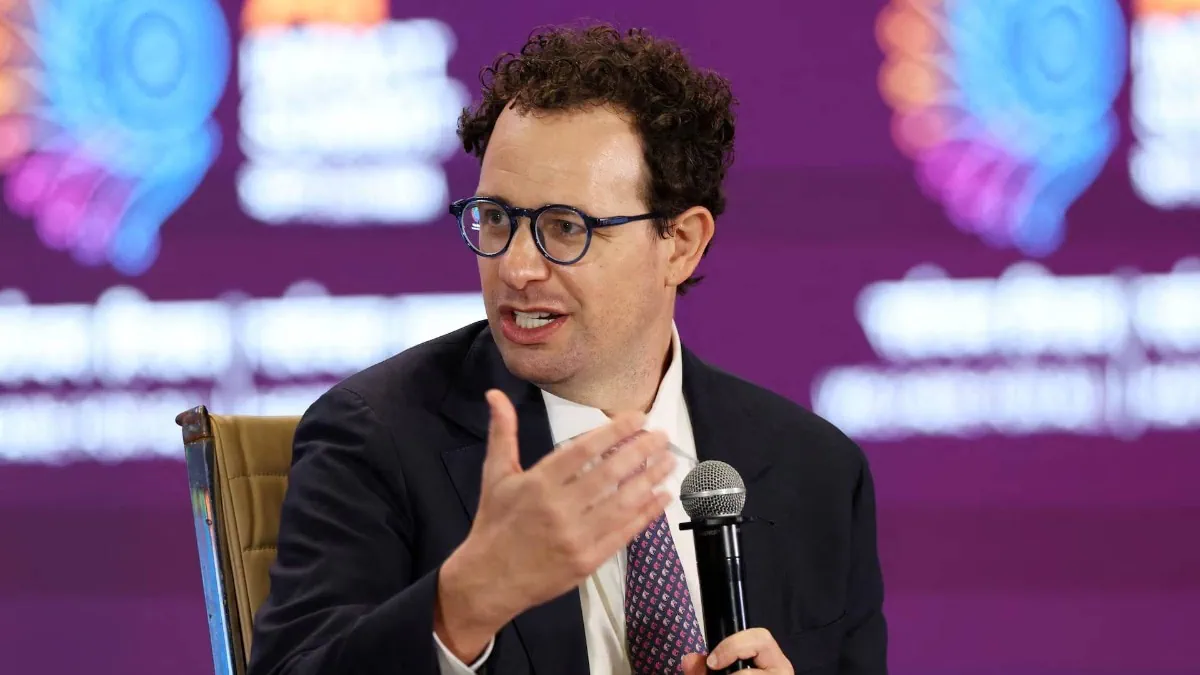
India Today also contrasted LeCun’s account of the OpenAI departure with Amodei’s previously stated explanation: a disagreement over leadership’s vision and a lack of trust. Those are competing accounts of motivation, not evidence that resolves the dispute.
LeCun’s professional standing makes the accusation newsworthy. It does not make the claimed motives an established fact.
How Widely LeCun’s Allegation Circulated
LeCun’s allegation reached a substantial audience on Hacker News, where the retrieved discussion recorded 1,545 points and 857 comments. Those figures are a changing snapshot, not a count of people who agreed with him.
The thread contained competing arguments:
- User 0xDEAFBEAD challenged the inference from financial interest to falsehood. Their point was that someone can benefit commercially from a warning while the underlying risk remains real.
- User comfysocks questioned the effectiveness of restricting US businesses. They argued that hostile actors abroad could retain access to open models while legitimate American companies lost access.
- User cma emphasized the potential consequences of powerful models without safeguards. Their comments favored greater care and international coordination.
These are individual reactions from one discussion, not representative findings about developers or the wider AI industry. They nevertheless show why the post spread: it combines concerns about commercial incentives, access to useful software and potentially serious misuse.
The thread’s size supports describing the allegation as widely circulated. It supplies no additional evidence about Amodei’s intentions.
What Anthropic Actually Says About Open-Weight Models
Anthropic’s July 27, 2026 position statement rejects a blanket open-weight ban and advocates capability-based safety testing. In the statement authored by Amodei, the company says:
“Anthropic has never advocated for a ban on open-weights models.”
Amodei describes open-weight models without dangerous capabilities as beneficial to businesses, developers and researchers. He also acknowledges that restricting their use by US businesses would protect American AI companies from competition, while arguing that such restrictions would fail to address his principal security concerns.
The statement separates two risks. One is authoritarian governments developing powerful AI for military superiority or domestic repression, regardless of whether the models are released publicly. The other is misuse involving cyberattacks, biological attacks or serious alignment problems.
Anthropic endorses three policy approaches:
| Policy Anthropic supports | Stated purpose |
|---|---|
| Controls on powerful chips and chipmaking equipment supplied to China, including action against smuggling | Limit access to computing resources used to build frontier models |
| Action against industrial-scale distillation operations | Address efforts Anthropic says allow Chinese developers to obtain stronger capabilities with less training compute |
| Mandatory testing of sufficiently capable open and closed models | Assess cyber, biological and alignment risks before release |
Those are Anthropic’s policy arguments, including its claims about the effectiveness of chip restrictions and distillation controls. They should not be read as independently demonstrated outcomes.
On testing, Amodei says less capable models, including those from startups and academia, should be exempt. He also argues that testing would need global participation to work effectively.
The July statement predates LeCun’s November post by several months. It is an existing policy position, not a direct reply to this allegation. No direct response to the November 22 post appears in the available reporting.
Zeniteq’s earlier coverage of Amodei’s calls for an AI slowdown and his race-to-the-top strategy provides background on that broader policy debate.
Why Safety Testing and a Blanket Ban Are Different
Anthropic’s published position distinguishes model capability from distribution format: sufficiently capable models would face testing whether their weights are downloadable or access is restricted to a hosted service.
That distinction matters. A blanket prohibition would treat open-weight distribution itself as grounds for restriction. A capability-based system would first assess what a model can do and the risks associated with releasing it. In principle, that leaves room for open models below the threshold and for more capable open models whose risks can be addressed.
The Anthropic statement also says the question of whether open models pose greater risks, and whether those risks can be mitigated, should emerge from testing. Its stated position therefore leaves an evidentiary route to releasing open models, rather than declaring all such releases unacceptable in advance.
Frequently Asked Questions
3 questions
1What Did Yann LeCun Accuse Dario Amodei Of?
LeCun alleged that Amodei exaggerates AI dangers to make open models illegal and retain control. He also claimed that control motivated Amodei’s departure from OpenAI. The post reproduced on Hacker News supplied no evidence establishing either motive, so both remain allegations.


