Claude Mythos 5.2 is the Anthropic model most people will never get to use, and that's on purpose. It launched on November 9 alongside Fable 5.2, and the two are the same underlying model. The difference is that Fable blocks most cybersecurity and many biology tasks, while Mythos lets vetted security teams and life scientists do exactly that work.
That makes Mythos harder to write about, because its best results happen inside companies' security teams and labs. So we stuck to what we could trace: Anthropic's launch post, its Mythos and verification-program pages, the Claude Security product updates, and case studies where the companies are named. Where a result came from an earlier Mythos model, we say so.
This list is for anyone curious about what a restricted AI model actually does all day. Each section covers the use, why it's impressive, and the catch, and the guide at the end explains who can get access, what it costs, and when Fable 5.2 or Opus 5.5 will do. The five uses aren't ranked.
1. Catching Security Bugs Other AI Models Miss
Best for: Security teams that already run AI scanners and want the bugs those scanners skip
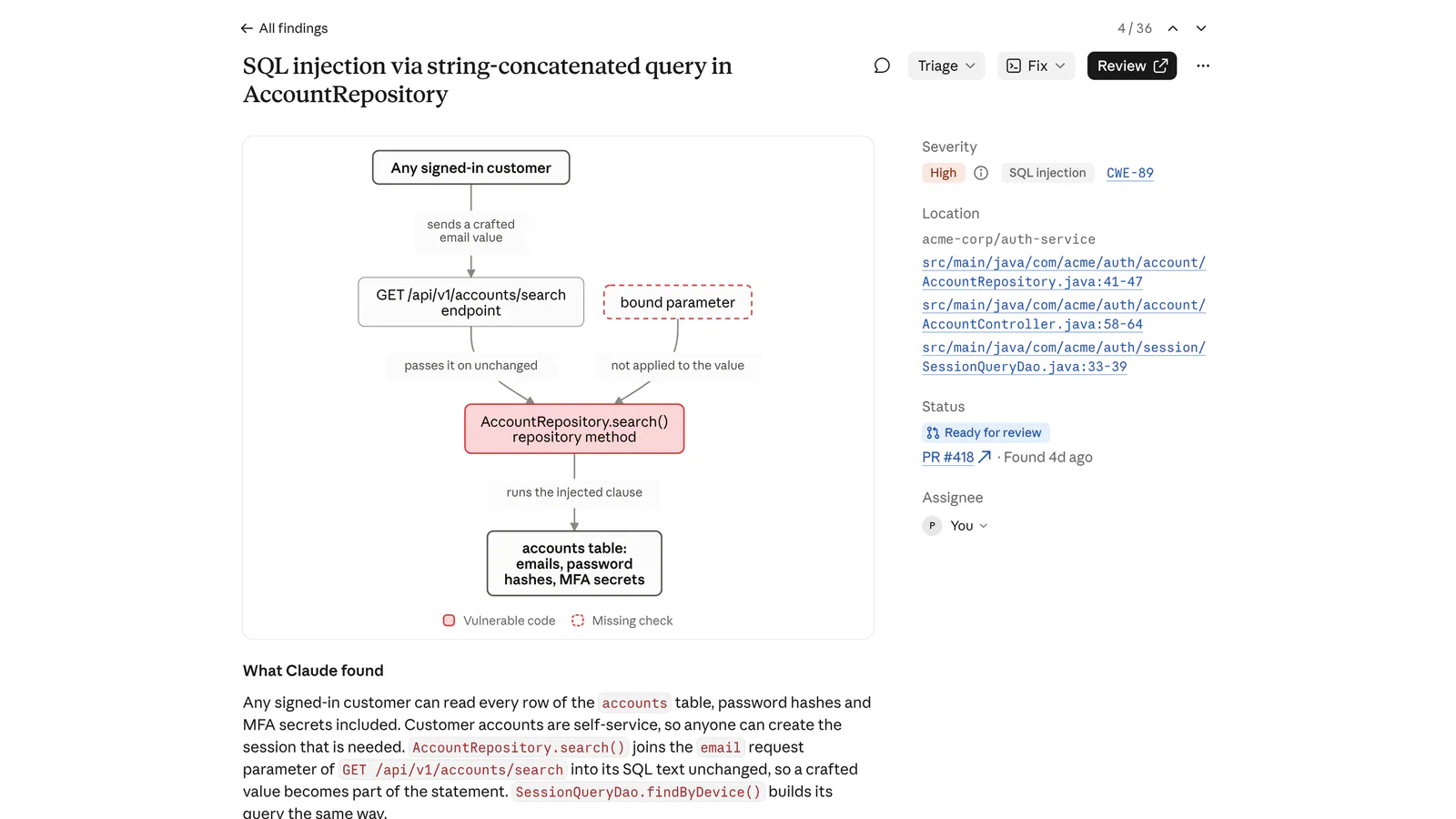
The headline claim from launch day is simple: one security company found that one in six confirmed bugs Claude Mythos 5.2 turned up were missed by every other frontier model it tested. Anthropic says Mythos 5.2 catches more vulnerabilities than its earlier models and is better at reproducing and fixing them, which is the part defenders actually need.
Anthropic's own numbers back that up:
- CVE Rediscovery: On a test of 1,829 real, published vulnerabilities, Mythos 5.2 found 10.2% more than Opus 5.5 and 14.4% more than Mythos 5.1
- Every effort level: It beat both models at every effort setting in Anthropic's October run
- Better judgment: One tester found earlier models had overstated how serious some bugs were, and Mythos 5.2 was more careful
- Fixes included: It reproduces bugs and writes patches, so a finding comes with a way to close it
The CVE Rediscovery test is a clever setup. Anthropic hands the model a snapshot of a project from before a known vulnerability was fixed and checks whether it can find the bug on its own. That mirrors real security work, where nobody tells you where the hole is.
There's a tension built into all of this. The same skill that finds a bug can help someone exploit it, which is why Fable 5.2's safeguards block most cyber tasks and Mythos sits behind a verification program. If you're on a security team, plan for the application process before you plan your workflow, and remember that the "one in six" figure comes from a single unnamed company.
2. Hardening Firefox and Open-Source Software
Best for: Open-source maintainers and anyone who cares how safe their browser is
Mozilla has spent the year using successive Claude models to harden Firefox, and its engineers say each round left fewer and subtler bugs to find. Even so, Mozilla's Brian Grinstead told Anthropic that Mythos 5.2 roughly doubled its vulnerability-discovery numbers compared with Mythos 5.1. That's striking for a codebase that has been picked over this many times.
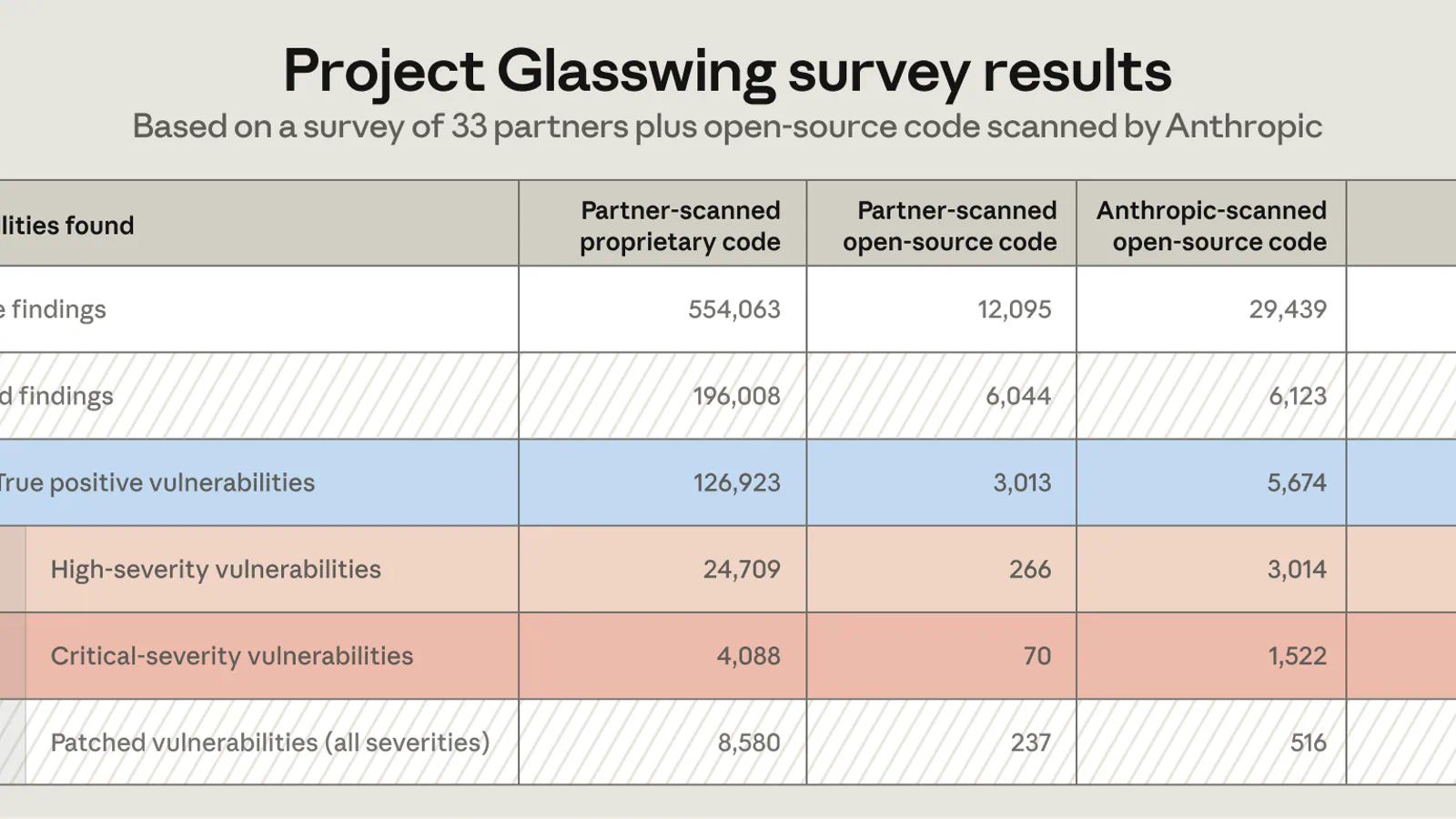
The Mythos line has a track record here. Before 5.2, an earlier version called Mythos Preview found a 27-year-old bug in OpenBSD, an operating system known for its security, and a 16-year-old flaw in FFmpeg's video code that automated testing had run past five million times. The scale of that work so far:
- Partner finds: Project Glasswing partners uncovered at least 129,000 verified vulnerabilities between April and July 2026
- Anthropic's own scanning: Another 5,500 verified vulnerabilities in open-source code between April and October
- Who's involved: Launch partners included AWS, Apple, Google, Microsoft, the Linux Foundation, and others
- Lower bound: Anthropic says the real numbers are higher, since fewer than half of partners reported how many bugs they'd patched
Open-source software is where this pays off for everyone. A single library like FFmpeg ends up inside thousands of apps, so a bug fixed upstream protects people who'll never know the library exists. Mozilla's results suggest Mythos 5.2 can keep squeezing out problems even after earlier models have done a full pass.
The caveat is that finding bugs creates work. Every report still needs a maintainer to check it, fix it, and ship the fix, and many open-source projects run on a handful of volunteers. The bottleneck is human time. If you maintain a project, it's worth asking what you'd do with a sudden pile of verified reports before one lands in your inbox.
3. Scanning Company Codebases Around the Clock
Best for: Enterprise security and engineering teams that want scanning built into daily work
The most practical way to use Mythos today is through Claude Security, a scanner for company code that Anthropic says now runs on Mythos 5.2. Since its public beta began in April, thousands of organizations have used it to find over a million vulnerabilities, and an October update turned it from a one-off scan into something that watches your code all the time.
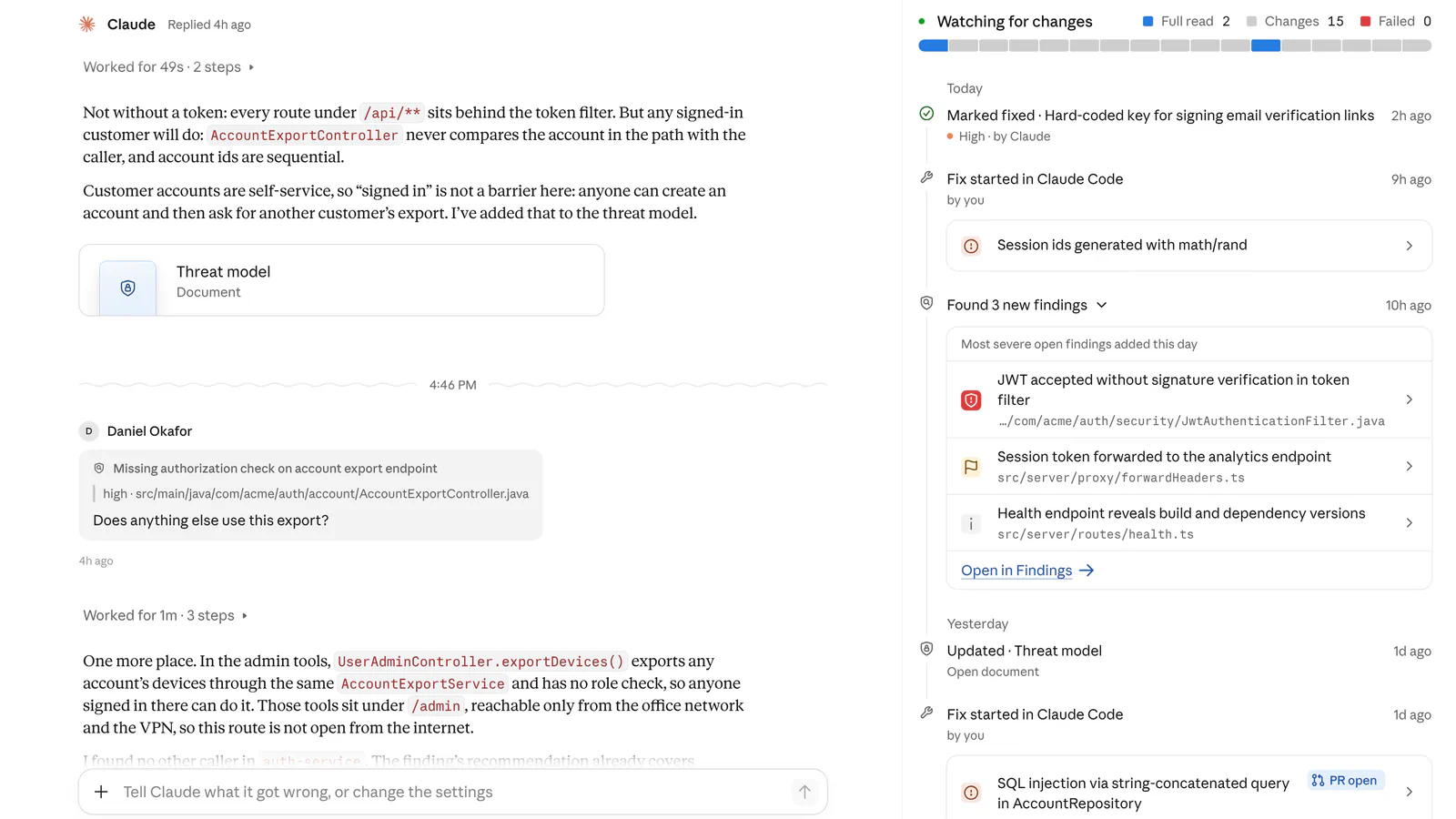
What it does now:
- Continuous scanning: It runs a deep first scan, then rescans changes based on how risky they look
- Fix tracking: It marks a finding fixed when the fix ships, and reopens it if the bug comes back
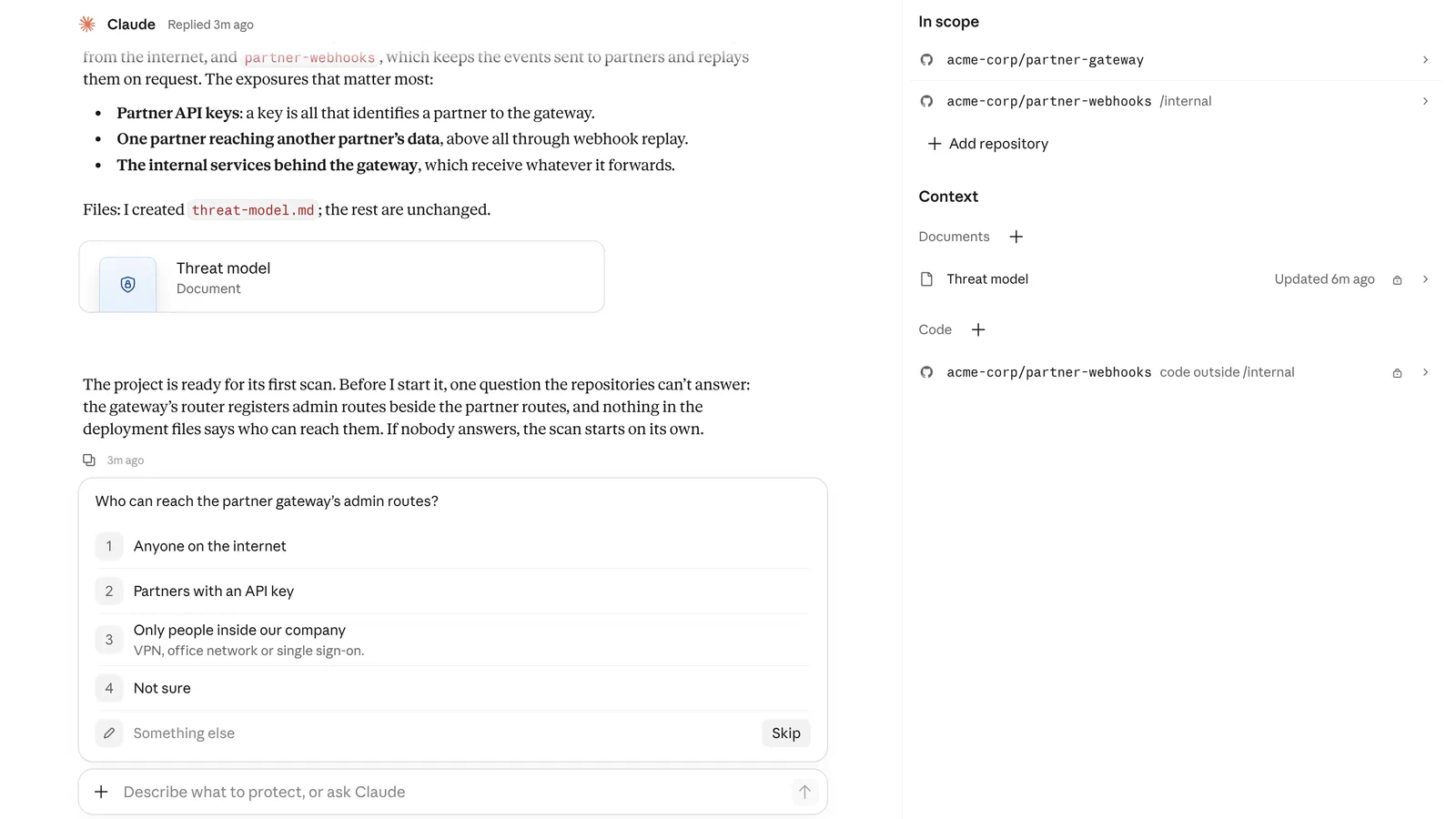
- Team knowledge: Each project has a knowledge base where you describe how your code is deployed, so it skips risks you already handle
- Attack paths: Every finding gets a severity rating and an explanation, sometimes with a diagram, of how an attacker could reach it
- Your tools: An API, webhooks, and an MCP connector bring findings into Claude Code and Claude.ai
That last point changes the daily routine. An engineer can pull up a finding in Claude Code, ask about it, start the fix, and mark it resolved without switching tools. One project can also hold several repositories, so it catches problems that live between services, like a backend trusting input that a separate app was supposed to check.
Access is the limit here, too. Claude Security is in public beta for Claude Enterprise customers only, though it doesn't require the Cyber Verification Program. Anthropic is offering $25,000 in free usage credits each month for two months, for usage through December 31, 2026. Every suggested patch still needs human review and approval, so budget engineer time for triage before you switch it on across every repo.
4. Tracing Exploit Chains Across Whole Systems
Best for: Large organizations whose real risk sits in how systems connect
An exploit chain is when an attacker links several small weaknesses into one serious break-in, and it's the thing traditional scanners are worst at. Comcast and Booz Allen used Mythos-class models through Project Glasswing to find exactly these chains, though their work used the earlier Mythos Preview, not 5.2.
What they reported:
- Comcast: In an assessment covering 258 business-critical systems and about 170 million lines of code, it found a critical login-bypass flaw in a public-facing platform
- Root cause: The bug came from several systems interacting, each of which looked fine when reviewed alone
- Booz Allen: One analyst reviewed eight production systems across 138 repositories in 12 days
- Hardware-level find: It spotted an unprotected security key in the code that runs before a device's operating system loads
The Comcast case shows why this is hard. No single file was wrong; the flaw only appeared when the model kept track of how multiple systems trusted each other. Comcast validated the finding against the live app, fixed it, and confirmed it hadn't been exploited first.
Mythos 5.2 extends that work. Rubrik's CTO told Anthropic his team used Mythos 5.2 for a new round of threat discovery inside its own systems and found the output more readable, so engineers could spot-check it faster. Rubrik built its Code Guardian tool on Mythos 5.1 and says it would switch to 5.2.
Booz Allen's security president made the key point himself: the model produces a big list of candidates fast, but teams still have to validate, deduplicate, and route each one. Mythos speeds up finding problems; it doesn't replace the people who decide what's real. Check whether your team has the capacity to verify findings before you scale up a review.
5. Predicting Protein Structures for Gene Therapies
Best for: Life-science teams working on drug discovery and gene therapy
This is the Mythos use that has nothing to do with hacking. Mythos 5.2 found a new way to predict the structure of whole virus capsids, the protein shells used to deliver gene therapies. A capsid's shape affects things like whether a patient's immune system blocks the treatment, but it's built from dozens of proteins, which is too much for tools like AlphaFold to handle in one go.
Frequently Asked Questions
5 questions
1What is Claude Mythos 5.2?
Claude Mythos 5.2 is Anthropic's most capable model for cybersecurity and life-sciences research, released on November 9, 2026. It's the same underlying model as Fable 5.2 but with safeguards adjusted for vetted security and biology teams.