OpenAI says thousands of GPT-Rosalind-powered agents analyzed a mouse brain dataset covering millions of cells in 32 minutes, producing research leads involving gene disruption and neurodegeneration. The output consisted of biological interpretations and proposed mechanisms, none of which were confirmed in the laboratory.
The collaboration between OpenAI, PerturbAI and Scripps Research addresses a specific research bottleneck: interpreting large experiments that measure how cells respond when genes are disrupted. Running agents in parallel allowed the team to examine more perturbations and consult substantially more literature than a single-agent approach, according to OpenAI’s account.
The accompanying manuscript is a bioRxiv preprint that has not been peer-reviewed. Its biological connections remain hypotheses, and the reported timing and evaluation results are the research team’s own measurements.
For researchers, the most useful release may be the Distributed Agents repository. It provides the framework, corpus tooling, saved reports and manuscript notebooks needed to inspect the work beyond the announcement.
Parallel Agents Interpreted an Existing CRISPR Atlas
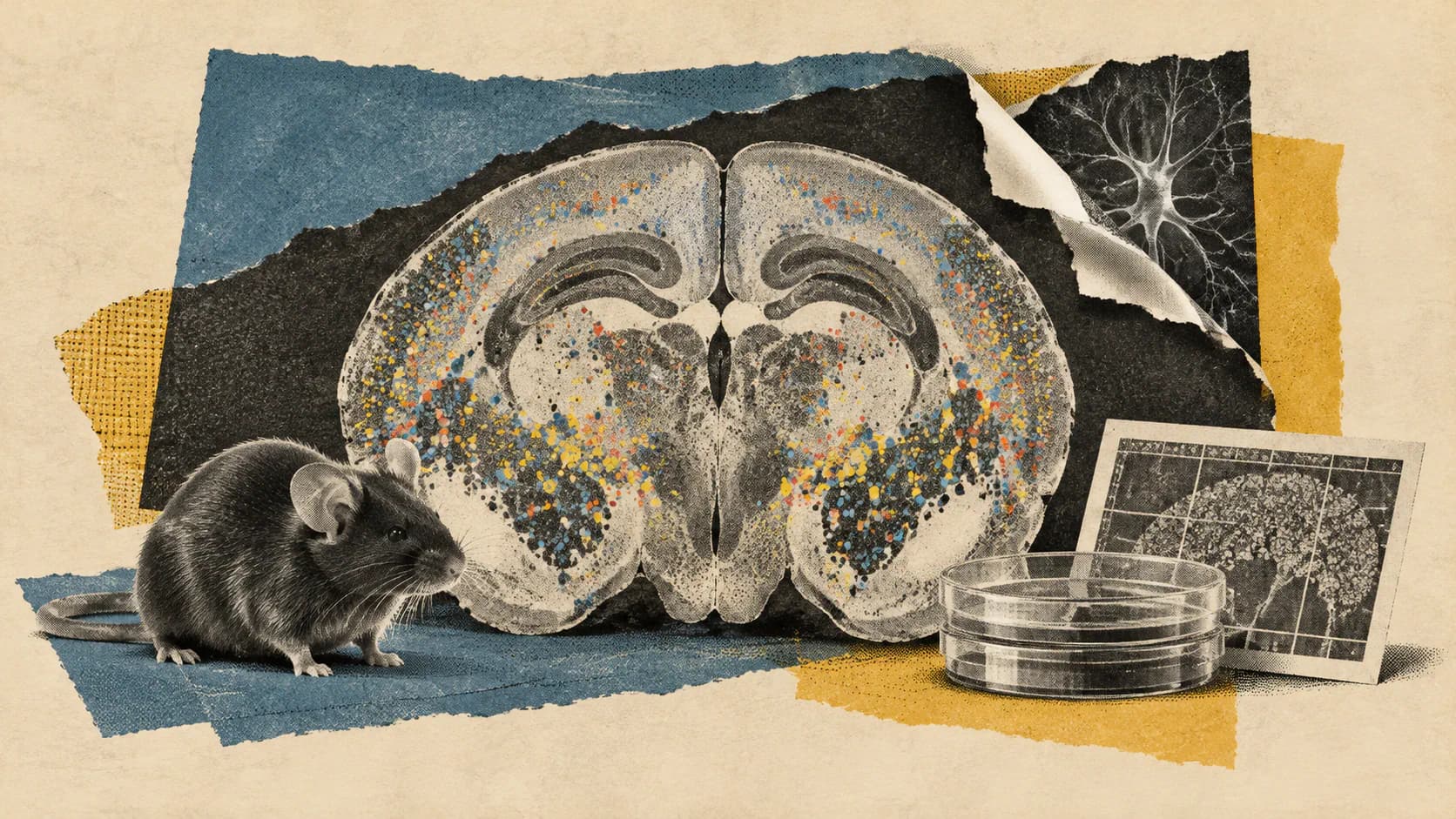
The system worked on a whole-brain, in vivo CRISPR Perturb-seq atlas. In this type of experiment, researchers disrupt genes and measure changes in gene expression across cells. Responses can differ by cell type, leaving a substantial interpretation task after the experimental data have been collected.
According to the repository, the framework assigns independent AI agents to individual perturbations. Each agent combines cell-type-resolved expression data with scientific literature and produces both narrative and structured reports. The system then synthesizes those narrower investigations to identify relationships between perturbations and prioritize hypotheses for follow-up, instead of asking one agent to interpret the entire dataset.
OpenAI describes the combined output as a reasoning atlas linking disrupted genes, cellular effects, publications and possible mechanisms. It adds an interpretation layer to the experimental measurements without replacing them.
The reported 32 minutes covers only the computational analysis. It excludes collecting millions of cells, conducting the CRISPR experiments and validating the resulting hypotheses. That boundary separates a fast interpretation workflow from an automated experimental discovery process.
Broader Literature Coverage Is the Clearest Reported Gain
OpenAI reports that, at the largest workload, the distributed agents cited more than 700 references, compared with 11 for a single agent. The company also says blinded human experts preferred the distributed-agent reports 75% of the time.