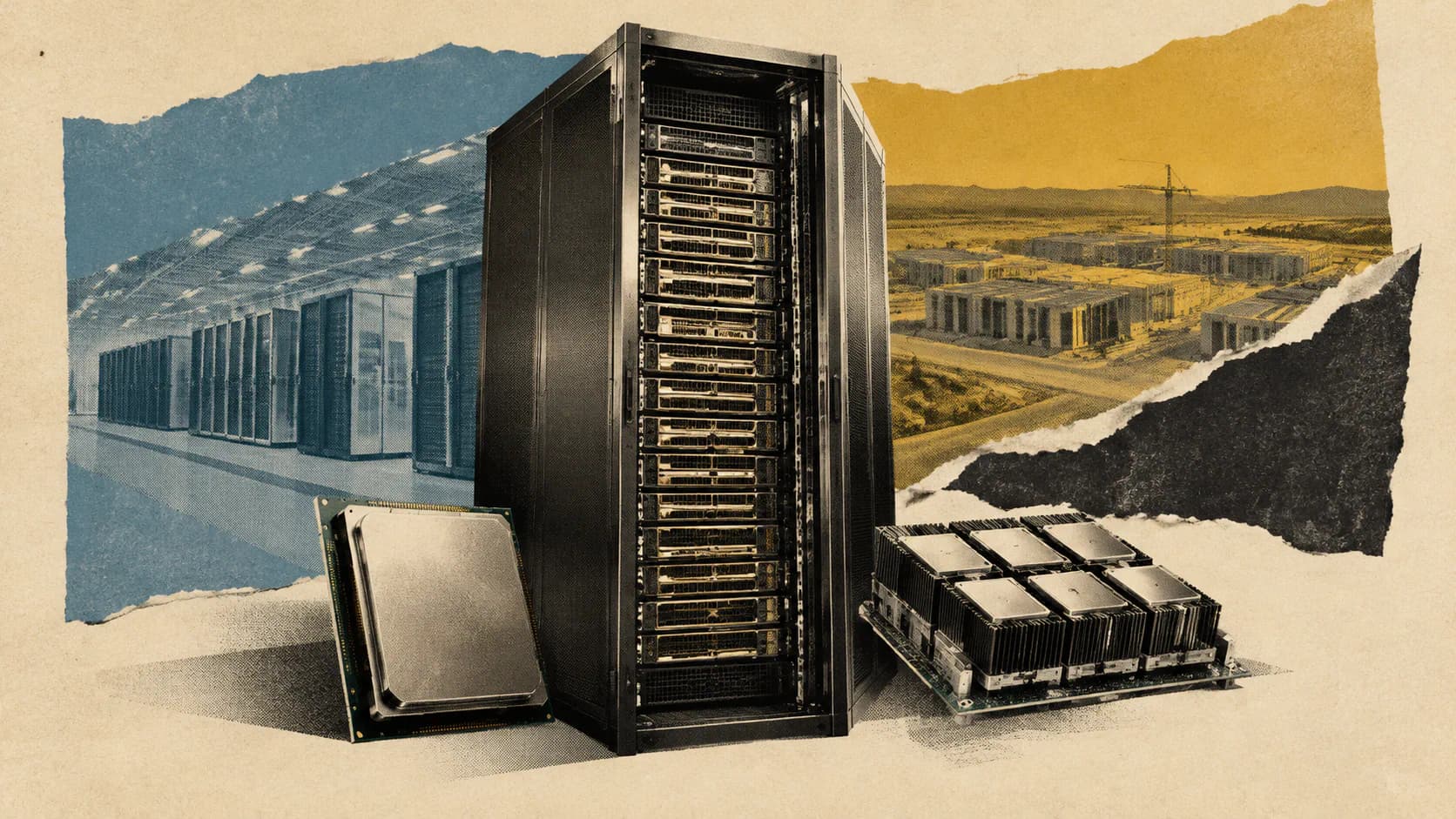
NVIDIA and Meta have announced plans to expand their collaboration on Muse and the Muse family of models, pairing training and inference optimization with a larger NVIDIA infrastructure deployment. NVIDIA also says it will invest $3 billion in Meta’s equity offering, adding a proposed financial commitment to the companies’ technical relationship.
The NVIDIA newsroom announcement is dated October 26, 2026. Its investor-relations copy and Reuters’ report carry October 27 dates.
The announcement combines several different levels of commitment. Model optimization and infrastructure expansion are announced plans. The equity investment is a proposed transaction. Work involving NVIDIA OpenShell and Sentry is only under consideration. Those distinctions matter when assessing what Meta has actually decided to deploy.
What NVIDIA and Meta Have Announced
The release describes an expansion of an existing relationship: Meta’s Muse models and agents already use NVIDIA infrastructure, according to NVIDIA. The next phase is intended to improve performance across the workflows supporting those models.
Here is how the individual pieces compare, based on the announcement’s wording:
| Area | Announced status | What readers can take from it |
|---|---|---|
| Muse training and inference | The companies will expand their collaboration | Optimization work is planned; performance gains are not quantified |
| Vera Rubin and Vera CPUs | Meta intends to expand deployment | Infrastructure expansion is an intention, without a disclosed rollout schedule or system count |
| Spectrum-X Ethernet and BlueField-4 | Meta says it will deploy them | Networking deployment is planned, but scale and timing are unspecified |
| OpenShell Reference Architecture | The companies will consider collaboration | No deployment commitment is announced |
| Sentry agent monitoring | The companies will consider collaboration | Adoption remains undecided |
| $3 billion equity investment | NVIDIA says it will invest | The transaction is forward-looking, with completion and applicable closing conditions addressed in the disclaimer |
This is the most useful way to read the deal: separate planned actions, exploratory work and desired outcomes. Improving cost or performance is an objective. Announcing that objective does not provide a measurement of how much improvement customers or Meta’s infrastructure teams should expect.
Muse Optimization Targets Two Different Costs
NVIDIA and Meta say their expanded work will improve both training and inference performance and lower total cost of ownership through optimizations across workflows.
Training is the process that develops or updates a model’s learned parameters. Inference is the computation used when a trained model responds to a request. Improving one does not automatically produce the same improvement in the other, so including both gives the collaboration a broader scope than a deployment-only agreement.
For agents, inference can also involve multiple model calls within a single task. An agent might interpret a request, select a tool, process the result and decide what to do next. As a general technical consequence, reducing the cost or latency of an individual model call can help the wider workflow, although the release provides no Muse-specific breakdown of those stages.
NVIDIA describes Muse as having achieved frontier-level benchmark performance and strong consumer download growth. Those are vendor claims: the announcement supplies no named benchmark results, scores, download totals or measurement periods, and the supplied reporting offers no independent performance measurements. The same limitation applies to the promised cost improvements. NVIDIA’s release states the goals without publishing a baseline or target.
I’d judge the optimization work by completed-task cost and response time under a defined workload. Raw model speed would be useful, but an agent that needs more calls or retries could erase that advantage. That is a practical evaluation criterion, not a result reported by either company.
Meta Plans Compute and Networking Expansion
Meta intends to expand deployment of Vera Rubin and Vera CPUs, with NVIDIA describing performance per watt as a goal for next-generation agents. Meta also plans to deploy Spectrum-X Ethernet networking and BlueField-4 to improve network efficiency and throughput, according to the announcement.
The release does not disclose system quantities, data-center locations, deployment dates or a hardware purchase value. The $3 billion figure belongs to NVIDIA’s proposed equity investment, not a stated infrastructure order.
The combination of compute and networking is technically consequential. Large AI deployments depend on moving data between systems as well as performing calculations. Networking can become a constraint when work is distributed across many machines. Adding compute capacity alone cannot guarantee a proportional increase in useful output if another part of the workflow becomes the bottleneck.
NVIDIA positions Spectrum-X and BlueField-4 as part of that networking effort. The announcement does not provide enough detail to describe Meta’s intended topology, configuration or measured throughput, so those implementation details remain open.
Performance per watt also needs context. It expresses useful performance relative to electrical power, but its meaning depends on the workload and how performance is counted. Higher throughput per watt can improve efficiency while a much larger deployment still consumes more electricity overall. NVIDIA has not supplied figures here that would support a claim about Meta’s total energy consumption.
Zeniteq’s related coverage, NVIDIA Vera Rubin and Vera CPUs Launch on OCI, covers another deployment context for the named platforms.
For this partnership, the important signal is the scope: Meta’s stated expansion spans compute and networking. That gives the companies more parts of the system to optimize together, while leaving the size and payoff of the deployment unquantified.
OpenShell and Sentry Remain Exploratory
NVIDIA and Meta use weaker language for the agent-safety work. They say they will consider additional collaboration involving the NVIDIA OpenShell Reference Architecture, including:
- , which the release associates with safe deployment.
Frequently Asked Questions
4 questions
1Has NVIDIA completed its $3 billion Meta investment?
The announcement presents it as a planned investment. NVIDIA’s forward-looking statement refers to anticipated completion and any applicable closing conditions; it does not confirm closing.