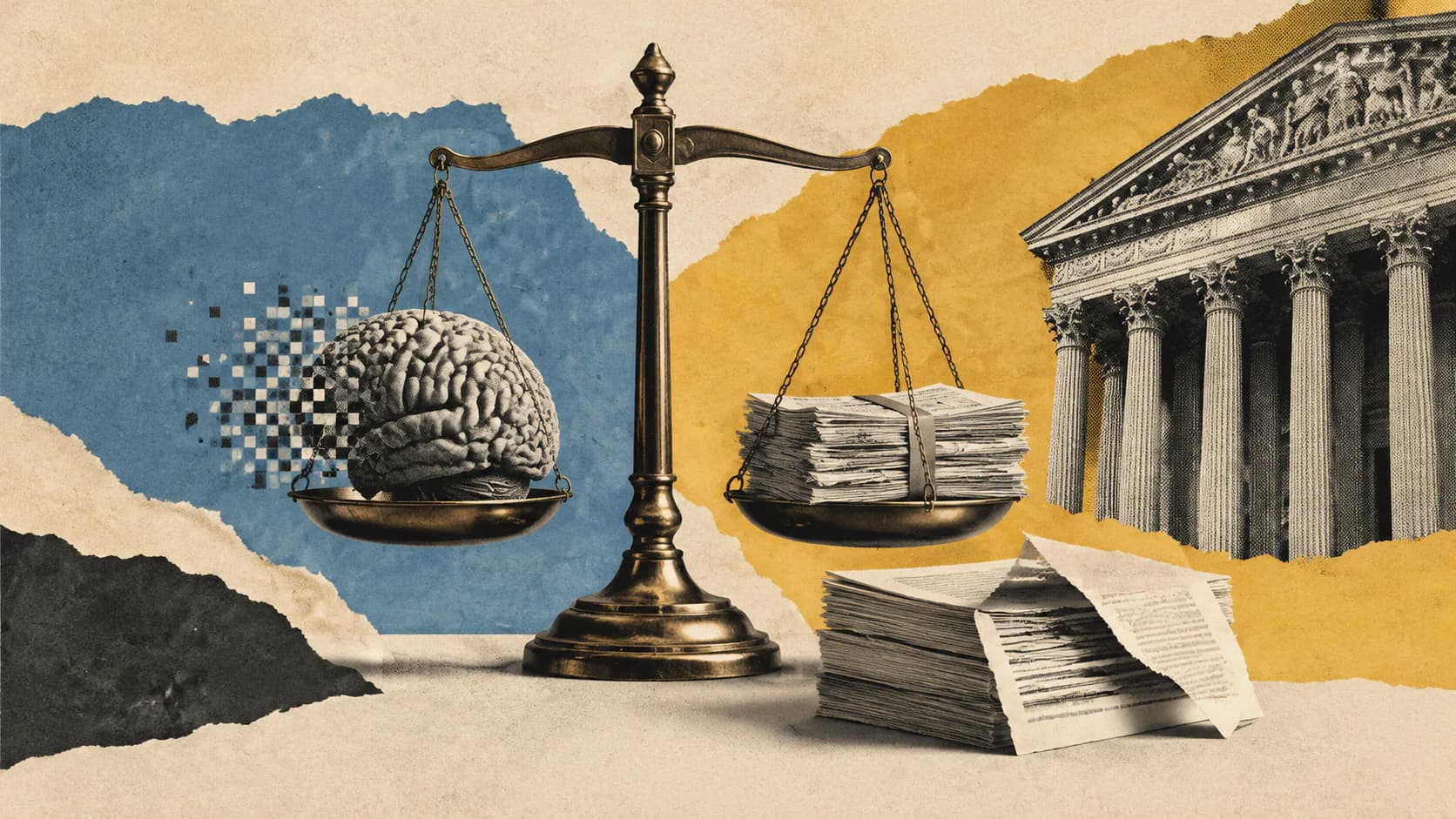
The Wikimedia Foundation is asking the court overseeing copyright litigation involving OpenAI, Microsoft and The New York Times to draw a line between learning from copyrighted material and copying it into chatbot answers.
In an announcement dated October 30, 2026, the nonprofit behind Wikipedia said it had filed an amicus brief in In re: OpenAI, Inc. Copyright Infringement Litigation. The consolidated proceeding brings together 12 lawsuits against OpenAI, including the Times’ 2023 case against OpenAI and Microsoft.
The distinction Wikimedia proposes carries real weight. Training a model can qualify as fair use when it creates something new and different from its sources. Retrieval-augmented generation, or RAG, that copies source works should follow publishers’ licensing and attribution requirements. Separately, Wikimedia says scraping must stay within its public API rate limits or use its Enterprise API offerings.
One procedural qualification applies. The Next Web reports that Wikimedia sought permission to submit the brief, and that the court had not ruled on accepting it or on the underlying fair-use issue at the time of reporting. This is Wikimedia’s legal argument, not a judicial decision. The analysis here draws on its public announcement and reporting about the proposed brief.
Why Wikipedia Wants a Split Decision
Wikimedia has interests on both sides of the dispute. Wikipedia supplies material used by AI systems, but its volunteers also depend on reporting and other reliable publications to write and maintain encyclopedia articles.
The foundation says Wikipedia contains more than 67 million articles across 300 languages, with nearly 250,000 volunteers contributing each month. Those contributors work within an information ecosystem that includes publishers whose work AI systems also consume. These figures and the description of Wikipedia’s role come from Wikimedia’s announcement.
Its concern is that an expansive ruling in either direction could damage that ecosystem:
- An overly restrictive approach to fair use could constrain technological development, including tools that benefit open-source projects.
- Blanket fair-use protection could weaken the availability of secondary sources that Wikipedia needs, particularly if AI products substitute for those sources without honoring their terms.
My view is that this dependency makes Wikimedia’s intervention useful. It has a reason to defend both the ability to build new tools and the continued production of reliable source material. Its position cannot be reduced to choosing between publishers and AI developers.
Training and Retrieval Use Source Material Differently
Fair use is a US legal doctrine that permits some uses of copyrighted work without the copyright holder’s permission. Wikimedia wants the court to assess what a company does with copied material, instead of treating every stage of an AI system as one undifferentiated use.
Training Builds a General-Purpose Model
Training uses examples to shape a model’s learned behavior. The resulting model can perform tasks across many subjects, rather than serving as an interface to one particular article.
Wikimedia argues that training should qualify as fair use when the resulting model is “something new and different from the original sources”. Under that argument, a qualifying training use would not require compliance with the source material’s copyright licensing terms.
The condition matters. Wikimedia is advancing a rationale for transformative training, not reporting that the court has approved every model, dataset or output. The Next Web describes the proposed brief as arguing that general-purpose training is likely fair because the resulting model is new and does not replace the works used to train it.
Retrieval Brings Source Passages Into the Answer Workflow
RAG adds a separate information-retrieval step. When a user asks a question, the system finds relevant material, supplies passages to the model and uses them to help produce an answer. This can give a chatbot access to current information beyond its training data.
That creates another use of copyrighted material. According to The Next Web’s account of the brief, RAG systems can copy relevant passages and reproduce substantial portions of them in their answers.
The comparison looks like this under Wikimedia’s proposed framework:
| Issue | Transformative model training | RAG that copies source works |
|---|---|---|
| Role of the source | Helps develop a model with a new purpose | Supplies material for a particular answer |
| Wikimedia’s position | Should qualify as fair use under the conditions it describes | Should follow the source’s licensing requirements |
| Copyright-license consequence | Qualifying fair use would not require compliance with those terms | Attribution and other applicable license conditions remain relevant |
| Access to Wikimedia infrastructure | Scraping must still be sustainable | The same sustainable-access requirement applies |
The useful distinction is between activities, not product names. One chatbot can contain both a trained model and a retrieval service. Wikimedia’s argument would allow different legal treatment for those components.
RAG Licensing Means More Than Adding a Link
The proposed brief applies that distinction directly to ChatGPT. As quoted by The Next Web, it states:
“While the pre-training of ChatGPT’s general LLM was fair use, OpenAI’s use of copies in ChatGPT’s RAG feature is not fair.”
That is Wikimedia’s position on the uses described in its filing. Its announcement extends the licensing argument to newer techniques that serve a similar grounding purpose, so the proposed boundary is not tied exclusively to the RAG label.
For Wikipedia, Wikimedia identifies Creative Commons Attribution-ShareAlike 4.0, or CC BY-SA 4.0, as the relevant license. Its announcement summarizes two central requirements:
- Credit must be given to the original creators.
- Remixes or adaptations must remain under the same Creative Commons license.
Attribution is therefore only part of the issue. A source link can identify where information came from, but it does not by itself address every license condition, including ShareAlike requirements where they apply.
“Licensing” also should not automatically be read as a demand for a new paid agreement. In Wikipedia’s case, Wikimedia points to an existing public license with reuse conditions. Other publishers can have different requirements. The foundation’s argument is that companies should honor the applicable terms when making the copying uses it describes.
I would keep those distinctions explicit in any AI product’s compliance plan. A citation feature, copyright-license compliance and an infrastructure access agreement solve different problems. Combining them under a single “sources” setting risks overlooking an obligation.
API Limits Apply Even When Training Is Fair Use
Wikimedia’s operational request is separate from its copyright argument. Regardless of whether material is collected for training or retrieval, the foundation says scraping its projects must happen sustainably: within public API rate limits or through its Enterprise API offerings.
The Next Web reports that the proposed brief describes scraping as a strain on Wikimedia’s servers. That pressure leads the foundation to introduce technical safeguards, which some scrapers circumvent.
Frequently Asked Questions
4 questions
1Does Wikimedia Support AI Training on Copyrighted Work?
It argues that training should qualify as fair use when it produces a model that is new and different from the original sources. That is a conditional legal position, not a court ruling.