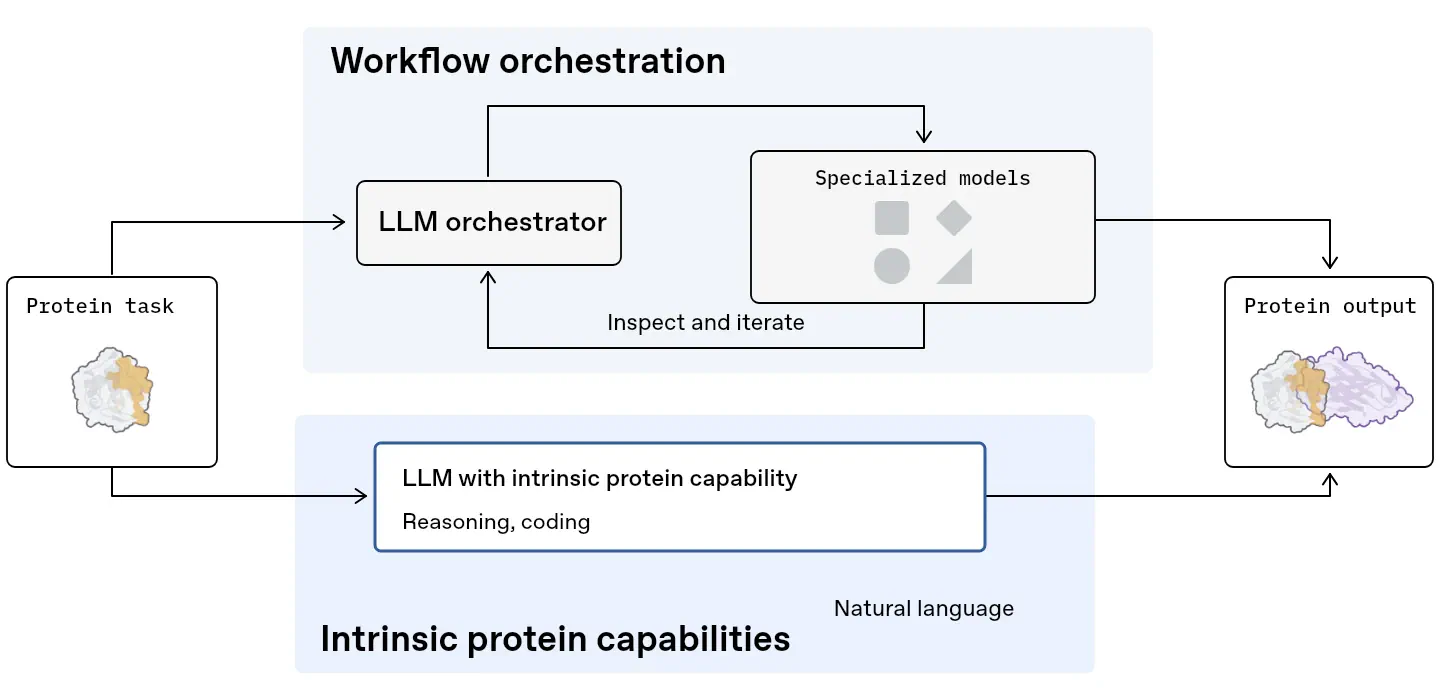
OpenAI reports that proteins based on designs from its GPT-6.2 model showed evidence of binding across five laboratory targets. The work, announced on November 24, 2026, explores whether general-purpose AI models can design protein structures and amino-acid sequences through reasoning and code.
The laboratory results came from research with Onava using a pre-released version of GPT-6.2. According to OpenAI’s announcement, at least one protein for each of five selected targets showed evidence of attachment. Separate experiments found that many redesigned minibinders and antibodies also retained binding to their original targets.
The findings are presented in a preprint, titled GPT‑6 as a Universal Foundation Model for Protein Biology: Beyond Specialized Models. They offer physical experimental evidence beyond a computational benchmark, but the tested workflow still used specialized biology models. Understanding where those tools entered the process is essential to interpreting OpenAI’s claim.
What OpenAI Says GPT-6 Can Design
OpenAI’s GPT-6 family can generate protein shapes and amino-acid sequences without calling specialized biology models to produce those designs, according to the company. Its claim concerns capabilities inside a general-purpose model using reasoning and general-purpose coding tools.
Proteins are chains of amino acids. Their sequence helps determine how they fold into three-dimensional structures, and those structures influence how they interact with other molecules. Designing a protein therefore involves related but distinct problems: choosing a useful shape and finding a sequence that can support it.
OpenAI says its models tackled tasks including:
- Designing small proteins, known as minibinders, intended to attach to specified targets.
- Building protein structures around required structural features.
- Predicting protein structures and molecular interactions.
- Ranking how sequence changes affect properties such as stability and binding.
Researchers could also supply constraints through prompts. OpenAI describes specifying where a minibinder should attach and how many coils or strands its structure should contain. An internal research model followed those structural instructions with what the company calls near-perfect fidelity in its three-dimensional designs.
That result concerns compliance with design instructions. It should be read separately from whether a manufactured protein folds as intended or binds successfully in a laboratory.