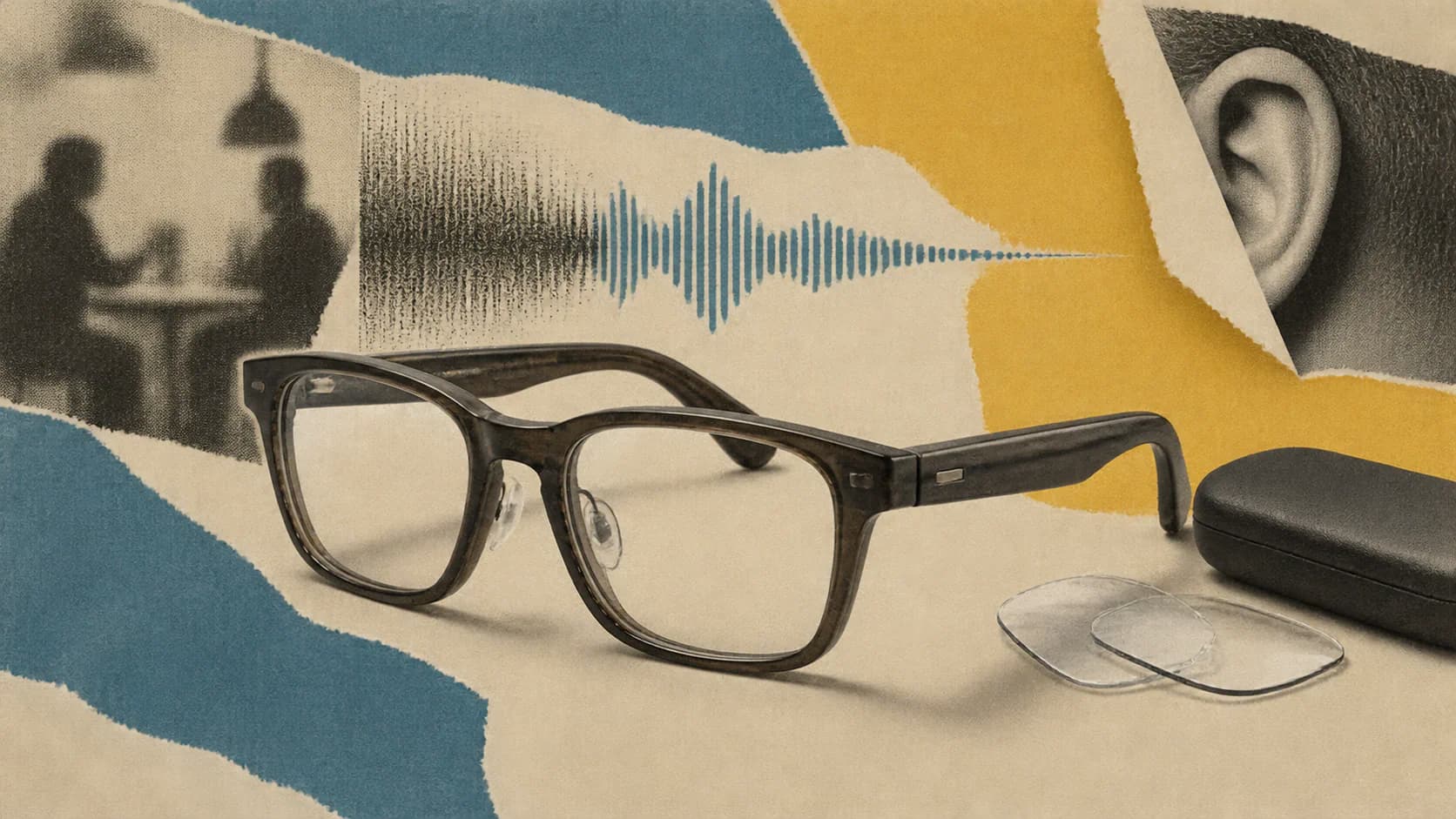
Legato Frames put hearing assistance into eyeglasses. Available in the United States starting at $999, they are intended for adults with up to moderate hearing loss who would rather wear glasses than put a device in their ears. They also support prescription lenses, Bluetooth audio and phone calls.
The feature that makes this more than another pair of audio glasses is SpeechSense AI. Legato says it processes sound on the frames, separates speech from background noise and amplifies voices. On-device AI could be useful here if it holds up in ordinary conversations in unpredictable, noisy places.
Buyers can evaluate the form factor and price now. They have less independent evidence for how well the glasses isolate speech, contain sound or last through a day of use. Legato cites a favorable laboratory benchmark, though broad real-world reviews are still lacking.
Who Legato Frames Are For and What They Cost
Legato describes its frames as hearing devices for adults with mild-to-moderate hearing loss. They are not presented as a solution for severe hearing loss. Anyone unsure of their hearing needs would be better served by an assessment than by treating a product description as a diagnosis.
The Legato store lists three styles. Symphony and Harmony start at $999, while Aria starts at $1,099. All three support prescription lenses. Lens configuration can affect the final cost, so shoppers should check their order total rather than assume the starting frame price is what they will pay.
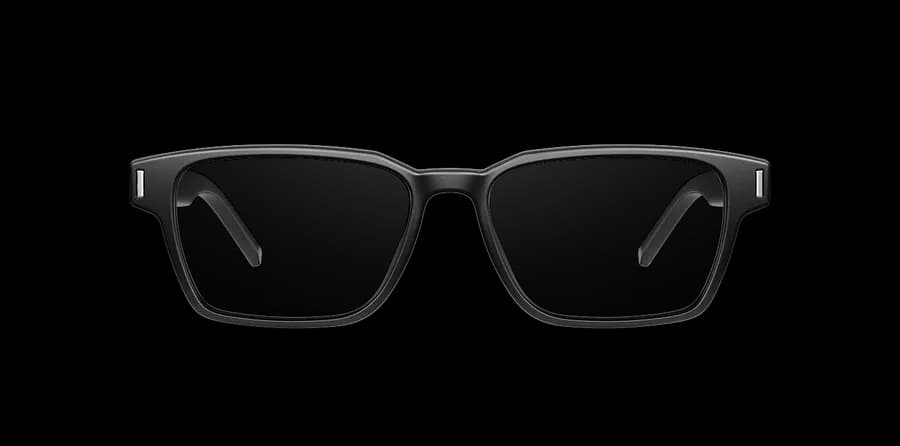
Legato announced U.S. online availability on October 1. Its launch announcement said the frames would soon be offered through selected eye-care providers, while TechCrunch reported that selected providers were among the purchasing options. Online ordering is the clearer immediate route; local provider availability is worth checking directly.
The company also says frames bought through eye-care providers will often be eligible for vision-insurance coverage. Eligibility does not mean a particular plan will pay or cover the full cost. Buyers should confirm benefits with their insurer and provider before counting on reimbursement.
Speech Processing Happens on the Frames
Legato says SpeechSense AI separates voices from surrounding noise in real time, then amplifies speech to compensate for hearing loss. According to the company, the core hearing feature runs on the glasses without depending on a phone or cloud service.
A hearing device has to respond to conversation as it happens, and processing sound on the wearable is a practical design choice for that job. The available launch material does not establish how the system handles every kind of competing sound or how natural its amplification feels to different wearers.
The frames have an open-ear design: their speakers direct audio toward the wearer without occupying the ear canal. That could appeal to people who dislike wearing hearing aids in their ears, but it leaves a question photographs cannot answer. In a quiet room, how much of an amplified conversation can somebody sitting nearby hear? TechCrunch reported Legato’s claim that its speaker system reduces escaping sound, but independent leakage measurements were not available in the supplied launch coverage.
Legato also says the frames have no cameras and do not record. In restaurants, meetings and other shared spaces, a camera-free design avoids one conspicuous privacy concern associated with smart glasses. The no-recording claim is the company’s description of the product, not an independent audit of its hardware, software or companion app.
The Everyday Appeal Comes With Glasses-Specific Tradeoffs
Legato Frames do double duty. Alongside hearing assistance, the company says they can stream music and handle calls over Bluetooth with iPhone and Android devices. Wearers can adjust their sound using the Legato app, and the company advertises lifetime support from its U.S.-based team.
According to Legato’s launch announcement, the frames weigh as little as 34 grams with lenses and offer 10 to 12 hours of battery life. Those figures are useful shopping specifications, though they do not guarantee that every prescription configuration or pattern of Bluetooth use will feel or perform the same. The company’s site also advertises a 45-day money-back guarantee; shoppers should review the applicable return terms before ordering customized lenses.
Combining hearing assistance with eyewear makes sense for someone who wears prescription glasses all day and would appreciate carrying one device instead of two. Someone who regularly switches between reading glasses, sunglasses and no glasses would need to consider when the hearing feature would actually be on their face. If the frames are charging or set aside, their hearing assistance is set aside too.
Legato’s $999 starting point may look attractive beside some prescription hearing solutions, but price alone misses that tradeoff. The frames offer a particular way of wearing hearing technology, not an interchangeable replacement for every hearing aid. Fit, prescription needs and the environments where a person struggles to hear all matter.
What the Evidence Does and Does Not Show
Legato says HearAdvisor tested the frames in May 2026 and gave them a SoundScore of 4.6 out of 5, placing them among the top 10 devices in that benchmark. The figure appears in Legato’s press release. The supplied source material does not include the underlying test report, its full comparison set or enough detail to assess how the score translates into everyday use. There has been independent testing, but the company’s account of one benchmark is not a complete performance review.
The most useful follow-up testing would compare speech understanding in several noisy settings, measure sound leakage at realistic distances and check battery life across hearing assistance, music and calls. Comfort over a full day and the experience of fitting prescription lenses deserve attention as well. Those are consequential questions for a $999 device that buyers may rely on throughout the day.
Frequently Asked Questions
5 questions
1How Much Do Legato Frames Cost?
Legato Frames start at $999 in the United States. Legato lists the Symphony and Harmony styles at that starting price and Aria at $1,099. All three support prescription lenses, so buyers should check the total for their chosen configuration. The company advertises a 45-day money-back guarantee, subject to its return terms.
2
Sources
- SpeechSense AIlegatohearing.com
- announced U.S. online availability on October 1globenewswire.com
- TechCrunch reportedtechcrunch.com