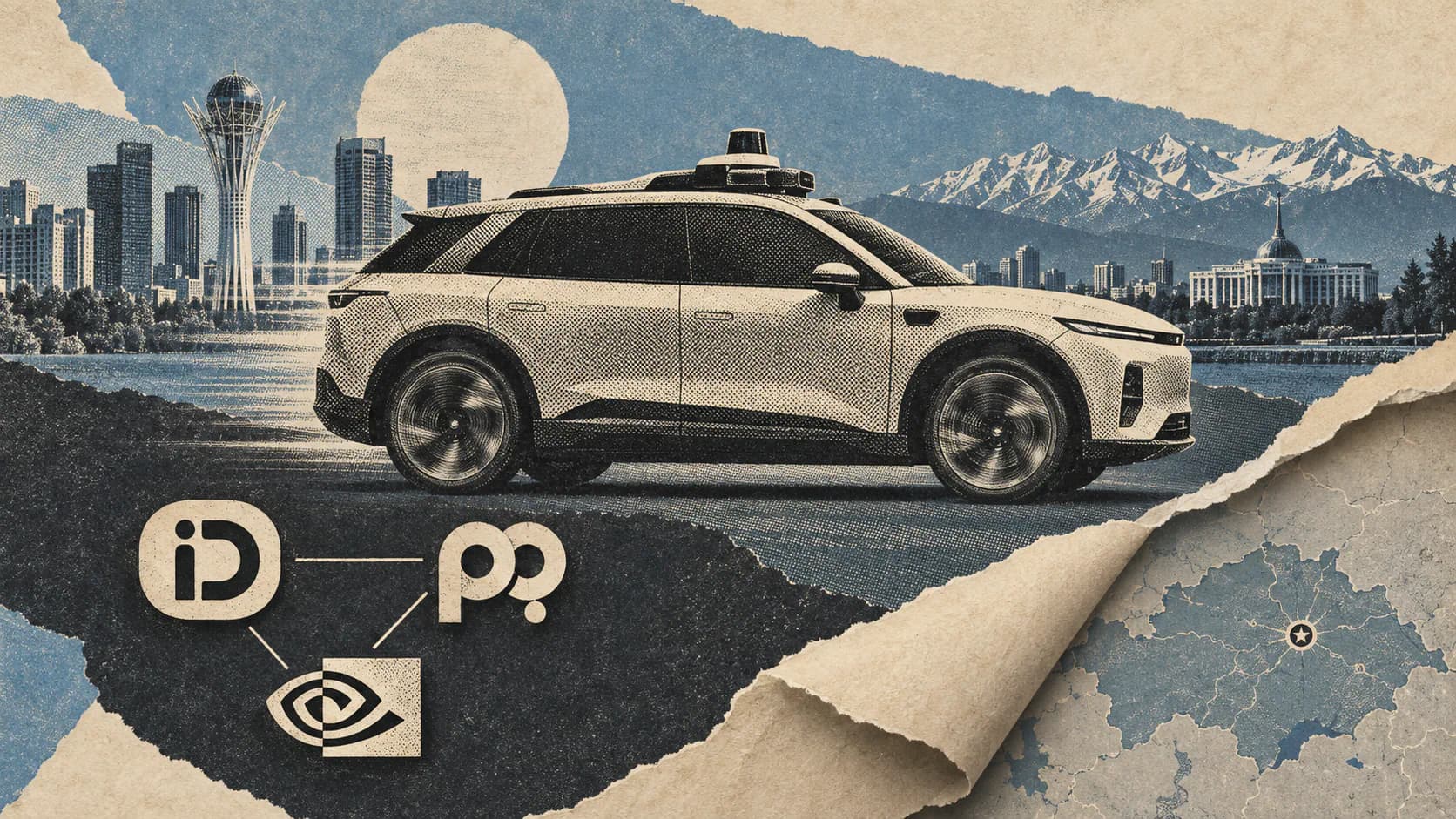
inDrive, Pony.ai and Nvidia have signed a memorandum of understanding to explore robotaxis in Kazakhstan, with supervised testing in Astana targeted for the first half of 2027. The proposal pairs Pony.ai’s seventh-generation vehicles with inDrive’s ride-hailing platform and Nvidia’s AI infrastructure.
The primary announcement, dated October 23, 2026, describes a project to assess technical, operational, regulatory and commercial feasibility. It also says a launch would follow an agreement with Kazakhstan’s government. That makes this a deployment proposal with a test timetable, not a confirmed commercial driverless service.
Astana gives the partners a potentially demanding location: a growing transport market with long winters, snow and ice. It also creates an important distinction for readers following autonomous-driving competition. Choosing a difficult environment is a reason to test a system, not evidence that the system has already mastered it.
The Memorandum and the Test Schedule Are Separate Milestones
inDrive CTO Yuri Misnik told TechCrunch that testing would begin in Kazakhstan’s capital in the first half of 2027. The vehicles would initially operate with a safety operator, with fully driverless rides as the eventual goal.
Read alongside the company announcement, that produces four distinct milestones:
- Signed memorandum: The partners have agreed to explore the project and evaluate its feasibility.
- Government agreement: The announcement makes a launch conditional on an agreement with Kazakhstan’s government.
- Supervised testing: inDrive has identified the first half of 2027 as the target start window in Astana.
- Fully driverless operation: This remains a goal without a published launch date.
Those stages answer different questions. A memorandum establishes the intended collaboration. Permission and operating arrangements determine how it can proceed locally. Supervised tests then provide evidence about the vehicles and the service under the conditions actually tested.
I’d treat the supervised-test start as the next useful checkpoint. It would move the proposal from planning into observable road operation, while still leaving substantial questions about when riders could use an unsupervised service.
The available evidence is a partner announcement and a news report, not the signed memorandum, regulatory text or test results. The public wording supports this milestone distinction, but it does not reveal every contractual or approval requirement.
What inDrive, Pony.ai and Nvidia Would Supply
The proposed service divides responsibility across three layers: the autonomous vehicle, the customer-facing transport service and supporting AI technology.
| Partner | Proposed contribution | Practical role |
|---|---|---|
| Pony.ai | Seventh-generation, or Gen-7, robotaxis | Supplies the vehicles and autonomous-driving technology |
| inDrive | Ride-hailing platform and service operation | Connects riders through its app and runs the Kazakhstan service |
| Nvidia | AI infrastructure, including Hyperion and Halos | Provides a sensor-and-compute reference platform and safety technology |
The announcement describes Hyperion as a reference sensor-and-compute platform for Level 4 autonomous vehicles and robotaxis. A reference platform provides a foundation for building and integrating a system; it is not, by itself, an operating taxi business.
Level 4 autonomy concerns driverless operation within defined operating conditions. The important deployment question is therefore what roads, weather and other conditions the eventual service would support. Calling a vehicle Level 4-ready does not answer those local operating questions.
Pony.ai says its Gen-7 vehicles use multi-sensor fusion, system-level redundancy and fail-operational capabilities. In plain terms, those describe combining sensor information, providing backup functions and designing the vehicle to maintain necessary operation through certain failures. They are vendor descriptions of the design, not published results from Kazakhstan.
Nvidia’s role also needs that distinction. The announcement names Hyperion and the Halos safety system and describes a broader robotaxi platform incorporating Alpamayo. It does not disclose the detailed hardware and software configuration intended for Astana. The presence of a named safety system cannot substitute for evidence about the complete vehicle in its intended environment.
Why Astana Matters for Regulation and Winter Testing
Kazakhstan was selected partly because of its regulatory readiness, according to the partners. Their announcement points to the country’s first structured legal framework for driverless transport and inDrive’s established local presence.
TechCrunch also reports that Kazakhstan had announced plans for autonomous taxi services in 2027, with initial trials in Astana and two other cities, and had introduced rules allowing autonomous-vehicle tests on certain public roads. That provides context for the proposal, although the announcement still identifies a government agreement as a launch condition.
Astana’s population of approximately 1.7 million gives the project an urban transport market in which to assess demand and operations. Its winters make the technical evaluation more consequential.
inDrive founder and CEO Arsen Tomsky said in the announcement:
“Launching here will provide an important opportunity to evaluate autonomous driving technology in challenging winter conditions.”
That is a testing rationale, expressed by the company. It is not a claim backed by published Astana performance data.
A useful winter evaluation would need to examine the complete driving task: interpreting roads affected by snow, responding to other traffic and handling reduced grip. For the service operator, the useful question is also how often vehicles can remain available safely during difficult weather.
The proposed first-half 2027 start does not specify how much severe winter exposure the pilot would receive. The sources give no operating-temperature range, snowfall limits, winter test duration or performance thresholds.
My view is that Astana’s value will depend on what the partners disclose about those conditions. Evidence from clearly described winter operations would say much more about expansion potential than the city’s climate alone.
Affordable Rides Make the Cost Case Harder
inDrive built its business around affordable rides and a model that lets passengers and drivers negotiate fares. Its robotaxi proposal therefore has to make commercial sense in a market where human-driven ride-hailing is already relatively inexpensive.
“Our approach is capital-light by design,” Misnik told TechCrunch, describing a strategy of working with partners in different markets.
Frequently Asked Questions
3 questions
1Is inDrive Launching a Driverless Service in 2027?
The published plan targets supervised testing in Astana in the first half of 2027. Fully driverless rides are an eventual goal, with no announced commercial launch date.