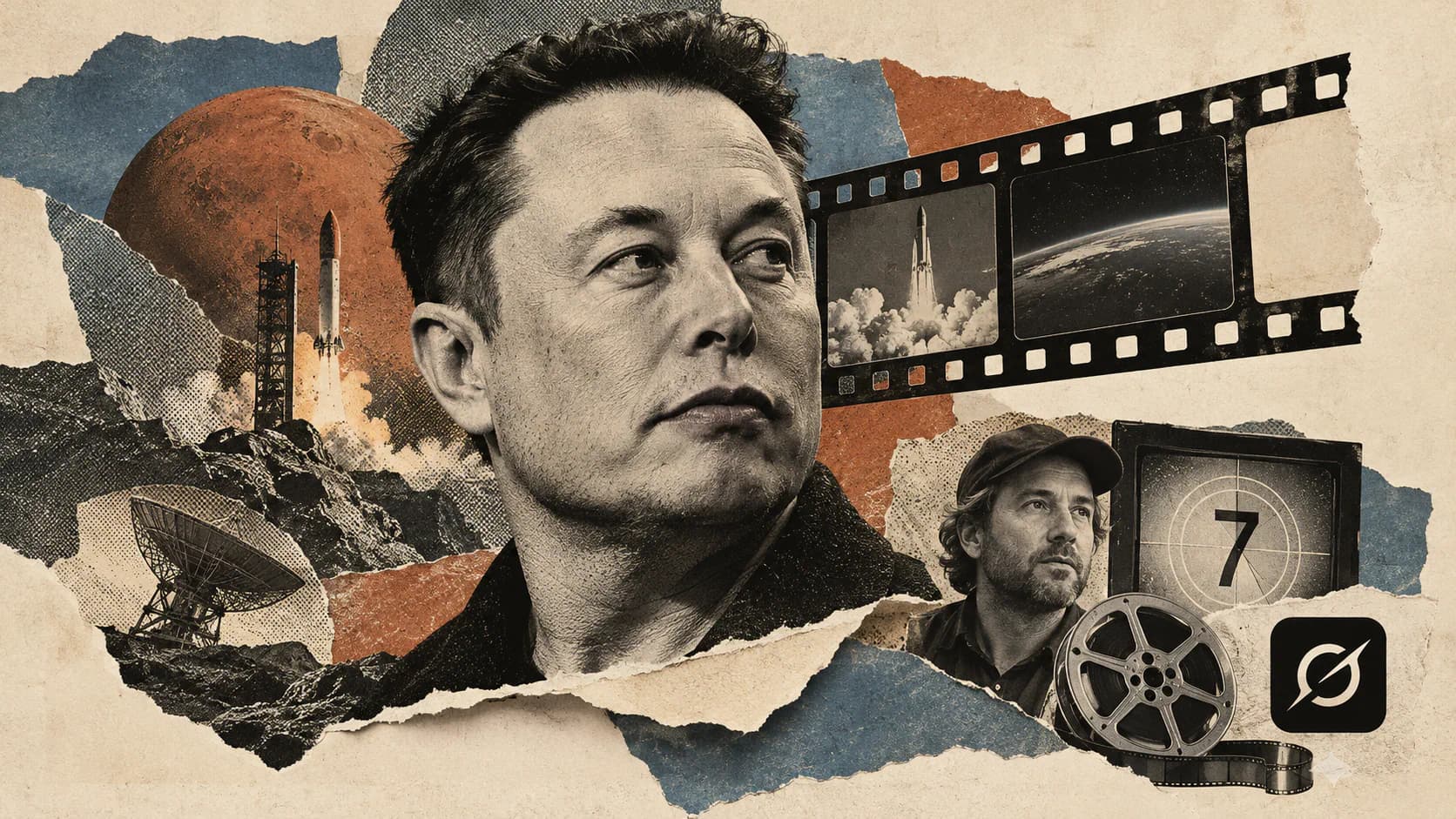
Grok Imagine released the first episode of its AI-generated Odyssey series on October 23, 2026, with a runtime of roughly seven minutes. The official announcement credits Wonder Studios and director Dev Walker as creative collaborators. It is an opening installment, not delivery of the full-length film Elon Musk previously promised.
That distinction matters, but so does the timing. Musk’s reported commitment was to release a feature before the end of 2026, so the October episode arrived before his deadline. The release shows what the project has published so far; it neither fulfills the feature-length promise nor proves that the deadline will be missed. TechCrunch and Variety both describe the gap between the earlier commitment and the episode now available.
For xAI’s video-generation ambitions, the useful question is what this finished production demonstrates. Seven edited minutes give viewers more to assess than an isolated clip, but the runtime alone reveals little about the underlying generation process.
What Grok Imagine Released on October 23
The official Grok Imagine account described the release directly:
“Watch Episode 1 of our Odyssey series made with Grok Imagine.”
The post names Wonder Studios and director Dev Walker as collaborators and asks whether viewers want a breakdown of how the episode was made. It does not present the release as a completed feature.
The announcement’s wording establishes two useful facts: Grok Imagine was used in the production, and the project involved named creative partners. It leaves the division of work between the model, studio and director unspecified.
TechCrunch’s October 25 report puts the runtime at about seven minutes. That is the length of the finished installment, not a disclosed maximum generation length for Grok Imagine. A published video’s duration and a model’s ability to generate an uninterrupted sequence are different measurements.
I’d treat this as a showcase of a collaborative production. The collaborator credits are important context for understanding the result, not a footnote to a claim that software independently made a movie.
How the Episode Compares With Musk’s Promise
Variety’s October 26 report traces Musk’s commitment to July. According to that report, he promised a full-length adaptation of The Odyssey before the end of 2026, describing it as “historically accurate” and faithful to Homer’s work.
The October announcement changes the immediate unit of delivery from a feature to an episode.
| Detail | Musk’s Reported July Promise | October 23 Release |
|---|---|---|
| Format | A full-length Odyssey movie | Episode 1 of an Odyssey series |
| Runtime | Feature-length, without a specific duration cited | Approximately seven minutes |
| Timing | Before the end of 2026 | Opening episode published in October |
| Creative standard | Historical accuracy and fidelity to Homer | No accompanying verification of those claims |
| Production credits | Grok Imagine identified as the filmmaking tool | Wonder Studios and Dev Walker explicitly credited |
The table supports a narrow but consequential finding: the released episode is smaller in scope than the promised film. It does not show that the feature has been canceled, or that an episodic release could never become a feature-length work.
A series could accumulate enough material to reach feature length. Even then, accumulated runtime would answer only the length question. Whether the installments form a coherent movie would depend on how their scenes, characters and dramatic structure fit together.
My view is that the fairest accounting keeps scope and deadline separate. Calling seven minutes the completed promise would overstate delivery. Calling the October release a missed year-end deadline would be premature.
The historical-accuracy claim also remains a separate question. Neither the announcement nor the supplied reporting provides a systematic assessment of the episode’s fidelity to Homer or its historical details.
TechCrunch’s Criticism Focuses on Storytelling
TechCrunch writer Anthony Ha offered a mixed assessment of the footage. He found some individual shots convincing enough to resemble real actors at sea, while criticizing the episode’s extended voiceover exposition, stilted dialogue and weak dramatic momentum.
His central objection was that the whole sequence offered “no sense of momentum.” These are Ha’s critical judgments, not technical measurements or a documented consensus among viewers.
The distinction between his praise and criticism is useful. A shot can look plausible without making a scene compelling. Viewers may accept the appearance of a ship, face or coastline while finding the dialogue unconvincing or the pacing slow.
Those are different evaluation criteria:
- Shot-level plausibility: Does an individual image or movement look believable?
- Scene continuity: Do characters, locations and actions remain understandable across cuts?
- Narrative momentum: Does the sequence give viewers a reason to follow what happens next?
Ha’s review speaks favorably about some moments in the first category and negatively about the storytelling. It does not supply a controlled continuity test or a model comparison.
For this particular project, that separation is more informative than a blanket verdict about whether AI video looks good. Musk promised an adaptation of a story. Visual realism is relevant to that ambition, but it cannot substitute for characterization, scene construction or pacing.
Seven Finished Minutes Reveal Little About the Pipeline
The official post offers a possible future production breakdown instead of publishing one. Across the announcement and the opened reporting, the following production details remain undisclosed:
- The Grok Imagine model version and generation settings.
- The duration and number of generated clips used.
- How many attempts were rejected or regenerated.
- The methods used to maintain characters and locations across shots.
- The amount of human editing, compositing, sound work or other intervention.
- Production cost and a schedule for later installments.
These gaps limit what readers can infer about autonomy, efficiency and reproducibility. The credits establish a creative partnership; they do not quantify anyone’s workload.
Frequently Asked Questions
3 questions
1Is This the Full Odyssey Movie Musk Promised?
No. The October 23 release is labeled Episode 1 of a series and runs about seven minutes. Musk’s reported promise concerned a full-length film.