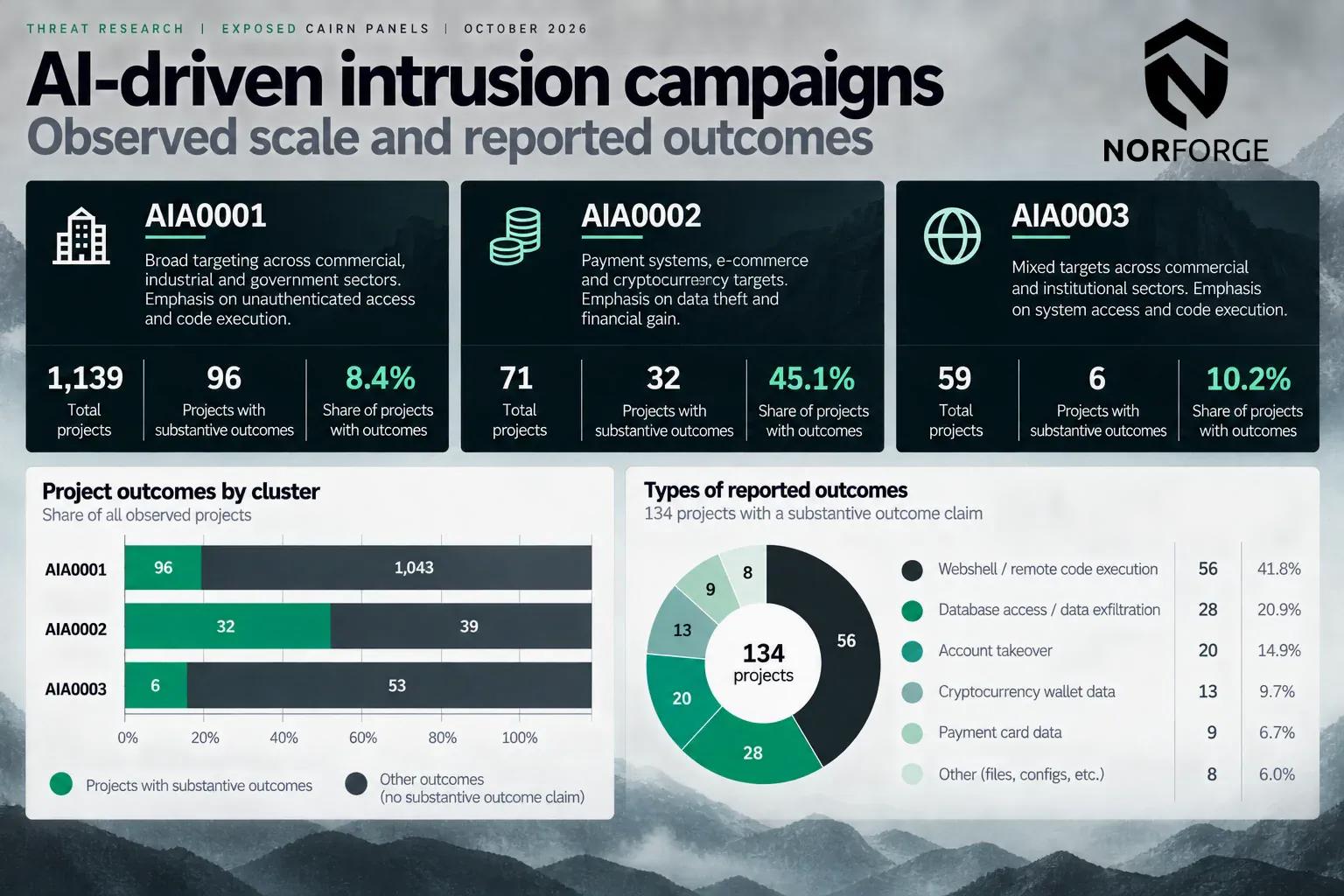
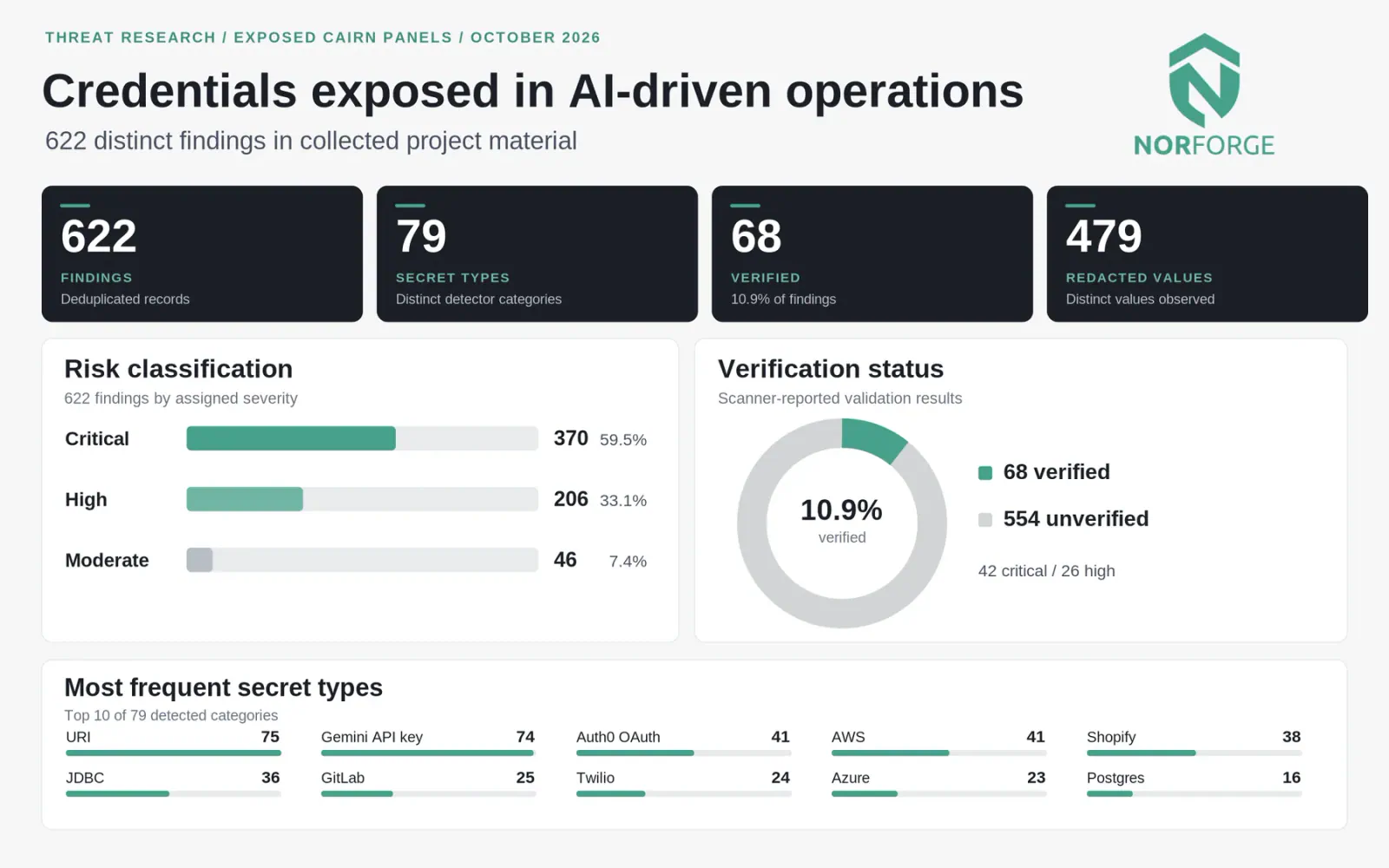
Amazon Threat Intelligence says a China-linked hacking group pointed Cairn, an open-source framework that coordinates AI agents, at university servers in September 2026 with one instruction: "obtain shell access." The agents found a previously unknown path traversal bug in MONAI Label, a medical imaging annotation tool, and used it to get a root shell. It's the clearest public AI agents zero-day case yet: software that found and used an unknown bug on its own in a real campaign.
Amazon's CISO, CJ Moses, published the findings on November 20, 2026. The MONAI Label maintainers posted a critical advisory on November 18 and shipped the fixed version, 0.8.6, on November 22. Anyone running MONAI Label 0.8.5 or older on a reachable network should treat the server as possibly compromised.
This article walks through how the attack worked step by step, what the bug actually was, what else the agents tried and failed at, how this fits with earlier criminal use of Cairn, and what defenders can do about agents that never get tired.
Key takeaways
- The agents found the bug themselves. Amazon says Cairn's agents mapped MONAI Label's API, spotted a filename parameter on an upload endpoint, and went from mapping to arbitrary file writes in about 11 minutes.
- Root came from a Python startup hook. The agents wrote a reverse shell into
sitecustomize.py, then called a training endpoint that launched a new Python process, which ran the payload as root. - The flaw is rated critical in advisory GHSA-qc22-rmgc-vg94 and tracked as CVE-2026-133968. It affects MONAI Label 0.8.5 and earlier, and authentication is off by default.
- The fix took 73 days to reach a release. The campaign ran September 8 to 10, 2026. The code fix merged October 19, and MONAI Label 0.8.6 shipped November 22.
- Attribution is moderate confidence. Amazon cites Simplified Chinese prompts, China Standard Time timestamps and the choice of targets, not malware or infrastructure overlaps.
- Most agent attempts still failed. A 16-hour, 148-step attack on a Redis server and a 30,000-credential spray both went nowhere. Norforge puts the average success rate of criminal Cairn projects at around 10%.
What did Amazon find?
Amazon found an attacker's AI hacking console left open on the internet, and inside it a full record of a two-day campaign. On September 10, 2026, Amazon Threat Intelligence identified a server running Cairn with no authentication, so the operator's prompts, project settings and the agents' own output were readable by anyone.
That record showed a campaign aimed at IP addresses tied to universities in East Asia outside mainland China, running for roughly 48 hours from September 8. In the AWS Security Blog post by CJ Moses, Amazon describes the operator handing the agents a list of targets and variations of the same goal, then stepping back.
The core claim is short enough to quote. Amazon wrote:
"During the campaign, the agents found a zero-day in an open-source application and used it to gain full control of a server."
Amazon didn't name MONAI Label in its post. Coverage by BleepingComputer, The Register and SecurityWeek identified it by linking to the project's advisory, and the advisory's own text matches Amazon's description of the bug.
What Amazon is and isn't claiming
Amazon is careful with its confidence levels, and they're worth keeping separate:
- High confidence: the bug was a zero-day, because there was no fix, issue, advisory or prior mention of it anywhere when the agents found it.
- Moderate confidence: the operator is a Chinese-nexus actor, based on the prompt language, script timestamps and targets of likely strategic interest to China.
- Inference: the operator used the zero-day to break into a second university, because a proxy they later supplied led to a server running the same vulnerable software.
The affected universities weren't AWS customers. Amazon says it worked through a government partner to notify them.
What is Cairn, and how does it direct AI agents?
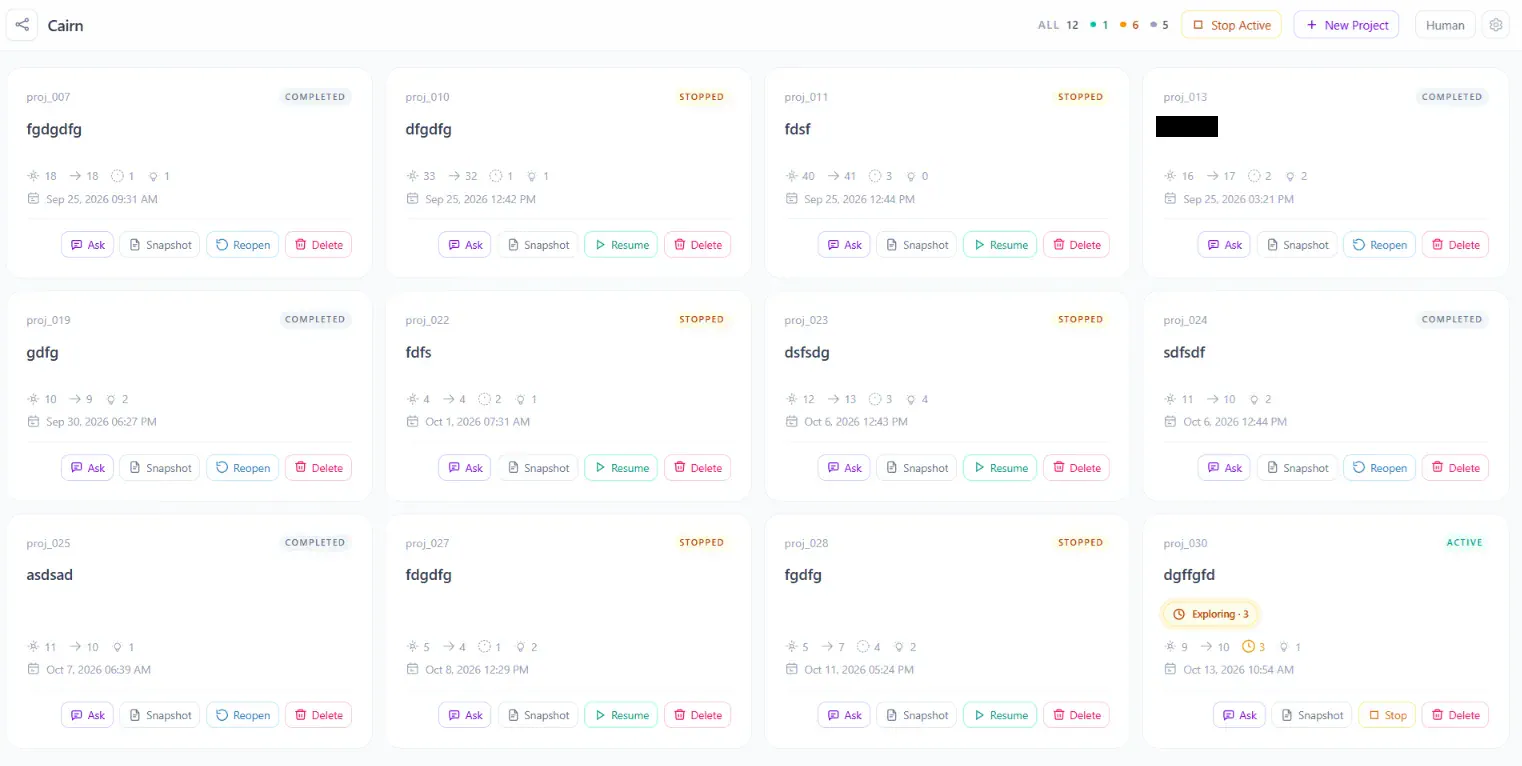
Cairn is an open-source, general-purpose problem-solving engine that coordinates several AI agents toward a goal written in plain language. Amazon says it was built as a research tool for defenders, which is exactly why it's easy to misuse: you give it a starting point and an objective, and the agents plan the rest.
Security firm Norforge, which studied exposed Cairn panels in October 2026, gives the clearest account of the mechanics. In the Norforge "Inside Cairn" report, each task is a project with an origin and a goal. Agents cycle between intents (what they plan to do next) and facts (what they've learned), and post every fact to a shared blackboard that all agent workers can read.
A human can drop hints onto the same blackboard. That's how the operator in Amazon's case could step in mid-campaign and hand the agents a proxy into a second network.
What powers the agents?
Cairn is a harness, not a model. It sits on top of whatever large language model the operator plugs in. Norforge found one criminal cluster's tasks run by a worker named claudecode_deepseek-v4.1-flash and another's by pi_openrouter_deepseek, which suggests coding-agent harnesses calling DeepSeek models.
Amazon's post doesn't say which model the China-linked operator used. That's a real gap, and it matters for the policy debate, because it means nobody can yet say whether a model provider's safeguards were bypassed, absent or never in the loop.
Cost is the other thing that makes this practical. Norforge estimated, with what it calls considerable uncertainty, that an average Cairn task costs about $5 in model fees, and that long projects with more than 1,000 intents and facts could run past $100.
How did the AI agents zero-day attack unfold?
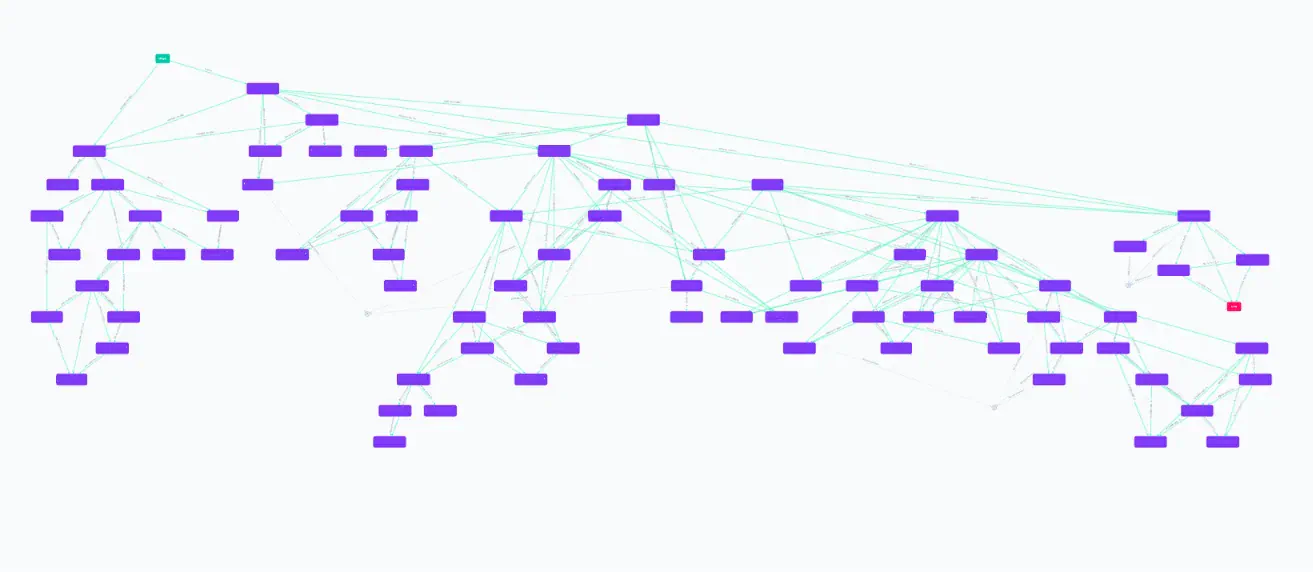
The AI agents zero-day attack took four moves: identify the app, map its API, test one parameter, then turn a file write into code execution. Amazon's account, read alongside MONAI Label's advisory, lets you reconstruct each step.
| Step | What the agents did | What it got them |
|---|---|---|
| 1. Fingerprint | Identified the application's framework on the target | Knew it was MONAI Label |
| 2. Map | Enumerated the API endpoints | Found an upload endpoint with a filename-style parameter |
| 3. Test | Tried path traversal sequences in that parameter | Arbitrary file write, about 11 minutes after mapping began |
| 4. Plant | Wrote a Python reverse shell to sitecustomize.py (later session) | A payload Python would run on its own |
| 5. Trigger | Called a training API endpoint that spawns a new Python process | Reverse shell running as root |
| 6. Pivot | Used an operator-supplied proxy into a second university | Access to target more machines there |
The 11-minute figure covers steps 2 and 3 only. Amazon says the root shell came "in a later session," and it doesn't give a total elapsed time from first contact to root.
Why sitecustomize.py gave them root
The trick in step 4 is a standard Python feature, not a MONAI Label bug. According to the Python documentation for the site module, the interpreter tries at startup to import a module named sitecustomize, which "can perform arbitrary site-specific customizations." Whatever code is in that file runs every time a new Python process starts.
So an arbitrary file write becomes code execution the moment anything launches Python. MONAI Label conveniently has a training endpoint that does exactly that.
It ran as root because the server process did. That's a deployment choice, and it's the reason the advisory tells operators to run the server as an unprivileged user.
What was the MONAI Label flaw, exactly?
The flaw is a path traversal in MONAI Label's datastore upload endpoints. Path traversal is a bug where a program builds a file path from user input without checking that the result stays inside the intended folder, so input like ../../ can reach anywhere on disk.
The MONAI Label advisory GHSA-qc22-rmgc-vg94 spells it out. The PUT /datastore/image endpoint took a caller-controlled image parameter as the image ID with no validation. LocalDatastore.add_image() appended a file extension, joined the result onto the datastore directory and copied the upload there with shutil.copy(). Nothing checked where the final path landed.
A value such as ../../../tmp/x writes the file wherever the server process can write. The label endpoint, PUT /datastore/label, built its path the same way.
Two details made it critical rather than merely bad:
- Authentication is off by default. MONAI Label ships with
MONAI_LABEL_AUTH_ENABLE=False, so in a default install any client that can reach the server can exploit it. - Low privilege is enough even with auth on. The advisory says the ANNOTATOR role is sufficient, which is the role you'd hand to the people labeling scans.
Who uses MONAI Label?
MONAI Label is an Apache-2.0 open-source tool from Project MONAI that helps researchers label medical images, with AI models suggesting segmentations that humans correct. It plugs into viewers such as 3D Slicer and OHIF. The repository had about 915 stars and 281 forks on GitHub on November 23, 2026.
That profile explains the targeting. MONAI Label tends to run on university and hospital research servers, often next to GPUs and imaging datasets, and often set up by researchers rather than security teams.
How long did the fix take, and is it out now?
Yes, the fix is out: MONAI Label 0.8.6, released November 22, 2026, closes the bug. The 0.8.6 release notes open with "This is a security release" and tell every server deployment to upgrade.
The timeline is longer than the headlines suggest. Here's what the public record shows:
| Date | Event | Source |
|---|---|---|
| Sept 8–10, 2026 | Campaign runs; agents find and exploit the bug | Amazon |
| Sept 10, 2026 | Amazon finds the exposed Cairn server | Amazon |
| Oct 12, 2026 | Fix pull request #1915 opened | GitHub |
| Oct 19, 2026 | Fix merged into the main branch | GitHub |
| Nov 18, 2026 | Advisory GHSA-qc22-rmgc-vg94 published, "Patched versions: None" | GitHub |
| Nov 20, 2026 | Amazon publishes its report | AWS Security Blog |
| Nov 22, 2026 | MONAI Label 0.8.6 released with CVE-2026-133968 | GitHub, PyPI |
From Amazon's discovery to a release users could install took 73 days. For 30 of those, the fix sat merged in the repository but unreleased, and for four days after the advisory went public there was no patched package.
Part of the delay is visible in pull request #1915 itself. Its author notes that continuous integration on the main branch "was already red for reasons unrelated to this change," and the PR ends up fixing a chain of dependency and build failures before the security fix could ship.
The release history on PyPI for monailabel shows why that's plausible: before 0.8.6, the last release was 0.8.5 on November 25, 2024. That's nearly two years without a release for a tool exposed to the network by design.
What 0.8.6 actually changes
The 0.8.6 release fixes two path traversal bugs, not one:
- Datastore uploads (the Cairn bug):
add_image()andsave_label()now resolve the destination and reject anything outside the datastore, and the image endpoint keeps only the basename and rejects empty or dot-prefixed IDs with HTTP 400. - Session uploads:
PUT /session/?uncompress=trueextracted tar archives without checking member names. That's fixed in #1942, and archives containing links or device files are now rejected. - Breaking change: 0.8.6 requires Python 3.11 or newer, dropping 3.9 and 3.10, so some older research environments will need a rebuild to upgrade.
The coverage doesn't fully agree on dates. BleepingComputer reported that maintainers released a security update on November 18, but the advisory published that day listed no patched version, and SecurityWeek correctly reported on November 21 that the fix would come in the next release. The installable fix arrived November 22.
What else did the agents try, and why did it fail?
Most of what the agents tried failed, and Amazon's report is useful precisely because it shows the misses alongside the hit. Two operations stand out, and both ran with no human choosing the next step.
The longest went after a university Redis database that allowed access without a password. Over about 16 hours and 148 sequential actions, the agents worked through the known playbook for open Redis servers:
- Abusing Redis replication to load unauthorized code
- Escaping the Lua scripting sandbox
- Writing to configuration files
- Corrupting memory
- Trying Log4Shell injection against another service on the same machine
- Mapping the internal Docker network through a server-side request forgery bug in a co-located Qdrant instance
- Spraying credentials at PostgreSQL, SSH and other services
None of it worked.
The second ran for more than six hours against a university GPU server. The agents built a list of about 80 real usernames from faculty directories, lab websites, archived pages and academic papers, then tested more than 30,000 credential combinations against SSH, an admin dashboard, a network storage device, a VPN and the campus portal. They never got in.
Frequently Asked Questions
6 questions
1What did AI agents actually do in the Amazon MONAI Label case?
AI agents running on the Cairn framework found and exploited an unknown bug in MONAI Label on their own, according to Amazon. Given the goal "obtain shell access," they mapped the app's API, found a path traversal flaw in an upload endpoint, and could write arbitrary files in about 11 minutes. In a later session they planted a reverse shell in Python's sitecustomize.py and got root.