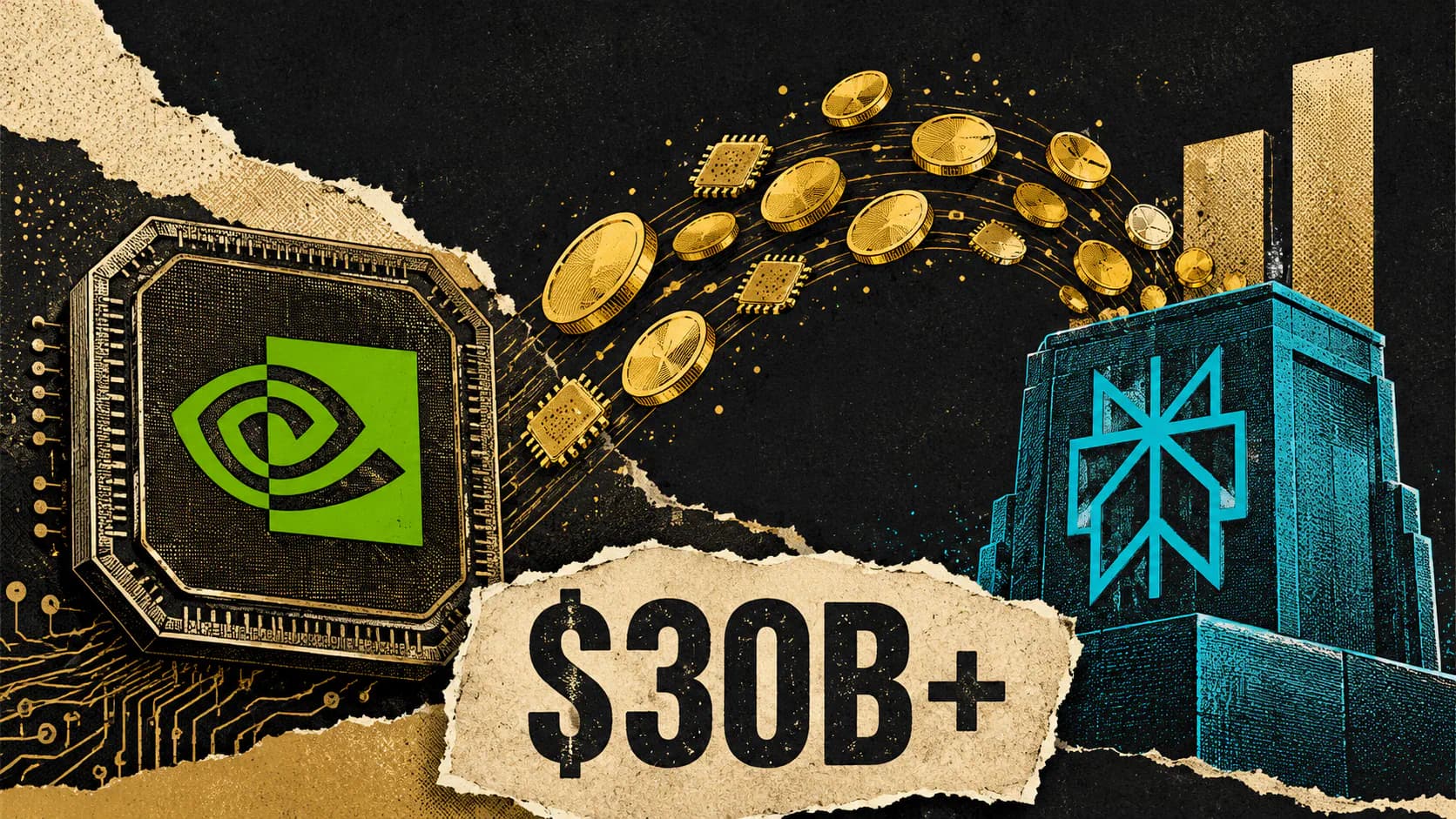
Nvidia is reportedly discussing an investment in Perplexity through an equity round that would value the AI search company at more than $30 billion. The financing could total billions of dollars, although Nvidia’s potential contribution and the identities of other investors remain undisclosed.
According to The Information’s report on the discussions, the talks previously centered on Nvidia licensing Perplexity technology and hiring some of its employees. They have since shifted toward a conventional investment, though neither company has announced a completed deal.
The change comes as Perplexity’s annualized revenue has climbed from less than $250 million at the start of 2026 to more than $750 million. Perplexity Computer, the company’s increasingly ambitious AI agent, reportedly contributed to that growth.
The Proposed Round Would Reprice Perplexity by More Than 50%
Perplexity’s last major financing reportedly brought in $200 million at a $20 billion valuation in September 2025. A new valuation above $30 billion would therefore represent an increase of more than 50% in roughly one year, while pushing the four-year-old company further into the top tier of private AI businesses.
The company has raised more than $1.7 billion from investors including Nvidia, Accel, New Enterprise Associates and SoftBank. Nvidia’s relationship with the startup is not new. The chipmaker participated in Perplexity’s $73.6 million funding round in January 2024, when the company was valued at only $520 million, and later joined additional rounds.
At the minimum reported figures, a $30 billion valuation equals 40 times Perplexity’s $750 million annualized revenue. That is not a conventional trailing revenue multiple. Annualized revenue extrapolates the company’s recent sales pace and does not mean Perplexity collected $750 million during the previous 12 months. It also says nothing by itself about operating profit or cash flow.
The final economics would depend on whether the valuation is calculated before or after new capital, the round’s precise size and any special rights given to investors. None of those details has been publicly established.
Computer Has Expanded Perplexity Beyond AI Search
Perplexity initially built its reputation as an answer engine that combined large language models with real-time web search and citations. Computer changes the scope of the product. Instead of returning an answer, it attempts to complete an entire task.
When the company introduced Perplexity Computer on February 25, 2026, it said the system could route work across 19 different AI models. Specialized agents can conduct research, analyze data, write code, create documents and perform tasks in parallel.
Perplexity’s current documentation describes Computer as an independent digital worker with persistent memory, scheduled jobs, isolated cloud environments and connections to hundreds of outside applications. A request can move through several stages, such as finding information, analyzing it, producing a presentation and delivering the finished file.
That makes Computer commercially more important than another chatbot feature. Search subscriptions are relatively easy for consumers to cancel, especially when similar capabilities appear inside ChatGPT, Gemini and other products. Long-running workflows connected to workplace data have a better chance of becoming recurring business infrastructure.
If Computer is responsible for a meaningful part of the reported revenue acceleration, Perplexity may have found a way to sell higher-value AI work rather than competing solely for search queries.
The Revenue Growth Is Impressive, but Its Quality Matters
Tripling an annualized revenue figure from below $250 million to above $750 million in less than a year would be exceptional growth. It also helps explain why investors might accept such a sharp valuation increase despite intense competition in AI search.
The next questions concern retention and unit economics. Investors will want to know how much revenue comes from enterprise contracts, individual subscriptions, API consumption and partnerships. They will also need to determine whether Computer’s early customers continue paying once initial experimentation ends.
The Information reports that Perplexity has maintained a gross margin of around 60%. That figure requires some care. Earlier reporting on Perplexity’s gross margin found that certain web-service expenses associated with nonpaying and trial users had not been included in cost of revenue. Including those costs would have materially weakened the metric in the period examined.
Agentic products can also consume substantially more computing resources than simple question-and-answer services. One Computer request may launch multiple models, browser sessions, code environments and sub-agents that run for an extended period. Revenue can grow rapidly while infrastructure expenses grow alongside it.
A valuation above $30 billion assumes Perplexity can keep expanding without allowing those workloads to overwhelm its margins.
An Equity Investment Makes More Sense Than Dismantling the Company
The earlier discussions reportedly involved Nvidia paying billions to license some Perplexity technology and recruit part of its team. Nvidia has used similar licensing-and-hiring structures to gain technology and talent from companies such as Groq and Enfabrica.
It is not clear why the Perplexity talks changed. The distinction is still important. A licensing and hiring agreement could have transferred valuable intellectual property and employees to Nvidia while weakening Perplexity as an independent company. An equity round would instead provide capital while keeping the product, team and business together.
For Nvidia, that approach offers several strategic benefits. Perplexity remains a growing customer, software partner and distribution point for AI models. Nvidia also gains financial exposure to the application layer, where companies are trying to turn expensive AI infrastructure into products that businesses will pay to use.
The relationship already extends beyond funding. Perplexity signed a multiyear agreement to use Nvidia Grace Blackwell clusters through CoreWeave for inference, and The Information reports that it plans to use Nvidia’s Vera CPUs for agentic workloads.
This creates a familiar feedback loop. Nvidia invests in an AI software company, that company expands its computing capacity, and some of the capital eventually supports greater demand for Nvidia systems. The arrangement can be economically rational for both sides, but investors should still distinguish genuine end-user demand from growth supported by ecosystem financing.
Perplexity Still Faces Difficult Business Questions
Perplexity does not usually compete by training the largest base models from scratch. Its main advantages lie in web search, model routing, citations, product design and agent orchestration. This lets the company adopt new models quickly, but it also creates dependence on outside model providers whose prices, access terms and products can change.
The largest AI companies can also bundle search and agents into existing platforms. Google controls dominant search and productivity products, Microsoft distributes Copilot through its business software, and OpenAI and Anthropic continue expanding their own agent systems.
Legal pressure remains another risk. Publishers have filed several copyright cases against Perplexity, including CNN’s May 2026 lawsuit, which alleges that the company unlawfully copied and distributed protected material. Perplexity disputes the broader argument that its answer engine violates publishers’ rights, but unresolved litigation could affect costs, licensing obligations and product design.
Fresh capital would give the company more time to address these issues before a possible public listing. CEO Aravind Srinivas has said Perplexity is targeting a 2028 IPO, although that timeline remains subject to business and market conditions.
Final Thoughts
The encouraging part of this report is not simply the $30 billion figure. It is that Nvidia’s discussions reportedly moved away from licensing Perplexity’s technology and hiring its people, and toward financing the company as a continuing independent business.
In that sense, it is good to see Perplexity back: not back from failure, but back in control of its own trajectory after talks that might have reduced it to technology licenses and transferred talent. Computer has given the company a credible story beyond AI search. The valuation will only hold up, however, if that product produces durable revenue, repeat usage and transparent margins rather than a temporary burst of agent experimentation.
Frequently Asked Questions
4 questions
1Is Nvidia investing in Perplexity?
Nvidia is reportedly discussing an investment, but no completed transaction has been announced. The proposed equity round could be worth billions of dollars and value Perplexity at more than $30 billion. Nvidia’s individual contribution, other participating investors and the final financing terms have not been publicly disclosed.