Sam Altman has given the clearest explanation yet for why OpenAI abandoned two of its most ambitious consumer products. In an interview published on August 23, 2026, the OpenAI CEO said the company “killed” Sora and its Atlas browser despite believing both were good products.
“We killed Sora, which was a good product and fun and cool, but used a lot of compute and not as important as Codex.”
In the interview clip shared by David Senra, Altman described the decision as an exercise in sacrificing good ideas for more important ones.
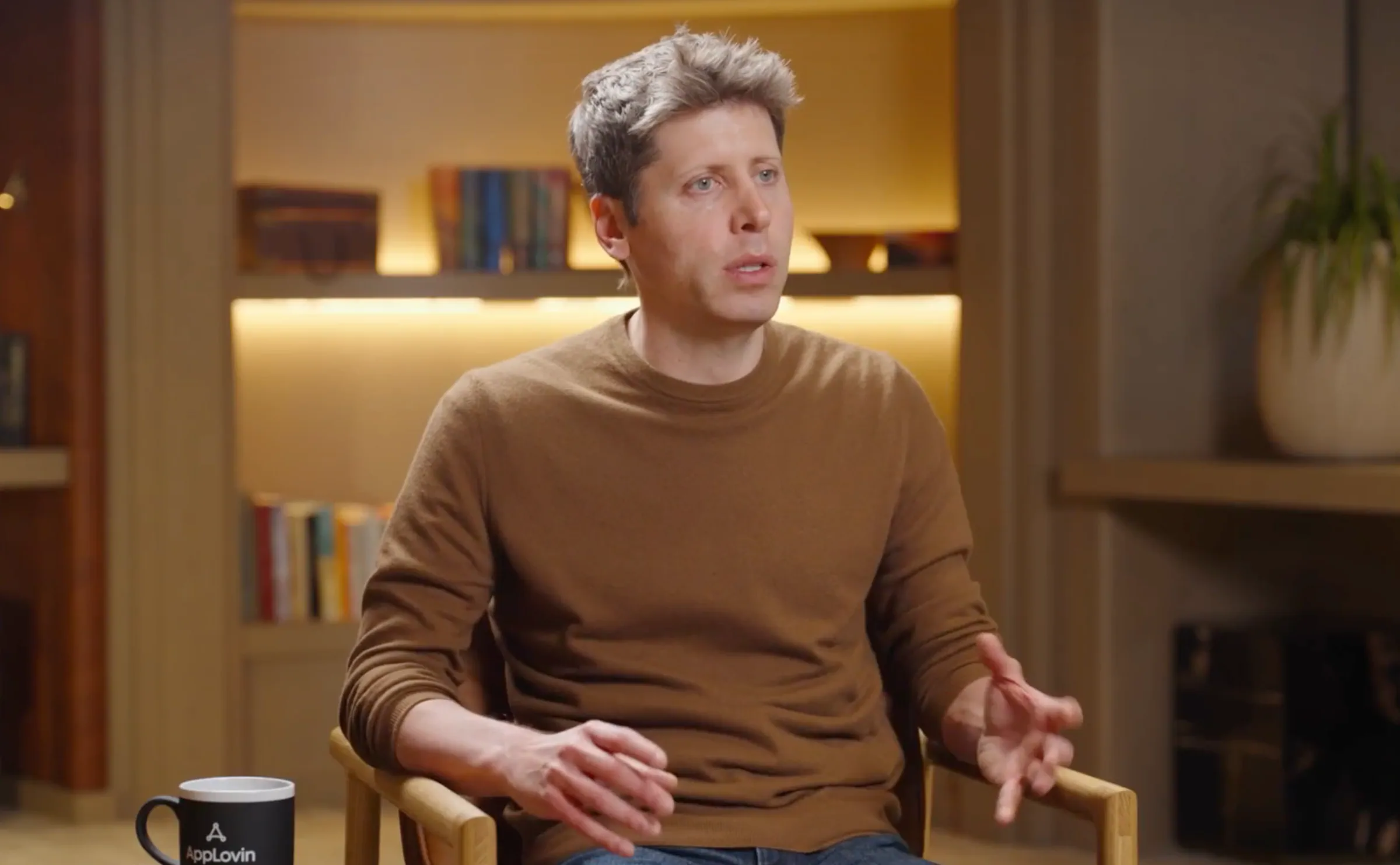
Faced with “limited compute, limited people, limited resources,” OpenAI decided that building general intelligence for knowledge work, and eventually science, mattered more than operating a video platform or standalone browser.
That explanation supports the commercial interpretation of OpenAI’s pivot. Coding agents and enterprise AI are easier to connect to recurring revenue than consumer video generation. But the strategy is not simply about selling more software to businesses. Codex is becoming OpenAI’s main route from chatbots to agents that can perform extended, economically useful work.
OpenAI Did Not Kill Bad Products
Sora and Atlas were unusually short-lived by major technology product standards. OpenAI launched the Sora 2 model and social video app on September 30, 2025. The company discontinued the web and app experiences on April 26, 2026, while the Sora API is scheduled to remain available until September 24, 2026.
The company introduced ChatGPT Atlas on October 21, 2025, initially as a macOS browser with ChatGPT, browser memory, and agentic task execution built in. Atlas stopped working on August 9, 2026, less than ten months after launch.
Altman’s language makes the decisions sound more absolute than they are. OpenAI has moved Atlas’s agentic browsing capabilities into ChatGPT and Codex rather than abandoning browser automation completely. The company also told Axios that Sora’s research team would continue studying world simulation for robotics and physical tasks. OpenAI killed the standalone products, but it retained some of the underlying research, technology, and product concepts.
That distinction matters. Atlas and Sora were not necessarily technical failures. They failed OpenAI’s internal test of strategic importance.
Sora Was Losing the Compute Allocation Battle
Text-to-video generation has an unforgiving cost structure. A language model produces a sequence of text tokens. A video model must construct a changing visual scene across many frames, preserve subjects and motion over time, and, in Sora 2’s case, generate synchronized audio. Users also tend to request several versions before keeping one result.
Those costs become difficult to hide inside a consumer subscription. A social video product encourages frequent experimentation, but every unsuccessful clip still consumes infrastructure. The consumer sees a disposable draft; the provider sees another expensive inference job.
A Wall Street Journal investigation, summarized by TechCrunch, reported that Sora was costing OpenAI roughly $1 million per day while its user base was falling from its launch peak. Reuters separately reported that running the app consumed significant computational resources and left other OpenAI teams with less capacity.
This supports the argument that winning consumer AI video currently requires heavy subsidy. A provider must either absorb the cost, impose restrictive generation limits, charge users close to the real cost, or find another source of revenue such as advertising, professional production plans, licensing, or media distribution.
OpenAI briefly appeared willing to pursue that market. Sora included a social feed, and the company negotiated a large licensing and investment agreement with Disney. The agreement never closed, however, and Sora’s shutdown ended the proposed partnership.
Sora’s problem was not that AI video lacked potential. Its problem was that every GPU assigned to entertainment video was a GPU unavailable for models that businesses would pay to use throughout the working day.
Atlas Was a Focus Problem More Than a GPU Problem
Atlas presented a different trade-off. A browser does not necessarily consume video-scale compute, although its agent features still require model inference. The larger cost was organizational.
Maintaining a browser requires continuous security work, Chromium updates, compatibility testing, password and session management, enterprise controls, and support across operating systems. OpenAI launched Atlas only on macOS while promising Windows and mobile versions later. Becoming a serious browser company would have required years of sustained investment.
OpenAI’s Atlas deprecation guidance explicitly notes that browsers need ongoing security maintenance. It directs users toward the ChatGPT desktop application and browser extensions, where OpenAI can offer agentic browsing without maintaining an entire standalone browser.
Altman called Atlas the best browser, but that is his assessment rather than an independently established fact. The important part of his comment is that even the “best” product can be the wrong product for a company to operate.
OpenAI still wants AI agents to use the web. It has simply concluded that owning the browser itself is not essential to that goal.
The Pivot Is Commercial, but It Also Serves OpenAI’s Mission
The evidence strongly supports the view that OpenAI is moving toward more lucrative business products. On March 16, Reuters reported that executives were planning a major strategy shift around coding and business users. Its subsequent report on Sora called the shutdown the first major step toward potentially more profitable areas such as coding tools and corporate customers.
OpenAI later said in its enterprise strategy update that business customers generated more than 40% of its revenue, with enterprise revenue expected to reach parity with consumer revenue by the end of 2026. The company is also bringing ChatGPT, Codex, and agentic browsing together in a unified work application.
Product-level profit margins remain private, so it would be too strong to declare Codex definitively OpenAI’s most profitable product. Coding does, however, have clearer economics than consumer video. Companies can compare the cost of an agent with engineering salaries, outsourced development, project delays, and technical debt. Successful work has a measurable financial value.
Anthropic demonstrated the strength of that market with Claude Code. Reuters reported that Anthropic’s focus on coding helped it gain developer traction and an enterprise advantage, forcing OpenAI to respond more aggressively.
Codex is also expanding beyond software development. According to OpenAI’s internal adoption data, legal, finance, recruiting, marketing, and operations teams increasingly use Codex for research, analysis, documents, data processing, and other knowledge-work tasks. Non-developers have become one of its fastest-growing user groups.
This is why Altman’s profit motive and AGI argument are not mutually exclusive. Code gives an AI agent a way to manipulate files, query data, operate tools, test its work, and produce verifiable outputs. A coding agent can therefore become a general work agent much more easily than a video feed can.
GPT-5.6 Sol Has Narrowed the Gap, but Benchmarks Remain Mixed
OpenAI’s renewed concentration appears to be producing a more competitive model and agent stack. The company released GPT-5.6 Sol for general availability in July 2026, positioning it around coding, professional work, cybersecurity, science, and long-running agent tasks.
OpenAI says GPT-5.6 Sol set a new high on the Artificial Analysis Coding Agent Index at launch while using fewer tokens, less time, and less estimated cost than Claude Fable 5. That is meaningful evidence that OpenAI has improved both capability and efficiency, two qualities that directly affect enterprise deployment.
Saying Sol is “on par” with Claude Opus 5 is reasonable if it means both belong in the top tier of coding and agent models. It should not be interpreted as a universal benchmark tie. An August 6 Artificial Analysis update still placed Opus 5 first on its broader Intelligence Index with a score of 63. Different effort settings, agent harnesses, costs, and tasks can change the ordering.
The claim that OpenAI had been one or two months behind Anthropic is similarly difficult to measure precisely. OpenAI clearly appeared reactive during Claude Code’s rise, but competitive distance cannot be converted cleanly into calendar time.
Nor can GPT-5.6’s progress be attributed entirely to shutting down Sora and Atlas. Frontier models take months to train and evaluate. The shutdowns could free inference capacity and engineering attention quickly, while research reallocation would affect model development over a longer period.
The defensible conclusion is narrower: OpenAI was under pressure in coding, concentrated resources there, and now has a much stronger competitive position.
Final Thoughts
Sam Altman’s explanation confirms that compute has become a form of capital allocation. OpenAI cannot treat every promising AI application as an independent company, especially when those applications compete for the same chips, researchers, engineers, and executive attention.
The commercial logic is undeniable. Codex serves customers with larger budgets, clearer returns, and reasons to use more intelligence as the models improve. It also supports OpenAI’s wider ambition to build agents for knowledge work and science.
The risk is that OpenAI has abandoned two potential distribution advantages. Sora could have owned a consumer creative network, while Atlas could have controlled the environment where web agents operate. Killing them makes OpenAI more focused, but it also makes the company more dependent on other platforms for consumer media and browser access.
For now, the Codex bet looks rational. Whether it proves visionary will depend on whether a coding agent can genuinely grow into Altman’s general-purpose system for productive and scientific work.
Frequently Asked Questions
4 questions
1Why did OpenAI shut down Sora?
OpenAI shut down Sora because the video product consumed substantial compute that the company wanted to assign to higher-priority projects such as Codex. Sora also had difficult consumer economics, with expensive generations and weaker monetization than enterprise AI. Sam Altman nevertheless described it as a good, enjoyable product rather than a technical failure.