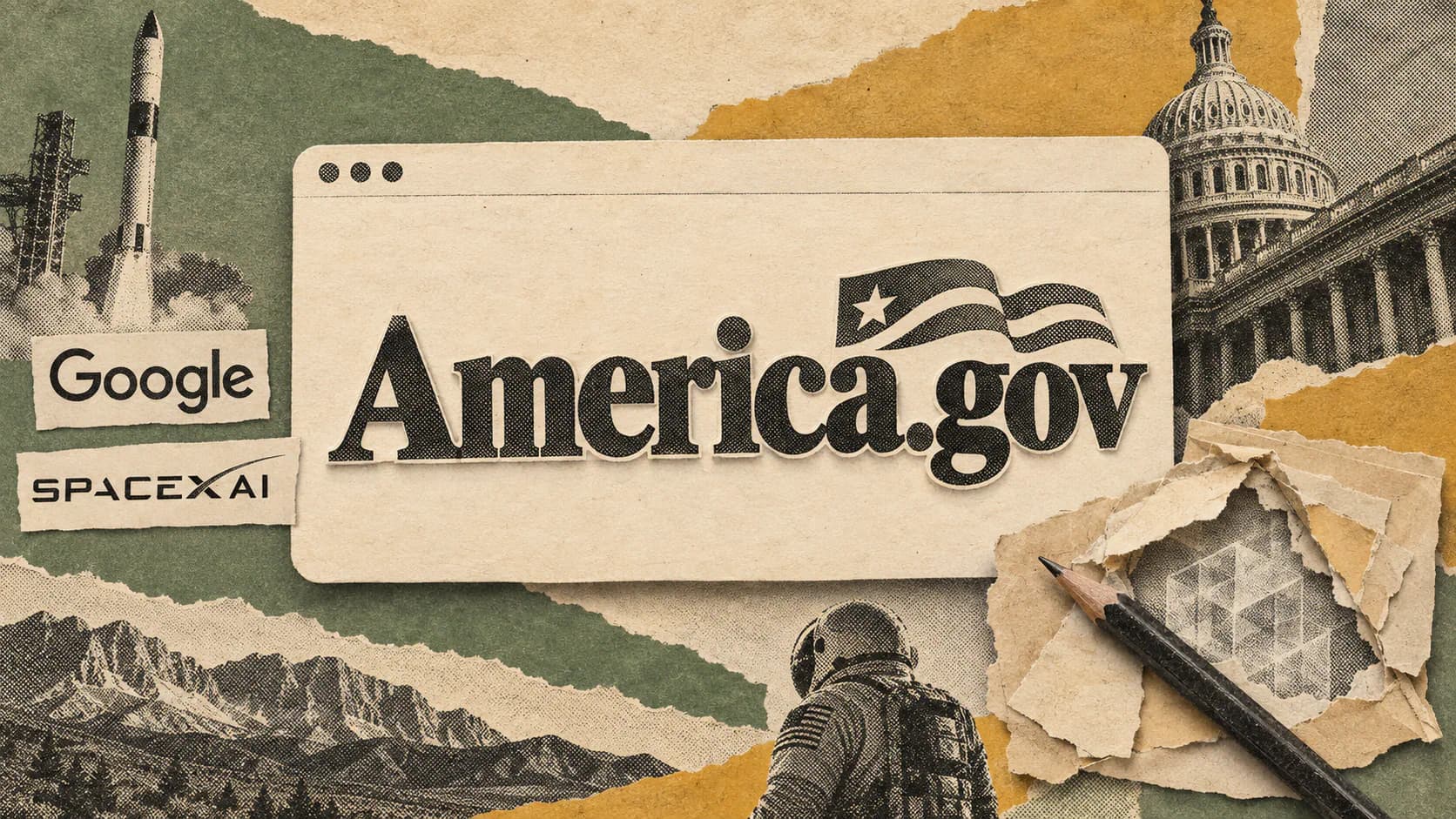
America.gov’s chatbot is meant to help people navigate government services. When testers told it to play Minecraft, they reported getting something else: a roughly 1,800-word monologue modeled on the poem that appears at the end of the game.
The response is strange for a service chatbot. Yet its recognizable source and a report that repeated prompts produced identical text point toward an Easter egg, not an AI system spontaneously losing track of its task. The distinction is worth examining before calling an unusual output a hallucination or jailbreak.
America.gov Is Meant to Be a Starting Point for Services
The U.S. government unveiled on September 29, 2026, as a public-facing chatbot intended to help people navigate government services, according to the Associated Press’s launch report. Someone with a service question can start with a conversational interface instead of first working out which government site to visit.
TechCrunch reported that Google and SpaceXAI helped build the chatbot. That does not establish which model handled a particular answer or how the application routes requests. The precise model stack and the implementation behind the Minecraft response have not been publicly documented in the available reporting.
People using a government-operated AI product may need an accurate route to an official form, a current explanation of a requirement, or a clear indication that their situation needs a human answer. The Minecraft exchange tests none of those jobs. It does show that the public interface can produce content far outside its service-navigation role.
A Minecraft Prompt Produced a Government-Themed End Poem
TechCrunch described a response of approximately 1,800 words that rewrites Minecraft’s End Poem. Written by Julian Gough, the original appears after a player reaches the game’s ending and addresses the player in a dreamlike conversation.
In the reported America.gov version, the player becomes a government-service user. Gizmodo’s account compares the original opening, “I see the player you mean,” with the chatbot’s “I see the constituent you mean.” Other passages trade the game’s imagery for references to filing, regulations, forms, and public offices.