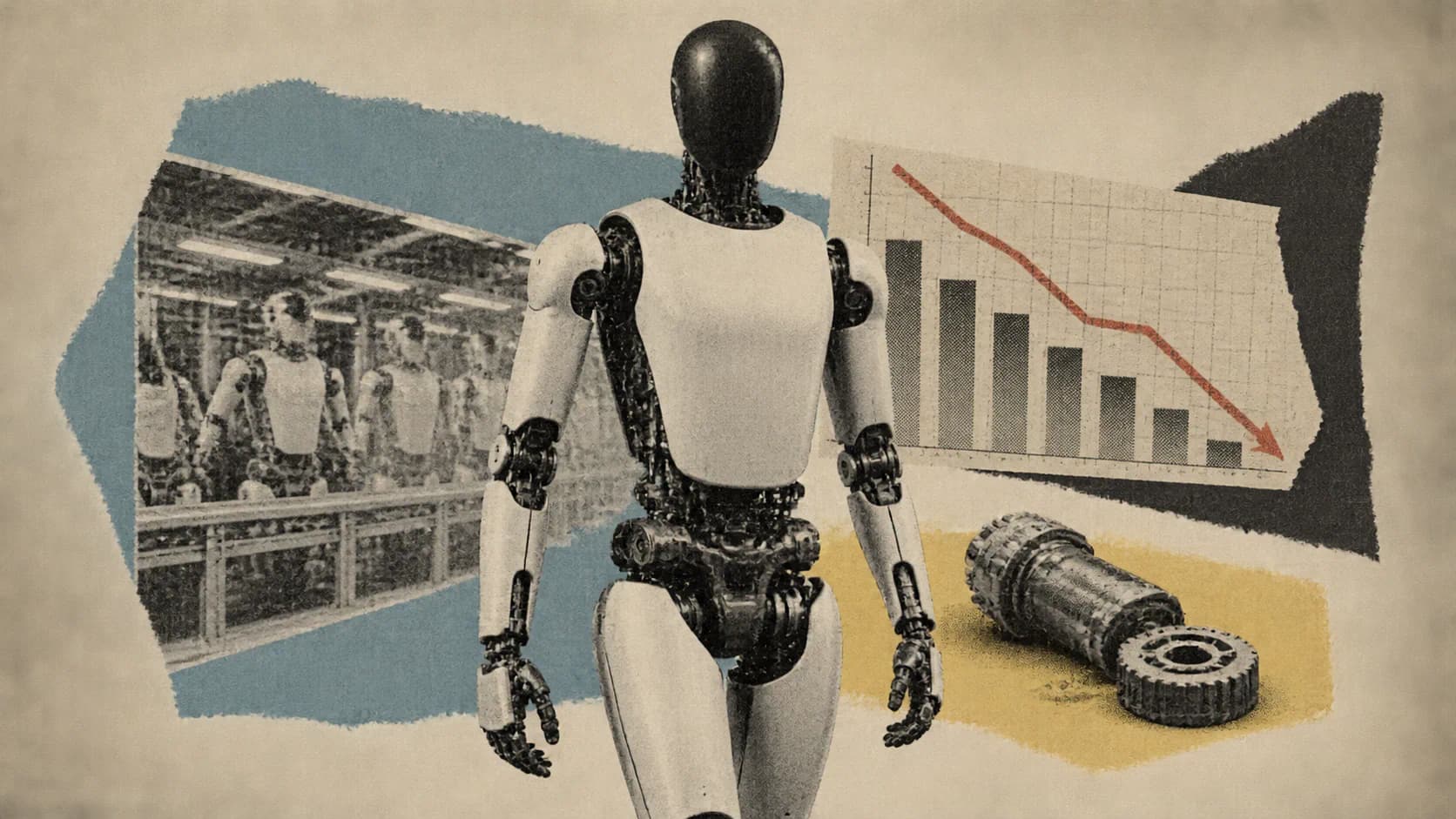
Tesla says its first production-quality Optimus humanoid robots are coming off a manufacturing line in Fremont, California. Elon Musk calls the operation early production, with a slow, uneven ramp ahead and substantial work still needed on the robots’ design and AI.
The October 21, 2026 announcement accompanied quarterly results showing net income of $787 million, down 43% from a year earlier. Higher spending on AI and Optimus contributed to the pressure, alongside lower regulatory-credit sales, according to TechCrunch’s report on Tesla’s shareholder letter and earnings call.
Those developments belong together, but they describe different stages of Tesla’s bet. Manufacturing has advanced enough for Tesla to call the hardware production-quality. The company is still spending to make those robots durable, useful and producible at scale.
What Tesla’s Fremont Milestone Actually Means
Tesla has started manufacturing Optimus in Fremont space previously used to build electric vehicles. In its third-quarter shareholder letter, quoted by TechCrunch, the company said:
“The bots coming off this line are the first production-quality bots that we have manufactured,”
Tesla also said its current manufacturing process is suitable for a commercial product, while acknowledging that both the hardware and production process will continue to change. These are Tesla’s assessments of its progress, reported through TechCrunch, rather than an independent evaluation of the factory or robots.
The distinction matters because production quality and production volume answer different questions. The former describes the kind of hardware Tesla says its process can produce. The latter requires a count of how many units the line can consistently turn out.
Continued design changes also mean this milestone should not be read as a frozen, finished product. Tesla can have a manufacturing process it considers commercially suitable while still adjusting the robot and how it is assembled. Musk’s description of early production is compatible with that narrower achievement.
My view is that the Fremont announcement deserves attention as a manufacturing step, but it is too early to treat it as a commercial launch. The available evidence establishes Tesla’s claim that production-quality robots are emerging from a line. It leaves customer availability and dependable performance unanswered.
The 2027 Target Is a Separate Forecast
Musk said Tesla would be able to manufacture 20,000 Optimus robots per week by the end of 2027. He also warned that production would ramp slowly and encounter difficulties because the product is so new, TechCrunch reported.
The current milestone and that future target should be tracked separately:
| Measure | What the available reporting says | What it tells readers |
|---|---|---|
| Manufacturing status | Tesla says production-quality robots have begun coming off the Fremont line | Tesla considers its process suitable for a commercial product |
| Current output | No unit count or weekly rate was disclosed | The starting point for the ramp is unknown |
| End-2027 ambition | Musk targets 20,000 robots per week | This is a forward-looking production-rate goal |
| Customer deliveries | No timetable was disclosed | Factory production does not yet provide a purchase or deployment date |
A weekly rate reached at the end of 2027 would not mean Tesla produced at that rate throughout the year. For scale, sustaining 20,000 units every week for 52 weeks would yield about 1.04 million robots. That is simple annualized arithmetic, not a Tesla delivery forecast or evidence that the factory can sustain such output.
The missing baseline is especially important. Without current production figures, readers cannot calculate how far Tesla must increase output to reach Musk’s goal. Nor can they judge whether subsequent increases represent a steady ramp or an isolated burst.
I’d put more weight on disclosed, sustained output than on the headline target. A dated production count would make the ramp measurable. Until Tesla supplies one, the 2027 number remains an ambition with no public starting rate against which to assess progress.
Safety, Durability and AI Remain Unfinished
Musk’s own comments identify work that manufacturing progress has not settled. He said Tesla still needs to refine the design to deliver robots that are safe, reliable and long-lasting. He also acknowledged substantial remaining work on AI before Optimus becomes genuinely useful for open-ended tasks, according to the earnings-call coverage.
These requirements overlap, but each creates a different practical hurdle:
- Safety: A robot’s physical actions must be controlled appropriately wherever it operates. Building the hardware is only one part of establishing safe operation.
- Reliability: Useful work needs to be repeatable. A successful task demonstration cannot, by itself, show how consistently a robot will perform.
- Durability: Hardware has to withstand continued use. Frequent wear or failure could interrupt work even when the robot’s software behaves correctly.
- AI capability: Open-ended usefulness requires handling a wider range of tasks and situations than a narrowly defined routine.
Musk’s discussion of duration included concern about a robot wearing out after a month. In that context, the issue is service life and durability. It should not be interpreted as a disclosure about battery runtime; the supplied reporting gives no operating-hours specification.
The AI caveat is equally consequential. A production line can manufacture a physical system while the software that makes it broadly useful remains under development. Increasing the number of robots would not automatically resolve that software problem.
The available report contains no independent task-performance measurements, reliability results or durability testing. It therefore supports a clear account of Tesla’s acknowledged unfinished work, but not an engineering verdict on how close Optimus is to dependable deployment.
For a prospective operator, I’d prioritize repeatable useful work over the number of robots leaving the factory. Output matters to availability; successful operation matters to whether deploying one makes practical sense.
AI Spending Meets a Largely Flat Revenue Quarter
Tesla’s third-quarter financial results show the cost pressure surrounding its AI and robotics push. Total revenue was broadly unchanged from a year earlier, while net income fell sharply.
Frequently Asked Questions
3 questions
1Is Tesla already mass-producing Optimus?
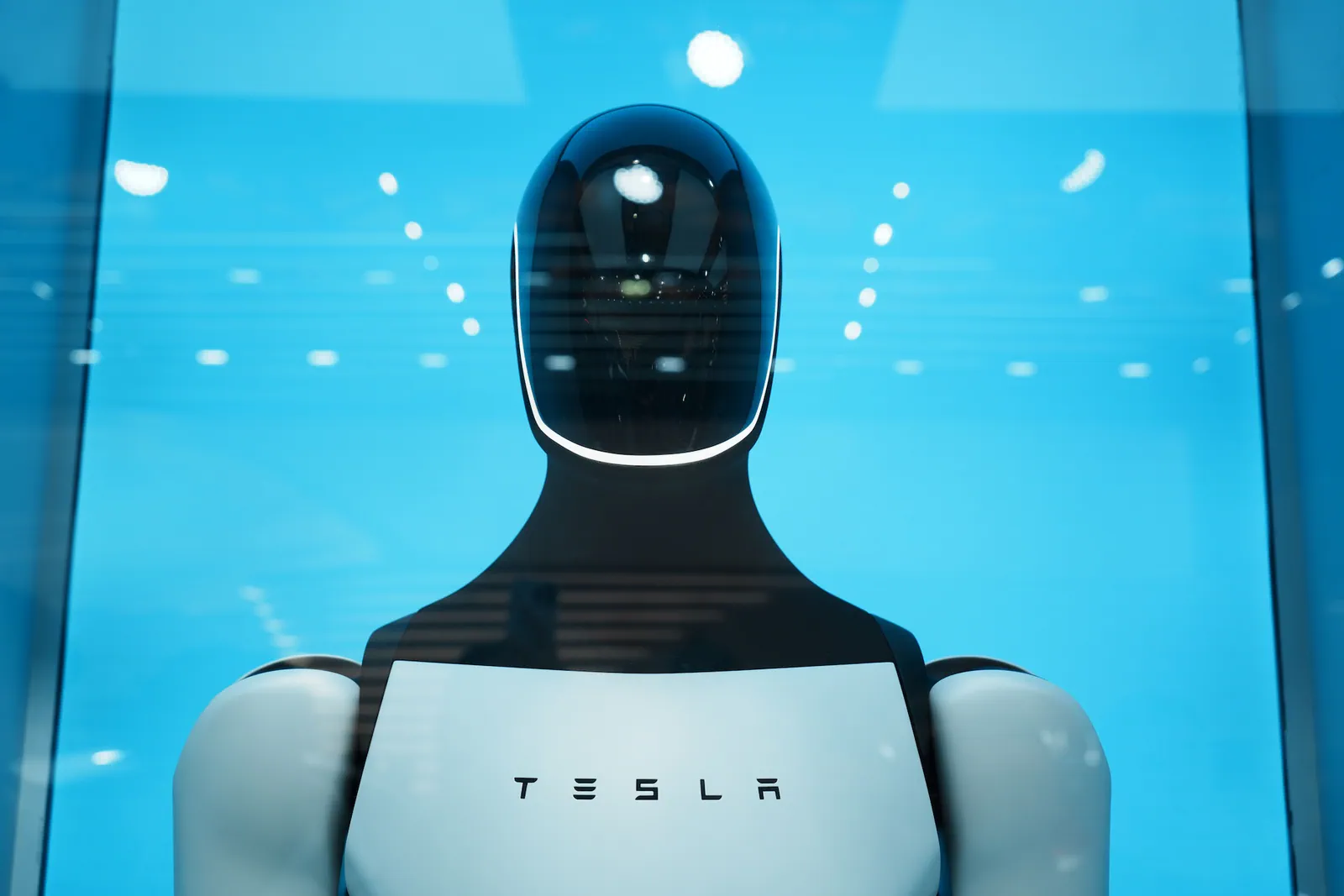
Tesla says production-quality robots are coming off its Fremont line. Musk describes this as early production, and no current output rate was disclosed.