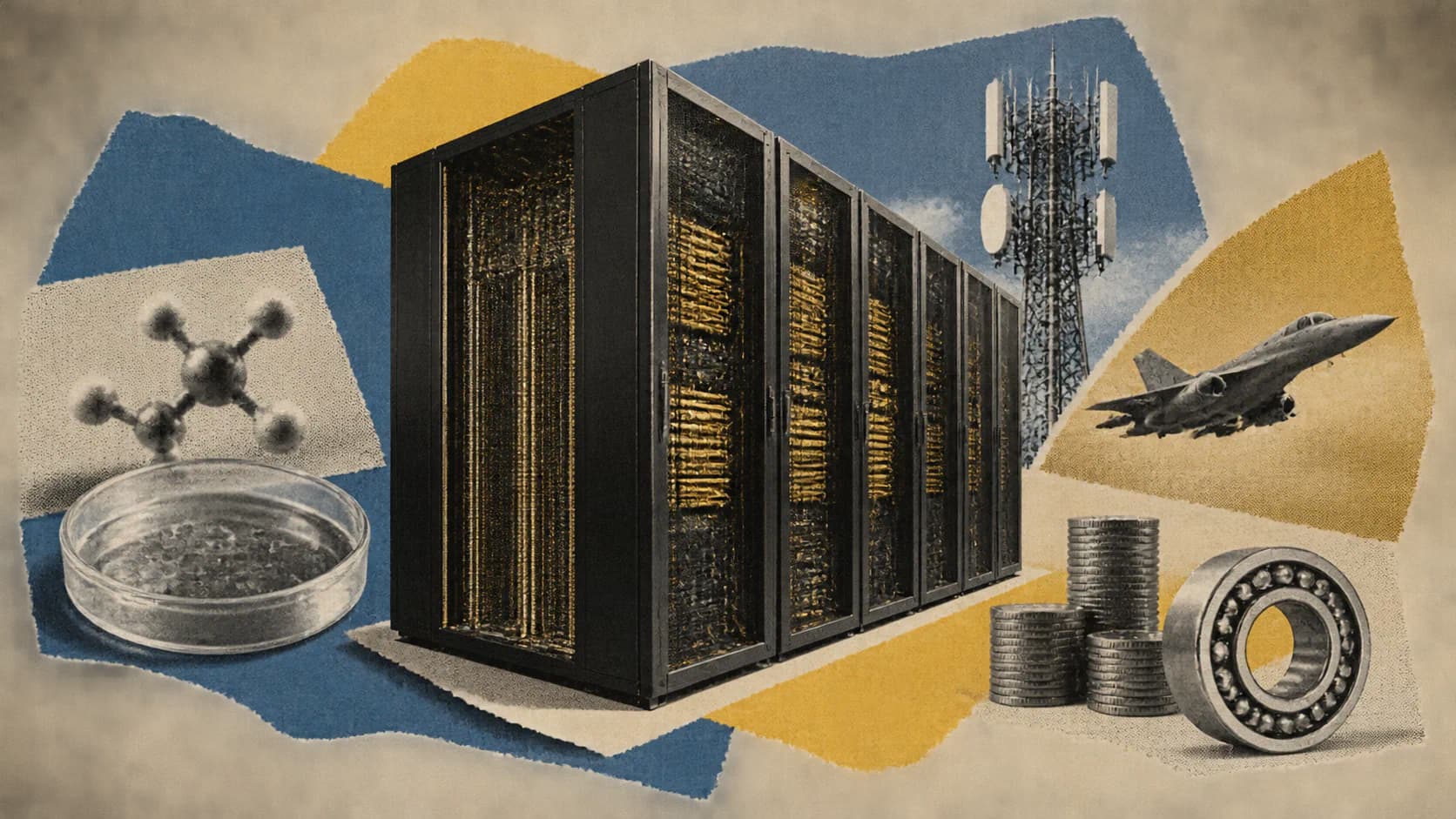
AstraZeneca, Ericsson, Saab, SEB and Wallenberg Investments have pooled AI computing capacity in Sweden. Their shared supercomputer, Sferical One, brings five founding companies and strategic partner SKF onto a common platform for developing and running AI models, avoiding the need for each to build comparable infrastructure.
Sferical AI announced the launch on October 15, 2026, and says the system has been running since late summer. Built from 16 NVIDIA DGX GB300 systems, it contains 1,152 GPUs, according to NVIDIA.
The partners are combining investment, computing capacity and expertise while pursuing applications in different industries. This shared arrangement offers an alternative to separate company-owned clusters, with domestic infrastructure intended to give members greater control over their AI work.
Whether it delivers better economics or faster development is still unproven. The announcements disclose neither capital costs nor utilization, benchmark results or timetables for specific production workloads.
Sharing the Infrastructure Without Sharing Every Business Problem
Sferical AI was founded by AstraZeneca, Ericsson, Saab, SEB and Wallenberg Investments, with SKF participating as a strategic partner. The operator describes its purpose as pooling resources across industries to avoid duplicating the same underlying infrastructure.
The consortium is establishing a common computing base beneath separate industrial projects. It is not announcing one AI application that all its members will use.
Companies can contribute to a larger installation without individually building an equivalent system. Through the venture, they can also share infrastructure expertise instead of each developing every operational capability independently.
The collaboration extends beyond access to GPUs. Sferical AI operates Sferical Labs, where the company and its partners jointly develop AI solutions and expertise.
The announcement does not establish that proprietary datasets, models or research results will be shared among all members. It describes shared infrastructure and joint development, without specifying what information crosses company boundaries or how individual projects are separated.
For readers following competition in the AI industry, this model differs from both buying access to an external service and building an entirely independent installation. The companies are creating a shared industrial resource while retaining distinct reasons to use it.