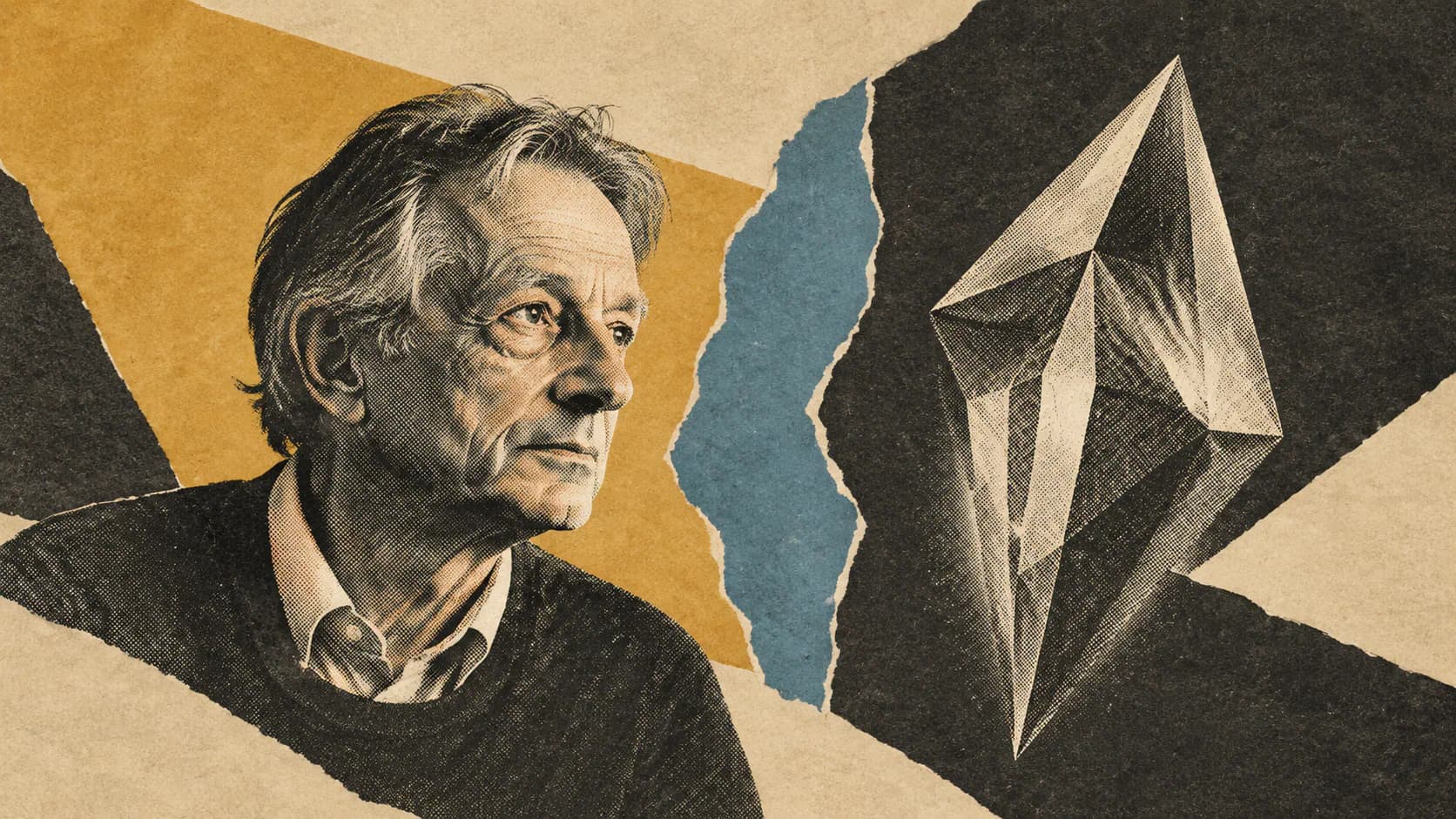
Humanity may have only “a couple of years” to adapt to the “alien beings” AI companies are creating, Geoffrey Hinton said in a Guardian interview published on October 13, 2026.
The pioneering computer scientist wants society to recognize advanced AI as a different kind of intelligence and prepare for risks it cannot precisely calculate. His short timeline is a warning, not an established scientific timetable. He also argues that companies’ assurances are no substitute for oversight.
Hinton’s concerns extend beyond the familiar dispute over whether AI could cause human extinction. If increasingly intelligent machines acquire a plausible claim to moral consideration, he says he would still prioritize people. He favors a symbiotic relationship in which human concerns carry more weight.
Together, these positions connect three debates often discussed separately: how to interpret uncertain risks, who should govern the AI industry, and whether powerful machines could eventually deserve moral consideration. None requires accepting his timeline as demonstrated fact.
The Risk Estimate Is Contested, Not a Scientific Finding
Nvidia CEO Jensen Huang directly challenged Hinton’s predictions in a conversation with podcaster Ezra Klein, according to The Guardian.
Huang disputed Hinton’s estimate of a 10–20% chance that AI could cause human extinction in the coming decades. He called the figure “not grounded on science” and argued that a prediction does not become scientific simply because a scientist makes it.
Hinton explained that he intends the number to communicate the seriousness of the risk, not serve as a precise forecast.
“The point of giving numbers is to say this is a serious risk. We don’t know how serious, but it’s serious.”
That clarification leaves the disagreement unresolved. A numerical probability can sound like the output of a calibrated forecasting method even when it expresses an expert’s judgment. Readers should not treat Hinton’s percentage as an experimentally established extinction rate.
His underlying argument concerns decision-making under uncertainty. If losing control of AI could produce irreversible consequences, he reasons, waiting for confidence about the probability could be a dangerous standard for intervention.
Huang questions the evidence behind the estimate; Hinton asks whether uncertainty justifies inaction. Challenging the percentage does not, by itself, establish that the hazard is negligible. Equally, describing a possible catastrophe does not establish its likelihood or prove that any particular safeguard would work.