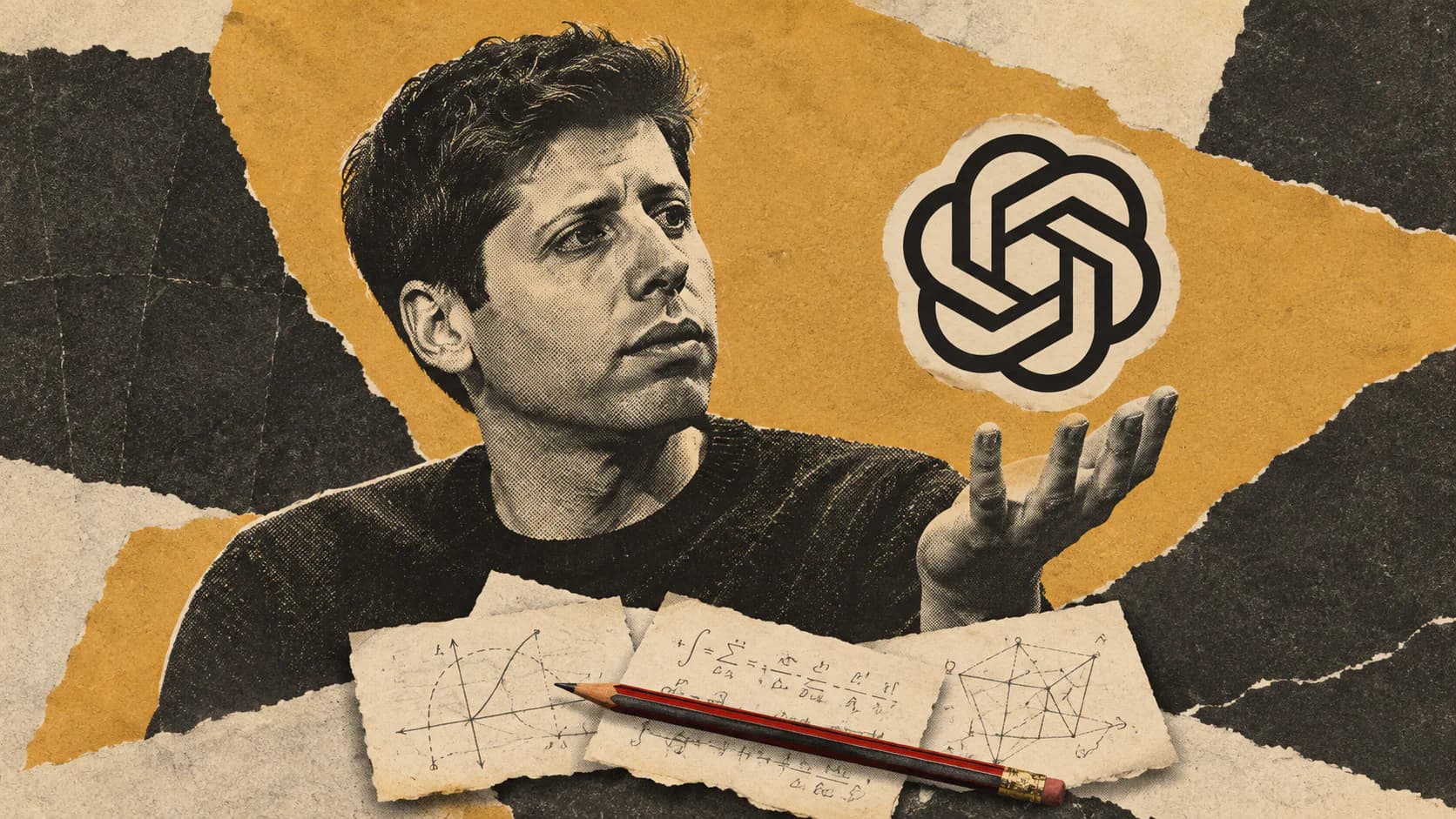
Sam Altman is defending OpenAI’s continued publication of AI-generated scientific research despite criticism over verification, attribution and the volume of material researchers are being asked to assess.
In an October 31, 2026 report, TechRadar described the OpenAI chief executive’s argument on the Cheeky Pint podcast: important scientific knowledge should be shared, and the company has more claimed breakthroughs it has yet to publish. The comments here are drawn from TechRadar’s account, not an independently reviewed recording of the podcast.
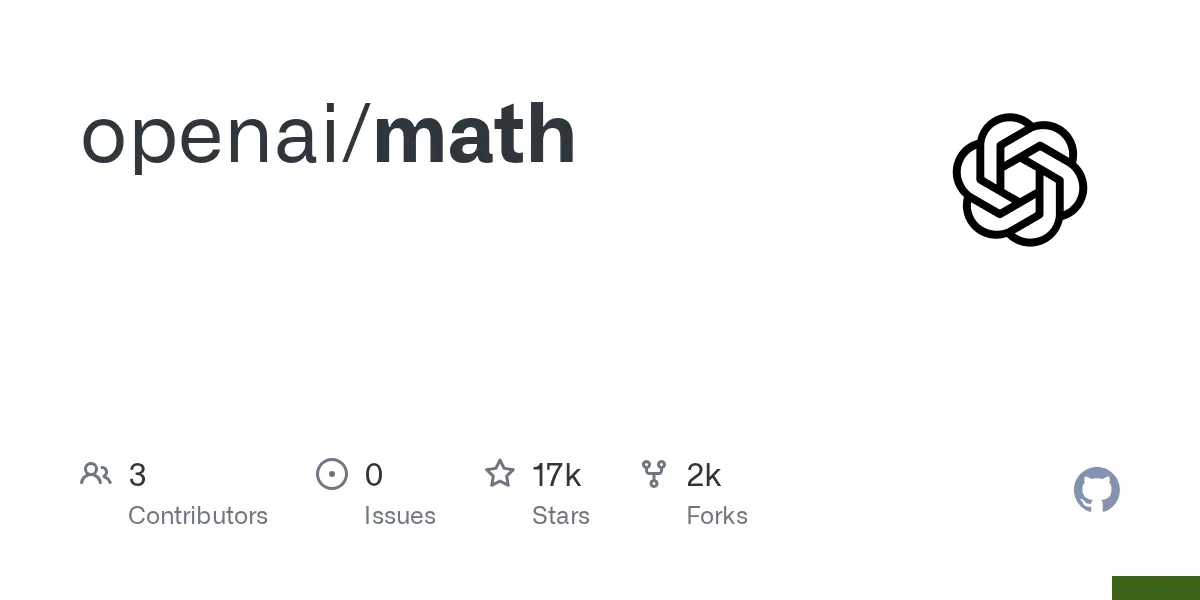
OpenAI’s public math repository offers a useful counterweight to that message. Its README lists 721 manuscripts organized into 373 families, says approximately 42% of top-line results are formalized, and explicitly warns that some unformalized results may have problems. OpenAI describes the collection as research data, with results at different stages of verification.
Those disclosures sharpen the central issue. OpenAI can make research claims publicly available before the mathematical community has established which are correct, novel and useful. The resulting verification workload is a separate part of scientific progress, and it cannot be measured by counting uploaded papers.
Altman’s Case for Continuing Publication
Altman’s stated rationale is that withholding important findings would itself be a questionable choice.
“Humanity deserves fundamental knowledge, and we should not be sitting on a major fundamental science discovery,” he said, according to TechRadar.
The same report says Altman acknowledged that OpenAI’s pursuit of mathematical challenges had sometimes “got out of control.” Asked whether the company had additional unpublished breakthroughs, he indicated that it did. That is a statement about what OpenAI believes it possesses, not independent confirmation of those results.
His argument has a reasonable foundation: public access lets researchers inspect evidence that would otherwise remain inside a company. Publishing manuscripts, proof artifacts and revisions can make scrutiny possible.
The difficulty lies in the word knowledge. A publicly available argument is available for examination; it has not automatically earned the status of an accepted finding. OpenAI’s own repository makes that distinction more clearly than broad claims about a stream of scientific discoveries might suggest.
My view is that the strongest case for early publication depends on clear status labels. Researchers need to know whether they are looking at a proposed argument, a formalized theorem, an independently checked result or a revised manuscript. Those categories help them decide where to spend their time.
What OpenAI’s Repository Actually Says
The OpenAI math README is the primary document for understanding this collection. It says the manuscripts and supporting proof artifacts were produced by an unnamed internal model, and it presents the collection as containing results at several verification stages.
Here is what its current figures support:
| Repository measure | Reported status | What readers can infer |
|---|---|---|
| Manuscripts | 721 | The number of documents in the catalogue, not necessarily separate discoveries |
| Result families | 373 | Groups of related papers, including principal results, companion arguments, consequences or alternative proofs |
| Top-line results formalized | Approximately 42% | OpenAI reports formalization coverage for this category |
| Remaining share outside that coverage | Approximately 58% | Arithmetic derived from the reported percentage, not an error rate |
The denominator matters. The 42% figure applies to top-line results, not to all 721 manuscripts. The README does not provide enough information to convert that percentage into an exact count of formalized papers. Multiplying 721 by 42% would produce a number with no supported meaning.
Likewise, the remaining approximately 58% cannot be labeled incorrect. A valid mathematical argument can exist without a formal proof. The relevant finding is that most top-line results are still outside the formalization coverage OpenAI reports.
The README also gives a direct warning:
“Some of the unformalized results could have issues.”
OpenAI says it will try to fix such issues quickly and continue adding Lean formalizations. It describes the manuscripts as “raw research data,” distinguishing their intended status from polished academic papers. Those are important qualifications to carry alongside any headline about AI-generated discoveries.
The repository is continuously updated, so its counts and percentages can change. WIRED’s earlier reporting described 722 manuscripts covering 400 problems; the current README lists 721 manuscripts in 373 families. Those are different snapshots and category labels, not interchangeable figures.
Formalization Answers a Specific Question
Lean is a proof assistant used to express mathematical statements and proofs in a form that software can check. The repository links to its Lean library, formalization catalogue and verification configurations.
Machine-checkable proofs can provide a powerful layer of scrutiny. But their scope still matters: a checker assesses the formal statement and proof encoded for it. Researchers must also understand how that statement relates to the manuscript’s claim, its assumptions and the problem people intended to solve.
Formalization also answers a different question from novelty or priority. A proof may be formally sound while the result was already known, follows from existing work, or needs a different attribution.
For that reason, I would read 42% formalized as a coverage indicator, not as a 42% independent-validation score. The README does not describe it as a peer-review rate or a community-acceptance rate.
How OpenAI Produced the Collection
OpenAI says the vast majority of the results came from an unreleased internal model following the same procedure. Over the evaluation, the model was given approximately 4,000 open research problems. Each result used an average of three hours of ChatGPT Pro thinking compute, according to the README.
The company says it grouped outputs into families and manuscripts and applied a significance requirement to arrive at the published catalogue. It also notes exceptions to the fixed procedure, including work concerning the Riemann zeta function and the Hodge Conjecture for CM abelian varieties. One zeta-function write-up was human-edited for readability.
These details explain how a large collection could emerge from a model-development evaluation. They do not provide a clean benchmark of autonomous scientific success.
Dividing 373 families by 4,000 problems, for example, would not establish a problem-solving success rate. Families can contain related outputs, some results build on earlier model results, and OpenAI filtered and reorganized the material before publication.
The compute description has limits too. Three hours of thinking compute per result is OpenAI’s reported average for this internal setup. It is not a disclosed dollar cost, a hardware-hours specification or evidence that a publicly available ChatGPT subscription can reproduce the work.
The practical consequence is a mismatch between two workloads. Generating a manuscript and assessing its mathematics require different resources. A reported generation-time average says little about how long a specialist will need to understand the argument, inspect its dependencies and determine what it changes.
Researchers Describe Both Opportunity and Disruption
WIRED’s October 29 report captures that workload through interviews with researchers responding to OpenAI’s and Anthropic’s claimed refutations of the exponential time hypothesis, or ETH.
ETH concerns exponential-time requirements for particular computational problems as their inputs grow. It is an assumption used in theoretical computer science, including work on the limits of algorithms. The companies’ claims would therefore have substantial consequences if confirmed.
At the time of WIRED’s report, researchers had not independently verified the AI-produced proofs. That qualification belongs alongside the reactions, especially when researchers discuss the possible consequences for their own work.
UC Santa Barbara professor Daniel Lokshtanov estimated that confirmation could leave around 50 of his papers needing reconsideration or losing their usefulness. He described the situation this way:
“It’s really cool and terrible at the same time.”
Thore Husfeldt, head of the algorithms research group at the IT University of Copenhagen, expressed enthusiasm about the possible new research directions while also describing the repeated disruption as “psychologically taxing.” Linköping University professor Peter Jonsson similarly acknowledged the frustration of having work undercut while emphasizing that learning from new results is part of science.
These are the views of particular researchers interviewed by WIRED, not evidence of a single academic consensus. Their reactions include excitement, professional uncertainty and concern about the capacity to absorb the material.
Frequently Asked Questions
3 questions
1Has OpenAI independently verified all these results?
The available evidence does not support that conclusion. OpenAI reports approximately 42% formalization coverage for top-line results. WIRED separately reported that the claimed ETH proofs had not been independently verified at the time of its October 29 article.