The Association for Human Mathematics’ Communications Working Group has urged mathematicians to stop working with OpenAI after the company released hundreds of AI-generated mathematical manuscripts.
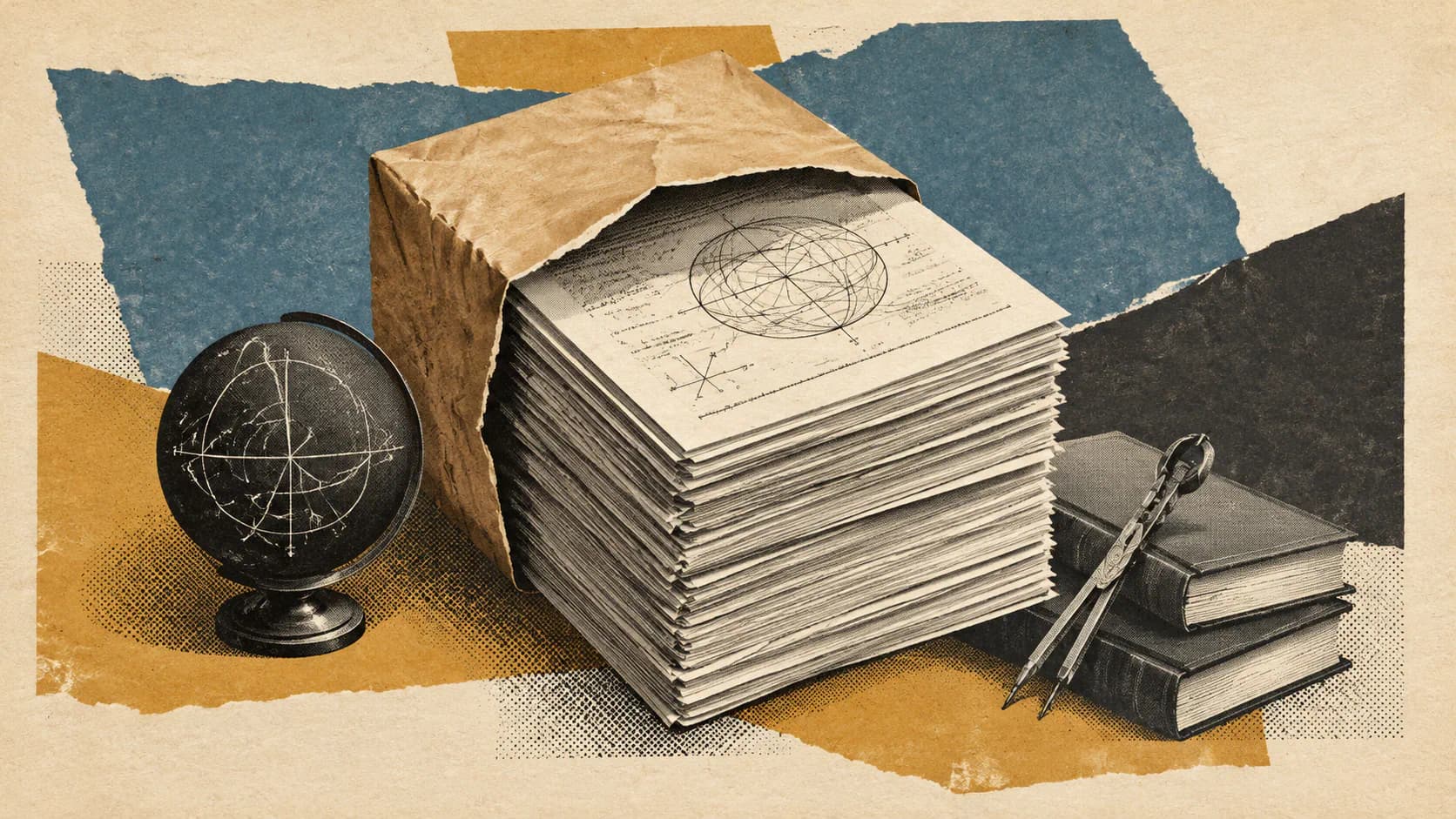
OpenAI’s October 6, 2026 release comprised 722 manuscripts spanning 372 groups of results, according to The Indian Express. The newspaper reported that OpenAI said the work, produced by an internal frontier model, included solutions to or significant progress on hundreds of open problems in mathematics and theoretical computer science.
AHM objects to how the work was produced and released, particularly the use of proprietary models inaccessible to the wider scientific community. The statement marks an organized backlash, though it does not establish broad support among mathematicians for cutting ties with OpenAI. It also makes no determination about whether any particular manuscript is correct or incorrect.
AHM Calls for Mathematicians to Discontinue Work With OpenAI
The statement closes with a direct demand:
“We urge mathematicians to discontinue their work with OpenAI and to return to a vision of science that centers human understanding.”
The Communications Working Group is asking mathematicians to end their work with the company. Its demand goes beyond corrections, additional documentation, or a slower publication schedule. The statement does not specify which kinds of work it means, describe an implementation process, or identify researchers who have already acted on the call.
Its argument begins with an objection to the research itself: “Mathematicians did not ask for this work to be done.” That is the working group’s characterization, not a finding from a survey of the mathematical community.
The group argues that OpenAI ignored a central objection raised by the separate Advisory Group on Mathematics and Artificial Intelligence, or AGMAI. AHM describes that decision as showing “total disregard for the norms of scientific research,” which it says keep mathematics trustworthy, ethically researched, and in the public interest.
It also disputes the company’s framing of the release:
“We reject OpenAI's assertion that this release advances our subject, and we urge mathematicians and the public to view the value of this publication model with due skepticism.”
AHM’s criticism extends to the model of scientific progress behind the publication. In the group’s view, producing mathematical output at scale is insufficient if the process does not center human understanding and the field’s research norms.