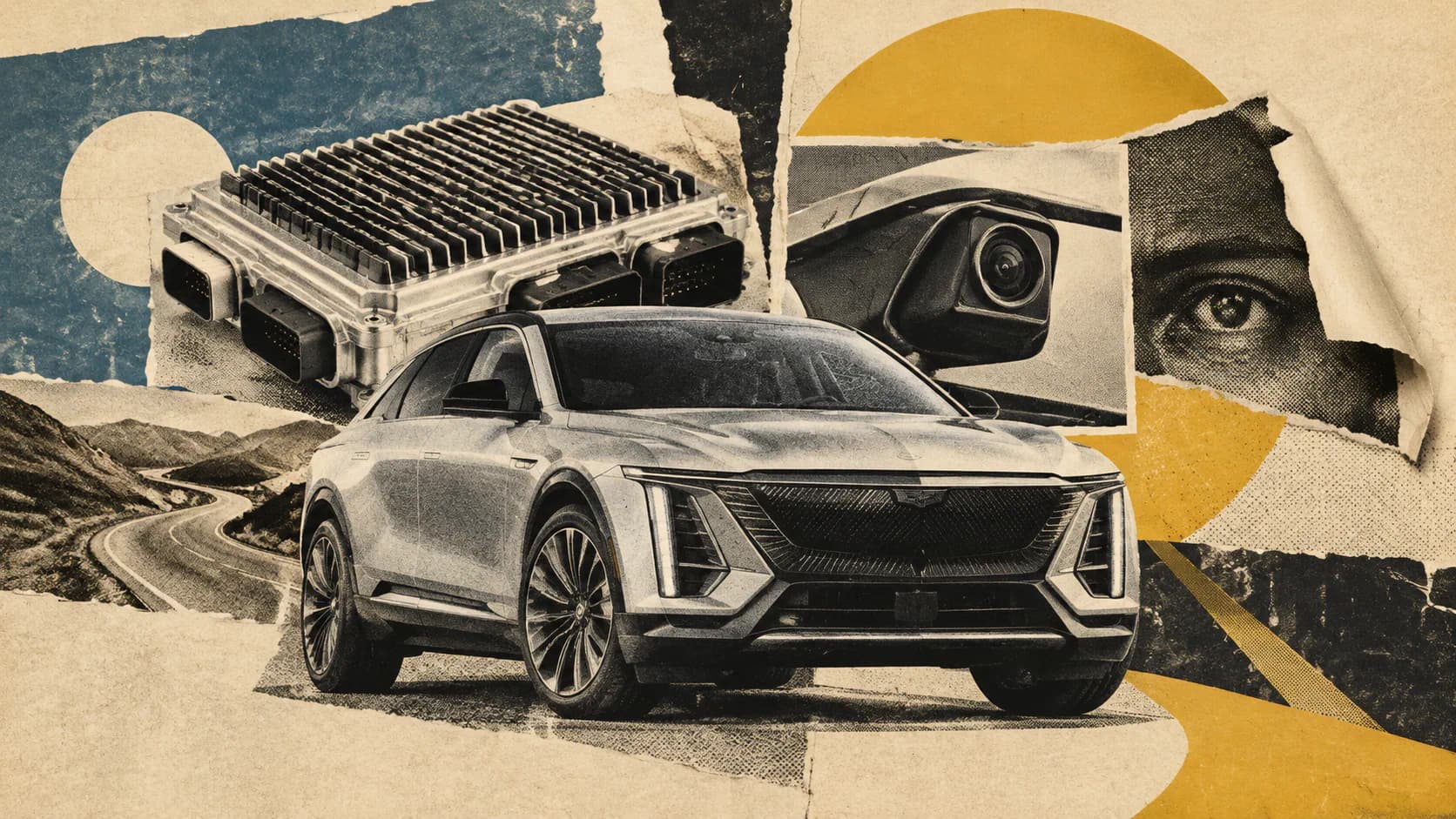
GM announced an in-house OnStar AI Assistant, centralized vehicle computing and AI-assisted engineering plans at its GM Forward event on October 21, 2026. The announcements connect several parts of its software-defined-car strategy, but they run on different schedules.
The assistant is due to debut in the 2027 Cadillac Lyriq in coming months, according to TechCrunch’s OnStar report. A new computing architecture is targeted for the Cadillac Escalade IQ in 2028, alongside a separately announced highway-autonomy rollout that year.
That timing matters. Buyers should not assume the assistant requires the 2028 hardware, or that an upcoming Lyriq will inherit every capability GM described. The announcements are a roadmap, with privacy controls deserving particular scrutiny after enforcement over GM’s earlier data-sharing practices.
GM’s Software Roadmap Has Two Timelines
GM’s near-term changes focus on how people interact with OnStar. Its longer-term changes reach into the electronics controlling the vehicle itself.
| Announcement | Planned timing | What GM has described |
|---|---|---|
| In-house OnStar AI Assistant | Coming months | Debut in the 2027 Cadillac Lyriq, with additional vehicles later |
| Consolidated OnStar mobile app | 2027 | Replace OnStar Guardian and the Buick, Cadillac, Chevrolet and GMC brand apps |
| New electrical and computing architecture | 2028 | Debut in the Cadillac Escalade IQ |
| More advanced highway autonomy | 2028 | Driving with hands and eyes off the road, without needing to remain ready to take over, according to GM’s description |
The app consolidation could make the OnStar change more visible beyond the first assistant-equipped vehicle. GM says the new app will complement and synchronize with its in-car software, bringing functions currently spread across several apps into one service.
The hardware and autonomy plans are described in TechCrunch’s separate architecture report. Both reports cover announced plans, not evidence of broad availability.
My view is that the rollout sequence is more useful than treating everything as one launch. The Lyriq debut will offer an early look at GM’s assistant experience; the 2028 architecture will require a separate assessment of the vehicle systems it enables.
OnStar Adds Voice Controls and Connected Cameras
GM’s assistant is intended to handle vehicle-related requests, including climate controls and questions about specific features. Those are concrete tasks: changing a cabin setting or explaining a function requires the software to understand the request and connect it to the relevant vehicle capability.
The broader OnStar update also includes connected-camera functions:
- Live views from cameras on the vehicle.
- Crash and safety recordings accessible through the OnStar app.
- Automatic event capture, which users can configure to activate when the vehicle senses a possible incident, such as an aggressive horn honk.
- Uploads to the app so owners can access captured events.
These are planned OnStar capabilities. The reporting does not establish that every feature will be available on every supported vehicle at the assistant’s debut.
GM has used conversational AI before. TechCrunch reports that it began using Google Cloud’s Dialogflow in 2022 to recognize particular spoken requests, then expanded responses to common questions in 2023. GM also previously announced plans to bring Google Gemini into vehicles in 2026.
The new assistant is described as an in-house effort. That identifies GM’s role in building the experience, but the reporting provides no underlying model specification or detailed account of how requests are processed.
For drivers, the important distinction will be between answering questions and reliably taking actions. Explaining a dashboard feature and changing a setting carry different requirements for permissions, confirmation and vehicle integration. GM’s announced capabilities establish the intended scope; they leave those interaction details open.
Centralized Compute Reaches Beyond the Dashboard
GM’s fourth-generation EV platform will move much of the vehicle’s computing into a central compute unit, or CCU. The planned system covers propulsion and chassis controls, perception and active safety, according to TechCrunch’s architecture coverage.
That makes this a deeper change than replacing an infotainment processor. GM describes an electrical architecture connecting acceleration and power, steering, braking, safety features and software.
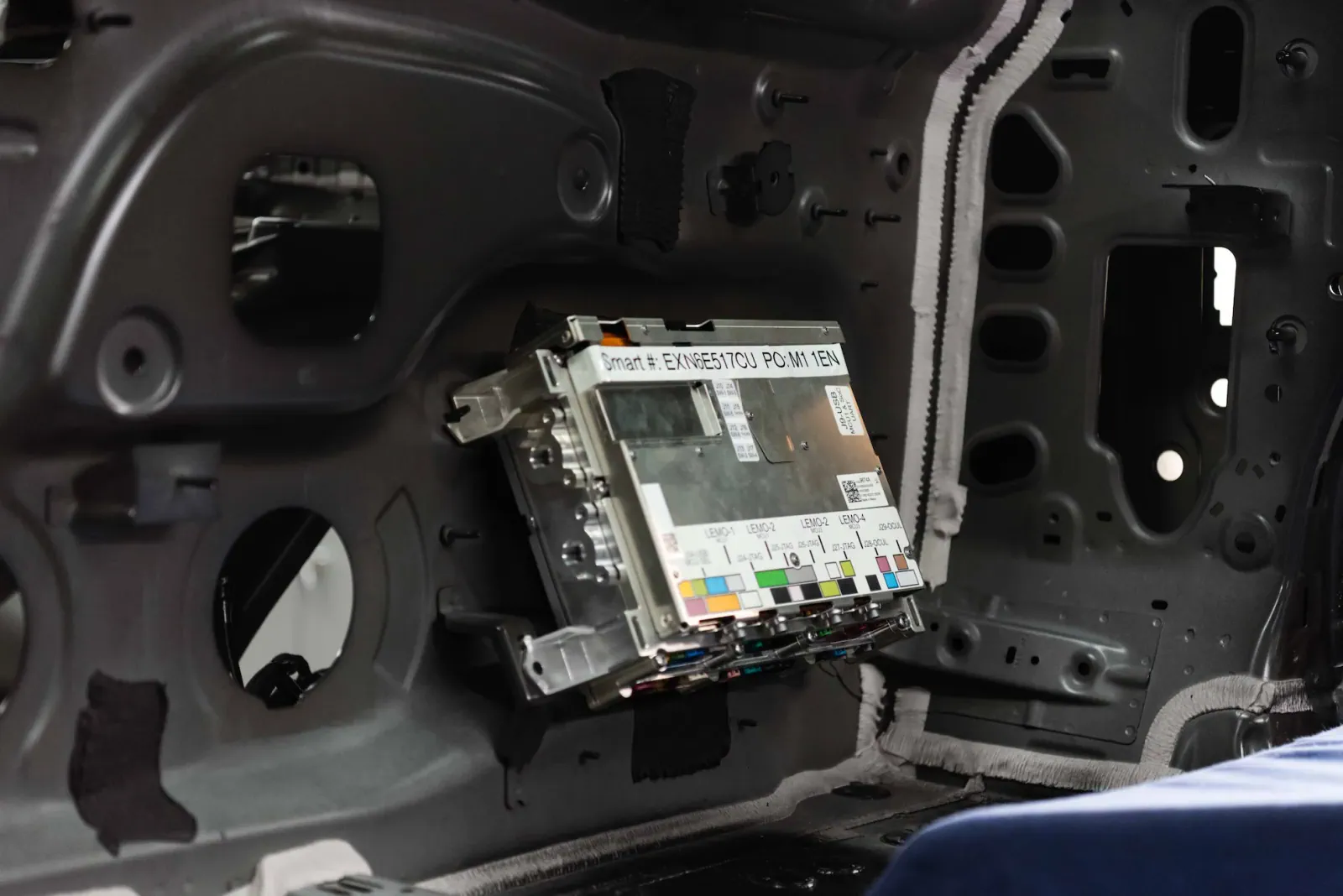
Image: GM is betting compute and AI will help it compete with Chinese automakers | TechCrunch.
The company’s headline figures are substantial, but their meaning needs boundaries:
| GM’s claimed improvement | What it describes | What remains unproven |
|---|---|---|
| 40 times more computing power | The new CCU compared with GM’s existing systems | Application speed, response times and real-world autonomy performance |
| 30% less wiring | A reduction associated with consolidating distributed electronics | The size of any resulting whole-vehicle weight or cost reduction |
These are GM’s figures, not independent measurements. The reporting provides no detailed benchmark workload or architecture specification that would support a like-for-like technical assessment.
The mechanism is understandable: reducing the number of separate computers around a vehicle can also reduce the wiring needed to connect them. GM says the change will save weight and simplify assembly. A shared computing platform can also give engineers a more unified foundation for functions that rely on multiple vehicle systems.
Still, 40 times more compute does not mean every function runs 40 times faster. Software design, sensors and safety requirements all influence what owners actually experience.
GM says the CCU can also work in combustion-engine vehicles, although its debut is planned for the electric Escalade IQ. That makes the architecture relevant beyond its next EV platform.
The autonomy promise needs its own boundaries. GM describes a 2028 highway feature that would permit hands-off, eyes-off travel without requiring readiness to take over. The available reporting does not detail operating conditions or fallback behavior. Those specifics will determine where and when drivers can actually use it.
Consent Matters as Much as Camera Encryption
GM says connected-camera recordings will be encrypted and time-limited, and that neither GM nor OnStar can access them. It also says customers will control data sharing and can withdraw permission.
A spokesperson described third-party sharing to TechCrunch as “feature-specific and consent-based”, with information shared only as needed to provide requested functionality. GM says declining certain sharing can limit related features, while other OnStar services continue.
Those statements address different parts of the privacy problem:
- Encryption concerns protection of stored or transmitted recordings.
- Retention limits concern how long recordings remain available.
- Access restrictions concern who can retrieve them.
- Consent controls concern which uses and disclosures the customer authorizes.
The practical consequence follows from GM’s own description: privacy choices can change the feature set. A customer may be able to refuse a particular data use, but could lose the function that depends on it.
I’d pay particular attention to how those choices appear during setup. A clear explanation of which feature needs which data is more useful than a broad assurance that recordings are encrypted. Encryption and permission to share answer different questions.
GM’s history makes that distinction consequential. TechCrunch reports that the FTC finalized an order earlier in 2026 banning GM and OnStar from sharing certain consumer data with consumer reporting agencies. The order also requires greater transparency and explicit consent for certain collection.
That enforcement account provides context for examining the new controls; it is not evidence that the announced camera features violate the order. GM’s new privacy protections remain company assurances in the reporting, without independent verification of their implementation or a feature-by-feature data-flow explanation.
AI-Assisted Engineering Targets Faster Development
GM is also using AI behind the scenes to shorten vehicle development. Its example concerns a lithium-manganese-rich battery pack: engineers evaluated 300,000 virtual designs before building the first physical prototype, according to the company’s account in TechCrunch’s report.
GM says that work helped move the concept to an approved program in one month. It wants to cut its traditional four-to-five-year development timeline roughly in half.
The distinction between those milestones is important. Evaluating virtual designs and approving a program are steps within development. The one-month figure describes progress to approval, not delivery of a finished battery pack or vehicle.
The broader strategy is coherent: AI tools accelerate design exploration, centralized electronics provide a shared software foundation, and OnStar turns some of that work into customer-facing services. Whether this produces better vehicles depends on execution across all three layers.
The first delivery test will be the Lyriq assistant’s actual functions and consent controls. The later test will be whether GM delivers its 2028 architecture and clearly defines the highway conditions its autonomy system can handle.
Frequently Asked Questions
3 questions
1When will the OnStar AI Assistant arrive?
GM says it will debut in the 2027 Cadillac Lyriq in coming months, with additional vehicles following. It is separate from the 2028 computing-architecture rollout.
2Does 40 times more compute mean 40 times faster driving software?
No. GM’s figure describes computing capability against its existing systems. The reporting provides no application-level benchmark showing an equivalent speed increase.
3Can owners decline data sharing?
GM says customers can manage permissions and withdraw consent. Declining certain sharing may limit related features, while other OnStar services continue.