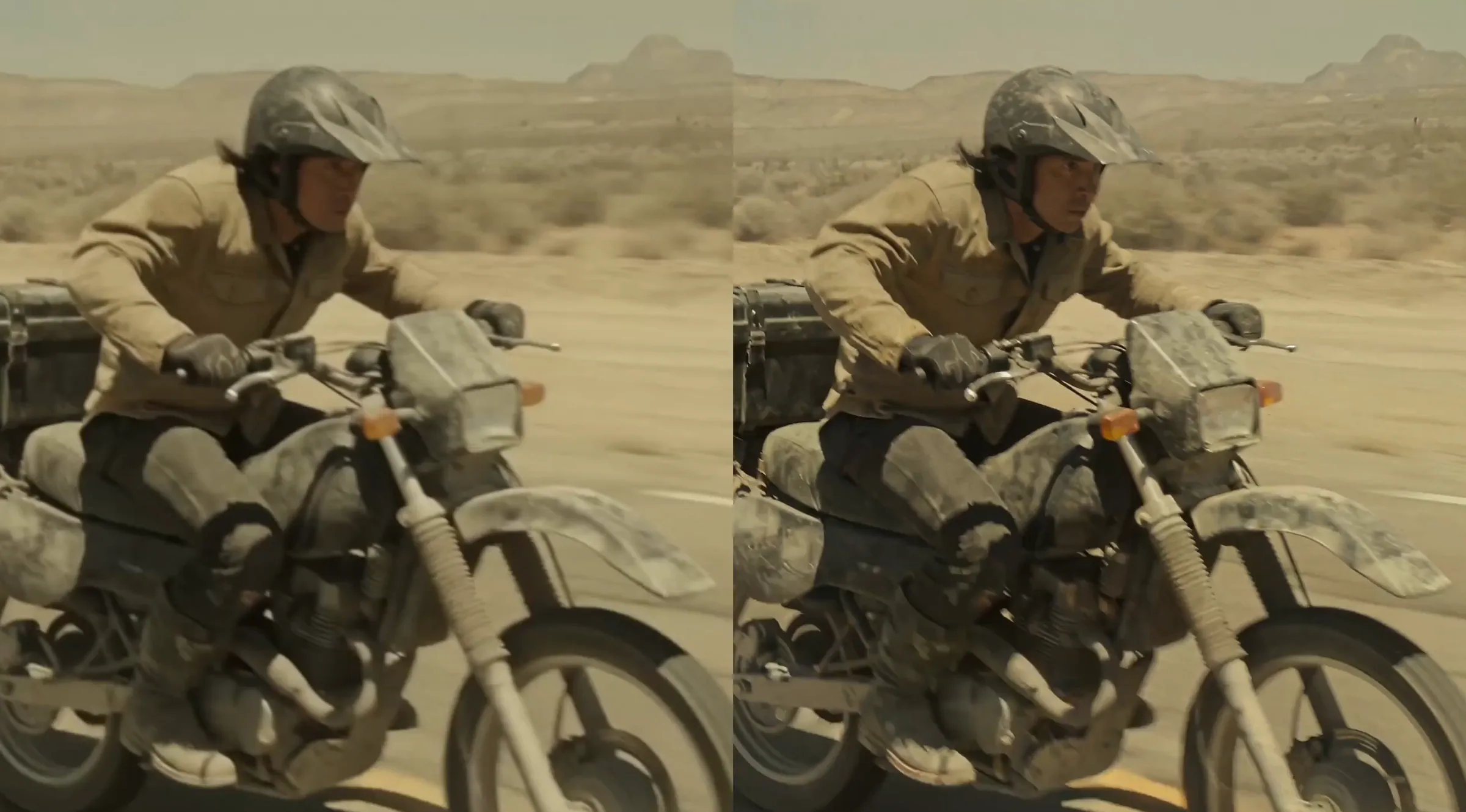
Black Forest Labs released FLUX Video Upscale on August 20, 2026, giving creators a direct route from lower-resolution footage to 2K- and 4K-class output. The AI video tool regenerates frames at higher resolution, targeting soft faces, damaged textures, and background details that conventional enlargement can leave blurry or distorted.
The release fills an important gap in the FLUX 3 production workflow. FLUX 3 Video generates clips up to 20 seconds long with native audio, initially offering HD output and Full HD through upscaling. FLUX Video Upscale extends that finishing stage toward 1440p and 4K while remaining available as a standalone tool for footage created outside FLUX.
That external-video support makes this more than a companion button for one model. Developers can place it after another AI video generator, use it on traditional footage, or integrate it into an automated post-production pipeline through the BFL API.
FLUX Regenerates Detail Instead of Simply Enlarging Pixels
Basic resizing methods can increase a frame’s dimensions, but they cannot recover visual information that is absent from the source. They interpolate between existing pixels, which often leaves faces looking waxy, foliage indistinct, and fine patterns covered in ringing or grid-like artifacts.
FLUX Video Upscale takes a generative approach. Black Forest Labs says the model can repair imperfections as it raises the resolution, including smudged faces and repetitive artifacts in textures such as grass and water. The intended result is not merely a larger file, but a cleaner reconstruction with more plausible high-frequency detail.
Its connection to FLUX 3 is particularly relevant for generated footage. BFL describes the upscaler as understanding FLUX 3 output natively, with the goal of preserving the original model’s broad style range, realistic movement, and natural visual character. A stylized animation should not suddenly acquire unwanted photorealistic textures, while a documentary-like clip should avoid the polished artificial finish that some enhancement tools impose.
“Regeneration” also introduces a limitation. Newly visible pores, fabric fibers, leaves, or architectural features are model-generated interpretations of the source, not recovered ground truth. That is useful for entertainment and advertising, but inappropriate when footage requires forensic or documentary accuracy.
Precise and Creative Modes Solve Different Problems
FLUX Video Upscale offers two processing modes rather than treating every clip as the same restoration task.