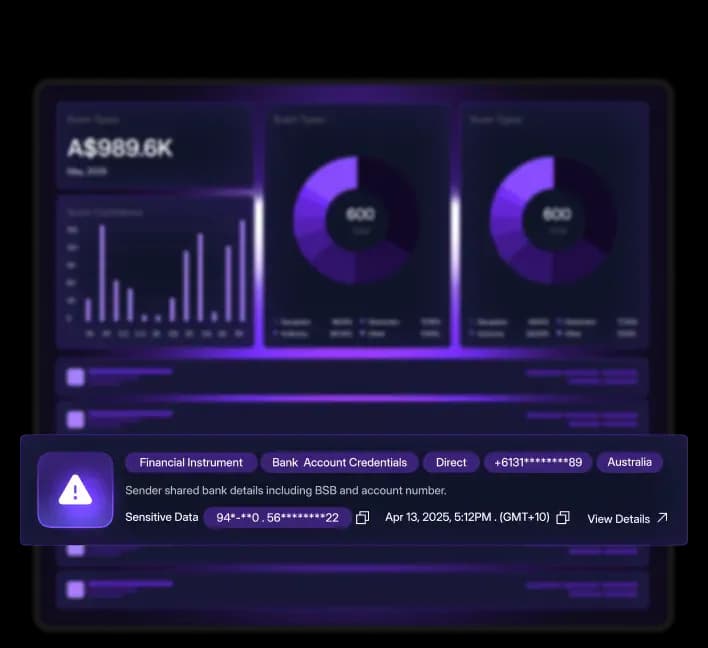
Apate says its AI agents have held 2.5 million conversations with scammers, consuming what the company describes as the equivalent of 17 years of scammers’ time. The agents try to obtain bank accounts, cryptocurrency wallets, malicious websites and other details that customers can use to investigate or disrupt scams while keeping fraudsters talking.
According to TechCrunch’s October 14 report, the Australian startup operates across phone calls, messages, email, phishing links and social groups. Customers include Commonwealth Bank of Australia and TPG Telecom.
Apate offers a concrete example of autonomous agents deployed in hostile, real-world channels. Assessing the results is harder: conversations handled, intelligence collected and losses prevented are different outcomes. The reported scale is Apate’s claim, and a prominent customer loss-reduction figure needs more context than the headline percentage provides.
The Agents Pretend to Be Victims to Extract Intelligence
Apate’s agents masquerade as potential victims, using different ages, genders, accents and languages to sustain conversations with scammers. When fraud becomes apparent, they attempt to keep the interaction going long enough to uncover operational details.
The targets include payment destinations, phone numbers, email addresses, malicious websites and the brands that scammers impersonate. These give defenders something more specific to investigate than a general description of a scam. Customers can assign particular missions, such as obtaining a bank account number or cryptocurrency-wallet address. A long conversation may help, but success depends on producing information relevant to the customer’s investigation.
Apate co-founder and chief commercial officer Brad Joffe told TechCrunch that the system uses both frontier models and the company’s own fine-tuned models. He said training draws on conversations with scammers and research conducted at Macquarie University, from which the business originated.
The report does not identify the models or provide detailed evaluation methodology. Readers therefore cannot compare the underlying system with another agent stack, assess its extraction accuracy or determine how reliably it maintains its fabricated identity. The disclosed evidence covers the deployment and its claimed activity; it does not provide a reproducible technical benchmark.
Telcos Divert Calls, While Text Agents Seek Conversations
Voice agents can receive calls diverted by a telecommunications provider. Text agents can seek out suspected scam activity in forums, investment groups and social platforms. Each channel has its own deployment arrangements.