DoorDash wants customers to start an order with a message instead of a visit to its app. Its new consumer experience is designed to find food, assemble a cart and complete checkout in a text thread. A separate connector gives compatible workplace AI agents a way to arrange deliveries for employees.
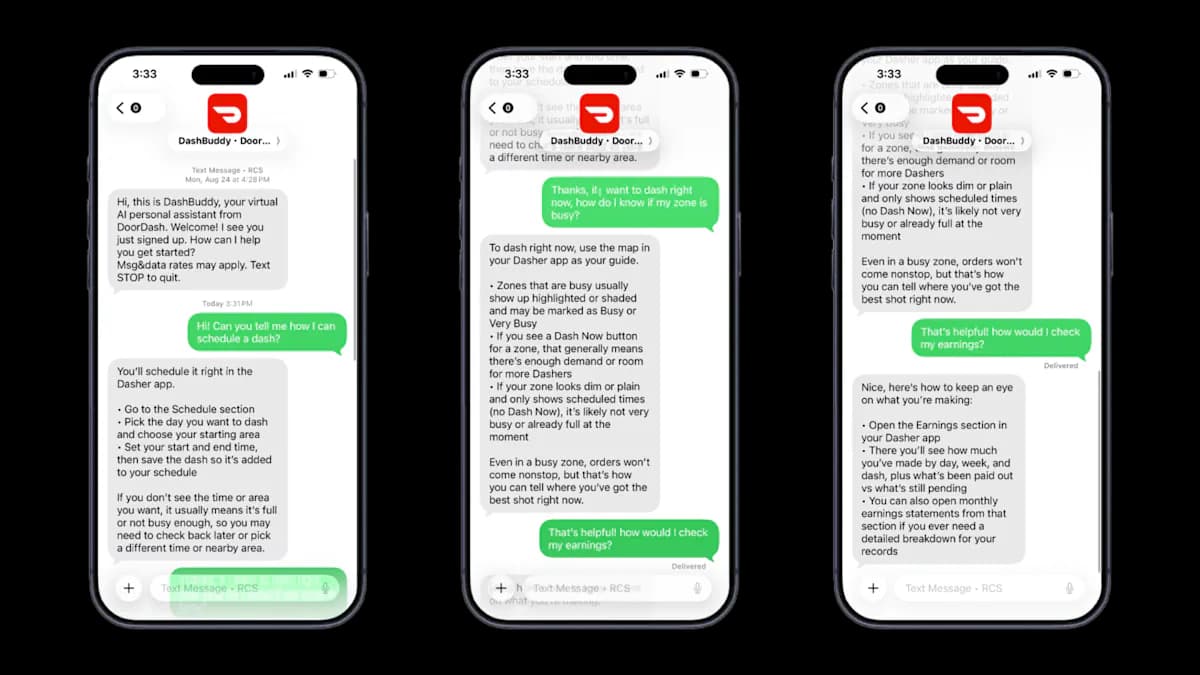
Access varies across the products. Text ordering has a U.S. beta waitlist. The corporate connector is in a limited beta. Individual developers can request expanded beta access to a separate command-line interface. DashBuddy, an SMS support assistant for Dashers, is live in the U.S. and Canada.
Announced on September 30, the releases give conversational interfaces ways to act on requests and, in some cases, place real orders. The limited rollouts leave open how reliably those agents handle the details of a purchase.
Text Ordering Starts With a U.S. Waitlist
DoorDash says its text-to-order beta will let a customer describe a craving, request a local recommendation or ask for a familiar order. The assistant searches DoorDash listings, proposes a cart and can send photos drawn from a restaurant’s store page. Customers can confirm an order and complete checkout within the text conversation, without opening the app.
DoorDash says the assistant can interpret “order my usual” using a customer’s previous choices, including modifiers. It can also assemble an order for a group with differing dietary preferences and quantities. Customers who opt in may receive a proactive message about a habitual order.
These are DoorDash’s descriptions of a beta, not capabilities available to every customer. U.S. users can join the text-ordering waitlist; the announcement gives no date for broad access. TechCrunch reported on the waitlisted launch as DoorDash seeks an advantage over food-delivery rivals. The announcement itself does not establish how the ordering flow performs across everyday requests.
The text beta extends Ask DoorDash, the company’s existing in-app assistant. Conversational search is already part of the app; the new step is moving shopping and checkout into a messaging channel. DoorDash also announced in-app grocery features that build a restock cart and suggest cheaper alternatives at a preferred grocer. Those app features do not mean text ordering is generally available.
A repeat family dinner, for example, could take less menu searching and cart rebuilding. The harder test comes when an item is unavailable, a group member changes their mind or the suggested order is almost right. DoorDash describes cart suggestions and confirmation, but provides too little detail to judge those edge cases.