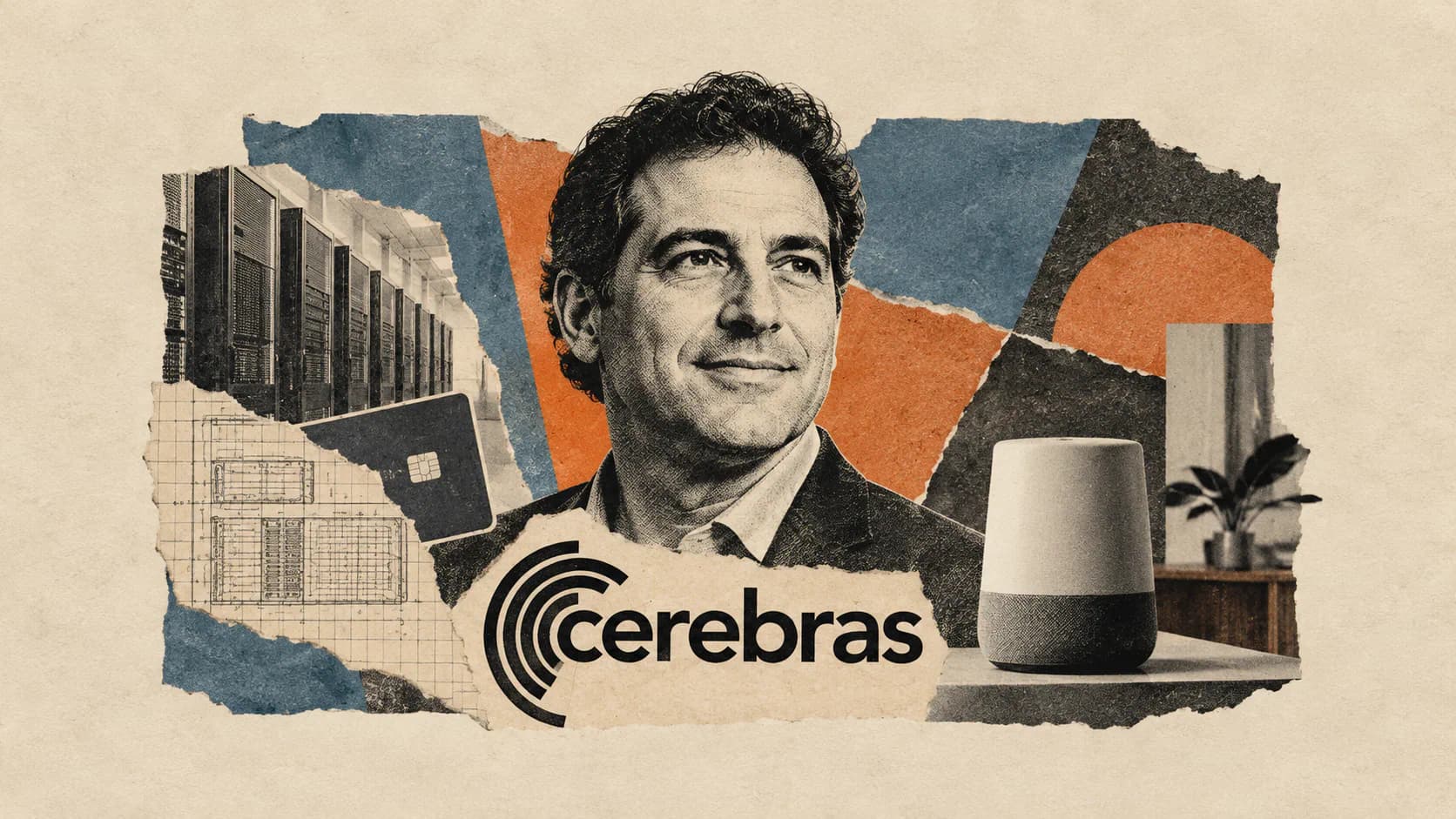
Cerebras CEO Andrew Feldman says the AI industry is contributing to its own backlash. His criticism spans two failures: leaders who emphasize catastrophic risks at the expense of potential benefits, and data-center developers who haven’t worked closely enough with the communities around their projects.
Speaking at TechCrunch Disrupt, Feldman joked that some AI leaders “maybe shouldn’t be allowed to talk in public,” according to TechCrunch’s account of his remarks. But his response wasn’t to dismiss every concern. He also called for reasonable regulation and acknowledged that powerful technologies create opportunities for misuse.
Alongside that criticism came an optimistic prediction. In a second report from the event, published on October 13, 2026, Feldman said home AI assistants combining local processing with cloud computing were close, and would eventually have access to credit cards.
These were executive opinions and forecasts, not a Cerebras product announcement. Read together, they outline his argument for broader AI adoption: communicate the benefits, address legitimate objections, and build systems useful enough for people to trust with everyday tasks.
Feldman Wants Less Doom, Not an Absence of Regulation
Feldman’s objection centered on how AI leaders describe their work to the public. In his view, warnings about extreme outcomes are overshadowing the technology’s promise.
He offered a sweeping example of the alternative message: AI could help create a world where people’s grandchildren never encounter someone who dies of cancer. That is an aspirational claim, not an established medical outcome or a forecast supported by evidence in the report. It nevertheless shows how strongly he wants the industry to emphasize potential benefits.
There is a tension in that position. Replacing catastrophic predictions with extraordinary promises doesn’t, by itself, give the public a firmer basis for judging the technology. Both require evidence, clear assumptions and an honest account of uncertainty.
Feldman’s more concrete position was that risk accompanies powerful technology and needs to be managed. As TechCrunch reported, he said:
“We have to be thoughtful about it. We have to regulate it reasonably.”
That qualification matters. His comments should not be read as an argument that AI systems are harmless or that government has no role. He acknowledged the problem of powerful tools reaching people who intend to misuse them.
However, the report does not set out a detailed regulatory proposal. It gives no basis for concluding which rules Feldman would support, which obligations he would place on model developers, or how he would define reasonable oversight. His statement establishes a broad position, not a policy program.
The distinction is important for an industry leader criticizing public messaging. There is a substantial difference between arguing that catastrophic scenarios receive too much attention and demonstrating that a particular risk assessment is wrong. The remarks reported by TechCrunch primarily make the former case.
Data-Center Backlash Is Also a Failure of Engagement
Feldman’s acknowledgment of the data-center industry’s shortcomings was more direct than a general complaint about negative coverage.
He said the industry had done a poor job working with local communities, particularly in the United States. In TechCrunch’s reporting on data-center opposition, he described inadequate engagement as an industry problem:
“They didn’t engage the community as they should have, and that was a problem.”
That admission complicates the idea that AI’s acceptance problem can be fixed simply by presenting a more positive story. Feldman was acknowledging conduct by the companies building the infrastructure, not just a failure by the public to appreciate its potential.
His use of an industry-wide frame also needs to be kept in proportion. The remarks do not establish misconduct by a particular developer, identify a specific disputed project, or show that every community objection has the same cause.
They do establish that a prominent AI infrastructure executive sees inadequate engagement as part of the explanation for resistance.
The practical implication is that national enthusiasm for AI and local acceptance of a particular development are different questions. A resident can support useful AI applications while still wanting a meaningful say in a nearby project. Promises about future assistants or medical advances do not settle the merits of that project.
Feldman’s acknowledgment is therefore consequential, but incomplete. The reported comments do not explain what better engagement would require or how a developer should respond when consultation fails to produce agreement. Accepting responsibility for poor outreach is a starting point, not evidence that the underlying disagreements have been resolved.
The Home AI Forecast Is Hybrid, Not Fully Local
Feldman’s consumer prediction was that personal AI assistants would operate partly on local devices and partly through remote computing.
“Actually, I don’t think that’s very far away,” he said when asked about AI becoming a home appliance. He compared the arrangement to a cellphone, with some work performed on the device and some sent back to the cloud.
That architecture is central to understanding the prediction. He was not describing a household system that necessarily performs every task independently of external servers. Nor did the report identify a particular device, hardware specification, price or release date.
The word “appliance” should therefore be read as his vision for how AI might become an everyday household service, not as the name of an announced Cerebras product.
Feldman also predicted that these assistants would become highly familiar with their users and operate within a “security perimeter.” Most consequentially, he said they would have access to credit cards and be able to buy things on users’ behalf.
That would extend an assistant’s role beyond providing information. A system that recommends a purchase can leave the final decision to its user; a system authorized to execute the transaction has been given a different kind of responsibility.
The report does not describe how that authority would work. Spending limits, approval requirements and the ability to revoke access are practical questions raised by the forecast, not announced features. Likewise, the reference to a security perimeter does not establish what data would remain local, what would reach the cloud, or how payment credentials would be protected.
The hybrid design alone cannot answer those questions. Knowing where some computation takes place is not the same as knowing what an agent is permitted to do.
His Own Agents Illustrate a Smaller Step
Feldman said he already uses a collection of agents to review his calendar and gather information about people he is scheduled to speak with.
Sources
- TechCrunch’s account of his remarkstechcrunch.com
- second report from the eventtechcrunch.com