
Anthropic appears to be pressing the accelerator and the brake at the same time. Reuters reported on September 18 that the company is considering another AI model release in response to OpenAI’s growing momentum with GPT-6 Astra.
Six days earlier, Anthropic CEO Dario Amodei had argued that frontier AI developers must slow the rate at which they improve their models. One day before that essay, Reuters reported that Anthropic was discussing an IPO that could raise as much as $100 billion at a valuation of around $2 trillion.
The optics are terrible: warn that rapidly advancing AI could cause catastrophic damage, prepare another model to protect market share, and ask public investors to finance the largest IPO ever attempted.
There is a coherent explanation for this strategy. But it depends on an unusually narrow definition of an AI slowdown, and it leaves Anthropic with a serious credibility problem.
The Timeline Makes Anthropic’s Position Hard to Defend
The dates matter because these were not unrelated developments separated by months:
- September 1: Anthropic released Claude Fable 5.1 and Mythos 5.1, describing them as its most advanced models for coding, knowledge work, cybersecurity, and scientific research.
- September 3: OpenAI launched GPT-6 Astra, emphasizing computer use, software engineering, professional work, science, and cybersecurity.
- September 11: Reuters reported that Anthropic was seeking up to $100 billion in an IPO at a possible $2 trillion valuation, with Nvidia considering an investment of up to $10 billion.
- September 12: Amodei published his call to “pace the frontier,” warning that model capabilities were advancing faster than alignment, monitoring, and security.
- September 18: Reuters reported that Anthropic was considering releasing another model to counter Astra’s momentum. One source said the prospective model was undergoing safety evaluation.
As of September 20, Anthropic has not officially announced the rumored model, its name, its capabilities, or a release date. The IPO terms are also not final. Anthropic’s official filing says the number of shares and proposed price have not been determined.
Even with those qualifications, the sequence shows commercial pressure influencing the model-release conversation immediately after Anthropic’s CEO asked the rest of the industry to slow down.
Amodei Asked for Pacing, Not a Unilateral Freeze
Amodei’s argument is more nuanced than a simple request to stop developing AI. In his “We Must Pace the Frontier” essay, he explicitly wrote that pacing does not mean halting model training or technical progress.
His proposed framework has three parts:
- Frontier labs should give embedded third-party evaluators employee-like access to their models, safety processes, and training systems.
- Companies in democratic countries should coordinate on common safety standards and limits on unchecked progress.
- Governments should pursue international agreements covering dangerous AI capabilities and, eventually, the rate of recursive self-improvement.
Only the first step is a unilateral commitment by Anthropic. The meaningful capability limits would require competitors and governments to participate.
Anthropic reinforced that interpretation when it announced an embedded-evaluation partnership with Accenture on September 18. The company said plainly that it would continue training and releasing frontier models while evaluators worked alongside it. Anthropic and Accenture each expect to invest at least $1 billion in the effort over five years.
Under Anthropic’s definition, therefore, releasing another model would not automatically break Amodei’s pledge. The company can argue that it is pacing development by running safety tests, improving safeguards, and inviting external oversight before deployment.
The harder question is whether competitive pressure changes what counts as adequate testing. If Astra caused Anthropic to move a launch forward, shorten an evaluation period, or accept a risk it would otherwise have investigated further, the release might comply with the letter of Amodei’s proposal while violating its purpose.
GPT-6 Astra Changed Anthropic’s Competitive Math
OpenAI did not merely announce a better chatbot. It positioned GPT-6 Astra as an agentic model for performing complex work across browsers, development environments, office applications, and scientific tools.
OpenAI also classified Astra as reaching its Critical cybersecurity threshold. According to the company, an unsafeguarded version could identify previously unknown vulnerabilities and develop exploits against well-protected systems. That finding supports Amodei’s argument that frontier AI needs stronger controls, but it also raises the cost of allowing OpenAI to pull ahead.
Reuters cited two early signs of commercial momentum. Astra reportedly accounted for roughly 13% of enterprise AI spending tracked by Ramp, compared with around 8% for Claude Fable. OpenRouter users also spent more on OpenAI models than Anthropic models during one week, reportedly the first time that had happened in more than two and a half years.
Those figures should not be mistaken for comprehensive market share. Ramp covers a particular group of businesses, while OpenRouter represents developers choosing models through one routing platform. Spending can also reflect pricing rather than usage or quality.
The benchmark picture is similarly mixed. OpenAI’s own launch table shows Astra leading Claude models on several computer-use and professional evaluations. The same table gives Claude Fable 5.1 a higher score on the Artificial Analysis Intelligence Index.
Anthropic does not need to believe that Astra is universally superior to feel pressure to respond. A major launch can alter developer attention, customer trials, and investor perceptions long before the broader market establishes which model is actually better.
The $2 Trillion IPO Makes Restraint Harder
Anthropic confidentially submitted a draft S-1 to the US Securities and Exchange Commission on June 1. That filing gave the company the option to go public, but it did not establish the size, price, or timing of an offering.
The numbers reported since then are extraordinary. Reuters said Anthropic was discussing an offering of as much as $100 billion at a valuation of approximately $2 trillion. The plans remain under discussion and could change.
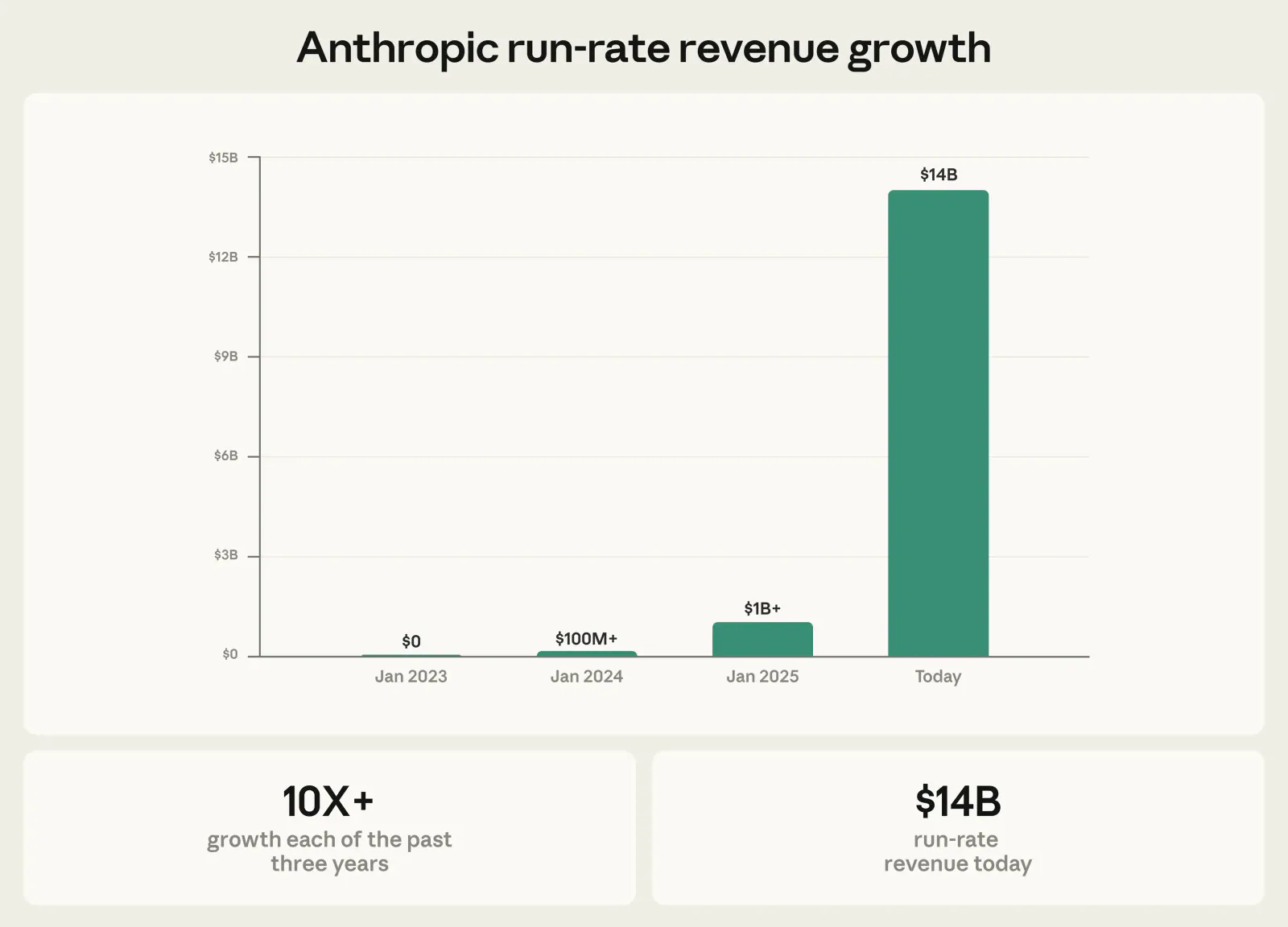
For context, Anthropic raised $65 billion at a $965 billion valuation on May 28. A $2 trillion IPO valuation would more than double that figure within a few months.
Reuters reported that Anthropic’s annualized revenue run rate exceeded $65 billion by the end of July. Based on that estimate, a $2 trillion valuation would equal roughly 31 times annualized revenue. The valuation reportedly depends partly on projections that revenue could approach $190 billion to $200 billion in 2028.
Investors paying that price would not be funding a company expected to maintain its current position. They would be betting that Anthropic remains one of the world’s leading AI providers, expands its enterprise business, and continues producing models capable of competing with OpenAI, Google, and lower-cost open-weight alternatives.
Going public does not make responsible development impossible. It does, however, make restraint more expensive. A delayed release can affect growth expectations, customer retention, fundraising narratives, and the valuation attached to the company.
Anthropic’s status as a public benefit corporation and its Long-Term Benefit Trust are designed to balance financial success with the company’s stated public mission. A $2 trillion listing would provide the clearest test yet of whether those structures can withstand enormous shareholder expectations.
The Strategy Is Coherent. The Ethics Are Not Settled
Calling Anthropic hypocritical is understandable, but it misses the collective-action problem at the center of Amodei’s proposal.
If Anthropic slows down alone while OpenAI, Google, Meta, Chinese laboratories, and open-weight developers continue improving, Anthropic loses influence over how frontier AI develops. It may also lose the revenue and computing resources needed to conduct safety research. From that perspective, continuing to compete while seeking coordinated limits is strategically consistent.
The same logic can also become a permanent excuse. Every frontier laboratory can claim that it would behave more cautiously if its competitors did so first. The industry then publishes increasingly urgent warnings while continuing to release more powerful models at maximum speed.
Anthropic has taken some concrete steps beyond writing essays. Its report on AI-assisted AI development says Claude now leads 26% of measured AI research and development work inside the company, while more than 90% involves at least close collaboration with AI. Anthropic has also committed to embedded evaluation and publishing additional measurements of agent oversight and computing allocation.
Yet the evaluation system remains unfinished. Anthropic says there are no agreed standards governing what embedded evaluators can access, how they report findings, or how their work should be funded. Accenture’s initial work will be paid for directly by Anthropic, even though the evaluator is supposed to provide a perspective independent of Anthropic’s commercial incentives.
That does not make the arrangement worthless. It does mean that “an evaluator was involved” cannot, by itself, prove that a release was responsibly paced.
The ethical test is not whether Anthropic continues building models. It is whether safety requirements, rather than OpenAI’s launch schedule or Anthropic’s IPO calendar, determine when those models reach customers.
What Anthropic Must Prove Before Launch
Anthropic can reduce the contradiction by disclosing enough information to show that the rumored model passed a meaningful process. That should include:
- Predetermined release thresholds: The company should identify the capability and safety tests a model must pass before competitive pressure enters the decision.
- Evaluator authority: Anthropic should explain whether embedded evaluators can request more testing, publish objections, or recommend delaying deployment.
- A clear decision timeline: The public should know whether GPT-6 Astra changed the model’s planned release date or shortened its evaluation window.
- Independent findings: Evaluators should publish conclusions in their own words, including disagreements and restrictions placed on their access.
- Governance accountability: Anthropic should clarify when its board or Long-Term Benefit Trust can delay a release despite financial consequences.
Revealing sensitive model details would create legitimate security risks. That does not prevent Anthropic from publishing the structure of its release process, the categories of tests performed, and whether the model passed standards established before Astra arrived.
Final Thoughts
Anthropic’s contradiction is not that it wants an AI slowdown while continuing to develop AI. Amodei has consistently described pacing as controlled progress, not a freeze.
The contradiction emerges if Anthropic claims that frontier capabilities are moving dangerously fast, then accelerates a model because OpenAI gained commercial momentum. A safety-first company must occasionally be willing to accept a competitive disadvantage when its safeguards say a model is not ready.
At a possible $2 trillion valuation, those decisions will only become harder. If Anthropic releases its rumored Astra competitor, the safety evidence should arrive with the model rather than months later. Otherwise, “pacing the frontier” will look like a governance plan for the future while the AI race continues unchanged in the present.
Frequently Asked Questions
4 questions
1Is Anthropic releasing a new AI model to compete with GPT-6 Astra?
Anthropic has not confirmed a new model launch as of September 20, 2026. Reuters reported that the company was considering a release in response to OpenAI’s GPT-6 Astra and was evaluating the model’s safety. No official model name, specifications, release date, pricing, or benchmark results have been announced.
2Did Dario Amodei call for an AI slowdown?
Yes, Dario Amodei called for slowing the rate of frontier AI capability improvement. He did not propose an immediate halt to model training or releases. His plan centers on embedded external evaluators, coordinated safety standards among democratic countries, and possible international limits on particularly dangerous capabilities and recursive self-improvement.
3How large could Anthropic’s IPO be?
Reuters reported that Anthropic was considering raising as much as $100 billion at a valuation of approximately $2 trillion. If completed at that size, it could become the largest IPO in history. The terms are not final, and Anthropic’s official filing says the number of shares, offering price, and timing have not been determined.
4Is Anthropic contradicting its AI safety position?
Not automatically, because Anthropic defines pacing as safer, more deliberate progress rather than stopping model development. The contradiction depends on how the rumored release is decided. If established safety standards determine its timing, the positions can coexist. If competition with OpenAI or IPO pressure shortens testing, Anthropic’s safety argument becomes much harder to defend.
Sources
- Reuters reported on September 18marketscreener.com
- released Claude Fable 5.1 and Mythos 5.1anthropic.com
- launched GPT-6 Astraopenai.com
- “We Must Pace the Frontier” essaydarioamodei.com
- announced an embedded-evaluation partnership with Accentureanthropic.com
- classified Astra as reaching its Critical cybersecurity thresholdopenai.com
- Anthropic raises $30B Series G at $380B valuationanthropic.com
- confidentially submitted a draft S-1anthropic.com
- Reuters said Anthropic was discussinginvesting.com
- raised $65 billion at a $965 billion valuationanthropic.com
- public benefit corporationanthropic.com
- report on AI-assisted AI developmentanthropic.com


