
Meta opened the Muse Connector Platform to developers on September 19, 2026, two days after introducing Muse as its personal AI agent. Zuckerberg’s pitch is concise: “You bring the API. Muse brings the agent, the browser, and the context of what the person actually wants.”
This is more than another integration directory. Meta is inviting businesses to separate their useful capabilities from their apps and expose them to an agent that can understand a request, navigate the web, call services, and complete multi-step tasks.
The larger shift is the agentification of consumer software. Instead of opening an app, learning its interface, and completing a workflow manually, a person describes an outcome. Muse then determines which tools can produce it.
That could create a major distribution channel for small API companies. It could also give Meta control over the layer between consumer intent and business revenue.
Connectors Turn Muse Into a Distribution Layer
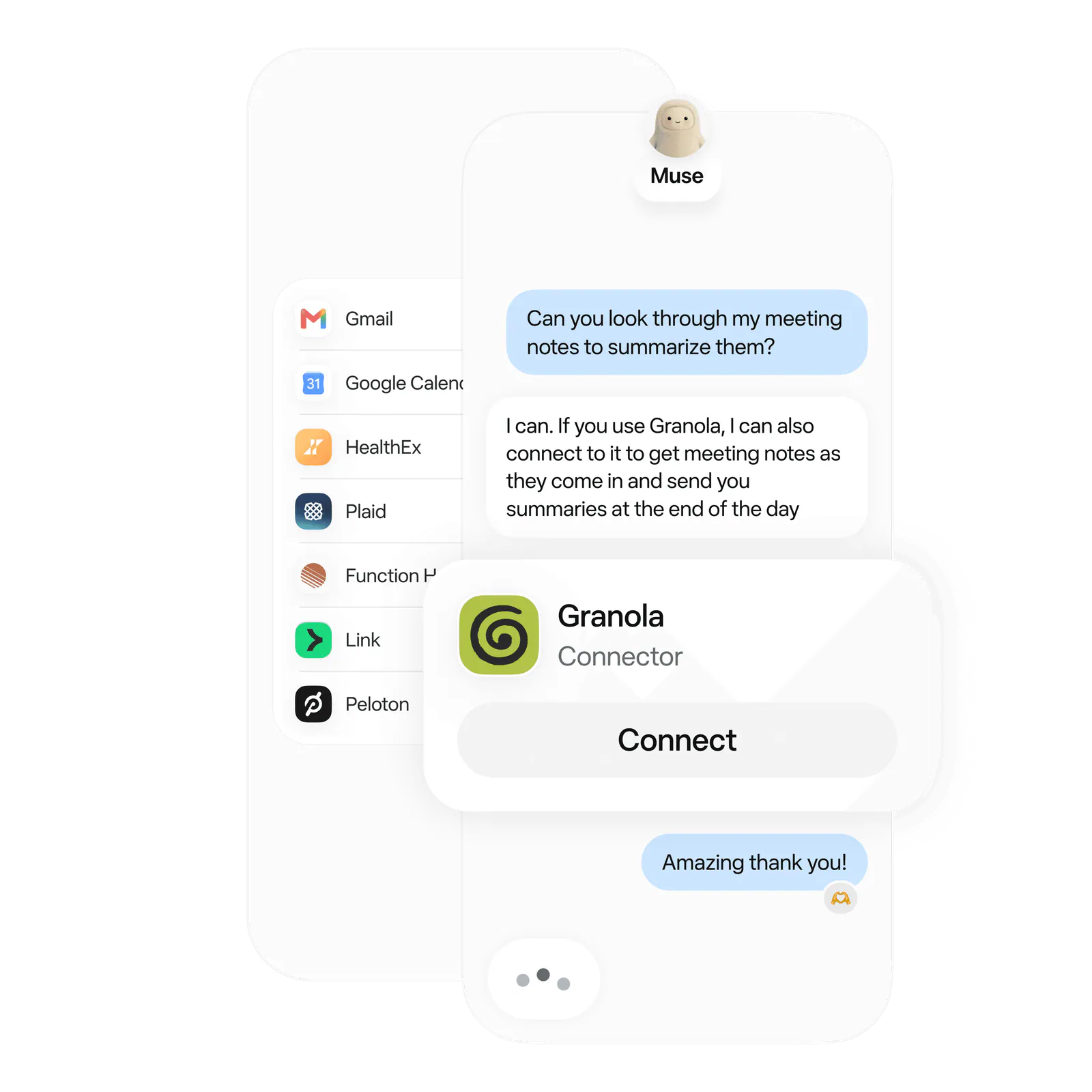
Meta describes a connector as a way to bring a company’s product into the everyday tasks people ask Muse to handle. The current submission process has three broad stages: developers describe their product, Meta tests the connector and provides feedback, and approved connectors appear in the Muse Connector Directory.
The public page looks more like a curated application funnel than a self-service developer platform. Meta has not yet published detailed public documentation covering tool schemas, authentication requirements, connector review times, rate limits, ranking criteria, usage fees, or revenue sharing.
That distinction matters. Developers can now express interest and submit products, but the platform does not yet resemble a mature API marketplace with transparent technical and commercial rules.
Muse already supports connectors for services including Gmail, Google Calendar, Google Drive, Canva, Notion, and Granola. Meta’s technical explanation says its engineers worked with providers to integrate their APIs and wrote “SKILLs,” which are detailed instructions that teach Muse how to use each connector effectively. Muse can also create custom connectors for services with suitable APIs or command-line interfaces.
This model reduces the amount of product infrastructure a developer must supply. A business can focus on the service itself while Muse provides the conversational interface, planning system, browser, execution environment, and access to users.
The App Store Analogy Understates the Change
The comparison with being early to Apple’s App Store is directionally useful. The App Store launched in July 2008, making 2009 its first full year as a software distribution platform. Early developers benefited from less competition and a new channel for reaching mobile users.
Muse connectors introduce a more consequential change. App stores still require people to search, compare listings, install software, and learn interfaces. An agent can collapse those steps into one request.
A user might say, “Organize a weekend in Chicago for six people under $2,000.” Muse could consult calendars, research travel, create an itinerary, produce invitations, and eventually transact with relevant providers. The user may never visit those providers’ homepages or install their apps.
Connectors therefore combine parts of an app listing, search result, sales channel, and software interface. The valuable real estate is no longer only a prominent directory position. It is being selected by the agent when the user expresses intent.
Users will still need to authorize connectors and approve sensitive actions. But as agents gain more autonomy, the choice of business could gradually move from a conscious human decision to an automated routing decision.
One Hundred Million Users Is Plausible, Not Proven
Meta has not publicly announced a target of 100 million Muse users. That figure should be treated as a plausible scenario, not company guidance.
The scale is conceivable because Meta reported an average of 3.60 billion daily active people across Facebook, Instagram, Messenger, and WhatsApp during June 2026. One hundred million users would equal roughly 2.8% of that daily audience.
Muse, however, launched as a free US product that Meta plans to roll out gradually. Access to Meta’s broader ecosystem does not automatically produce adoption, retention, or trust. The relevant question is whether Muse becomes useful enough to replace established consumer habits, not whether Meta can place it in front of enough people.
For developers, even a fraction of Meta’s reach could be significant. A three-person API company may not need its own mobile apps, general-purpose assistant, browser automation stack, or consumer acquisition campaign if Muse supplies those layers.
Access to millions of potential users is not the same as owning those relationships, though. The agent platform would still control discovery, permissions, presentation, and possibly payment.
Your API May Matter More Than Your App
Consumer software has traditionally been designed around screens. Teams optimize navigation, onboarding, forms, notifications, and visual conversion funnels because humans operate the product directly.
An agent interacts with a business differently. It needs reliable operations rather than polished screens. That makes several technical characteristics more important:
- A narrow, well-documented API with predictable behavior
- Scoped authentication and clear permission boundaries
- Structured prices, inventory, availability, and status information
- Idempotent operations that do not create duplicate bookings or purchases
- Explicit confirmation steps for destructive or costly actions
- Machine-readable errors that tell the agent how to recover
- Observability that identifies failed calls, abandoned workflows, and agent behavior
This does not make the app irrelevant. People may still want visual control for complex work, account management, exceptions, and reviewing results. But routine workflows can move away from the interface.
In that environment, the API stops being a secondary feature built for partners. It becomes the main product surface through which demand arrives.
The strongest connector companies may look unusually small by consumer software standards. If Meta supplies the interface and distribution, a compact team can concentrate on one capability and expose it cleanly. The difficult work shifts toward reliability, authorization, pricing, and operational execution.
Meta Wants the Moment Between Intent and Transaction
Muse becomes more strategically important when it can complete transactions rather than merely recommend products. Meta has partnered with Stripe so connectors can accept payments through Link, and Muse can use Stripe’s Universal Commerce Protocol to shop across participating businesses.
According to Stripe’s Muse announcement, users can confirm a purchase inside the Muse conversation. Link supplies saved shipping and payment details, the merchant processes the order, and purchase information is shared with Meta so Muse can provide a receipt.
That closes the gap between asking and buying. Muse can potentially observe the request, identify a provider, execute the workflow, and present the completed transaction.
This position gives Meta an unusually rich view of commercial intent. It can see what people request and receive information about connector usage. In some payment flows, it also receives purchase details. Meta’s public privacy language says connector interactions may be used to operate and improve its products, personalize experiences, and, in some circumstances, affect advertising.
The documentation does not establish that Meta currently ranks connectors using conversion rates, sells paid connector placement, or plans to use transaction data to launch competing products. Those remain strategic possibilities rather than announced policies.
Still, the platform sits in a position where such decisions could eventually be made. Whoever controls intent routing can influence which businesses receive demand and how much they pay for access to it.
The Landlord Risk Extends to Security and Trust
Building on Muse creates the same dependency that businesses have experienced with app stores, search engines, social platforms, and online marketplaces. Meta can determine which connectors qualify, how they appear, what permissions they receive, and which platform rules they must follow.
A company that gets most of its customers through Muse could become exposed to ranking changes, review delays, new fees, policy updates, or a competing first-party service. Meta has not announced connector listing charges, commissions, or paid rankings, but the lack of public commercial terms is itself a reason to avoid assuming permanent free distribution.
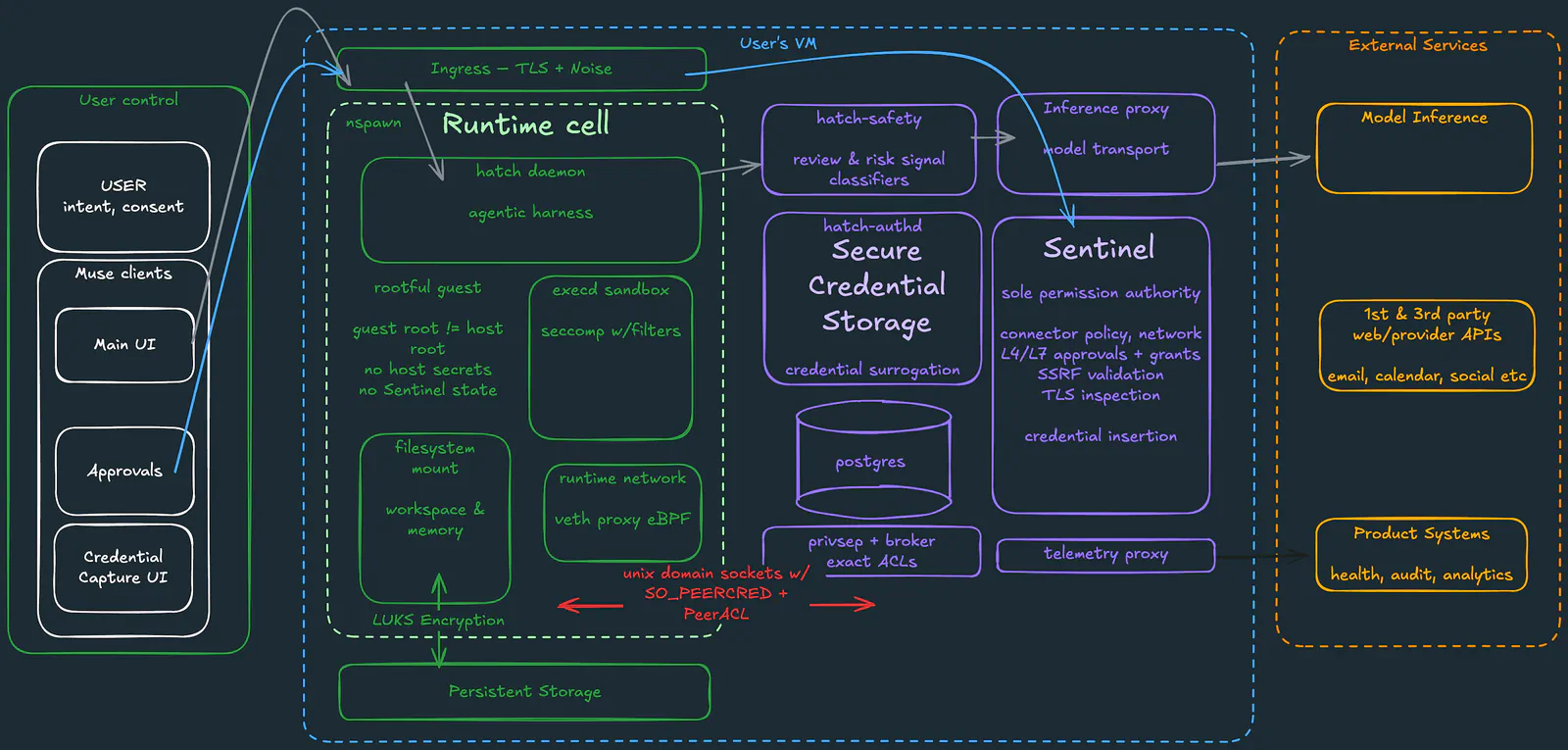
Developers also inherit some of Muse’s security model. Meta says Muse runs tasks inside an isolated virtual machine, while sensitive credentials remain outside the agent environment. Its Sentinel system evaluates planned actions, checks for unusual or high-risk behavior, and can block an action or require user approval.
The architecture is designed to reduce the damage caused by prompt injection, malicious webpages, compromised connectors, and unintended agent behavior. Meta also says Muse initiates actions only in response to user instructions and limits network access to approved destinations.
Those controls are meaningful, but they do not remove the trust problem. A connector can still expose sensitive business operations, personal records, purchases, or account actions. Developers will need their own authorization checks, audit logs, limits, fraud controls, and recovery systems rather than treating the agent’s approval process as sufficient.
The safest strategy is to treat Muse as an important channel without making it the only channel. Portable APIs, independent customer accounts, and support for other agent standards can reduce the cost of a future platform change.
A Second-Order Connector Economy Will Emerge
The first opportunity is obvious: build a connector that delivers an existing service. The larger opportunity may be helping other businesses become usable, discoverable, and profitable inside agent platforms.
Several categories could develop around that need:
- Agent-native API development: Rebuilding human-oriented workflows as secure, structured operations an agent can call.
- Connector agencies: Creating, testing, submitting, and maintaining connectors for companies that lack internal AI expertise.
- Agent distribution optimization: Improving descriptions, capabilities, response quality, pricing, and reliability so agents select a service for relevant requests.
- Identity and trust infrastructure: Verifying businesses, users, permissions, transactions, and completed actions across multiple agents.
- Connector observability: Measuring which requests trigger a connector, where workflows fail, and which actions generate revenue.
- Vertical marketplaces: Aggregating specialized providers in areas such as travel, healthcare administration, home services, logistics, or professional work.
- Agent pricing systems: Creating usage, subscription, commission, or outcome-based models that fit automated demand.
“SEO for agents” will probably become a popular label, but conventional keyword optimization is an incomplete analogy. Agents need accurate capability information, dependable outputs, competitive pricing, low failure rates, and evidence that a provider can fulfill the request.
A connector that markets itself well but regularly fails will create a poor agent experience. If routing systems use performance data, reliability could become as important as relevance.
Being early may help developers learn these dynamics before connector directories become crowded. It will not guarantee durable placement. The more defensible advantage is building a service that agents can understand and trust across platforms.
Muse Is Not Yet in a Simple Three-Way Race
It is tempting to frame the current market as Muse versus Instinct versus Grokbot, but the products do not yet compete on identical terms.
Instinct is positioning itself as a private personal AI with a persistent browser session, memory of online activity, and custom connectors for work services. Muse combines a personal agent with Meta’s consumer distribution, an isolated execution environment, third-party connectors, and integrated commerce.
Grok currently approaches the market from several directions. Grok Business and Enterprise provide connectors for workplace data, while custom Grok connectors can connect to remote Model Context Protocol servers. Grokbot is more narrowly focused on software development, connecting repositories and work tools so it can handle coding tasks.
The broader competition is for the orchestration layer. Each company wants its agent to become the place where a person states an intention and delegates the rest.
Meta’s advantage is consumer reach and its ability to connect an agent with messaging, social context, browsing, third-party services, and payments. Its disadvantage is that businesses understand how much control a dominant Meta distribution channel could eventually acquire.
Final Thoughts
The best analogy for Muse is not an app store alone. It is an app store combined with a search engine, an operating layer, and a wallet. The connector directory supplies capabilities, the agent interprets demand, and the payment system can complete the transaction.
Developers should take the channel seriously, particularly while Meta is still defining its connector ecosystem. But early participation should not require surrendering portability. The strongest approach is to build an agent-native service that can work through Muse, MCP-based systems, and future agent platforms rather than optimizing the entire business around one landlord.
The businesses that benefit most will not simply have a Muse connector. They will make themselves easy for any trusted agent to understand, price, call, verify, and pay.
Frequently Asked Questions
5 questions
1What Are Muse Connectors?
Muse connectors are integrations that let Meta’s personal AI agent use third-party products and services while completing a task. A connector can give Muse access to operations exposed through an API, such as retrieving information, creating content, managing records, or initiating transactions. Meta reviews submitted connectors and can list approved integrations in the Muse Connector Directory.
2How Can Developers Build a Muse Connector?
Developers can begin by submitting their product through the Muse Connector Platform. Meta asks applicants to describe what their product does and how a Muse integration would work, then tests proposed connectors and provides feedback. The public platform page does not yet provide a complete self-service SDK, detailed schema requirements, review schedule, or connector pricing model.
3Does Meta Charge for Muse Connector Distribution?
Meta has not publicly announced connector listing fees, revenue-sharing requirements, commissions, or paid placement. Its current platform materials focus on submissions, review, directory access, and Stripe Link payments. Developers should avoid assuming those terms will remain unchanged because Meta would control connector approval, distribution, and the rules governing access to Muse users.
4Why Could Muse Connectors Matter to Small Businesses?
Muse connectors could let small companies reach users without building a complete consumer app, conversational agent, browser automation system, or payment interface. A focused team could expose a useful service through an API while Muse handles the interaction. The tradeoff is dependency: Meta would control the distribution layer through which those customers discover and use the service.
5Is Muse Competing With Instinct and Grokbot?
Muse competes with Instinct and Grok products for parts of the emerging agent market, but their current focuses differ. Muse targets general consumer tasks and commerce, Instinct emphasizes a private personal AI with browser context, and Grokbot focuses on coding workflows. The common objective is to become the agent that routes user intentions to external tools and businesses.
Sources
- Muse Connector Platformmuse.ai
- https://x.com/finkd/status/2101084678640066765x.com
- App Store launched in July 2008apple.com
- 3.60 billion daily active peopleinvestor.atmeta.com
- Stripe helps Muse, Meta's new personal AI agent, shop across the internet with Linkstripe.com
- How We Built Safety Into Museresearch.meta.ai
- Instinctinstinct.com
- Grok Business and Enterprisedocs.x.ai
- custom Grok connectorsdocs.x.ai


