OpenAI's Codex CLI is an open-source terminal coding agent, built in Rust, that can read, change, and run code on your machine in the selected directory. The CLI ships roughly weekly, and it's actively maintained with individual features landing frequently.
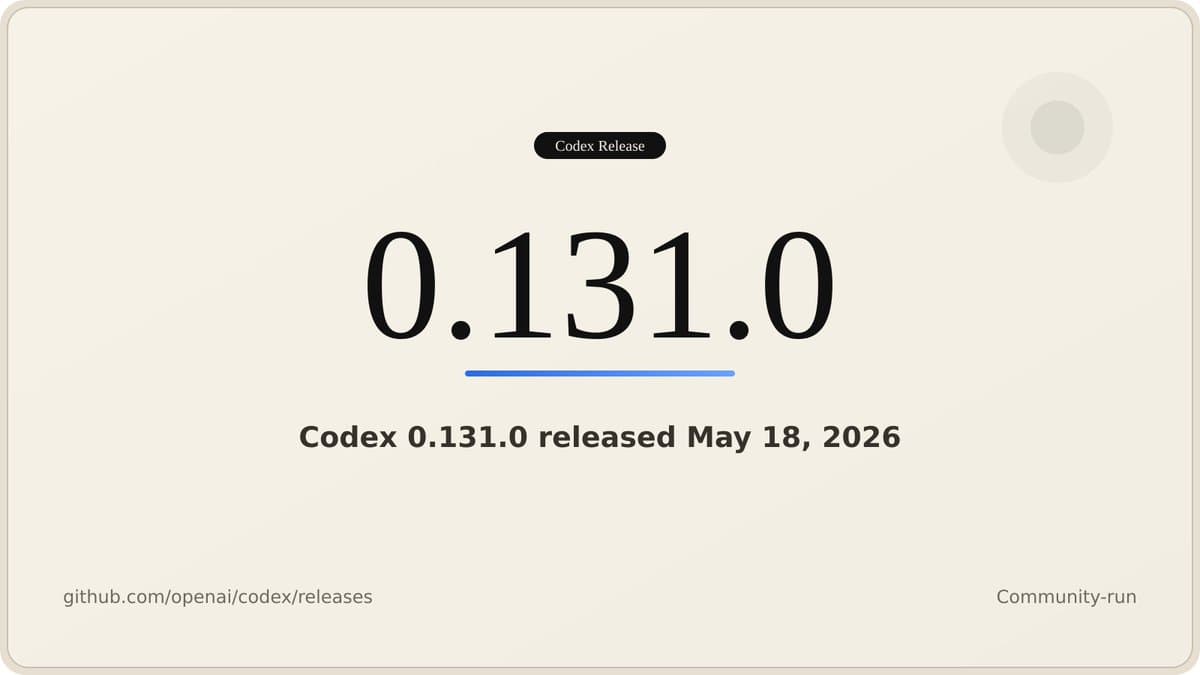
Version 0.131.0 is one of the more feature-dense releases in recent memory. It touches the terminal UI, plugin workflows, remote control infrastructure, the Python SDK, and the diagnostics toolchain, all in one drop. Here's a breakdown of what actually changed and why it matters.
A Much Richer Terminal UI
The TUI is the most visible part of this release. The TUI now offers richer session controls and display: data-driven service-tier commands, blended token usage, permissions and approval mode, effective workspace roots, and responsive Markdown tables.
That blended token count in the status line is worth calling out specifically. The Display blended token count in status line change was contributed via PR #21669, and permissions and approval mode display via #21677. Previously, you had to infer token consumption from model context limits. Now the status line tells you directly.
Several TUI interaction and rendering issues were also fixed, including URL wrapping, light-mode selection contrast, Shift+Enter in tmux, /review MCP startup status, /side Esc handling, and network approval history text.
The @ mention picker also got a meaningful upgrade. @ mentions now search files, directories, plugins, and skills in one unified picker, backed by app-server plugin metadata. If you use @ references heavily in your prompts, this consolidation reduces friction considerably.
codex doctor for Diagnostics
This is a genuinely useful addition for anyone who's ever spent time debugging a broken Codex setup. codex doctor was added for support-ready diagnostics across runtime, auth, terminal, network, config, and local state.
Instead of manually checking your environment variables, verifying your auth tokens, or guessing whether the issue is a network policy or a misconfigured config file, you now run one command and get a structured report. It's the kind of thing that should have existed from the start.
Plugin Workflows Get Marketplace-Level Maturity
Plugin workflows gained marketplace CLI commands, version-aware sharing, share checkout, clearer shared-workspace buckets, and default-enabled plugin hooks.