
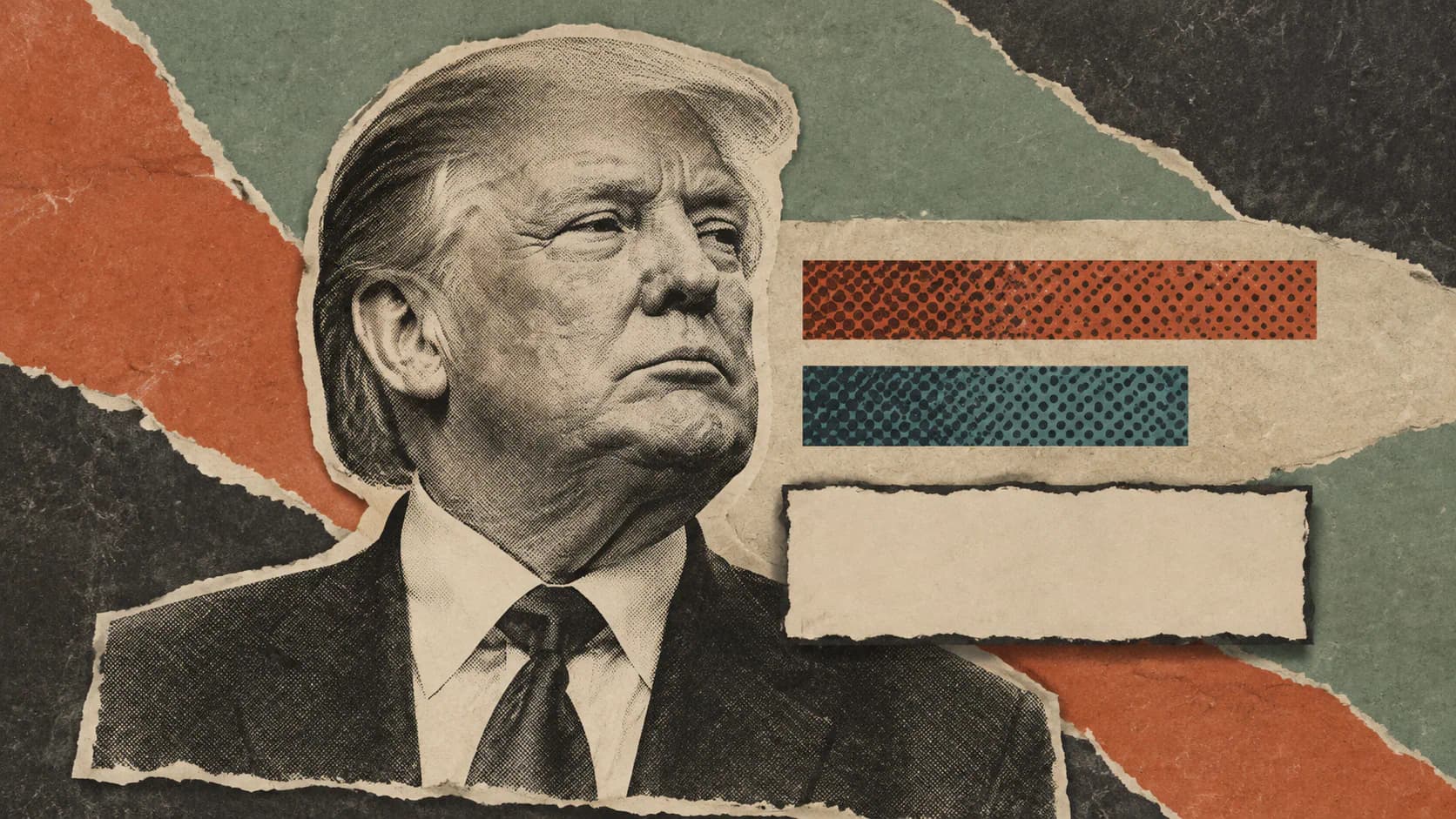
Donald Trump wants to give artificial intelligence a more flattering name. In an X poll posted on September 20, 2026, the president asked users to choose between Superior Intelligence and Extreme Intelligence, dropping a third candidate, Supreme Intelligence, from an earlier round.
At the snapshot supplied on September 21, Superior Intelligence led with 57.4% of the vote, compared with 42.6% for Extreme Intelligence. The poll had received 129,646 votes, giving Superior Intelligence a 14.8-percentage-point advantage.
It is an effective piece of political branding, but it is not a scientific naming process. The post did not announce an executive order, technical definition, agency directive, or proposal to amend existing laws. More importantly, “artificial intelligence” is embedded in seven decades of research, standards, regulation, education, and product development. Replacing it would take far more than finding a phrase that wins an X poll.
Superior Intelligence Leads Trump’s Runoff Poll
Trump’s first poll included three options: Superior Intelligence, Extreme Intelligence, and Supreme Intelligence. He removed the last choice after it fell behind, suggesting that its association with the Supreme Court might have hurt its performance.
The second poll presents a straightforward runoff:
- Superior Intelligence: 57.4%
- Extreme Intelligence: 42.6%
- Total votes: 129,646
Those figures should be treated as a live snapshot rather than a final result. X polls can continue changing until they close, and the displayed percentages may move as more users participate.
The large response does not make the poll representative of the American public, AI researchers, developers, or technology companies. Respondents select themselves, come from the audience that encountered the post, and are not chosen through random sampling. There is also no way to determine why someone picked Superior over Extreme.
The result can show which label Trump’s participating X audience prefers. It cannot demonstrate that the technology industry, the scientific community, or the broader public wants to abandon the term AI.
Artificial Intelligence Has 70 Years of Institutional Weight
Artificial intelligence is not a recent product name controlled by one company or government. The term appeared in the 1955 proposal for the Dartmouth Summer Research Project on Artificial Intelligence, which took place in 1956 and helped establish AI as a distinct research field.
The terminology has certainly been debated since then. “Intelligence” remains difficult to define, and “artificial” can suggest something fake or inferior when it is intended to distinguish machine-based systems from biological intelligence. Trump’s criticism touches on a real linguistic problem, even if his alternatives do not solve it.
Today, however, AI appears in laws, university programs, research journals, industry categories, company names, international agreements, and technical standards. The NIST definition of artificial intelligence, sourced from federal law, describes a machine-based system that makes predictions, recommendations, or decisions in pursuit of human-defined objectives. NIST also maintains an AI Risk Management Framework used by organizations evaluating these systems.
Trump’s own administration published America’s AI Action Plan on July 23, 2025. That document uses “artificial intelligence” and “AI” throughout its discussion of innovation, infrastructure, diplomacy, and national security.
Changing the label would therefore require more than updating White House speeches. It would create inconsistencies across statutes, regulations, procurement documents, research databases, standards, and international policy.
The Alternatives Describe Status, Not Technology
The main weakness in Trump’s proposed names is that they make a claim about how good the technology is. Artificial intelligence, despite its imperfections, describes the nature or origin of a system. Superior Intelligence and Extreme Intelligence describe its supposed quality.
| Name | What It Communicates | Main Problem |
|---|---|---|
| Artificial Intelligence | Intelligence-related tasks performed by engineered systems | “Artificial” can sound fake or inferior |
| Superior Intelligence | Intelligence that ranks above something else | Assumes superiority without defining the comparison |
| Extreme Intelligence | Intelligence at an unusually high level | Provides no technical threshold or measurable category |
Superior Intelligence is the more polished phrase, which may help explain its poll lead. It sounds confident and aspirational without the aggressive tone of “extreme.” As technical language, though, it creates an immediate question: superior to what?
Some AI systems exceed human performance on carefully defined tasks, but that does not make every system broadly superior. A model can perform well on an exam, write functional code, or identify patterns in large datasets while still producing fabricated information or failing when circumstances differ from its training and evaluation conditions.
The NIST Generative AI Profile identifies risks such as confabulation, harmful bias, privacy problems, information-security threats, and overreliance on model outputs. Renaming these systems Superior Intelligence could encourage precisely the kind of misplaced trust that risk-management guidance is intended to reduce.
Extreme Intelligence is less boastful about ranking, but it is even harder to define. “Extreme” could refer to computational scale, speed, benchmark performance, autonomy, economic impact, or danger. Nothing in the phrase tells researchers how to classify a system or tells users what it can reliably do.
Superior Intelligence would also introduce the acronym SI, which already denotes the International System of Units. That may seem like a small branding issue, but unambiguous terminology matters in science, engineering, standards, and search. AI has the considerable advantage of already being recognized worldwide.
An X Poll Cannot Rename a Global Technical Field
A president can influence the language used by the executive branch. Trump could encourage agencies to use Superior Intelligence in speeches, press releases, branding campaigns, or new policy documents.
That would not automatically change existing federal law. Artificial intelligence is already defined in the US Code, and replacing the term in statutes would require legislative action. Independent regulators, standards organizations, state governments, universities, international bodies, and private companies would remain free to use AI.
Several outcomes are more plausible than a complete rename:
- Superior Intelligence becomes a Trump administration slogan. It could appear alongside AI in speeches and promotional material without formally replacing it.
- Some executive agencies adopt the phrase. Agencies might use “Superior Intelligence” as a preferred communication term while retaining legal definitions of AI.
- The name becomes partisan language. Supporters could adopt SI while the technology industry continues using AI.
- The proposal fades after the poll. Without a directive, legislative effort, or industry support, it may remain a social-media event.
There is also a practical communication problem. Calling every system “superior” would make neutral evaluation more difficult. A government procurement document, for example, needs to distinguish between machine learning, computer vision, language models, autonomous systems, and conventional software. A superlative does not provide that information.
The same problem would affect regulation. Policymakers need definitions based on capabilities, deployment conditions, risk, and human oversight. “Extreme” and “superior” are subjective descriptions, not testable categories.
The Poll Says More About Branding Than AI
Trump’s proposal makes more sense as a message about American ambition than as a new scientific taxonomy. Both candidates present the technology as powerful and desirable. Neither carries the ambiguity or perceived negativity of the word “artificial.”
That framing fits a political argument about leadership in AI. If the United States is competing with China and other countries over chips, data centers, models, talent, and industrial deployment, “Superior Intelligence” sounds like a goal rather than a research category.
The risk is that the name turns an aspiration into an assumption. Calling a system superior before evaluating its reliability, cost, security, or real-world performance gives marketing language priority over evidence.
AI communication would benefit more from greater specificity than a new umbrella term. Instead of calling every product artificial, superior, or extreme intelligence, companies and governments can identify what the system actually is: a large language model, an image generator, a recommendation system, an autonomous agent, a computer-vision model, or an industrial robot.
Those labels are less dramatic, but they help people understand the capabilities and limitations in front of them. A name should clarify the technology, not award it a trophy.
Final Thoughts
Superior Intelligence is likely to win Trump’s runoff poll because it sounds more credible and less volatile than Extreme Intelligence. That makes it the better slogan, not the better technical term.
Artificial intelligence is imperfect language, but it has accumulated a shared meaning across research, law, standards, business, and public discussion. Replacing it with a superlative would trade one linguistic problem for several new ones, including overstatement, acronym confusion, and the absence of a usable definition.
If Trump wants American AI to be superior, policy can set measurable goals for research, infrastructure, reliability, security, and economic performance. Renaming the entire field does not establish superiority. It simply assumes it.
Frequently Asked Questions
5 questions
1Why Does Trump Want to Rename Artificial Intelligence?
Trump argues that the word “artificial” does not properly reflect the sophistication or importance of modern AI. His proposed alternatives frame the technology more positively, although the X post did not provide a technical definition for either name. The idea currently appears to be a branding proposal rather than a formal change to federal law or policy.
2Which Name Is Winning Trump’s AI Poll?
Superior Intelligence was leading with 57.4% of the vote in the September 21, 2026 snapshot, while Extreme Intelligence had 42.6%. The poll had received 129,646 votes, putting Superior Intelligence ahead by 14.8 percentage points. Because the X poll was still live at the time of the snapshot, its percentages and vote total could continue changing.
3What Happened to Supreme Intelligence?
Trump removed Supreme Intelligence after it performed poorly in the earlier three-choice poll. In his follow-up post, he suggested that voters may have associated the term with the Supreme Court. The runoff therefore includes only Superior Intelligence and Extreme Intelligence, with participating X users asked to make the final choice between them.
4Can Trump Officially Rename AI?
Trump can promote a preferred name and encourage executive agencies to use it in communications. He cannot unilaterally force researchers, companies, international organizations, or the public to abandon artificial intelligence. Existing statutes that define or regulate AI would also remain unchanged unless Congress amended them through the legislative process.
5Would Superior Intelligence Replace the AI Acronym?
Superior Intelligence would normally produce the acronym SI, not AI. That creates an immediate conflict because SI is already the internationally recognized abbreviation for the International System of Units. Organizations could continue using AI for familiarity, but doing so would weaken the purpose of the rename and leave Superior Intelligence functioning mainly as a slogan.
Sources
- https://x.com/realDonaldTrump/status/2101698074166882517x.com
- 1955 proposal for the Dartmouth Summer Research Project on Artificial Intelligencehome.dartmouth.edu
- NIST definition of artificial intelligencecsrc.nist.gov
- AI Risk Management Frameworknist.gov
- America’s AI Action Planwhitehouse.gov
- NIST Generative AI Profilenvlpubs.nist.gov
- International System of Unitsbipm.org


