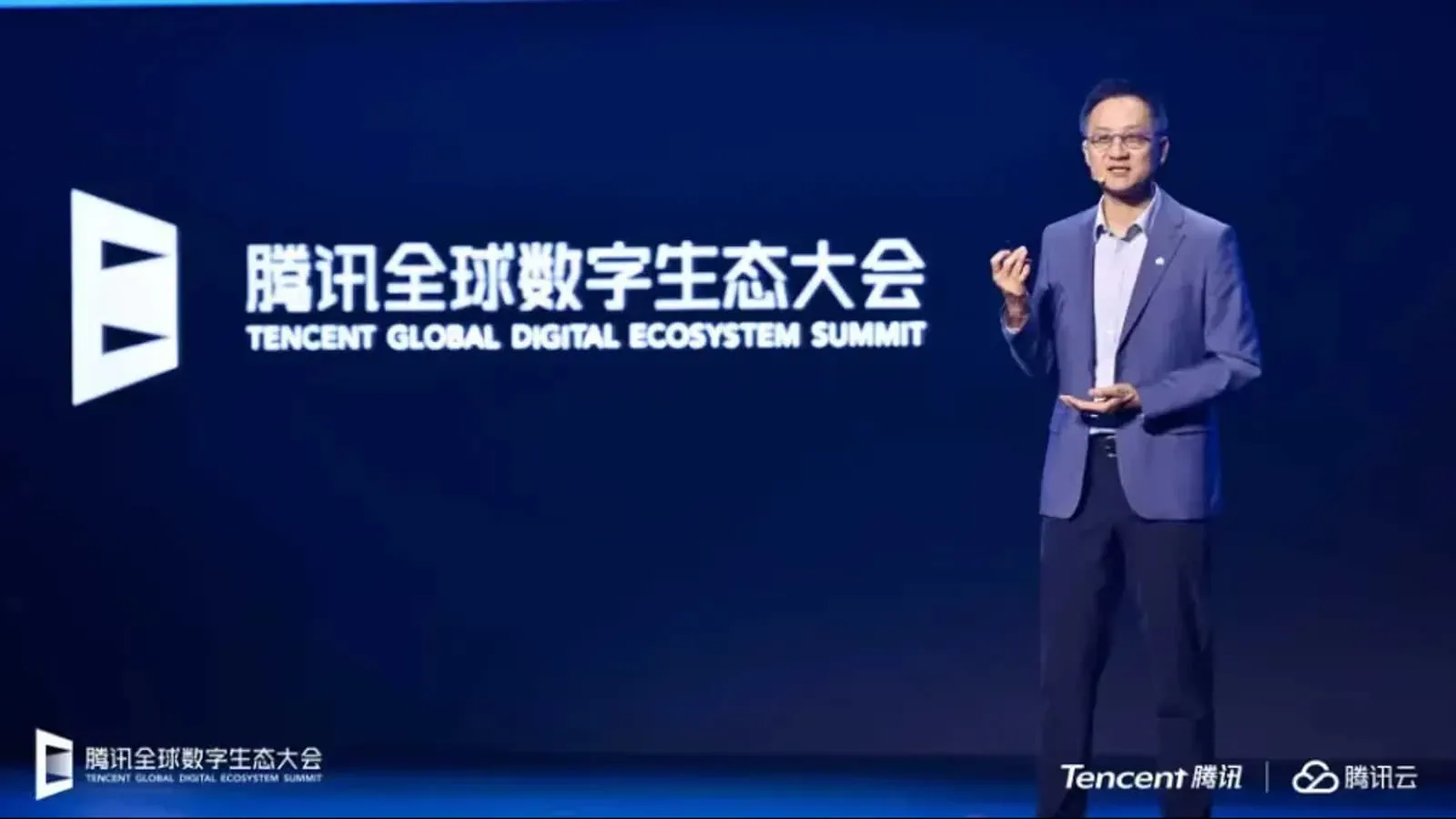
Tencent is pushing its workplace AI agent WorkBuddy into Southeast Asia, targeting existing cloud and big-data customers, particularly in Indonesia. The expansion comes as Dowson Tong, CEO of Tencent’s Cloud and Smart Industries Group, says overseas demand for the company’s AI services grew at a triple-digit rate over the past year.
Tong outlined the regional strategy in remarks reported on October 29, 2026, by the South China Morning Post. This is an expansion of a product already entering overseas markets, not a simultaneous Southeast Asian launch. Indonesian news agency ANTARA reports that WorkBuddy launched in Indonesia on July 14.
The reports also describe different layers of Tencent’s business: WorkBuddy adoption, broader AI-service demand and overseas cloud customers. Separating those layers gives a clearer picture of the strategy. Tencent is using established infrastructure relationships to open doors for its agent, while presenting model choice and deployment flexibility as ways to make enterprise AI economically workable.
Indonesia Is the Starting Point, Not a Region-Wide Launch
Tencent’s WorkBuddy rollout has unfolded in stages, according to ANTARA’s October 29 report:
| Date | Reported development |
|---|---|
| March 2026 | WorkBuddy became available to individual users in China on iOS, Android and HarmonyOS. |
| July 14, 2026 | WorkBuddy launched in Indonesia. |
| October 28–29, 2026 | Tong discussed the early Southeast Asian expansion and Tencent’s plans to adapt the product for overseas markets. |
Speaking to reporters in Shenzhen on October 28, Tong described Tencent as beginning to offer products such as WorkBuddy in Southeast Asia. He said the company was still adding features and improving support for different office and enterprise workloads.
That sequence matters. The October coverage marks a clearer statement of international strategy after an Indonesian launch, not evidence that every Southeast Asian country now has the same product, features or purchasing options. The opened reports do not provide a country-by-country availability schedule or regional pricing.
Tencent’s immediate audience is also more specific than the entire regional office-software market. Tong told SCMP that the company was targeting customers already using its cloud computing and big-data services, especially in Indonesia.
ANTARA reports that Tencent has three data centers in Indonesia and existing relationships with companies including Gojek and XLSmart. Those relationships demonstrate an established enterprise presence; they are not evidence that either company has adopted WorkBuddy.
My view is that this is the most practical part of Tencent’s approach. An existing cloud relationship gives it a route into discussions about infrastructure, procurement and technical requirements. Selling an agent through that channel may reduce the work needed to establish a new supplier relationship. Whether it leads to regular employee use is a separate commercial question.
Model Choice Is an Economic Strategy
Tencent is offering customers a choice of models, including Hunyuan, DeepSeek and Kimi, as part of its effort to lower inference costs, according to SiliconReport. The same report says Tencent is adapting software for domestically produced Chinese chips.
Inference is the computation required when a model processes a request and generates a response. For an enterprise agent, one user instruction can lead to several model calls as the system processes context, chooses actions and works through intermediate steps. The relevant cost is therefore the cost of completing a useful task, including failed attempts and retries.
Model choice can help with that calculation. A business might use a less expensive model for a constrained task and reserve a more capable model for work that requires stronger reasoning. That is a general economic rationale, however, not a documented description of WorkBuddy automatically routing tasks between these models.
The reporting leaves several consequential details unspecified:
- Which model versions customers can select.
- Whether choices differ by market or deployment type.
- Whether WorkBuddy exposes the same choices as Tencent’s broader AI platform.
- What each option costs under regional contracts.
- How the models compare on the same workplace tasks.
The evidence supports Tencent’s multi-model direction, but it does not support a model-by-model performance ranking or a claim that one configuration is cheapest.
Tong also told ANTARA that Tencent needs to integrate local models into WorkBuddy to adapt it to regional ecosystems and popular devices. That adds another purpose to model choice: localization. Supporting a regional model could potentially help with language or local requirements, but the reports do not identify those models or publish regional language evaluations.
I would assess this strategy using cost per successfully completed workflow, not the lowest advertised model rate. A cheaper response loses its advantage if employees must repeatedly correct it. Conversely, paying for a more expensive model on every simple task can undermine the economics of a large deployment. Tencent’s flexibility is useful in principle; buyers still need comparable task-level evidence.
WeChat and Tencent Docs Give WorkBuddy a Workflow Base
WorkBuddy integrates with WeChat and Tencent Docs, SiliconReport reports. Those connections are central to the product’s positioning as a workplace agent.
An agent becomes more useful when it can operate where a company’s information and work already reside. Communication and document integrations can reduce the need to move material manually between an AI interface and separate applications.
The named integrations establish a starting point, but the reporting does not specify their permission scopes, supported actions or overseas feature parity. It would be premature to assume that a regional WorkBuddy account can read every conversation, edit every document or carry out actions without approval.
For an enterprise buyer, the useful integration checklist is concrete:
- Which information can the agent access?
- Can it change content, or only retrieve and summarize it?
- Which actions require a person’s approval?
- Can administrators restrict access by employee or workspace?
- What record is kept of the agent’s actions?
These are the details that turn an integration announcement into a deployable workflow.
The regional strategy also depends on how well Tencent’s connected applications fit customers’ existing habits. WeChat and Tencent Docs give the company assets to build around, but the reports do not show how extensively target businesses in Southeast Asia use those tools. Tong’s emphasis on local models, devices and partners suggests that adaptation will be part of the rollout.
Data Control Extends Beyond the Choice of Model
Tencent is also pitching flexibility over where enterprise AI runs. Tong told ANTARA that customers want control over model services, agents and deployment environments, and do not want sensitive information used by their service provider.
He described software-based solutions that can run on customers’ own infrastructure or Tencent’s public cloud. He also discussed virtual private cloud environments and encryption across the model-inference path, accompanied by cryptographic verification.
These are company statements about Tencent’s broader enterprise offering. The report does not establish which configurations are available with WorkBuddy in each Southeast Asian country or provide enough technical detail to independently assess the encryption claims.
The deployment choices still have practical consequences:
Frequently Asked Questions
4 questions
1When Did WorkBuddy Launch in Indonesia?
WorkBuddy launched in Indonesia on July 14, 2026, according to ANTARA. The October reports describe its continuing expansion strategy.