Spotify users can already ask Meta’s Muse to play music, save songs and build playlists, according to the company’s Muse announcement. The conversation happens in another company’s assistant, while Spotify fulfills the listening request.
Spotify wants that arrangement to become a broader distribution strategy. In TechCrunch’s October 22, 2026 report, co-CEO Gustav Söderström described the goal as becoming the media service people use through any AI agent.
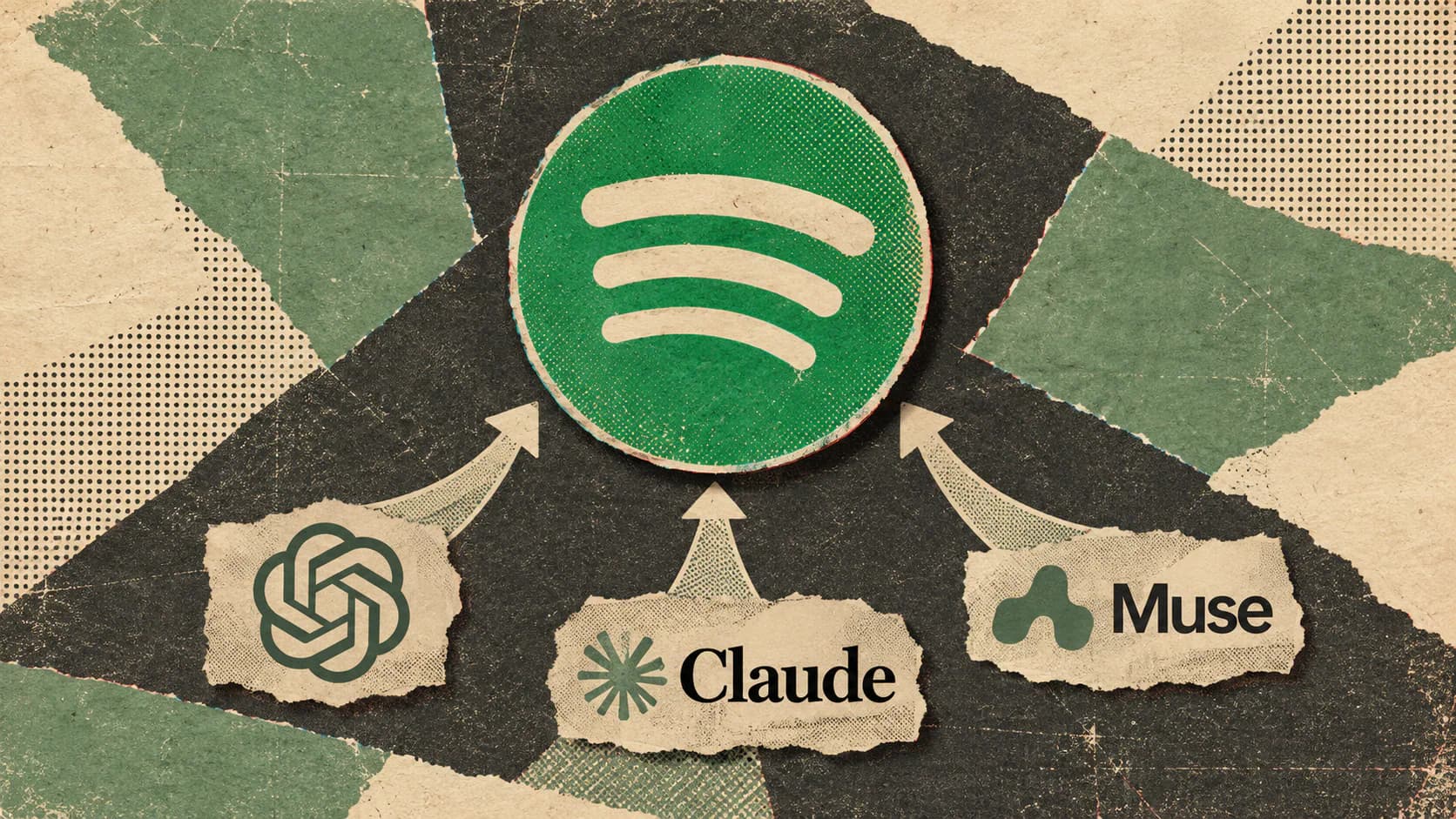
This is not a standalone product launch. It is a strategy built on existing integrations with OpenAI’s ChatGPT, Anthropic’s Claude and Meta’s Muse, with important questions still open about usage and privacy.
Muse Shows What Agents Can Hand Off
Spotify’s September 23 Muse announcement provides concrete examples of what this approach supports. The company says users can ask Muse to queue and play audio, save songs to their Spotify Library, create and name playlists, and find podcasts and audiobooks.
Some requests extend beyond choosing a track. Spotify describes asking Muse to resume a podcast, play a playlist on a kitchen speaker or schedule a workout playlist to start at a particular time. It also gives an example of creating a driving playlist inspired by a destination.
These are Spotify’s documented Muse capabilities, not proof that every integration supports the same actions. The announcement establishes specific tasks for Muse; it does not supply a feature-by-feature comparison with ChatGPT or Claude.
That distinction matters because “available through an agent” can describe different experiences. Finding a playlist, saving it and starting playback are separate actions. Readers should not assume that an integration offering one necessarily offers all three, or that scheduled playback works across every assistant.
Spotify Can Serve the Request Without Owning the Chat
The strategic separation is between where a listener expresses an intention and where the listening request gets fulfilled.
A person could discuss a trip with an assistant, then ask for music suited to the journey. Under Spotify’s approach, the assistant can become the entry point while Spotify supplies the media service. The listener does not necessarily have to begin by opening Spotify and searching.
That gives Spotify a reason to participate across competing assistant platforms. If music requests originate in ChatGPT, Claude or Muse, integration provides a route for those requests to reach Spotify rather than stop at the conversational interface.
The potential advantage is broader than adding another playback control. Spotify could remain useful even when another company owns the first screen and the surrounding conversation.
There is a corresponding tradeoff: the assistant would influence how a request is expressed and which services are presented. Spotify’s availability alone does not establish that an agent will recommend it, prefer it over a rival or make it the default. Integration creates an opportunity to receive listening requests, not a guaranteed stream of them.
The Privacy Claim Depends on Where Personalization Happens
Söderström’s explanation, as reported by TechCrunch, is that Spotify does not send listener data to its agent partners. Instead, the outside agent sends a request and Spotify performs the reasoning on its own side.
That describes a potentially important separation. An assistant could ask Spotify for suitable music without needing a copy of the listener’s underlying history. Spotify could then use its own information to personalize the response.
It also explains why Spotify sees itself as more than a catalog that agents search. Under the company’s account, the personalization work remains part of Spotify’s service.
But this is Spotify’s description of its architecture, not an independently verified privacy guarantee. It does not establish everything an assistant sees or retains from its own conversation with a user.
For example, a request for music suited to a particular mood already tells the assistant something about the user’s listening intent. Keeping Spotify’s listening history on Spotify’s side would not erase that separate disclosure.
The practical questions are therefore specific: what information crosses the integration, what comes back, and what each partner retains. The reported statement does not provide a complete, integration-by-integration answer.
Availability Does Not Yet Establish Adoption
Söderström also claimed Spotify was seeing “really good adoption” inside agents. TechCrunch’s report supplies no figures alongside that assessment.
Without a user count, request volume or share of listening attributable to assistants, there is no way to judge the scale of that activity from the claim alone. It could reflect growing use without demonstrating a meaningful contribution to Spotify’s overall business.