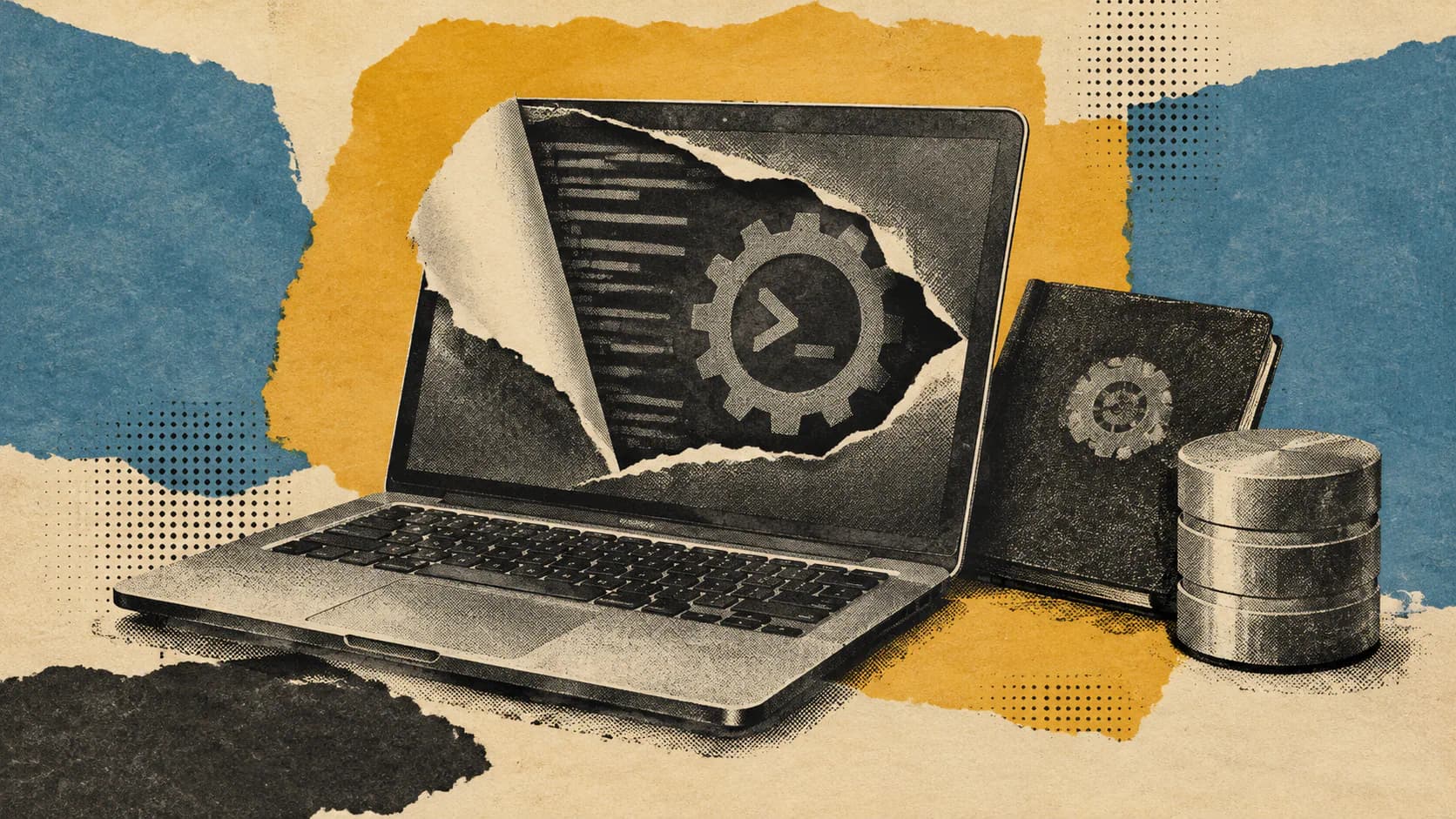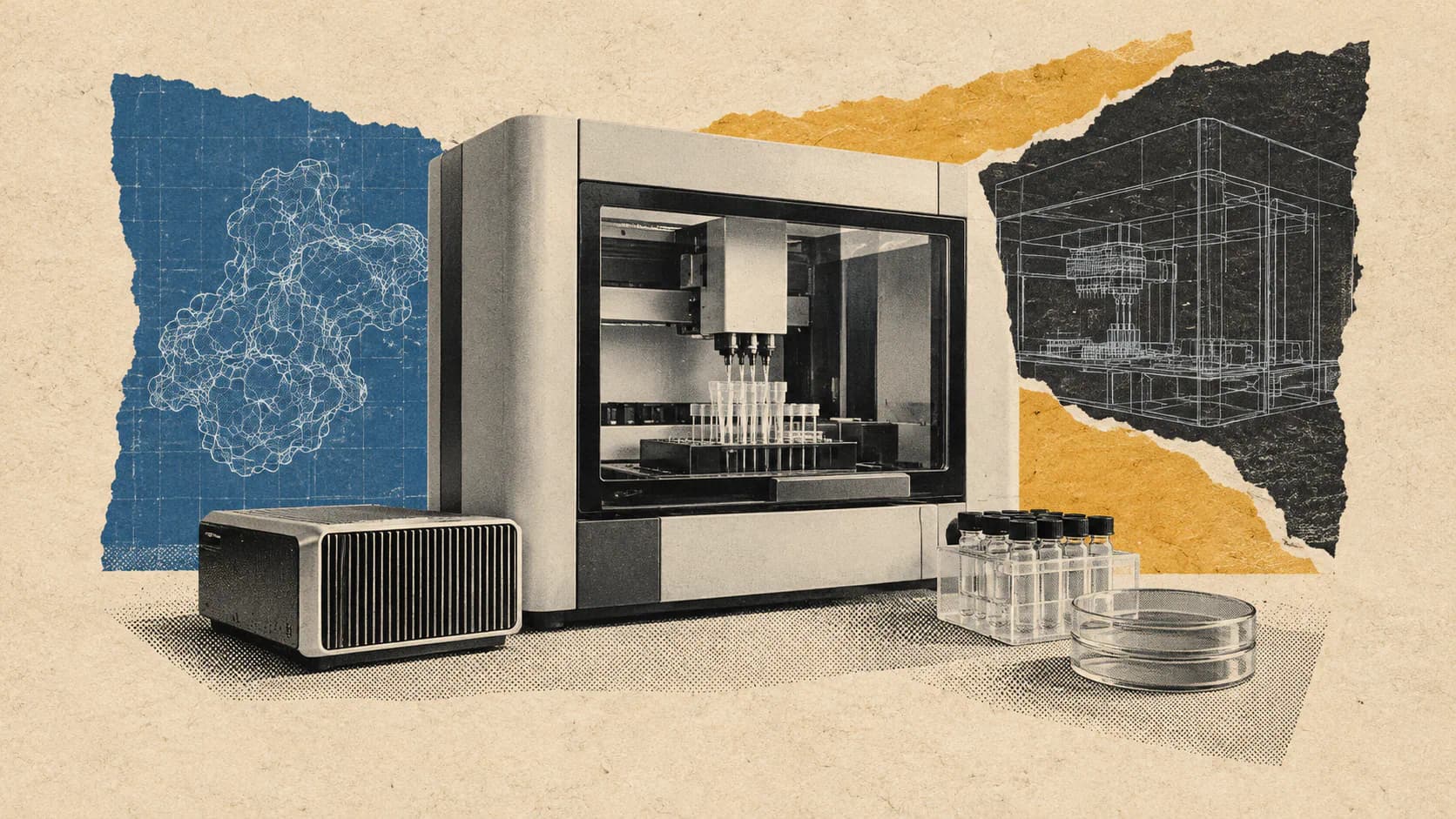
NVIDIA and Danaher plan to integrate AI into a selected group of scientific instruments, connecting model predictions with physical experiments and feeding the results back into experimental design. Neither company has identified the instruments or said when customers could use the integrations.
Danaher’s October 14 announcement outlines the technology stack: DGX Spark edge computing, RAPIDS data processing, real-time inference, BioNeMo open models, and exploration involving Cosmos world models and Omniverse digital twins. The release describes integration work and potential applications. It reports no shipped autonomous instrument or demonstrated scientific breakthrough.
Danaher has separately announced an AI-powered autonomous laboratory expected to operate at scale in early 2027. That project provides context for the NVIDIA collaboration, but its schedule and performance targets are not commitments for the newly announced instrument integrations.
The Instrument Layer Is the Starting Point
The companies say they are working to combine Danaher’s scientific instrumentation, automation, laboratory workflow software and domain expertise with NVIDIA’s accelerated computing and AI technologies. Initial efforts will focus on a select group of priority instruments, with possible expansion across Danaher’s broader portfolio later.
The work starts at the equipment and workflow layer, where an AI-generated proposal would need to become an executable experiment. That gives the effort a more specific focus than a general promise to apply AI to science.
A scientific model can suggest a candidate or help prioritize an experiment without controlling the equipment that produces the evidence. Closing that gap requires a connection between the proposal, the laboratory procedure and the resulting measurements. Danaher’s stated objective is a continuous learning cycle in which experiments inform models and models help design subsequent experiments.
Whether the first implementations primarily assist scientists with analysis or take a more active role in directing experiments remains unclear. The announcement does not establish that the complete loop is operating on any named instrument. It also leaves open which decisions a future integration could make automatically, which would require approval, and how much existing equipment might need to change.
Where NVIDIA’s Stack Could Fit
The announced technical scope covers several different jobs. Treating them as interchangeable “AI” features would obscure what the companies are proposing.
DGX Spark and real-time inference could bring computation closer to equipment. Danaher names edge computing “like NVIDIA DGX Spark” as part of the integration effort. Inference means running a model to produce an output, rather than training it. In a prospective instrument workflow, that output could inform an analysis or a subsequent experimental step. The release provides no deployed configuration, latency measurements or evidence that a model can control a particular instrument in real time.
RAPIDS is the proposed analytics and data-processing component. It would process experimental data to support analysis and subsequent decisions. Faster model execution alone would not establish a faster end-to-end laboratory process; the collaboration will also need to connect instrument data with the software that interprets it. No workload-specific acceleration results were disclosed.
BioNeMo open models sit on the scientific-model side. The release places them alongside scientific reasoning and foundation-model technologies, with a potential role in connecting model-generated predictions to experimental evidence. Which BioNeMo models Danaher intends to use, what tasks they would perform, and how their outputs would be evaluated before influencing an experiment are all unspecified.
Cosmos and Omniverse remain exploratory elements. The companies are exploring how Cosmos world models and Omniverse digital twins could support more intelligent instruments and laboratory workflows. One possible application would be evaluating proposed workflow changes in a virtual representation before applying them to physical equipment. This is an illustration of how such a system might help, not an announced feature or a validated capability of the collaboration.
Together, these components suggest a possible architecture: a model proposes an experiment, workflow software translates it into laboratory actions, instruments produce measurements, and analytics prepare the results for evaluation and further modeling.
The release does not publish the interfaces, orchestration design or validation procedures needed to connect those stages, so that sequence remains an ambition rather than evidence of completed integrations. Nor does it say that every named technology will appear in every priority instrument.
The Early-2027 Lab Is a Separate Announcement
Danaher’s October 7 autonomous-lab plan gives more detail about the intended scientific task and operating timeline.
Based at Abcam, a Danaher company, the laboratory is intended to help develop custom antibodies and other molecular tools. Danaher says it will combine AI, robotics and technologies from several operating companies in a connected workflow, with operation at scale expected in early 2027.
The planned process is a design-make-test-learn loop: AI helps create affinity-reagent designs, the laboratory builds and tests them, and the results feed back into subsequent designs. Automata is a collaborator on device orchestration and robotic automation.
Danaher says the lab is designed to deliver up to eight times faster progress from an idea to a validated reagent and up to a tenfold increase in reagent generation as it scales. These are company-stated design targets, not independently verified outcomes established by the supplied announcements.
Those figures belong to the Abcam-based lab plan. They are not benchmark results for NVIDIA-integrated instruments, and the early-2027 expectation is not a customer availability date for the October 14 collaboration.
Both announcements describe efforts to connect models, instruments and experimental results. The NVIDIA release, however, does not establish that its named technologies underpin the Abcam laboratory or that the separate lab’s targets depend on them.
Scientists will continue to make the key decisions in the planned lab, according to Danaher. Its use of “autonomous” should therefore not be read as a promise to remove human scientific oversight.
Faster Discovery Is the Goal, Not the Result
NVIDIA healthcare vice president Kimberly Powell describes the collaboration as helping researchers compress years of discovery into months. That is the announcement’s strongest performance language, but it supplies no experiment, baseline or independently assessed result demonstrating the outcome.
Evaluating progress will require distinguishing between different kinds of improvement. Faster data processing does not necessarily mean faster completion of a laboratory workflow. Producing more experimental candidates does not, by itself, demonstrate a higher rate of scientifically useful findings.
The most informative evidence would connect computing improvements to the experimental process: what task was performed, which instrument was used, how long the complete cycle took, and how the resulting evidence compared with the existing workflow. These are criteria for assessing future claims, not results the partners have reported.
Sources
- Danaher’s October 14 announcementinvestors.danaher.com
- announced technical scopeprnewswire.com
- October 7 autonomous-lab planinvestors.danaher.com